


Check-in

Ba Den Mountain and Cao Dai Holy See: Discover two cultural identities of Tay Ninh
At Ba Den Mountain, spiritual and cultural spaces have taken shape over generations, closely associated with the legend of the Linh Son Holy Mother and the pilgrimage traditions of Southern Vietnamese people. Amid the mountainous landscape at an altitude of 986m, ancient pagodas and monumental Buddhist landmarks create a destination that preserves its sacred traditions while offering diverse opportunities to explore nature, culture and art. Meanwhile, the Cao Dai Holy See impresses visitors with its vibrant architecture, meaningful religious symbols and distinctive ceremonies, reflecting the convergence of different philosophies and spiritual beliefs in Vietnamese cultural life.
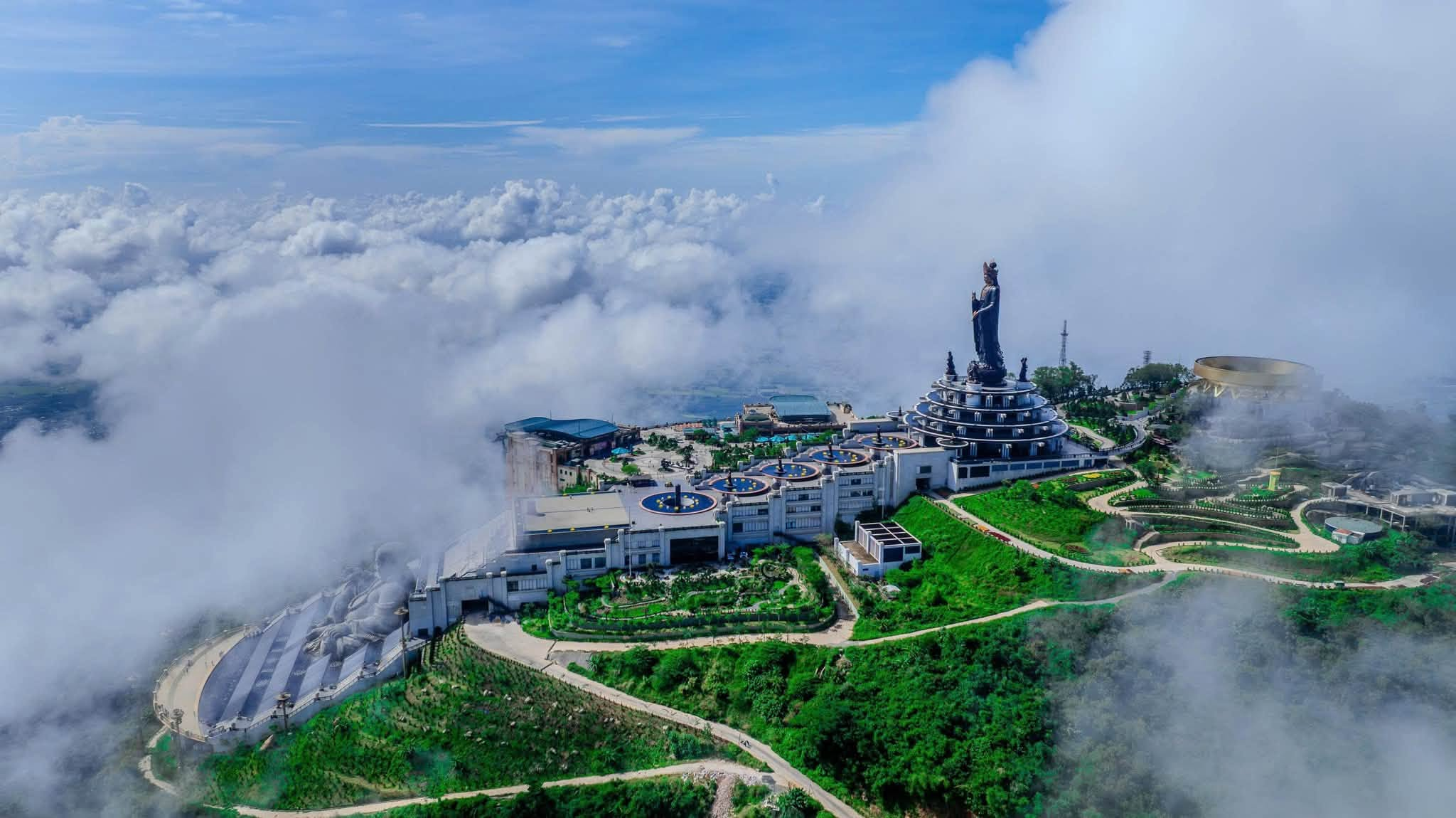
Ba Den Mountain is a prominent spiritual and cultural destination in Tay Ninh, closely associated with the worship of the Linh Son Holy Mother and magnificent natural scenery.
What makes combining these two destinations in a single journey particularly interesting is the contrast and connection between their cultural identities. While Ba Den Mountain offers spiritual experiences amid nature, where visitors express their wishes for peace and happiness at sacred landmarks, the Cao Dai Holy See provides opportunities to discover an indigenous religion through its architecture, ceremonies and the daily lives of its followers. Each destination offers a distinct perspective, contributing to the diverse cultural and spiritual landscape of Tay Ninh.
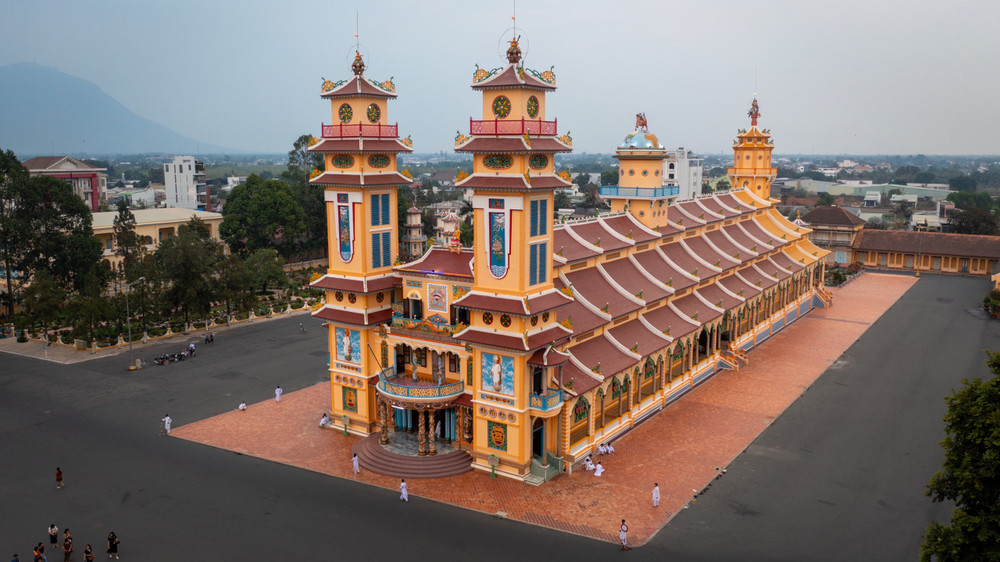
The Cao Dai Holy See stands out for its distinctive architecture, reflecting the unique cultural and religious identity of Tay Ninh. (Source: Collected)
Known as the “Rooftop of Southern Vietnam” at an altitude of 986m, Ba Den Mountain has long been one of Tay Ninh’s most prominent cultural and spiritual symbols. Beyond its magnificent natural scenery, the mountain is closely associated with the worship of the Linh Son Holy Mother, a folk religious tradition preserved over generations. For Southern Vietnamese people, a journey to Ba Den Mountain is not simply a sightseeing trip but also an opportunity for pilgrimage, worship and prayers for health, peace and happiness.
Today, the modern cable car system at Sun World Ba Den Mountain allows visitors to conveniently explore the mountain’s spiritual and cultural spaces. During an approximately 8–10-minute journey on the Van Son cable car, visitors can admire spectacular aerial views of lush mountain slopes, Dau Tieng Lake and the vast Tay Ninh plains. Beyond these expansive natural landscapes, the journey continues to sacred destinations where traditional cultural values are preserved alongside impressive works of Buddhist art.
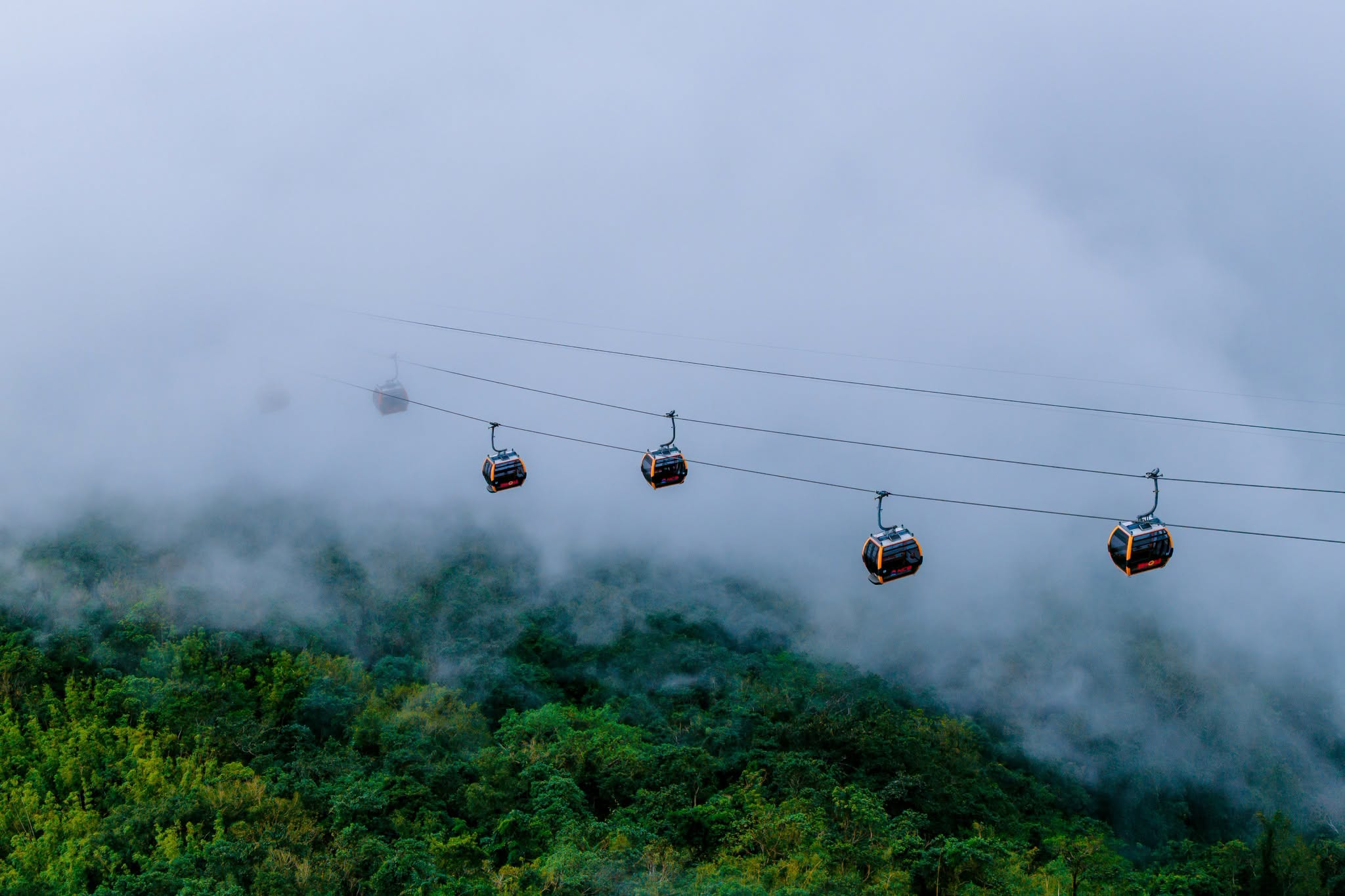
A cable car journey through the clouds reveals panoramic views of the mountains and Tay Ninh plains from above.
Halfway up the mountain, the Ba Pagoda complex has long been an integral part of local spiritual life. Among its highlights is Linh Son Tien Thach Pagoda, dedicated to the Linh Son Holy Mother, attracting numerous local residents and visitors, particularly during traditional festivals. Nestled between rocky cliffs and lush greenery, the ancient pagoda complex offers a tranquil atmosphere distinct from the spiritual landmarks at the summit. Visitors can also learn more about Mother Goddess worship and the folk legends that have helped shape Tay Ninh’s cultural identity.
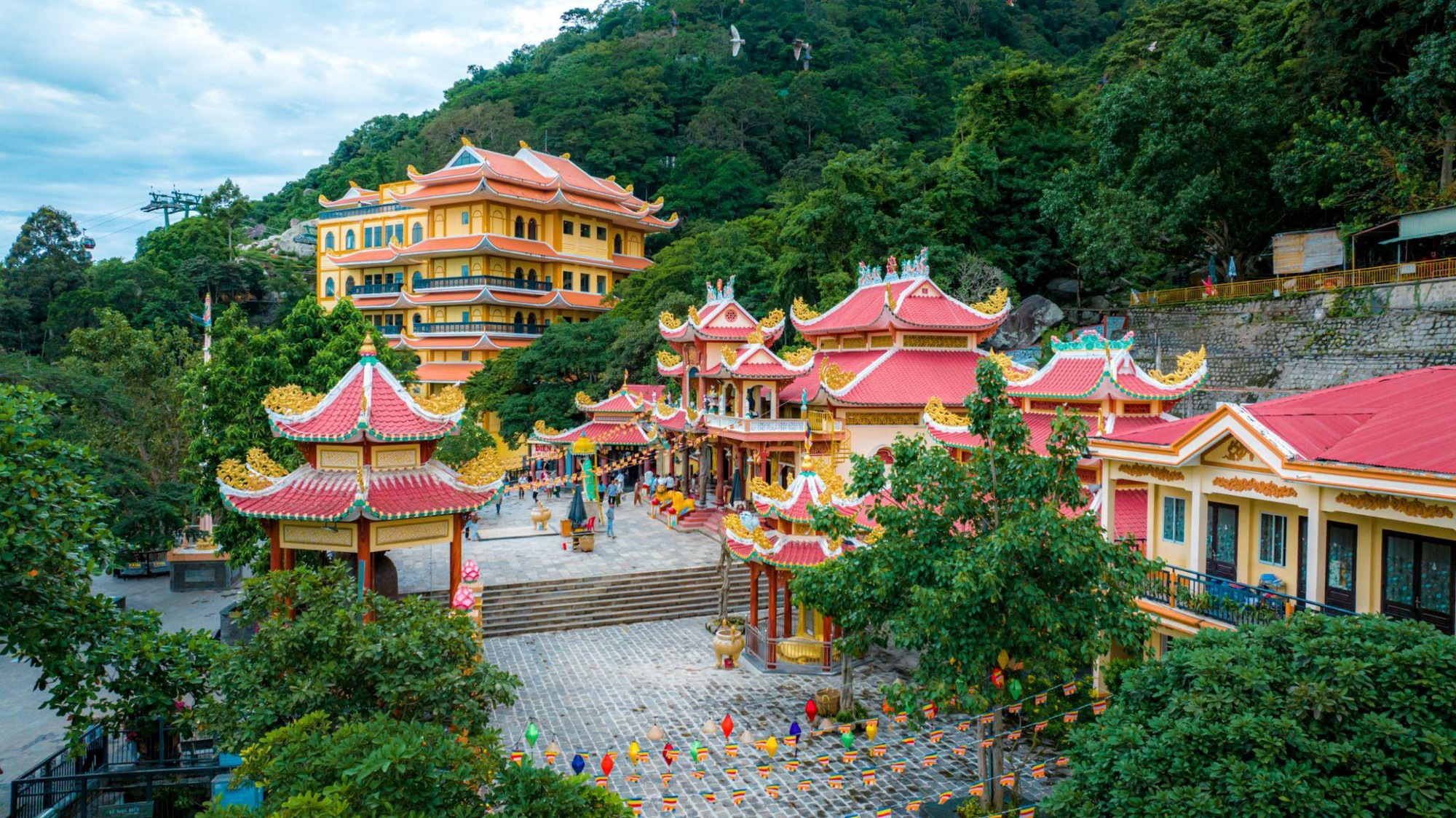
The Ba Pagoda complex, located halfway up Ba Den Mountain, preserves the centuries-old spiritual traditions of Southern Vietnamese people.
While the Ba Pagoda complex exudes timeless charm, the summit of Ba Den Mountain impresses visitors with its monumental Buddhist landmarks. Standing majestically amid the clouds is the 72m-tall Tay Bo Da Son Bodhisattva Statue, cast in bronze, alongside a series of black granite Heart Sutra pillars. Nearby, the Maitreya Bodhisattva Statue, assembled from thousands of sandstone blocks, forms a distinctive architectural masterpiece amid the mountains. Beyond admiring these iconic landmarks, visitors can discover Buddhist art through exhibition spaces, displays and cultural activities organised at the summit.
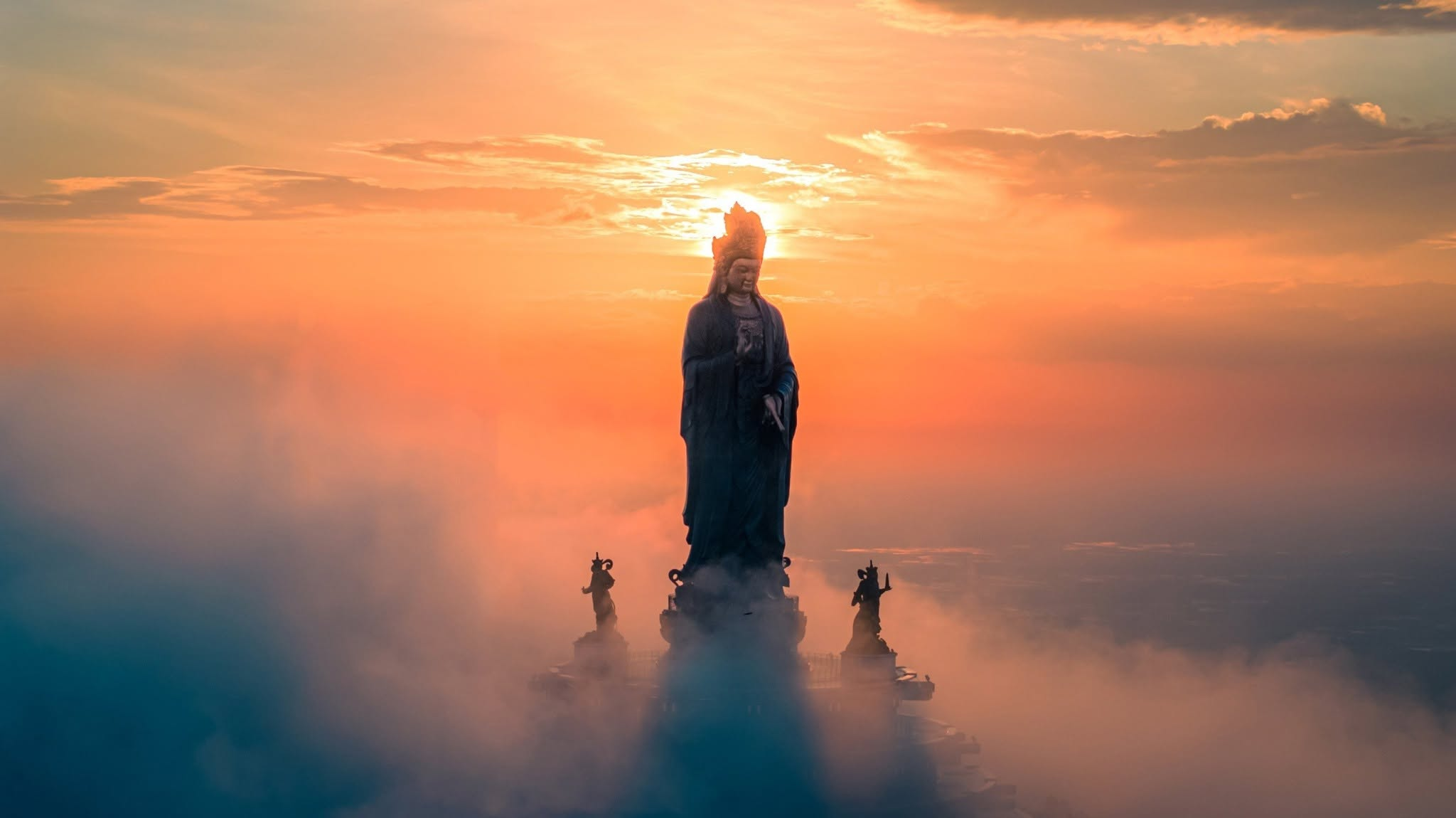
The 72m-tall Tay Bo Da Son Bodhisattva Statue is one of the iconic landmarks at the summit of Ba Den Mountain.
Beyond its rich spiritual heritage, Ba Den Mountain also attracts visitors with relaxing experiences amid nature. Vibrant flower gardens, scenic walking paths surrounded by greenery and panoramic viewpoints offer opportunities to enjoy the fresh air at an altitude of nearly 1,000m. After sightseeing, visitors can take a break over a cup of tea, discover signature dishes or dine at the summit restaurants while relaxing and admiring Tay Ninh’s landscapes from above.
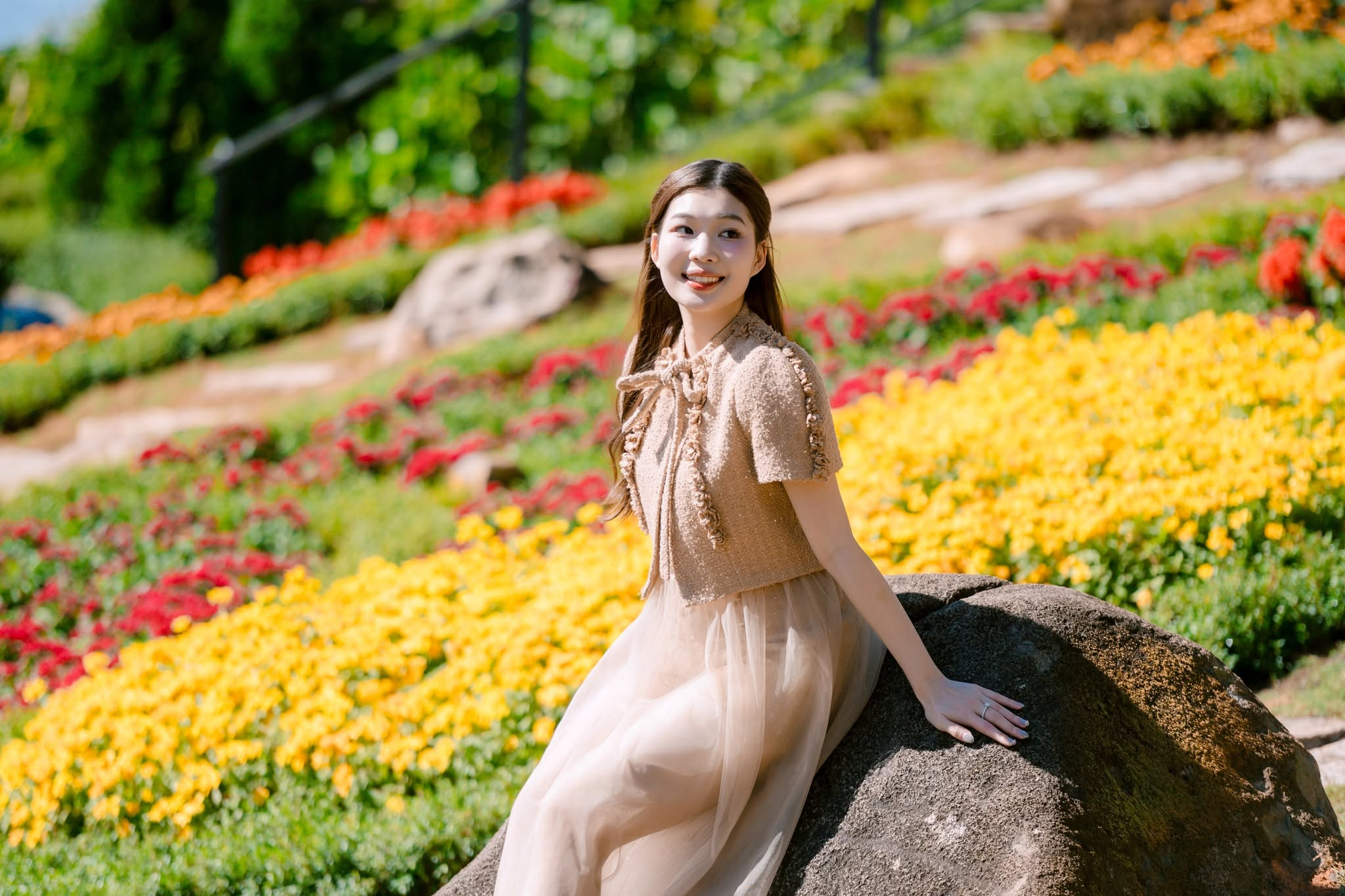
Flower gardens and natural scenery at the summit of Ba Den Mountain offer relaxing experiences alongside a journey of spiritual and cultural discovery.
The combination of natural scenery, folk beliefs and Buddhist art creates the distinctive appeal of Ba Den Mountain within a journey through Tay Ninh. While ancient pagodas provide insights into the spiritual lives of Southern Vietnamese people, the summit’s landmarks offer a perspective on the continuity and development of spiritual and cultural spaces in contemporary life. This meaningful destination also serves as an ideal starting point before visitors discover an entirely different religious tradition at the Cao Dai Holy See.
Leaving behind the mountainous landscapes and Buddhist landmarks of Ba Den Mountain, visitors can continue their cultural journey through Tay Ninh at the Cao Dai Holy See, one of Southern Vietnam’s most distinctive religious landmarks. Located in the Hoa Thanh area, the Holy See is an important spiritual centre of Caodaism, a religion founded in Vietnam in 1926. Beyond its religious significance, the complex is a prominent cultural destination reflecting the convergence of different philosophies and spiritual traditions in Vietnamese spiritual life.
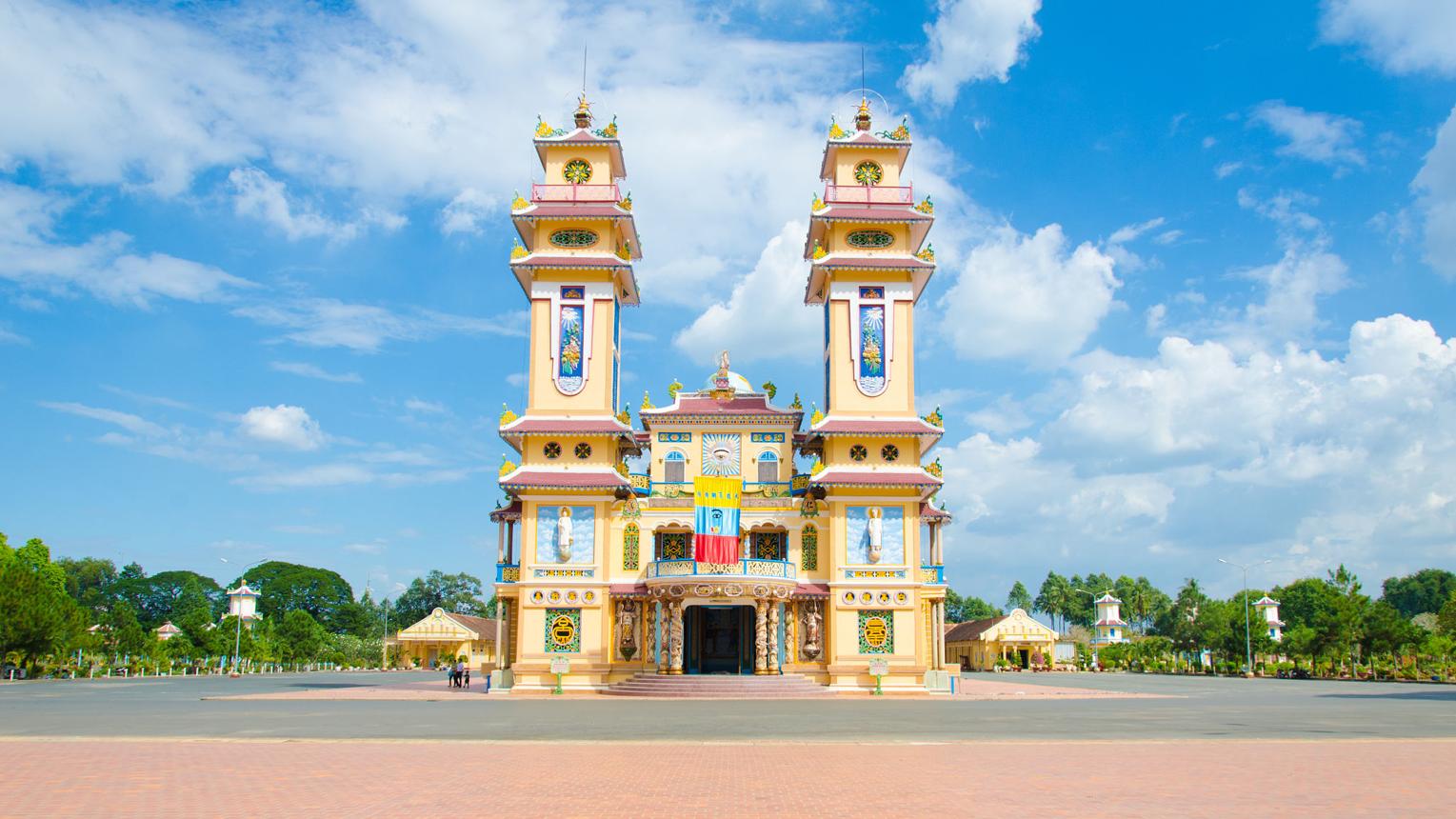
The Cao Dai Holy See is a prominent religious landmark in Tay Ninh, renowned for its distinctive architecture and vibrant colours. (Source: Collected)
The first impression upon arriving at the Cao Dai Holy See is its distinctive architecture, featuring two towering bell towers at the entrance, multi-tiered roofs and colourful decorative motifs. Inside, visitors can admire rows of pillars carved with winding dragons, ceilings decorated with clouds and skies, and a collection of meaningful religious symbols. Particularly notable is the Divine Eye, representing the Supreme Being, which appears throughout the building and has become the most recognisable symbol of Caodaism. The combination of Eastern and Western architectural elements, together with symbols reflecting Buddhism, Taoism and Confucianism, creates the Holy See’s unique appearance.
Beyond its architectural appeal, the Cao Dai Holy See offers opportunities to discover the spiritual lives of its followers through traditional religious ceremonies. One noteworthy experience is observing the four daily worship ceremonies, held at midnight, 6:00 AM, noon and 6:00 PM. In a solemn atmosphere, religious dignitaries and devotees perform ceremonies in distinctive religious attire, accompanied by ceremonial music and rituals reflecting the identity of Caodaism. For visitors, this is an opportunity to understand how an indigenous religion has preserved its spiritual values and communal practices over generations.
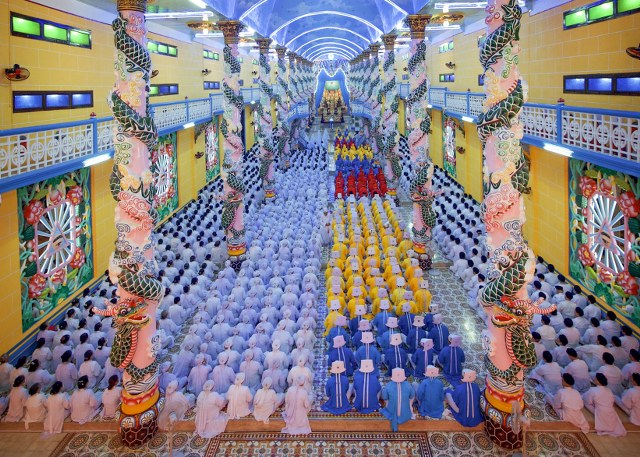
The four daily worship ceremonies at the Cao Dai Holy See offer visitors insights into the religious life and distinctive cultural traditions of Caodaism. (Source: Collected)
Another distinctive aspect of Caodaism is its philosophy of religious harmony, emphasising compassion, morality and virtuous living. These values are expressed through the Holy See’s symbols, architecture and ceremonies, offering visitors further insights into the diversity of spiritual and cultural life in Tay Ninh. While Ba Den Mountain is associated with the worship of the Linh Son Holy Mother and Buddhist culture, the Cao Dai Holy See represents a distinct religious tradition that emerged and developed in Southern Vietnam during the 20th century.
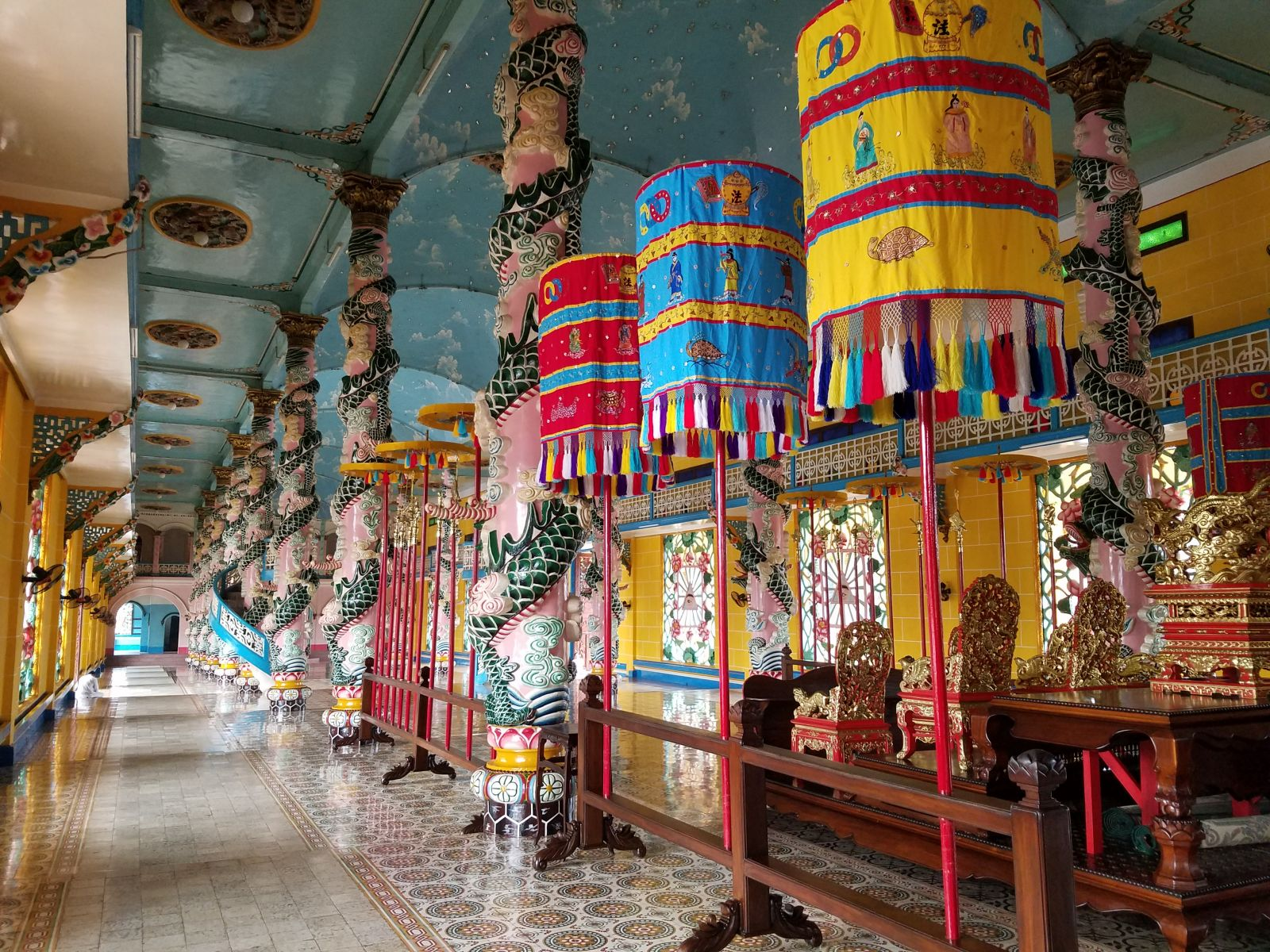
Dragon-adorned pillars and decorative motifs create the distinctive architectural beauty of the Cao Dai Holy See. (Source: Collected)
For travellers interested in cultural discovery, the Cao Dai Holy See is not merely a sightseeing and photography destination but also a place to learn about the religion’s origins, philosophies and distinctive communal practices. When visiting, travellers should dress modestly, maintain silence and follow instructions in worship areas to demonstrate respect for the sacred environment. Combined with Ba Den Mountain, this destination completes a journey through two contrasting cultural traditions that together contribute to Tay Ninh’s unique identity.
With convenient travel connections, Ba Den Mountain and the Cao Dai Holy See can easily be combined into a one-day itinerary in Tay Ninh. This itinerary is particularly suitable for visitors departing from Ho Chi Minh City or staying in Tay Ninh who wish to discover distinctive cultural and spiritual traditions without spending too much time travelling. In a single day, visitors can experience two contrasting environments: admiring mountain scenery and exploring spiritual landmarks at Ba Den Mountain in the morning, followed by discovering architecture and religious ceremonies at the Cao Dai Holy See in the afternoon.
Visitors can begin their journey at Sun World Ba Den Mountain early in the morning, around 7:30 AM, taking a cable car over lush mountain slopes to reach the 986m summit. Here, visitors can admire impressive Buddhist landmarks such as the Tay Bo Da Son Bodhisattva Statue and the Maitreya Bodhisattva Statue, explore spiritual and cultural spaces and take in Tay Ninh’s magnificent natural scenery. Beyond sightseeing, visitors can leisurely stroll through vibrant flower gardens, take photographs at scenic viewpoints or enjoy refreshments amid the expansive mountain landscape. Around 11:00 AM, the journey continues with lunch at a summit restaurant before travelling to the next destination.
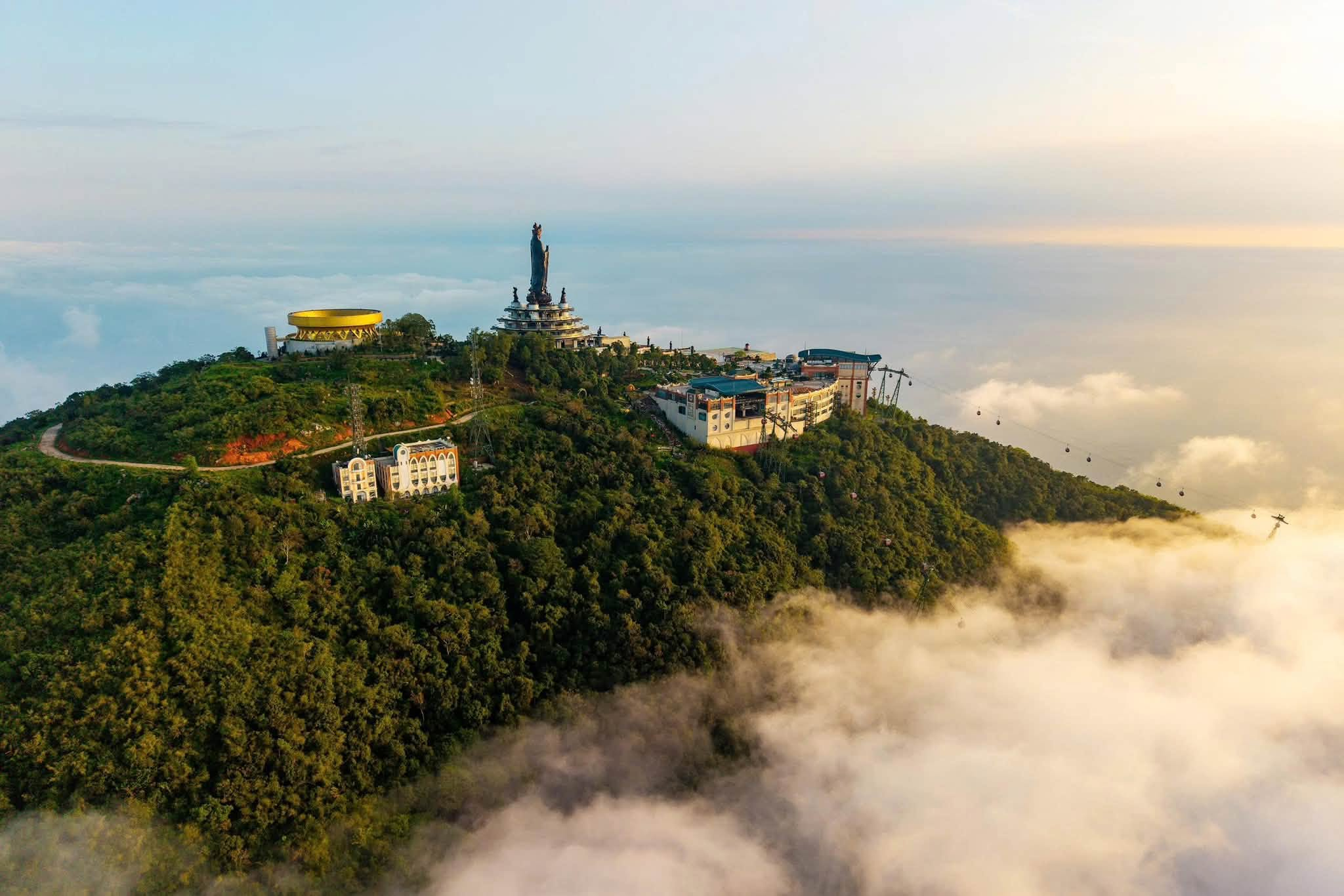
Visitors can admire impressive Buddhist landmarks and discover magnificent natural scenery from an altitude of 986m.
In the early afternoon, the journey continues at the Cao Dai Holy See, where visitors can spend approximately 1–2 hours admiring its architecture, discovering the meaning of the Divine Eye symbol and exploring the distinctive religious traditions of Caodaism.
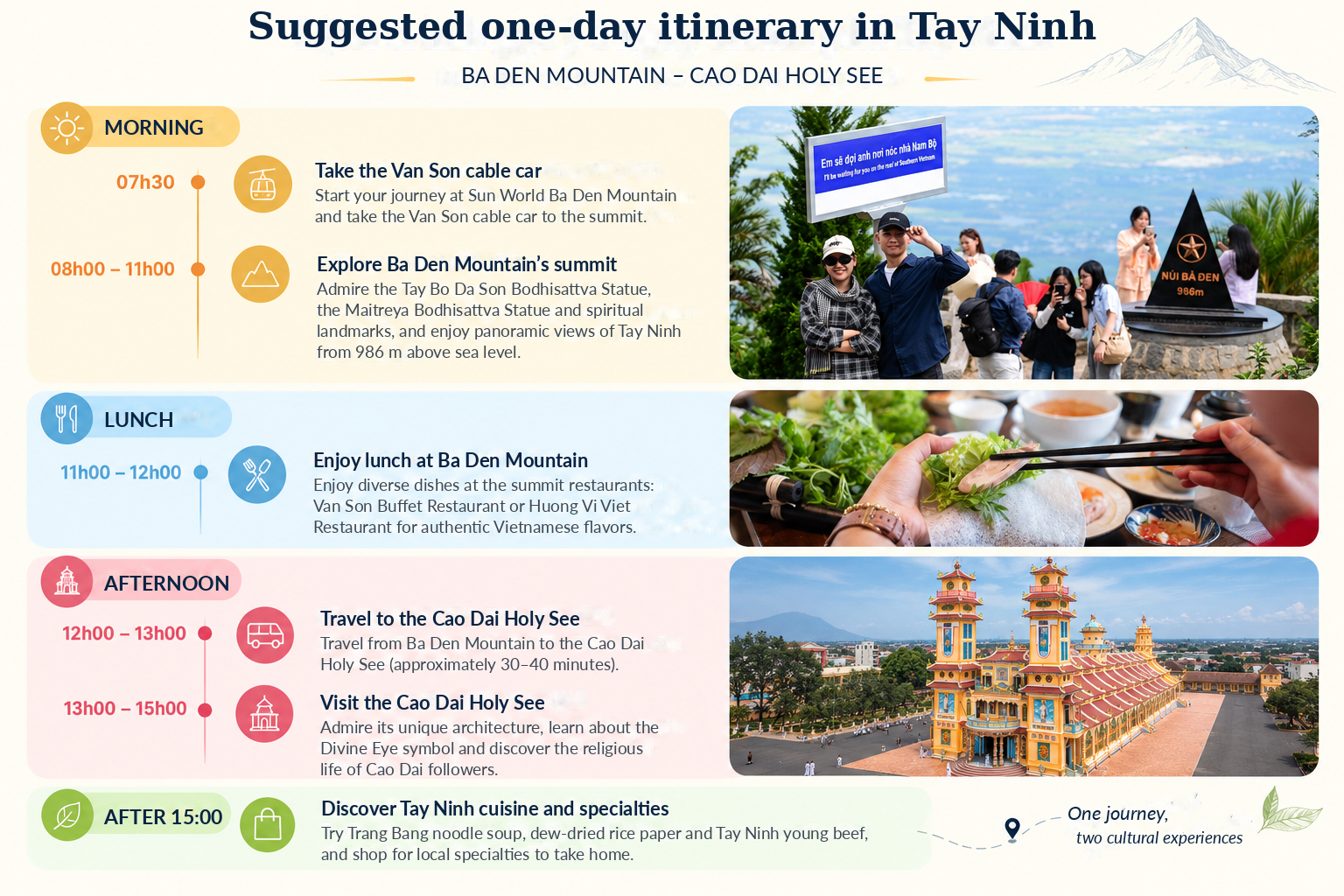
Combining Ba Den Mountain and the Cao Dai Holy See in a single day allows visitors to discover two distinctive cultural destinations in Tay Ninh.
After visiting both destinations, travellers can spend time exploring local cuisine to complete their journey. Famous dishes such as Trang Bang thick noodle soup, dew-softened rice paper rolls with boiled pork, Tay Ninh young beef and dishes served with shrimp salt offer opportunities to discover the region’s distinctive culinary culture. Visitors can also purchase rice paper, shrimp salt and other local specialities as souvenirs.
From the sacred mountain landscapes of Ba Den Mountain to the architectural beauty and distinctive religious ceremonies of the Cao Dai Holy See, this one-day journey offers diverse perspectives on Tay Ninh’s cultural and spiritual life. More than a sightseeing trip to two renowned destinations, it is an opportunity to discover traditional values, experience the harmony between nature and spiritual culture, and create lasting memories while exploring Southeastern Vietnam.
Let's start your vacation!

Special offer up to 30% when booking tickets on the Sun Paradise Land app
Related topics

