


Activites

Discovering traditional handicrafts at May Village Fansipan
Surrounded by the majestic Hoang Lien Son mountain range, May Village at Sun World Fansipan Legend offers a vibrant journey into the cultural heritage of Northwest Vietnam, where traditional handicrafts continue to be preserved through the skilled hands of local ethnic communities. Beyond admiring colorful brocade costumes and handcrafted products reflecting local identities, visitors can learn about intricate production techniques, hear the stories behind each pattern and stitch, and experience the simple rhythms of highland life.
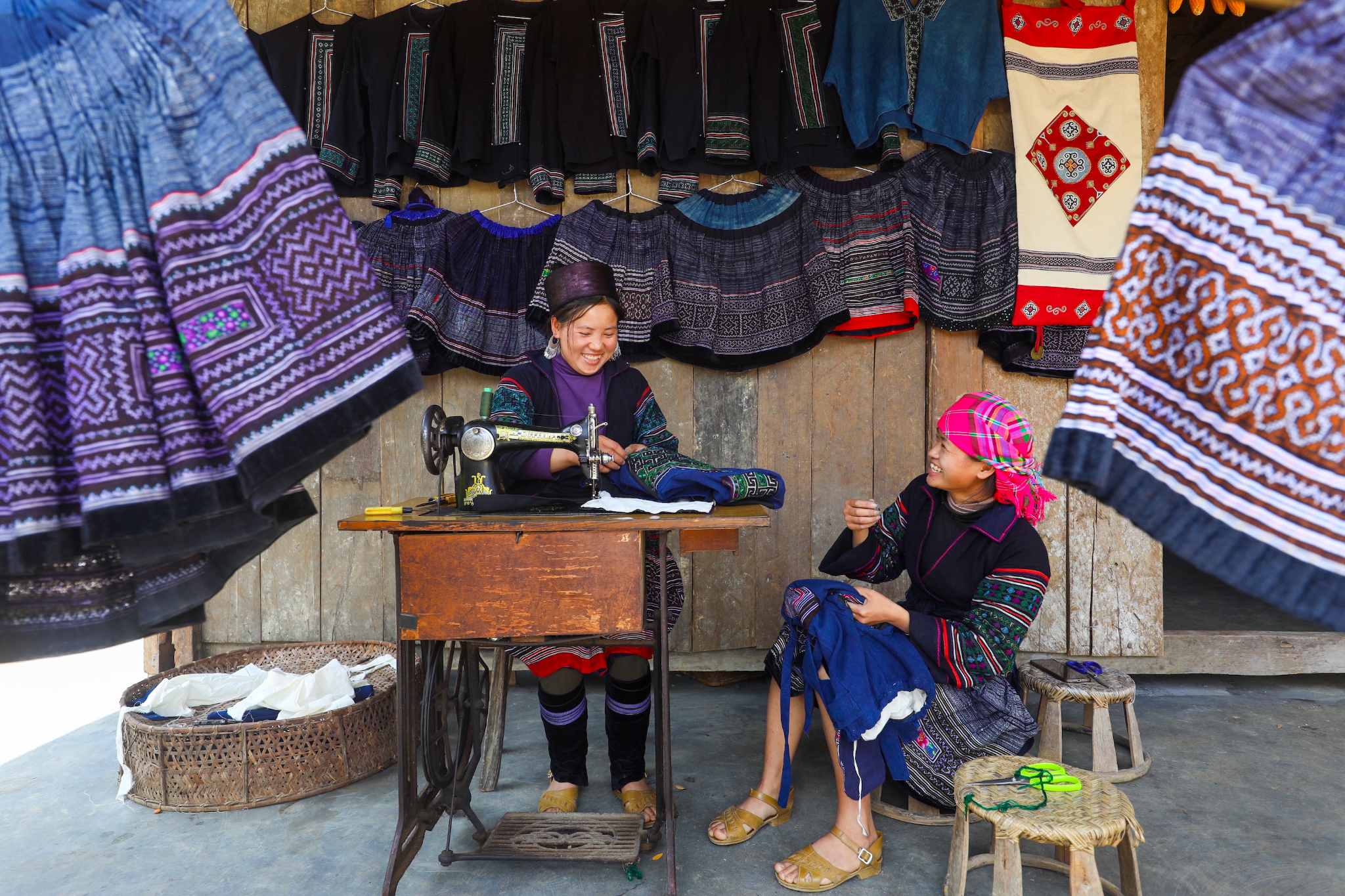
Traditional handicrafts are preserved and recreated within the cultural setting of May Village at Sun World Fansipan Legend.
What makes May Village special is the authentic and approachable way it presents cultural traditions through the everyday activities of the Hmong, Dao, Tay, Giay, and Xa Pho ethnic communities. From brocade embroidery and fabric dyeing to handicrafts associated with daily life and festivals, each experience reveals a different aspect of Northwest Vietnam's customs, lifestyles, and artistic traditions. Behind seemingly simple handmade products lie generations of craftsmanship, experience, and indigenous knowledge.
Rather than simply strolling through the village and taking photographs, visitors can spend time observing artisans at work, learning about the meanings behind traditional products, and participating in interactive activities when available. These personal encounters make a visit to May Village more memorable while offering a deeper understanding of Northwest Vietnam's cultural identity during a journey to Fansipan.
A visit to May Village offers more than an opportunity to experience the cultural atmosphere of Northwest Vietnam's ethnic communities. It also allows visitors to discover handicrafts preserved across generations. From intricate embroidery on traditional costumes and fabric-patterning techniques to handmade products used in everyday life, each craft carries its own stories of cultural heritage, customs, and the remarkable skills of highland artisans.
At May Village, the sight of ethnic women carefully working with needles and thread offers visitors an opportunity to discover one of Northwest Vietnam's most distinctive cultural traditions. For many highland communities, embroidery is more than a way to create clothing. It is also a means of preserving artistic values, customs, and stories passed down through generations. Geometric patterns, nature-inspired motifs, and distinctive color combinations all contribute to the unique identities of different ethnic groups.
In particular, the embroidery and costume decoration traditions of the Red Dao and Xa Pho communities demonstrate exceptional craftsmanship at every stage. From selecting threads and coordinating colors to creating intricate patterns, artisans require patience and skill to complete products that reflect their cultural heritage. Alongside brocade embroidery, decorative cord weaving also showcases creativity in combining colors and patterns, enriching traditional clothing and accessories.
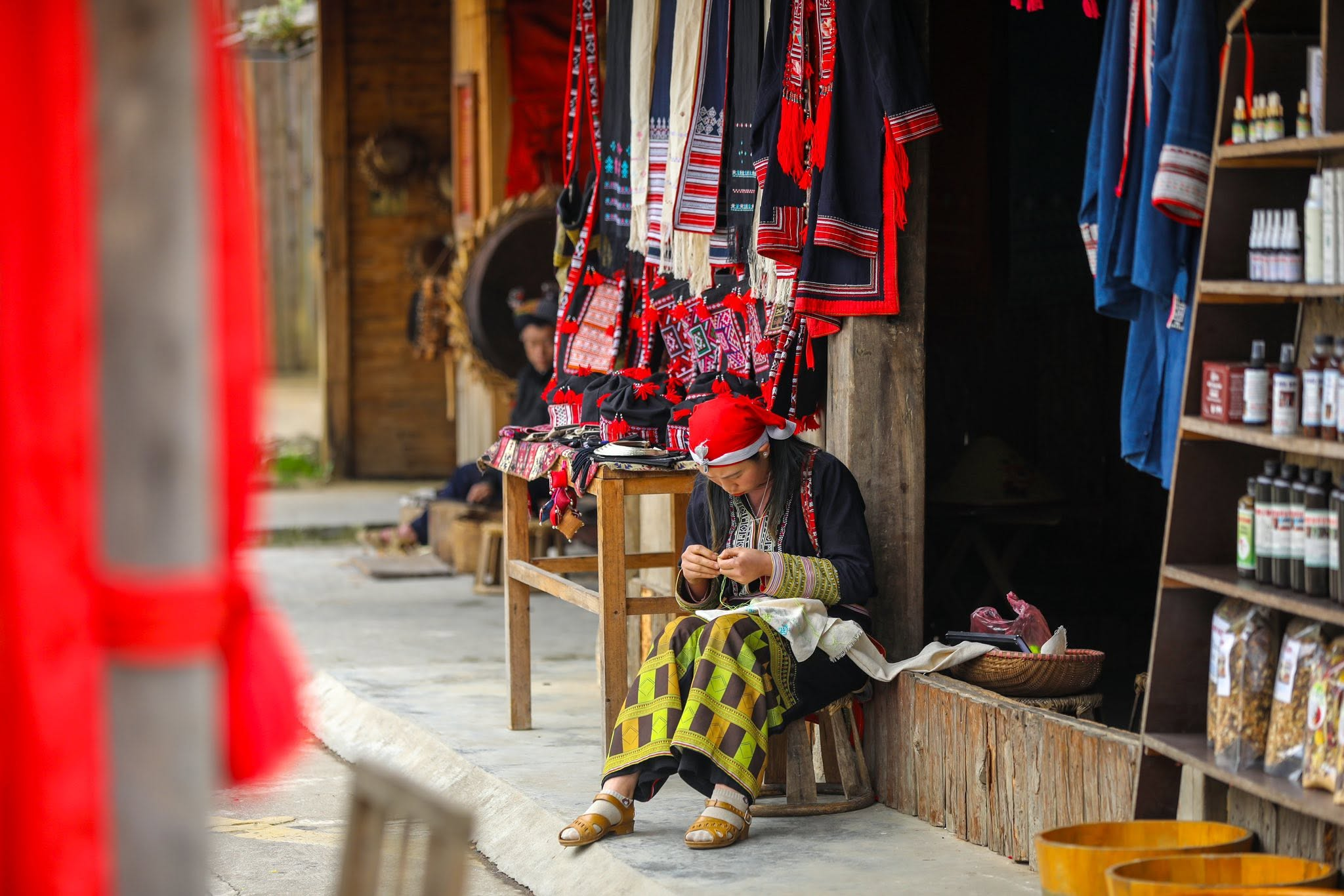
Artisans at May Village preserve Northwest Vietnam's cultural heritage through intricate embroidery on traditional costumes.
One of the most fascinating aspects of exploring embroidery at May Village is watching artisans perform techniques that may appear simple but require considerable experience. Through friendly conversations, visitors can discover the meanings of different patterns, the distinctions between ethnic costumes, and how traditional techniques are passed from one generation to the next. When guided hands-on activities are available, trying a few embroidery stitches can help visitors appreciate the dedication and craftsmanship behind each handmade product.
While embroidery adds vibrant colors to highland clothing, indigo dyeing and beeswax drawing reveal another sophisticated artistic tradition, in which colors and patterns are created using natural materials and generations of craftsmanship. Among several ethnic communities in Northwest Vietnam, particularly the Hmong, indigo-dyed fabrics are not only used for everyday clothing but also represent traditional identity and aesthetic values.
One particularly distinctive technique is beeswax drawing on fabric. Artisans use specialized tools to apply melted beeswax to the fabric's surface, creating carefully planned lines and decorative patterns. When the fabric is dyed with indigo, the wax-covered sections resist the dye, allowing the patterns to stand out after the wax is removed. This process requires precision in every stroke, careful coordination between stages, and experience in handling materials to produce harmonious designs.
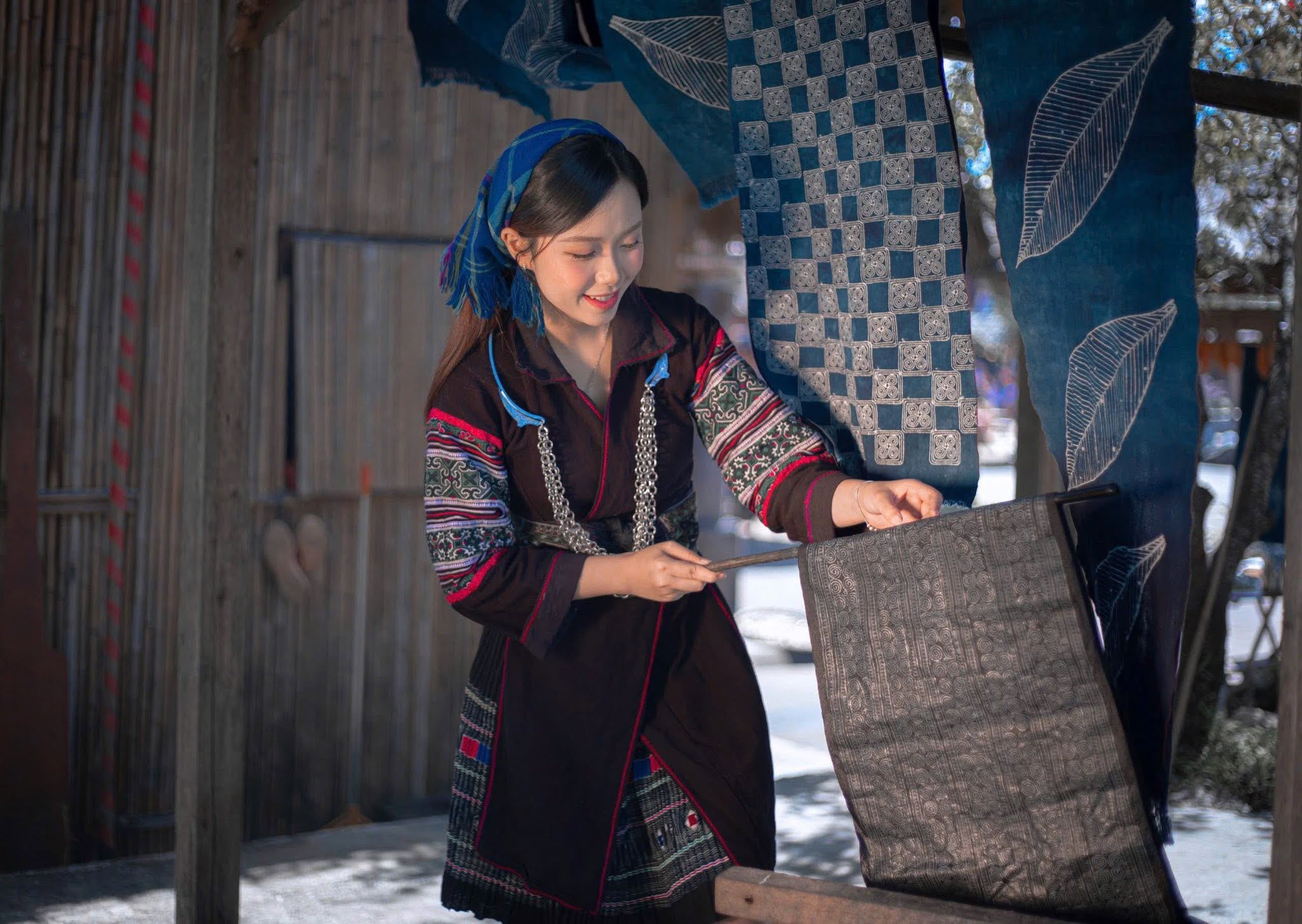
Traditional indigo dyeing and fabric-patterning techniques reflect the creativity and craftsmanship of Northwest Vietnam's ethnic communities.
Exploring traditional dyeing and pattern-making techniques allows visitors to understand how highland communities creatively use natural materials. From the deep blue tones of indigo to the intricate patterns formed with beeswax, each stage reflects the close relationship between people and their natural surroundings. If demonstrations are available during the visit, guests can observe artisans at work, learn about the materials, and discover the cultural stories behind traditional fabrics.
Alongside traditional costume making, handicrafts associated with everyday activities contribute to the rich cultural landscape of Northwest Vietnam's ethnic communities. Basket weaving is one such traditional craft, demonstrating the skill and resourcefulness of highland people in using natural materials. Bamboo, rattan, and other familiar materials are transformed into carrying baskets, storage baskets, trays, and various household and agricultural items.
The distinctive feature of basket weaving lies in its combination of practicality and craftsmanship. Creating a finished product involves several stages, including selecting materials, splitting bamboo strips, preparing surfaces, and weaving suitable structures. Sturdy carrying baskets designed for mountain paths and simple handmade baskets demonstrate an intimate understanding of materials and knowledge accumulated over generations. Each product serves a practical purpose while reflecting the communities' close connection with nature.
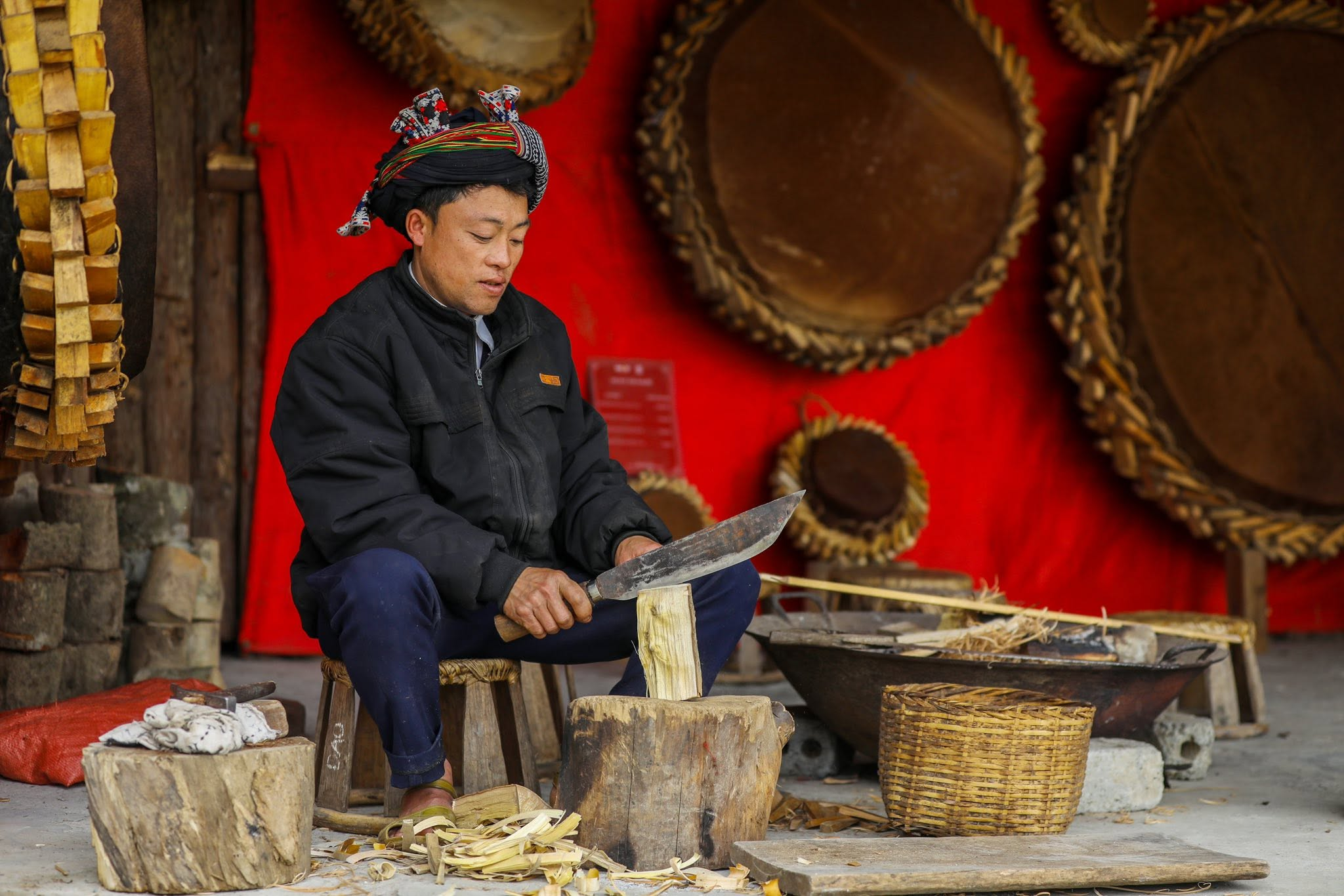
Traditional handmade products reflect the daily lives and cultural heritage of Northwest Vietnam's highland communities.
Drum making, meanwhile, reveals another aspect of highland cultural life, where handcrafted instruments are closely connected to music, festivals, and community gatherings. Making drums requires knowledge of materials, structure, and sound production. From selecting the drum body and preparing the drumhead to completing the instrument, every stage contributes to its distinctive sound. These drums are not only products of skilled craftsmanship but also important elements of cultural activities, bringing lively rhythms to traditional celebrations.
At May Village, activities introducing traditional handicrafts allow visitors to connect more closely with the everyday lives of ethnic communities. When suitable demonstrations are organized, guests can observe artisans' techniques, learn about the purposes of different products, and hear stories about how traditional crafts are preserved. Through these experiences, familiar village objects become more than practical tools; they also represent the distinctive cultural heritage of the highlands.
A day at Sun World Fansipan Legend becomes even more rewarding when visitors combine a journey to the "Roof of Indochina" with the cultural experiences available at May Village. From the magnificent mountain scenery at an elevation of 3,143 meters to a traditional village reflecting Northwest Vietnam's cultural heritage, this itinerary offers opportunities to admire nature, discover traditional handicrafts, and interact with highland ethnic communities.
Visitors can begin their journey at around 8:00 AM near the Fansipan cable car departure station, spending time exploring May Village before heading to the summit. Surrounded by traditional houses and the scenic Hoang Lien Son mountains, visitors can stroll through the village, learn about the lifestyles of the Hmong, Dao, Tay, Giay, and Xa Pho communities, and admire traditional costumes featuring distinctive colors and patterns.
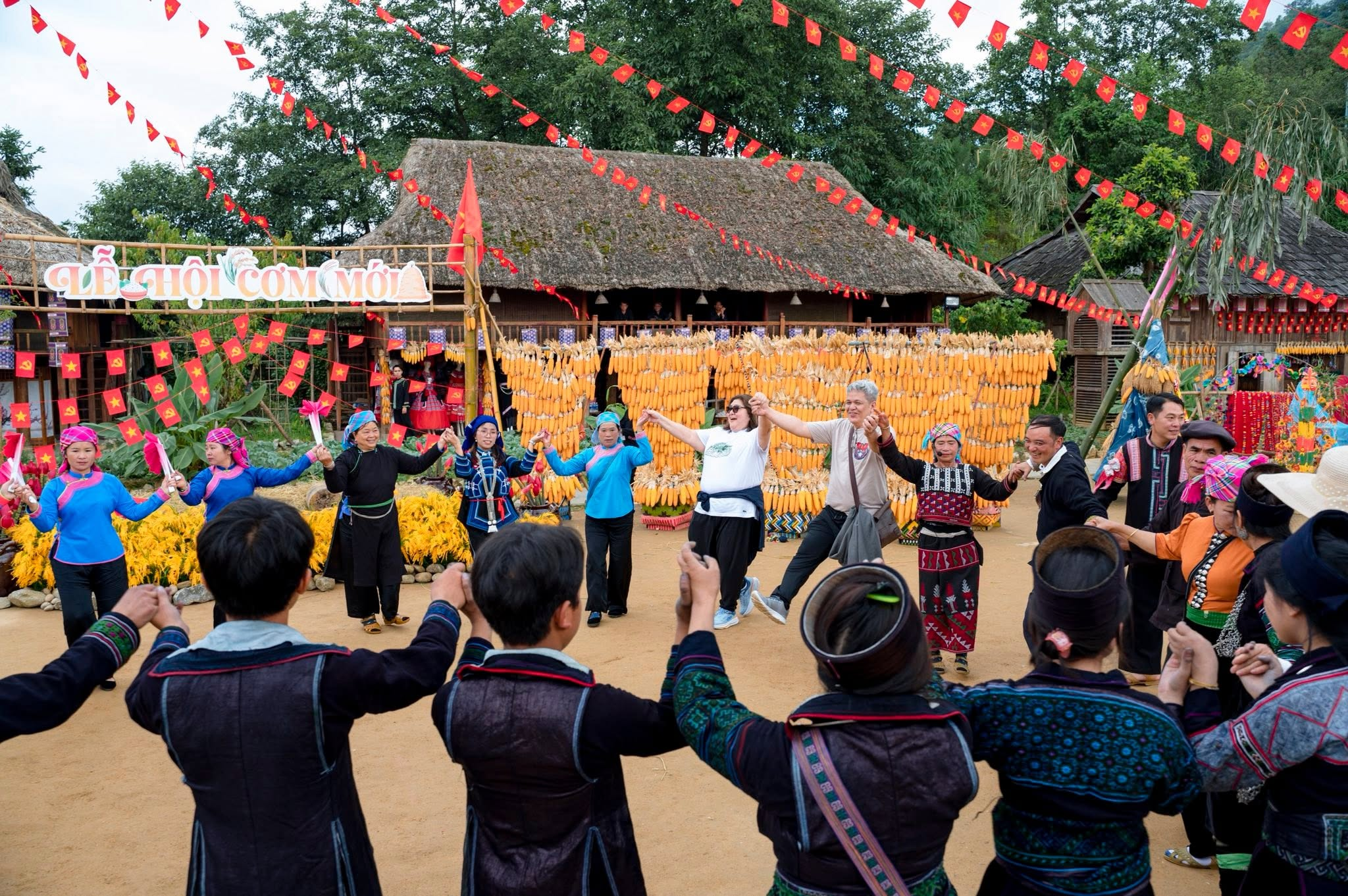
Visitors discover traditional cultural practices and interact with local ethnic communities at May Village.
From approximately 8:30 AM to 10:00 AM, visitors can prioritize the handicraft activities being introduced at May Village. Watching artisans create brocade embroidery, learning about traditional fabric-patterning techniques, and exploring handmade products offer insights into the skills and indigenous knowledge passed down through generations. If guided workshops are available, visitors can try simple techniques and hear stories about the meanings of patterns, traditional products, and the preservation of local crafts.
Between 10:00 AM and 11:30 AM, visitors can immerse themselves in a lively cultural atmosphere with traditional folk performances, the sounds of ethnic musical instruments, dances, and community activities. They can also take photographs beside traditional houses, explore ethnic costumes, and discover souvenirs reflecting Northwest Vietnam's cultural identity.
After a morning exploring local culture, visitors can take a break and enjoy lunch at Van Sam Restaurant within Sun World Fansipan Legend. The spacious dining area and diverse buffet menu provide a convenient stop to recharge before continuing the journey to the summit.
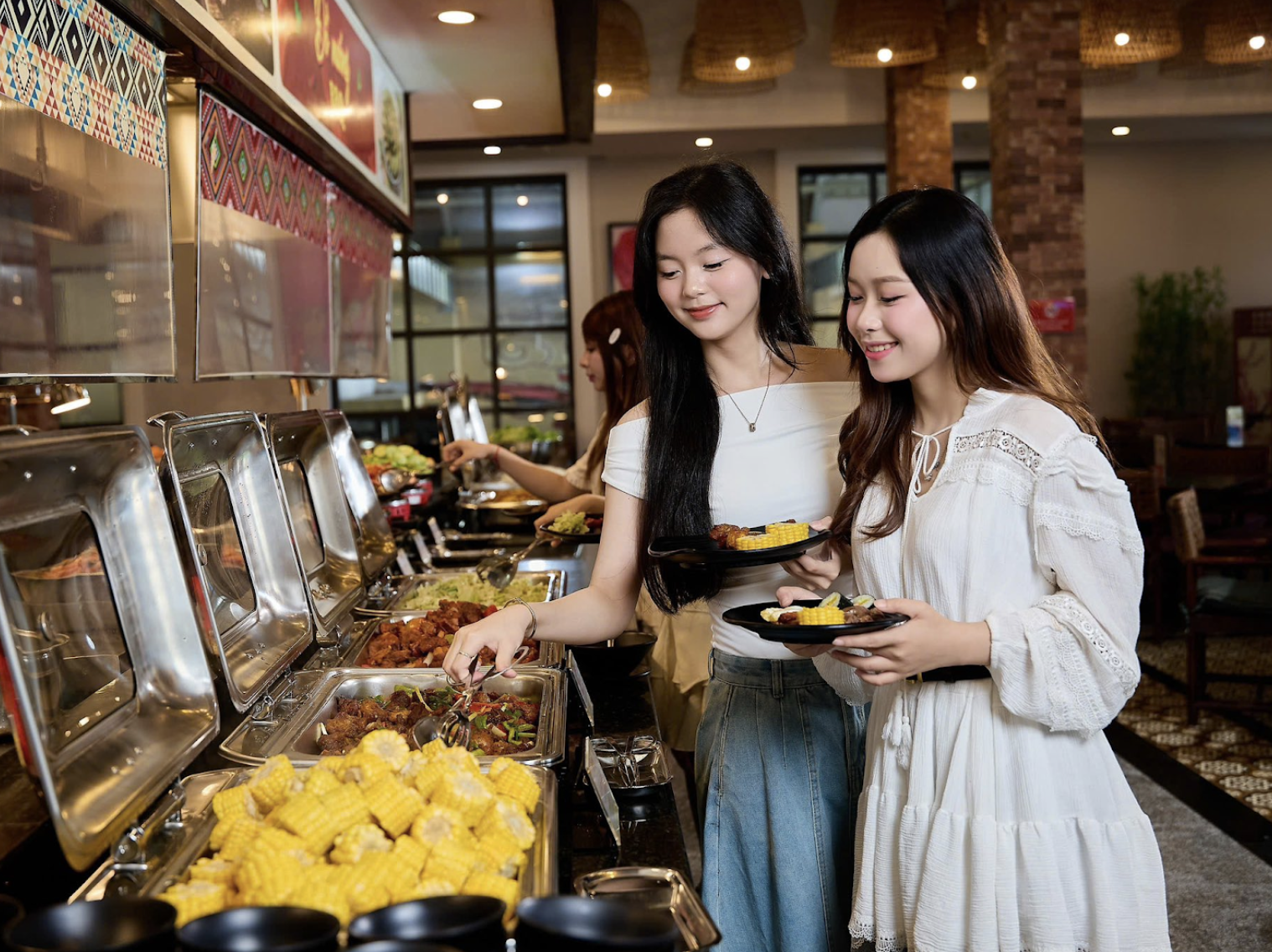
Van Sam Buffet Restaurant offers a convenient dining experience during a visit to Fansipan.
Alongside familiar dishes, visitors can discover distinctive flavors of Northwest Vietnamese cuisine, including grilled meats, highland vegetables, and regional specialties, depending on the menu available. Lunchtime also offers families an opportunity to relax, share memorable experiences from May Village, and prepare for the next stage of their journey.
At approximately 12:30 PM to 1:00 PM, visitors can begin their journey to Fansipan's summit aboard the modern cable car system. During the approximately 15-minute ride, the cabin carries passengers above deep valleys, pristine forests, and the overlapping mountain slopes of the Hoang Lien Son range. Under favorable weather conditions, white clouds drifting between the mountains create a spectacular natural panorama, offering a striking contrast to the village's cultural atmosphere experienced earlier in the day.
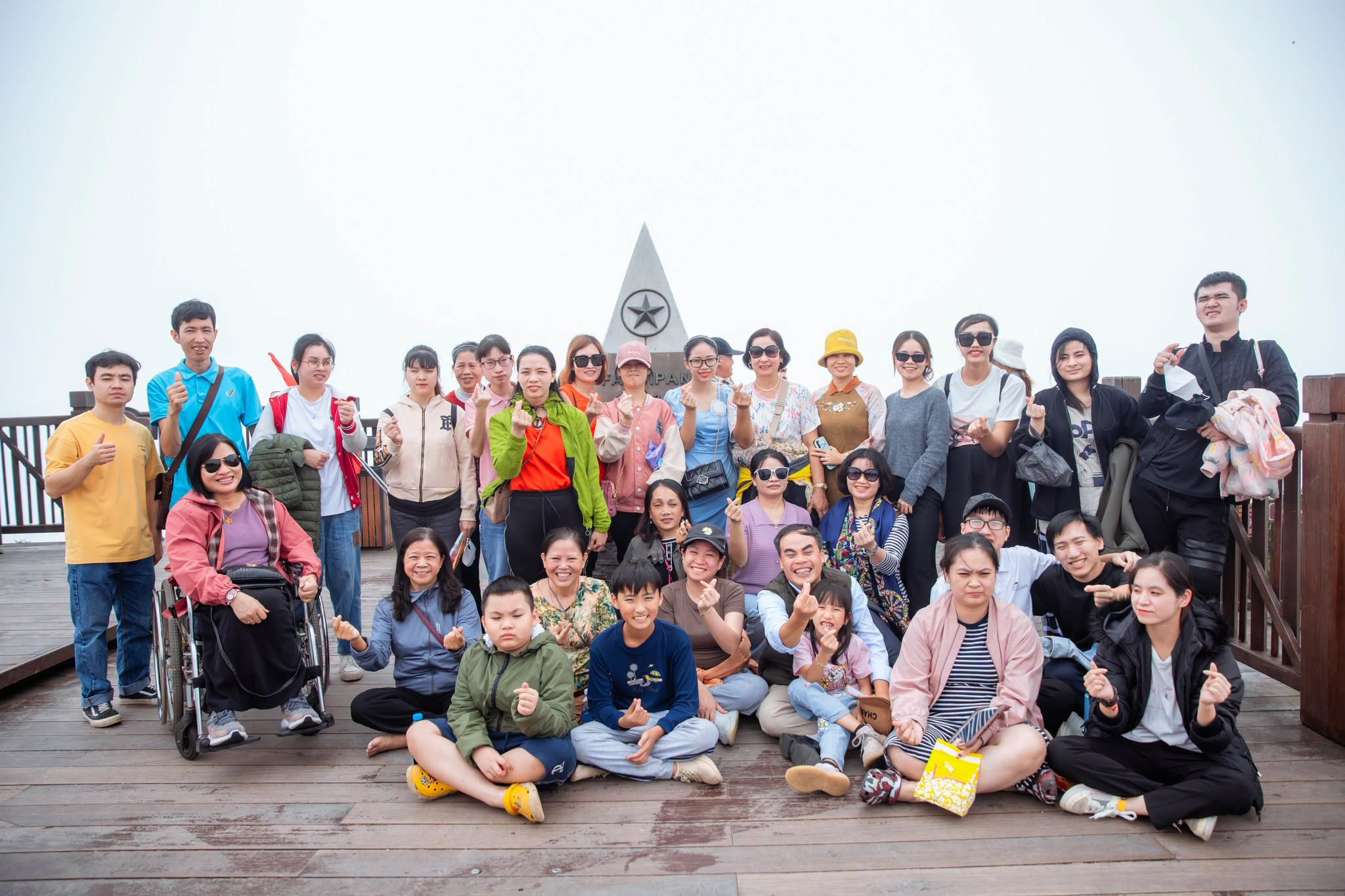
Reaching Fansipan's 3,143-meter summit is a memorable highlight of a journey through Sa Pa.
Upon arriving at the summit area, visitors can explore prominent cultural and spiritual landmarks, including the Great Amitabha Buddha Statue, Bich Van Zen Monastery, Kim Son Bao Thang Pagoda, and scenic viewpoints surrounded by mountains. The journey to the 3,143-meter Fansipan summit marker is a much-anticipated moment, offering visitors an opportunity to capture their achievement of reaching the "Roof of Indochina" while admiring the majestic Hoang Lien Son landscape.
For visitors wishing to conserve their energy, the Do Quyen mountain funicular provides a convenient way to reduce the walking distance to the summit. Visitors should allow approximately two to three hours for sightseeing, photography, and enjoying the highland atmosphere, while checking the cable car operating schedule to plan their return journey appropriately.
A visit to May Village offers more than an introduction to traditional handicrafts. It is also an opportunity to experience Northwest Vietnam's cultural heritage through intricate embroidery, colorful brocade, and everyday stories shared by highland communities. By combining village experiences with a journey to Fansipan's summit, visitors can enjoy a fulfilling day in Sa Pa, discovering both its natural beauty and cultural richness. Plan a visit to Sun World Fansipan Legend to explore the traditions of May Village and create unforgettable memories at Fansipan's summit!
Let's start your vacation!

Special offer up to 30% when booking tickets on the Sun Paradise Land app

