


Travel guide

Tracing Vietnamese heritage through the traditional attire of the highlands at May Village, Fansipan
Traditional clothing has long been an essential part of the cultural life of ethnic communities in Northwest Vietnam. Beyond its practical purpose, each outfit reflects aesthetic values, customs, and traditions preserved over generations. From the choice of colors and designs to intricate embroidery and decorative patterns, every detail contributes to the distinctive identity of each community. Even in modern life, traditional attire remains present in the daily routines of highland communities, serving as a familiar expression of ethnic identity. The clothing of the Red Dao and H'Mong people is particularly striking for its harmonious combination of colors, patterns, and traditional craftsmanship.
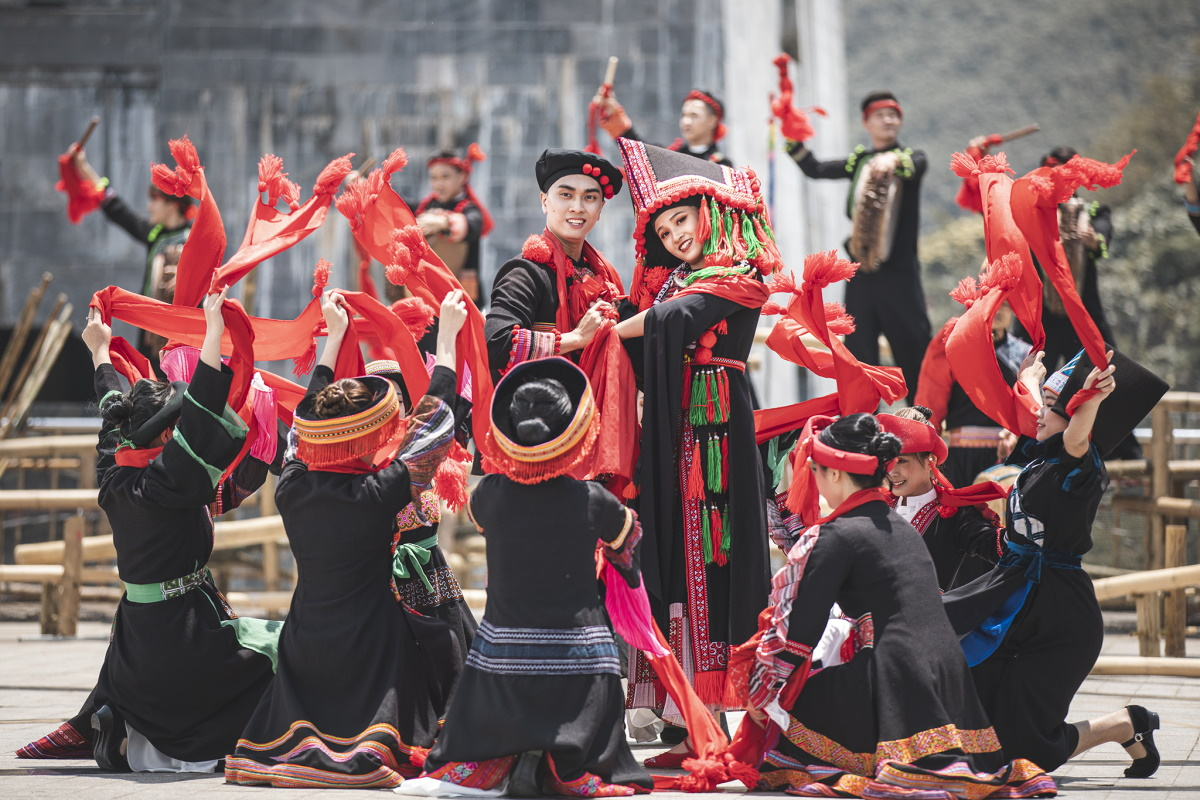
May Village at Fansipan preserves the traditional cultural beauty of ethnic communities in Northwest Vietnam.
At May Village, Fansipan, visitors can encounter these cultural treasures in an authentic highland village setting. Traditional headscarves, indigo garments, and delicate embroidery not only add vibrant colors to the surroundings but also reveal stories about local lifestyles, people, and heritage.
In celebration of Vietnam Culture Day on November 24, exploring May Village offers visitors an opportunity to appreciate the cultural diversity of Vietnam's ethnic communities, where traditional values continue to be preserved and passed down through generations.
One of the most recognizable features of traditional Red Dao clothing is the striking red headscarf worn by women. Against the mountainous landscape of Northwest Vietnam, this vibrant color creates a distinctive visual highlight, allowing visitors to recognize the unique beauty of Red Dao women's attire from their very first encounter.
Beyond its aesthetic appeal, traditional clothing is closely connected to the community's cultural life and customs. Over generations, distinctive ways of dressing, combining colors, and decorating garments have been preserved as an important expression of Red Dao identity and pride.
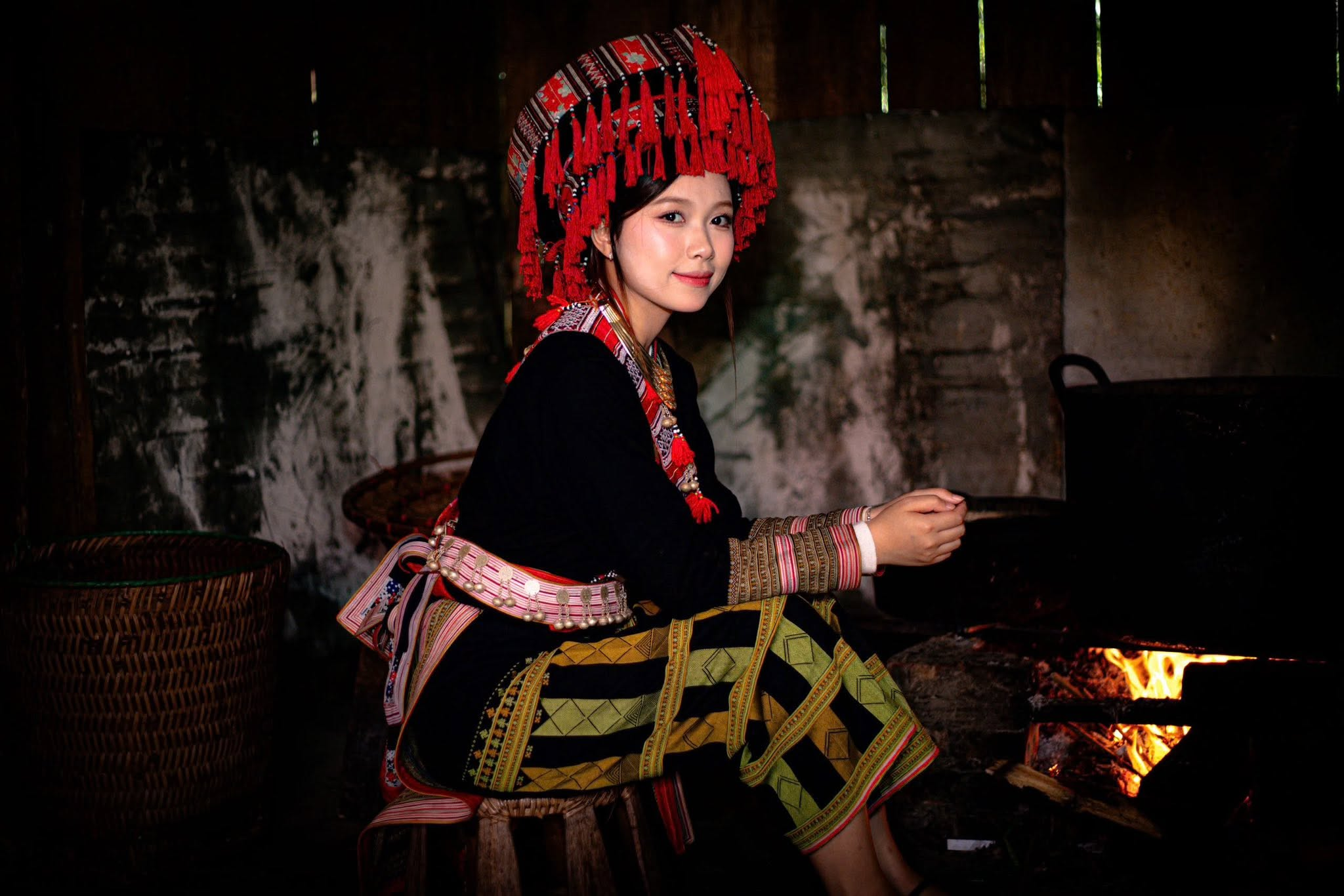
The vibrant red headscarf is a distinctive feature of traditional Red Dao women's clothing.
Another remarkable feature of Red Dao attire is its meticulously handcrafted embroidery. Against dark fabric backgrounds, decorative details in red, white, and other contrasting colors create a harmonious yet visually striking appearance. Every stitch reflects the patience, skill, and artistic sensibility of highland women.
Completing a traditional outfit requires considerable time for preparation, embroidery, and decoration. The patterns are more than ornamental details; they are connected to customs, aesthetic traditions, and cultural values passed down within the community. This dedication gives each garment its own distinctive beauty, difficult to replicate through ordinary mass-produced clothing.
Alongside the headscarf, the combination of jackets, trousers, belts, and decorative accessories contributes to the recognizable appearance of Red Dao women's traditional attire. Each element plays a role in the overall outfit, balancing practicality with cultural expression.
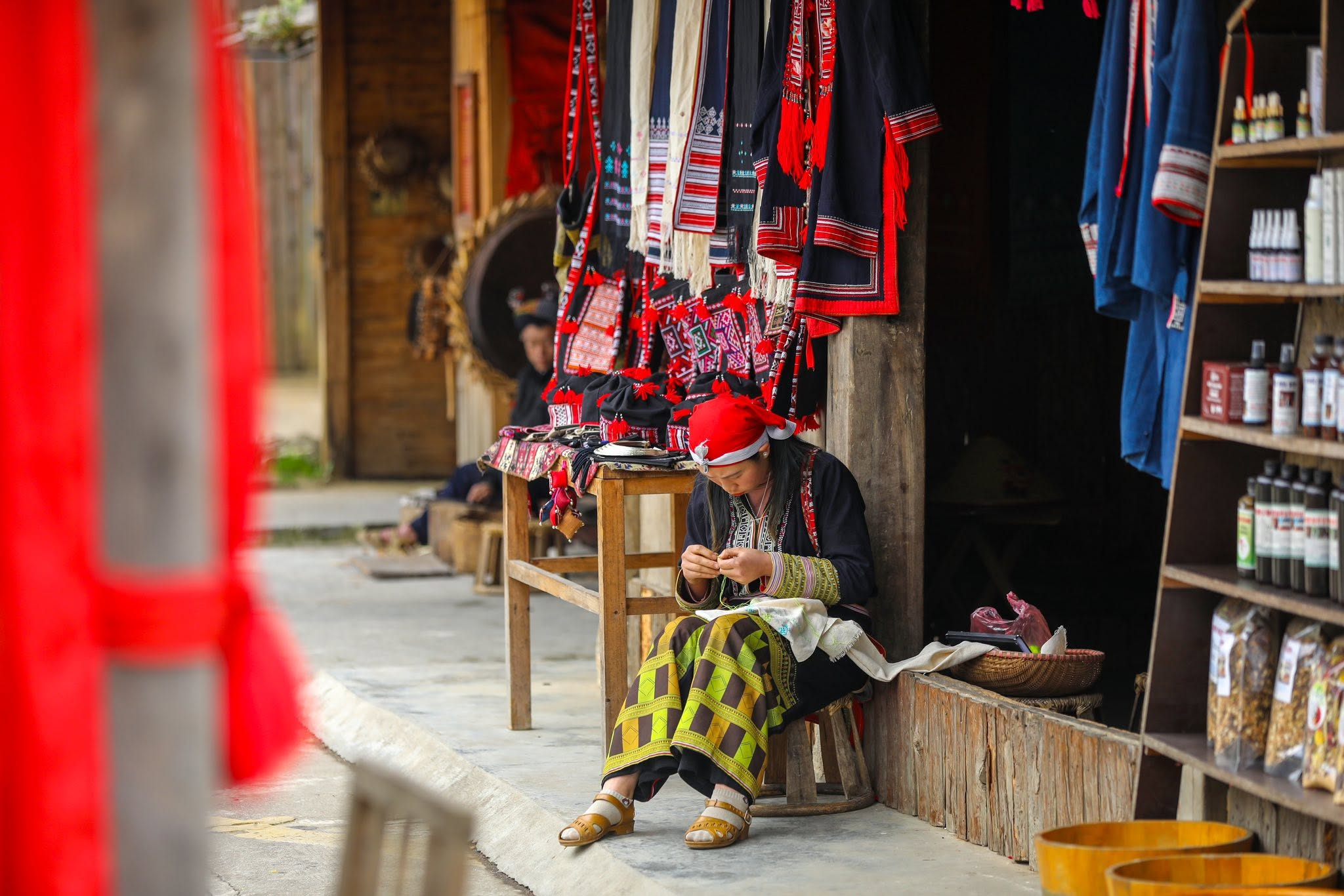
Intricate embroidery on Red Dao clothing reflects the craftsmanship and artistic sensibility of highland women.
What makes these garments especially meaningful is that they are not limited to festivals or important ceremonies but remain part of village life. The familiar image of a Red Dao woman wearing her red headscarf is therefore closely associated with everyday routines and pride in cultural heritage.
At May Village, Fansipan, visitors can take time to observe the details of traditional clothing, from the way headscarves are wrapped and colors are combined to the patterns embroidered onto fabric. Conversations with local residents, when possible, can offer deeper insights into how the garments are made and what their decorative elements represent.
Within the highland village landscape, the vibrant red of Red Dao clothing not only highlights the beauty of Northwest Vietnam's people but also represents cultural values preserved across generations. It is one of the memorable aspects of visiting May Village, particularly for travelers interested in traditional culture.
While Red Dao clothing stands out for its vibrant red headscarves, traditional H'Mong attire at May Village has a distinctive appeal through its deep indigo tones and carefully crafted patterns. The combination of colors, materials, and decorative details creates an appearance that is both rustic and captivating.
Indigo has long been associated with the daily lives of many H'Mong communities, particularly in traditional clothing. This color conveys a simple beauty closely connected to nature and mountain life. Against indigo fabric, decorative details are skillfully arranged to create distinctive accents while maintaining an overall sense of harmony.
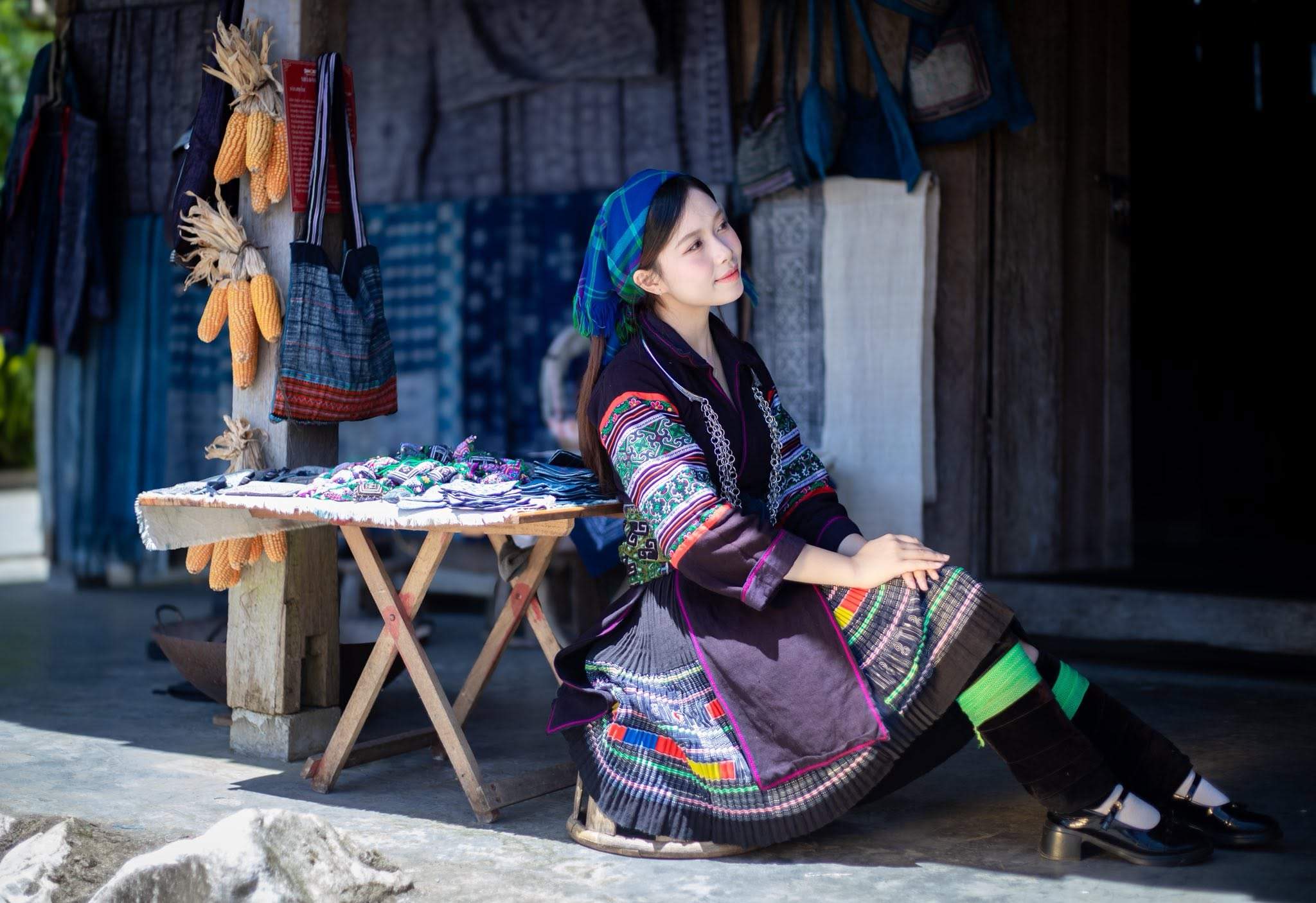
Indigo tones and distinctive patterns create the rustic yet refined beauty of traditional H'Mong attire.
One of the most fascinating aspects of H'Mong clothing is the traditional art of pattern-making. Depending on the community subgroup and type of garment, patterns may be created through techniques such as embroidery, fabric appliqué, or decoration on dyed cloth. Geometric designs, pattern arrangements, and color combinations demonstrate the distinctive artistic sensibility of highland communities.
Behind this beauty lies a labor-intensive process requiring patience and skilled hands. From preparing materials and creating colors to completing decorative details, each stage contributes to garments that carry a unique cultural identity. These skills have been preserved and taught across generations, helping sustain traditional craftsmanship and community heritage.
The significance of traditional clothing extends beyond decorative beauty. It also reflects the relationship between people, their natural environment, customs, and aesthetic values. Every pattern, color combination, and garment design contributes to the diversity of H'Mong clothing traditions while highlighting differences among community subgroups.
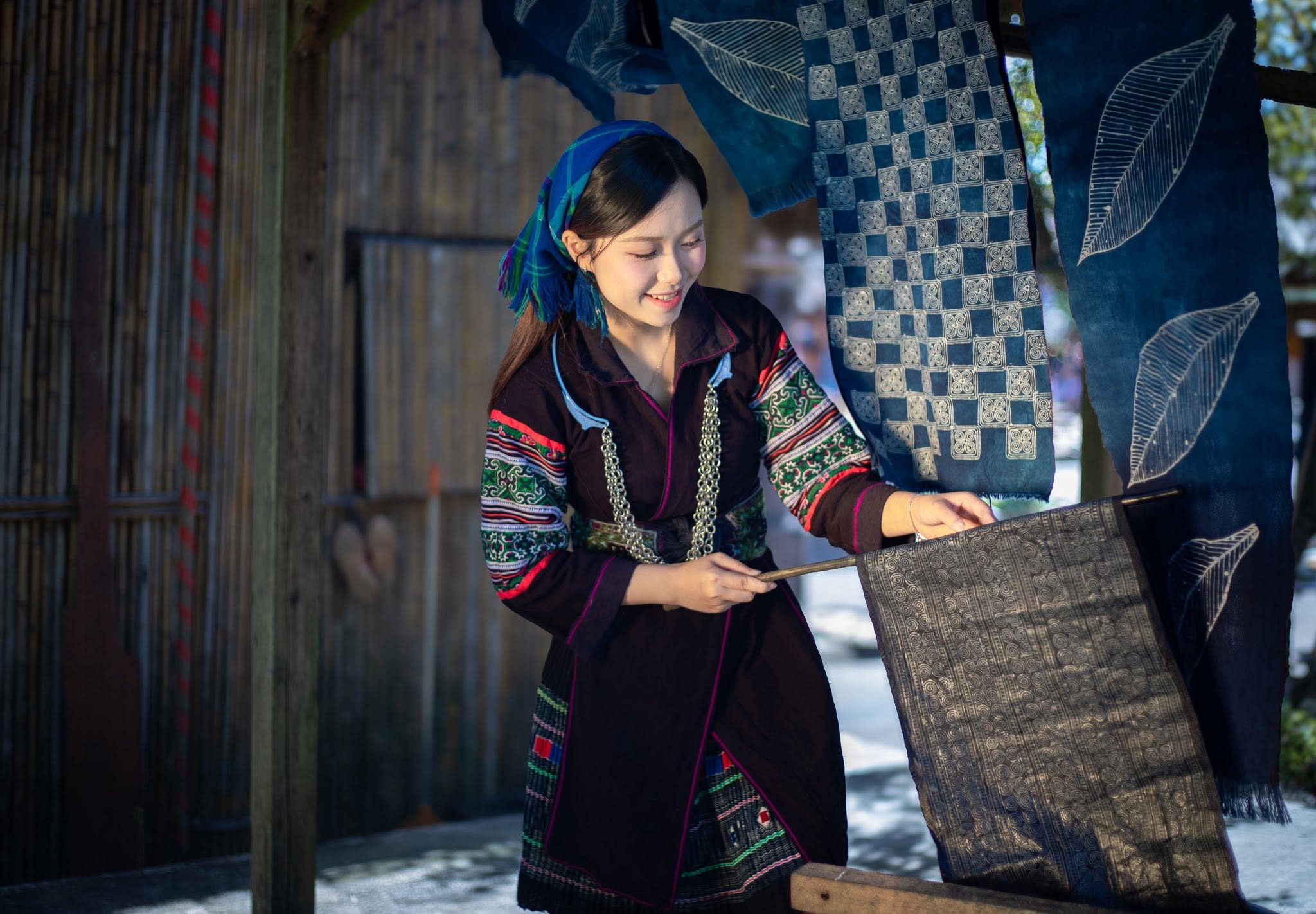
Carefully crafted patterns on H'Mong clothing preserve cultural heritage and traditional craftsmanship.
At May Village, Fansipan, the beauty of traditional H'Mong attire can be experienced within the everyday setting of village life. Visitors can admire these garments while gaining a sense of how traditional clothing remains connected to the daily lives of local residents.
During a visit, take a moment to appreciate the smaller details of each outfit. These may include patterns along the sleeves, decorative borders, or subtle variations of color against indigo fabric. Such seemingly simple elements contribute to the distinctive beauty of H'Mong traditional clothing.
When placed alongside the vibrant red of Red Dao attire, the indigo tones and traditional patterns of H'Mong garments further highlight the cultural richness of Northwest Vietnam. Each community expresses its identity differently, yet both share a deep respect for values inherited from previous generations.
Encounters with local residents at May Village also provide opportunities to learn more about traditional clothing and highland culture. Rather than simply admiring garments or taking photographs, listening to stories about how clothing is made, worn, and preserved can turn a visit into a meaningful cultural experience.
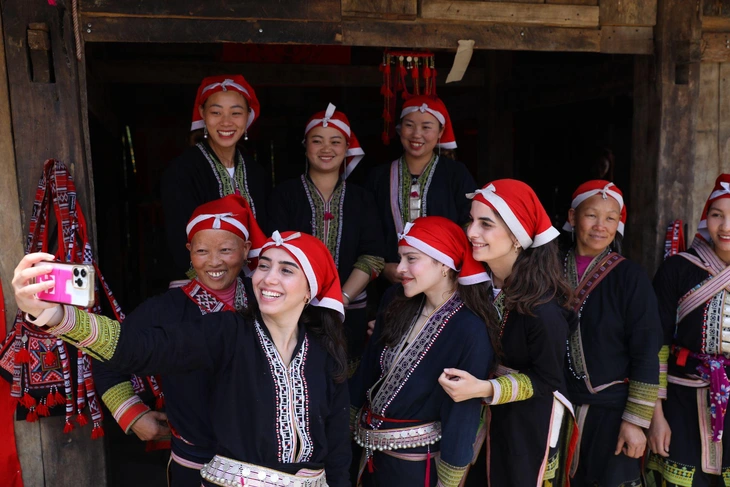
Visitors can discover the cultural beauty of Northwest Vietnam through traditional attire and encounters with local residents at May Village.
Amid the mountainous landscape of Fansipan, the indigo of H'Mong attire and the vibrant red of Red Dao clothing create a rich cultural tapestry. These garments not only bring color to May Village but also highlight the value of traditional craftsmanship, customs, and heritage that continue to thrive in modern life.
In celebration of Vietnam Culture Day on November 24, tracing Vietnamese heritage through the traditional attire of May Village offers visitors an opportunity to discover and appreciate the cultural identity of Northwest Vietnam. From the red headscarves of the Red Dao to the indigo tones and intricate patterns of H'Mong garments, every outfit tells its own story of people, customs, and values preserved through generations. Visit Sun World Fansipan Legend, spend time exploring May Village, and experience the beauty of traditional culture through every stitch and fold. Sometimes, the most memorable moments of a journey through Northwest Vietnam begin with the simple colors of everyday village life.
Let's start your vacation!

Special offer up to 30% when booking tickets on the Sun Paradise Land app
Related topics

