


Promotions

Chieng Lau Village: A peaceful experience hidden amidst the mountains and forests of Pu Luong
Ban Chieng Lau is located in the heart of the Pu Luong tourist area, Thanh Hoa province, about 5km from Canh Nang town (now Ba Thuoc commune). This small village lies at the foot of the mountain, embracing the clear blue Cham stream, creating a poetic, picturesque scene. Unlike Ban Don with its bustling crowds of tourists, Ban Chieng Lau retains the slow, leisurely pace of life in the Pu Luong highlands.
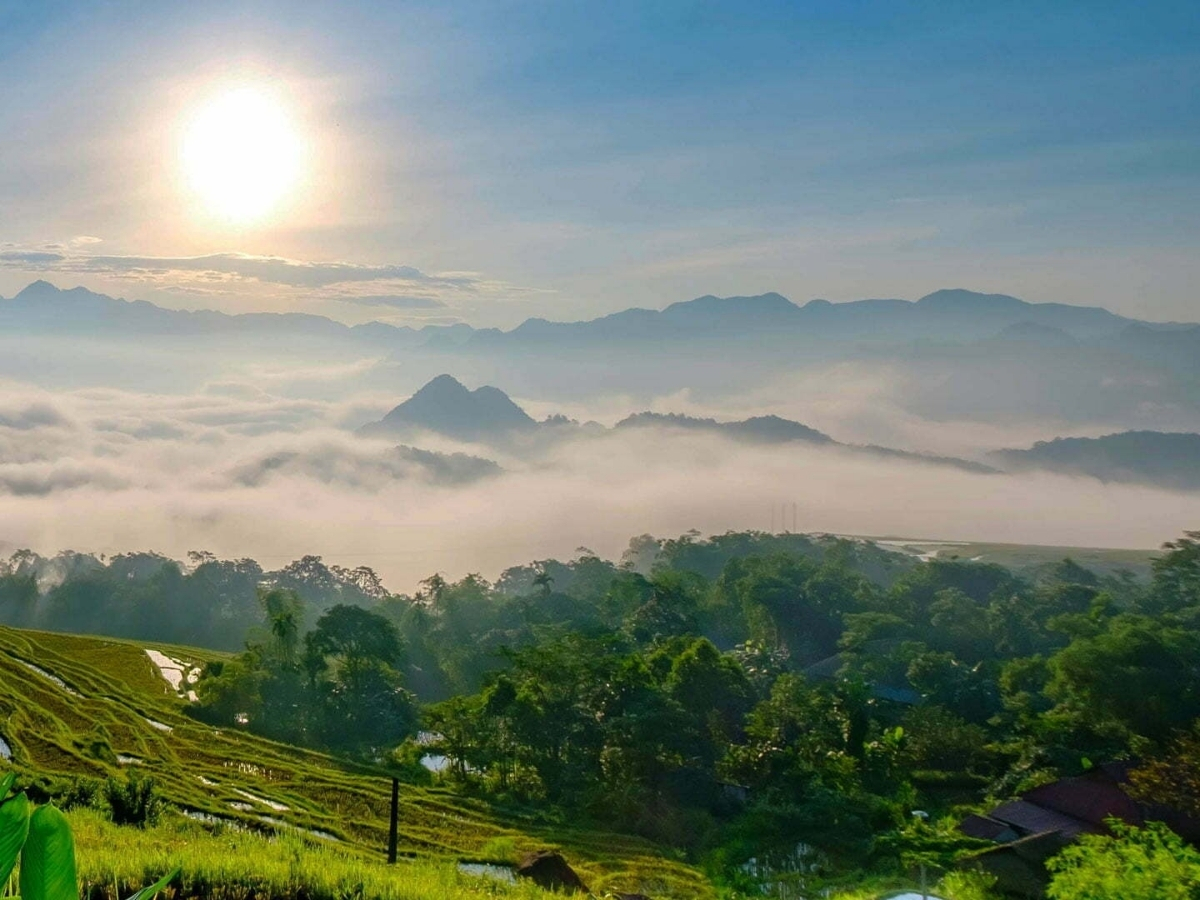
Chieng Lau village peaceful amidst the mountains and forests of Pu Luong. (Source: Collected)
The first thing that impresses visitors is dozens of giant bamboo water wheels (guong nuoc) spinning steadily by the stream. These wheels are not only tools for irrigation but also a distinctive cultural symbol of the Thai people here. The rhythmic sound of the water wheels combined with the babbling of the stream makes visitors feel like they have entered a symphony of the mountains and forests.
For those who love backpacking, the journey to Chieng Lau village in particular and the Pu Luong ecological tourist area in general by motorbike will bring many interesting experiences. Visitors can follow National Highway 6 or National Highway 15C, both routes offer magnificent mountain scenery. The advantage of this mode of transport is that you can stop anywhere to admire the scenery and take photos. However, visitors should also note that the road to Chieng Lau village has many steep passes and sharp turns, so a steady hand and long-distance driving experience are required.

The journey to Chieng Lau village is full of beautiful natural mountain and forest scenery. (Source: Collected)
For convenience and economy, visitors can choose a bus from Hanoi to Ba Thuoc commune, with ticket prices ranging from 250,000–350,000 VND per trip. From here, continue to hire a taxi or motorbike taxi to enter the Pu Luong tourist area and reach Chieng Lau village. The total travel time is about 5–6 hours.
The final stretch into Chieng Lau village is particularly interesting as it requires crossing a small, charming wooden bridge over the Cham stream. This bridge is not only the only entrance to the village but also a popular check-in spot for many tourists. Under the bridge, large bamboo water wheels turn peacefully, creating a rustic yet romantic and unforgettable scene.
The most ideal time to explore Chieng Lau village is the ripe rice season, usually falling in late May - early June and late September - early October. At that time, the terraced fields stretching from the foot of the mountain to the stream banks turn a brilliant golden color. The morning and late afternoon sunlight shines down, making each grain of rice look as if it's covered in a layer of sparkling glitter.
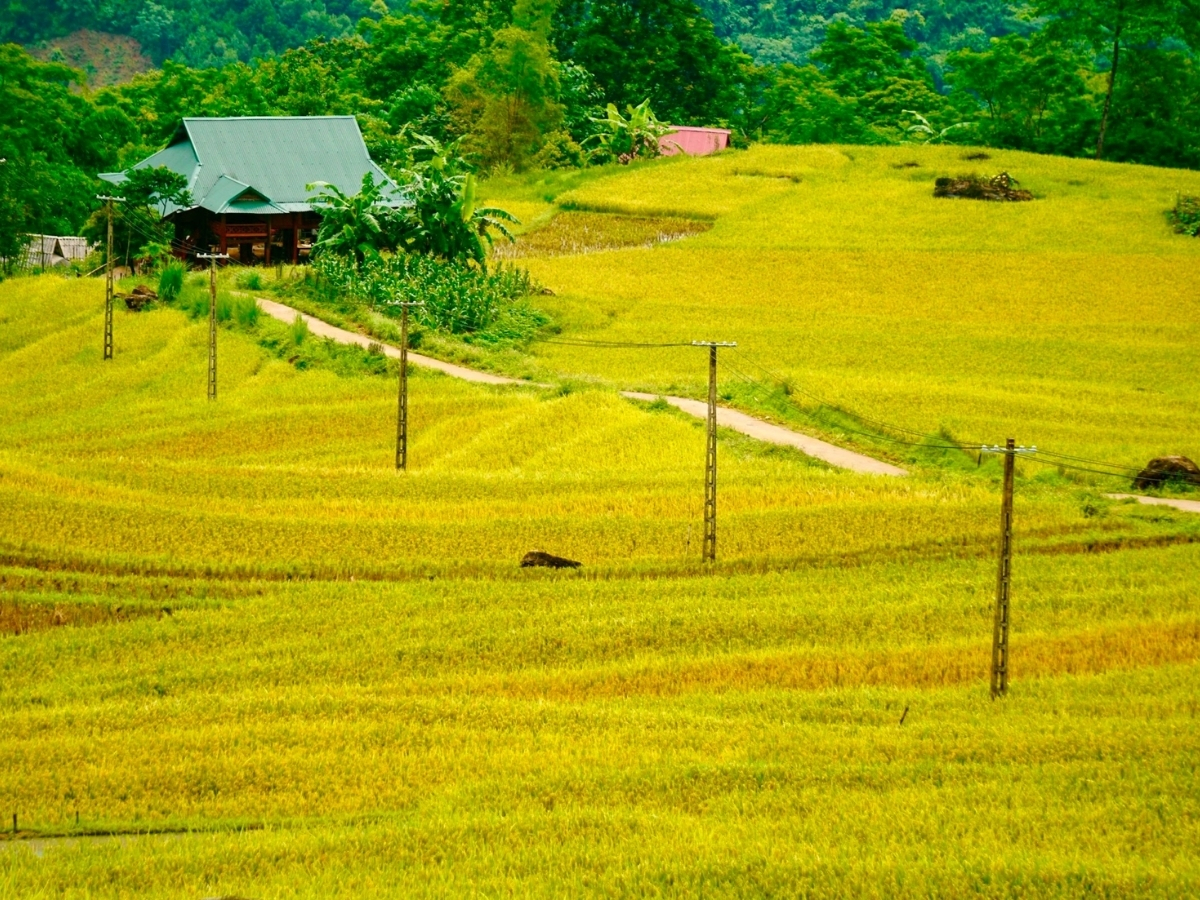
The ripe rice season is an indispensable "specialty" in the Pù Luông mountain region. (Source: Collected)
This scenery is especially beautiful around 6-7 AM or 4-5 PM, when the golden light is warmest. Tourists can walk along the paths between the fields, listen to the rustling of rice in the wind, and feel the rare tranquility of the highlands. This is also the season when the people of Chieng Lau village are busiest with rice harvesting, creating vivid moments of rural life.
Besides the vibrant beauty of the ripe rice season, Chieng Lau village also possesses another charm on winter mornings. Around December to February, thick fog covers the entire valley, creating an ethereal scene like a fairyland.
The morning temperature usually ranges from 12-15°C, making the air fresh and cool. The bamboo water wheels still turn steadily in the white mist, creating an indescribably poetic image. Early risers can witness the moment the mist gradually dissipates, revealing each stilt house, each terraced field appearing as if from a fairy tale.
Experiencing bamboo rafting on Cham stream is an unmissable activity when visiting Chieng Lau village. This stream winds its way with a depth of 0.5-1.2 meters, its water crystal clear all year round, making it very suitable for rafting. Each bamboo raft can carry 2-4 people, skillfully steered by local people through bends and gentle rapids.

Rafting is an unmissable experience in Chieng Lau village. (Source: Collection)
Throughout the approximately 30-45 minute journey, visitors will admire Chieng Lau village from a completely different perspective. On both sides of the stream are lush green terraced fields, steadily rotating bamboo water wheels, and traditional stilt houses hidden behind green canopies. The cost for a raft trip is usually around 50,000 VND/person, depending on the journey's length.
Located near the famous Cham Stream Water Wheel site, Chieng Lau Dam (also known as Chieng Lau) possesses a tranquil beauty that few people know about. Belonging to Chieng Lau village – the ancient home of the Black Thai ethnic group, the dam is associated with rice cultivation and daily life by the cool streams.
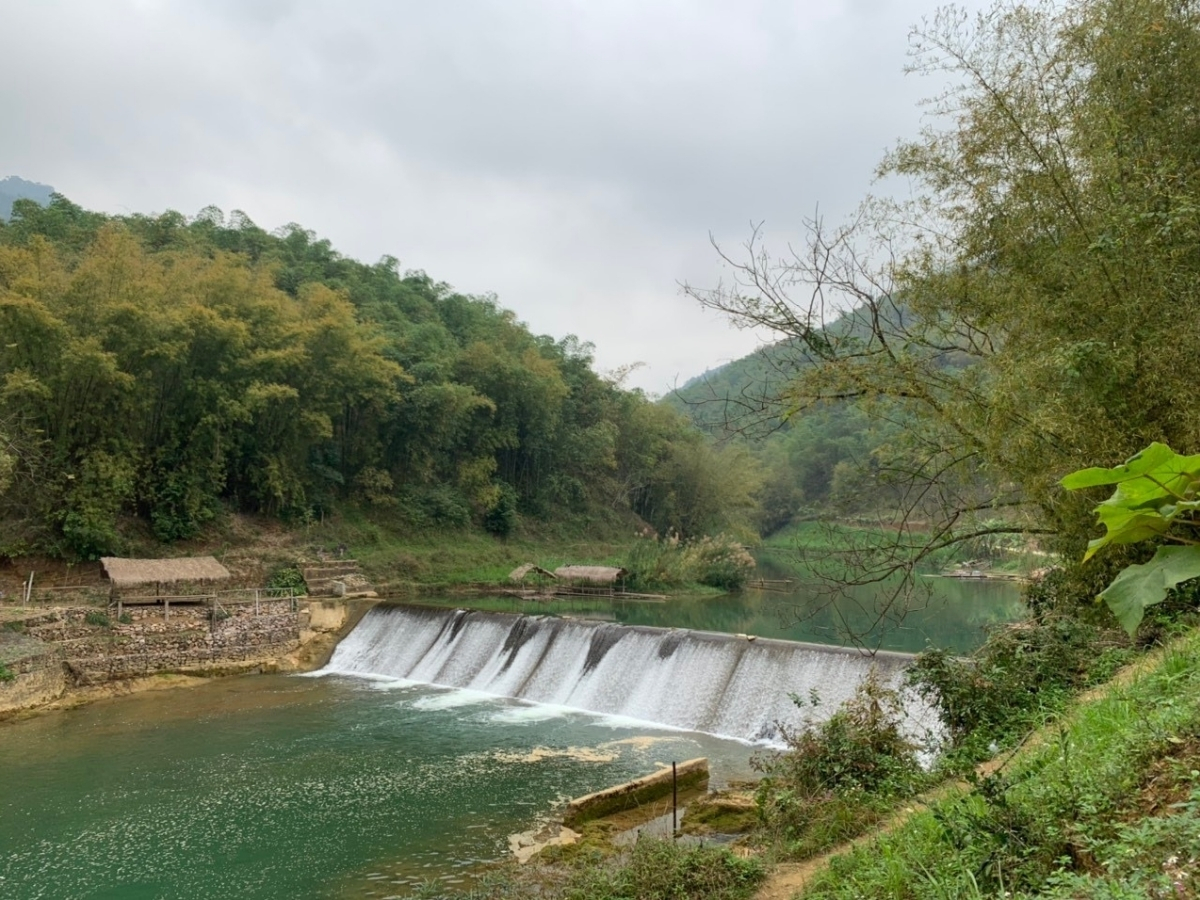
Chieng Lau Dam majestic amidst nature Pu Luong. (Source: Collected)
Visiting this place, visitors will admire a section of the lush green Cham stream winding between mountains before turning downwards at Chieng Lau dam. The nature here is likened to an ink wash painting, both wild and charming, which will surely bring you "once-in-a-lifetime" photos and unforgettable experiences.
The daily life of the Thai people in Chieng Lau village unfolds at a slow pace, closely connected to nature. Visitors can participate in activities such as weaving brocade on traditional looms. Besides, the culinary experience in the village is also very rich with specialties like duck from Co Lung, bitter leaf soup, or bamboo-tube rice.
In the evening, locals often organize cultural performances such as Xoe dance, Then singing, and storytelling about the origin of bamboo water wheels. Visitors are invited to join the Xoe dance, enjoy Can wine, and traditional dishes. This is a great opportunity to gain a deeper understanding of the culture, customs, and lifestyle of the ethnic Thai people in the highlands, creating memorable moments of an authentic community tourism trip.
When packing for a trip to Chieng Lau village, visitors should prioritize comfortable, easy-to-move-in clothing. Cotton or quick-drying sportswear is the best choice, along with a light jacket for early mornings and late evenings when the temperature drops. Trekking shoes or sports shoes with non-slip soles are necessary as the path to the village can be quite slippery, especially after rain.
A camera or phone with a full battery and a power bank are essential items to capture beautiful moments. Sunscreen, a wide-brimmed hat, and insect repellent are also accessories that should be in your bag. If you plan to go rafting, you should bring extra clothes and a waterproof bag to protect your personal belongings.
Community tourism in Chieng Lau village requires visitors to be conscious of respecting the living space and culture of the local people. When taking photos of people or houses, you should gently ask for permission first. Maintain environmental hygiene by not littering, especially plastic bags and bottles, into streams and rice fields.
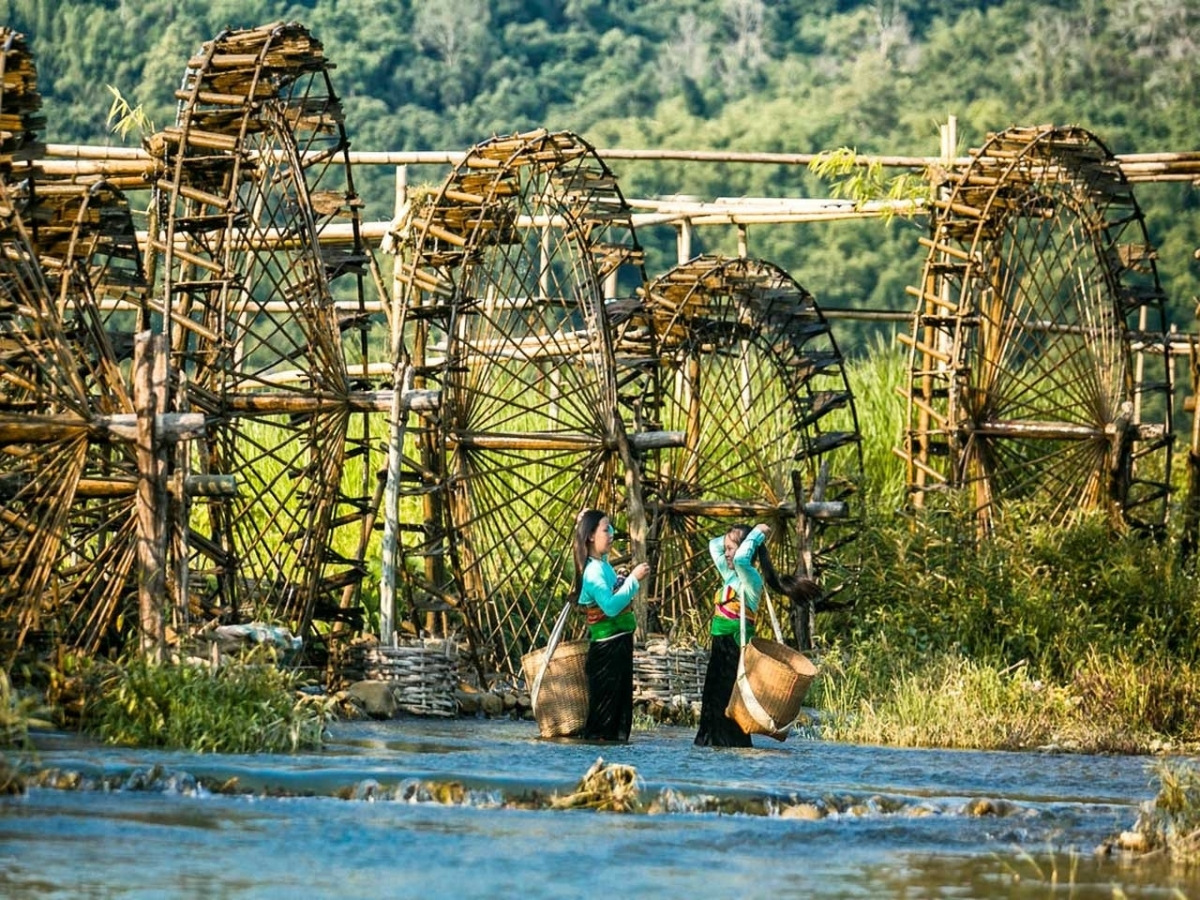
The Thai ethnic community and their characteristic water wheels. (Source: Collected)
Avoid talking loudly or playing loud music late at night and early in the morning to avoid disturbing the sleep of the residents. When participating in cultural activities, tourists should listen, respect, and participate sincerely with the ethnic people here. Shopping for souvenirs from the locals is also a very practical way to support the local economy.
Ban Chieng Lau offers tourists an authentic and meaningful community tourism experience, where the slow pace of life blends with wild nature and rustic local culture. Amidst majestic mountains and clear streams, you can listen to the steady turning of water wheels, enjoy traditional Thai cuisine, or simply stroll among lush green terraced fields. If combined with an itinerary exploring the vibrant Sun World Sam Son or the sacred Nui Chua – Am Tien, a trip to Thanh Hoa will reveal a comprehensive picture of its natural beauty, history, and unique culture. Prepare your luggage and take the time to experience it to create unforgettable memories in Ban Chieng Lau and the beloved Thanh Hoa land.
Let's start your vacation!

Special offer up to 30% when booking tickets on the Sun Paradise Land app

