


Travel News

Explore the Vinh Lang Stele with distinctive historical and cultural value
From the center of Thanh Hoa, tourists will travel about 50 km to the northwest to reach the Vinh Lang Stele. The stele is located within the Lam Kinh historical site in Lam Son commune. The stele's position was carefully chosen, situated to the southwest of Emperor Le Thai To's tomb, at a distance of exactly 300 m.
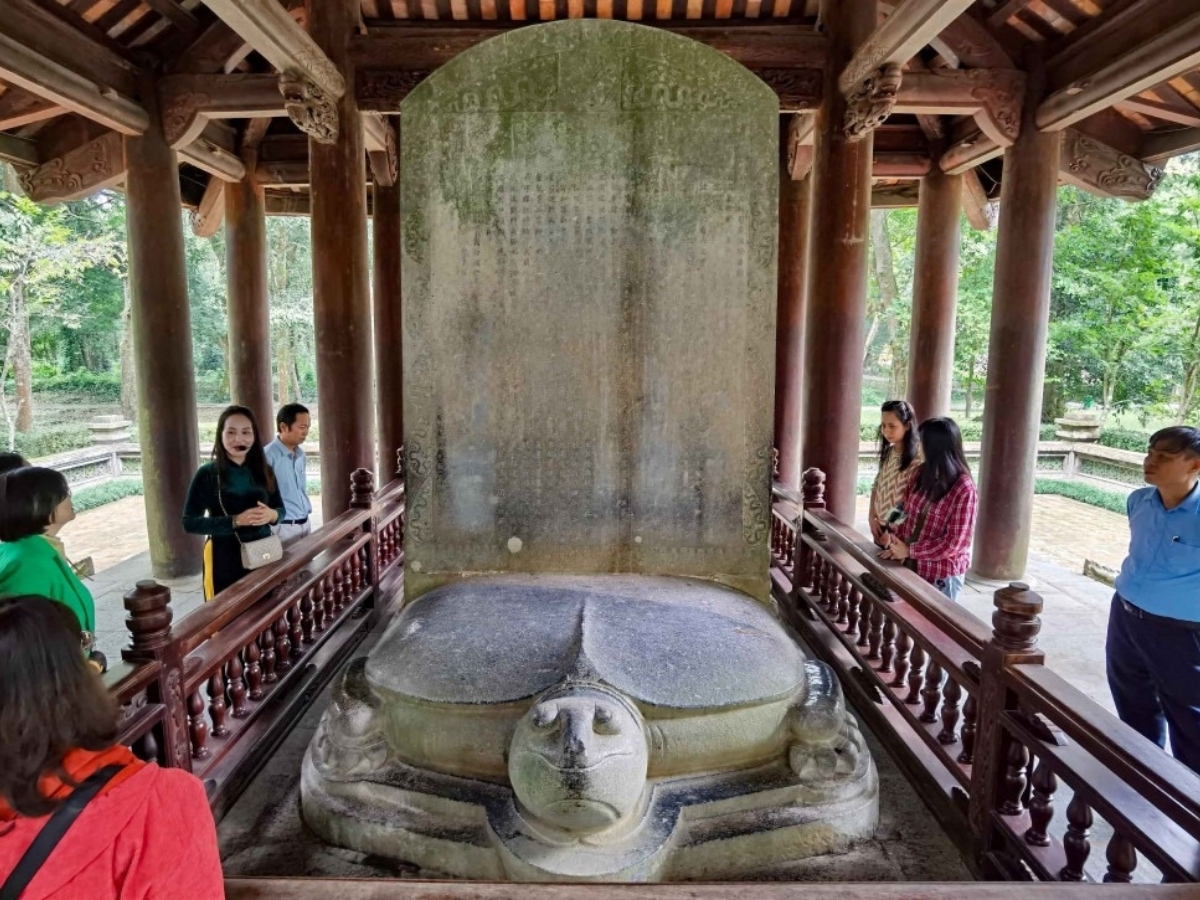
The Vinh Lang Stele belongs to the Lam Kinh historical site in Thanh Hoa. (Source: Collected)
The space around the stele evokes a solemn feeling thanks to the open terrain to the south and the embrace of ancient trees providing cool shade. Stopping here, visitors can clearly feel the majesty of the stone stele, considered among the largest in Vietnam, while admiring the lush green landscape which has always maintained its freshness.
The highlight of the Vinh Lang Stele comes not only from its size but also from its artistic value. The stele is a testament to the carving skills of the Early Le dynasty, with intricate carved lines, demonstrating the sophistication and high technique of 15th-century artisans.
The history of the Vinh Lang Stele is linked to the event of King Le Thai To's passing on the 22nd day of the intercalary August in the Year of the Ox (1433). On October 23rd of the same year, the king was buried at Vinh Lang, Lam Son, in a solemn royal ceremony.
Immediately after, during the Thuan Thien reign, the 6th year (1433), the court erected the Vinh Lang Stele to commemorate the merits of the founding king of the Later Le dynasty. The content inscribed on the stele reflects the gratitude of the court and the people towards the king, while also recording important events in the early period of the dynasty.
Having existed for over 590 years, the stele still retains many intact details. In 1961, a square pavilion was built to shelter it, contributing to protecting the stele from weather effects and helping the carved lines remain clearly preserved.
The Vinh Lang Stele is considered a precious stone document about the early days of the Later Le dynasty. The text inscribed on the stele depicts the Lam Son uprising, the resilient spirit of the Đại Việt army and people in the struggle against the Ming dynasty's domination. Each inscribed line is a historical imprint, reflecting the spirit and will of the era.
Within the Lam Kinh historical site complex, the Vinh Lang Stele plays a prominent role, attracting the interest of tourists and researchers. In 2013, the stele was recognized as a national treasure by the Prime Minister, affirming the outstanding cultural and historical value of the relic.
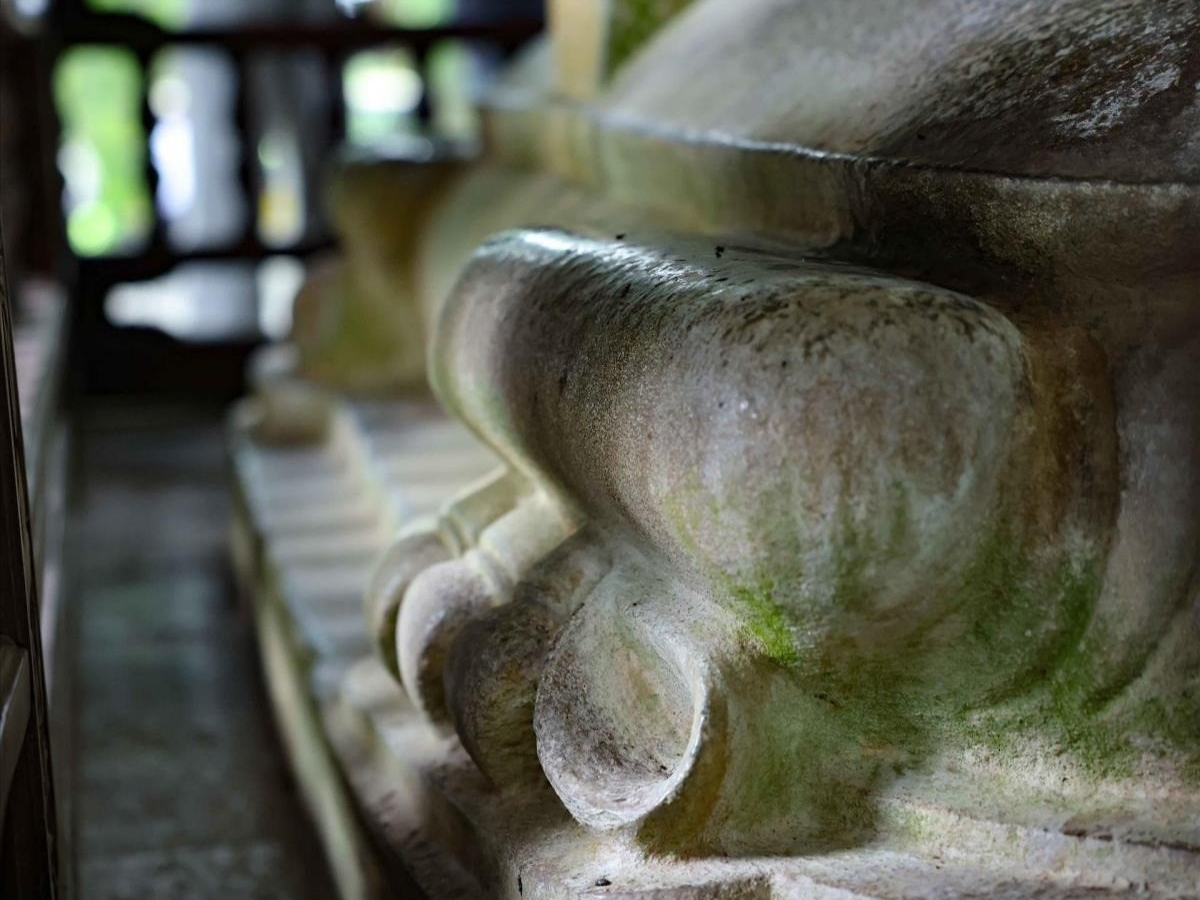
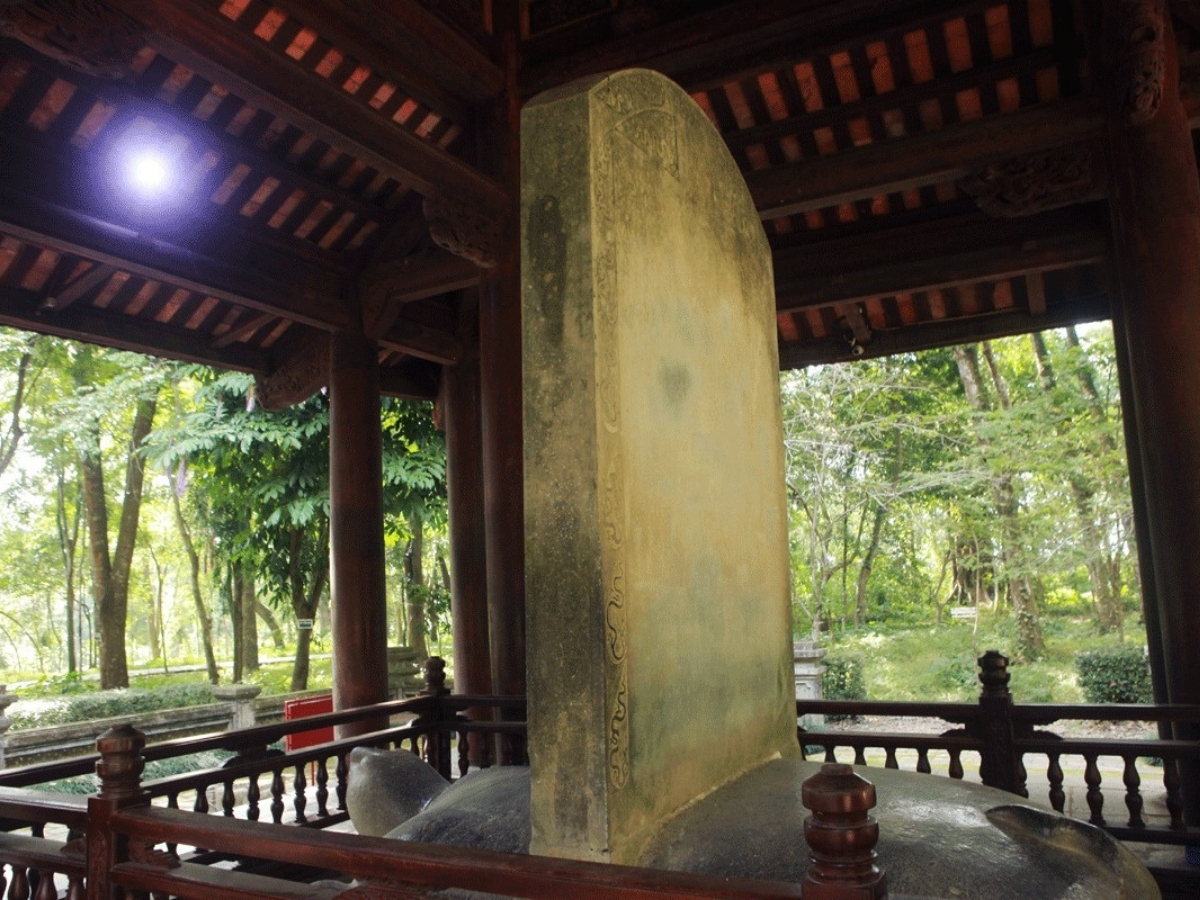
The Vinh Lang Stele still carries many historical - cultural values. (Source: Collected)
Besides historical value, the stele also holds significant meaning for the study of language, literature, and sculpture art of the Early Le dynasty. Therefore, the Vinh Lang Stele not only attracts domestic tourists but is also a source of materials of interest to international researchers.
Upon entering the grounds of the Vinh Lang Stele , visitors can easily notice the grandeur of the stone stele with dimensions of 2.79 m in height, 1.94 m in width, and 0.27 m in thickness. When observed directly, the size of the stele creates a sense of solidity and solemnity, befitting its status as a relic within the Lam Kinh complex.
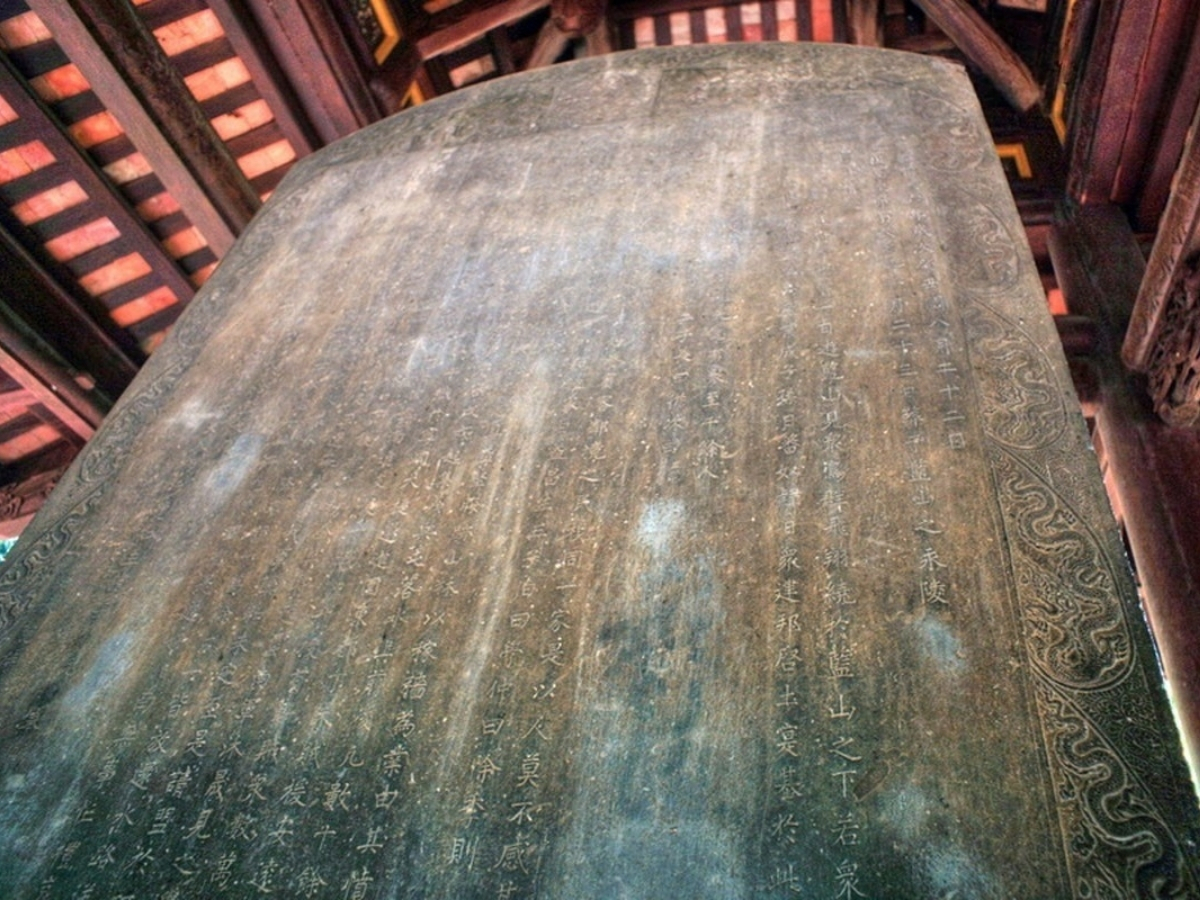
Close-up of the content inscribed on the Vinh Lang stele. (Source: Compilation)
The stele is crafted from ancient stone with high hardness and durability, helping the stone surface retain its smoothness and clear carved details despite over 590 years. This material is also suitable for the exquisite patterns characteristic of the early Le dynasty art.
Thanks to the pavilion erected in 1961 and regular conservation efforts, the Vinh Lang stele remains in good condition by 2025. The carved lines are clear, allowing visitors to easily read the stele's text and observe the artistic details.
The base of the Vinh Lang stele is carved in the shape of a turtle - a familiar symbol in traditional stone stele architecture. The difference in this image lies in the detail of the six-clawed turtle, representing the concept of eternity and noble status in Vietnamese culture.
The top of the stele is carved with a dragon with graceful lines, sharp eyes, and a sinuous body. The dragon image combined with cloud motifs is depicted in the early Le dynasty style, influenced by the interplay between Vietnamese aesthetics and Northern artistic elements, creating harmony and solemnity for the entire stele.
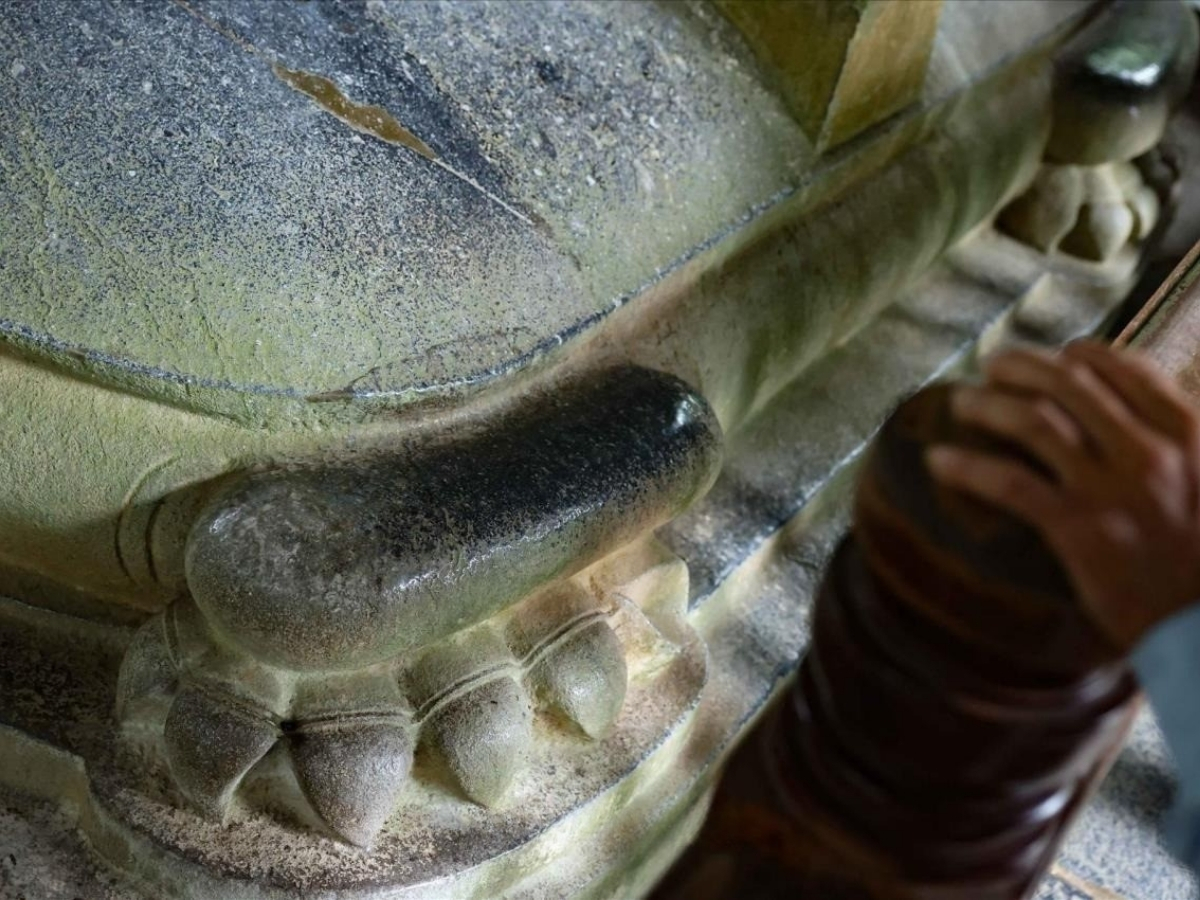
The image of a six-clawed turtle is prominent on the Vinh Lang Stele. (Source: Collected)
The pattern system includes dragon, cloud shapes, and stylized floral motifs that are elaborately crafted. These symbols not only serve decorative purposes but also convey auspicious meanings, expressing hopes for prosperity and peace.
Vinh Lang Stele is often mentioned as a typical testament to the carving art of the Early Lê period. The overall composition is tightly organized, with harmonious connections from the border to each small detail.
The court artisans of this period used deep, even, and firm carving techniques, creating clear light and shadow effects on each motif. As a result, the dragon, cloud, and decorative patterns stand out against the stone background, creating a vivid sense while maintaining a solemn demeanor.
The combination of strong lines and soft details brings depth to the work, making the Vinh Lang Stele not only historically valuable but also an important work of art, reflecting the technical and aesthetic standards of 15th-century artisans.
The content of the Vinh Lang Stele inscription was compiled by Nguyễn Trãi. He is one of Vietnam's most prominent cultural figures and played a crucial role in the court of Lê Thái Tổ. Entrusting him with writing the stele inscription demonstrates the court's recognition of his talent and prestige in politics, literature, and ideology.
Nguyen Trai was instrumental in compiling the Vinh Lang stele. (Source: Collected)
Throughout his tenure as an advisor to King Le Thai To, Nguyen Trai offered many important opinions for the nation-building cause. This allowed him to clearly express the king's image and merits in the stele's text, using precise, concise, and historically profound language.
The task of carving the stele was undertaken by stone artisans who understood carving techniques as well as the meaning of each line of text. The coordination between content and execution techniques helped the stele fully convey the spirit it intended to impart.
The surface of the stele features 750 Chinese characters carved in seal script, recording the life and career of King Le Thai To. The introduction presents the family's origins, then emphasizes the king's significant contributions, particularly the Lam Son uprising and the process of stabilizing Dai Viet after gaining independence.
Nguyen Trai's writing style is formal and profound, while also being rich in allusions. This reflects his deep learning and the humanist spirit promoted in the ideology of the Later Le dynasty.
In terms of academic value, the Vinh Lang stele is a valuable source of information for many research fields. For historians, the stele helps cross-reference and supplement information about the early period of the Later Le dynasty. For linguists, it is a document illustrating the use of Chinese characters in literature of this period. For art experts, the stele is a vivid testament to stone carving techniques and the artistic style of the 15th century.
The Lam Kinh historical site is planned according to the feng shui principle of "sitting on a mountain, facing water," creating a landscape that is both solemn and harmonious. Behind it lies Dau Mountain, in front is the winding Chu River; it is bordered by Phu Lam forest, Huong Mountain, and Ham Rong Mountain on the sides, offering a spacious natural environment.
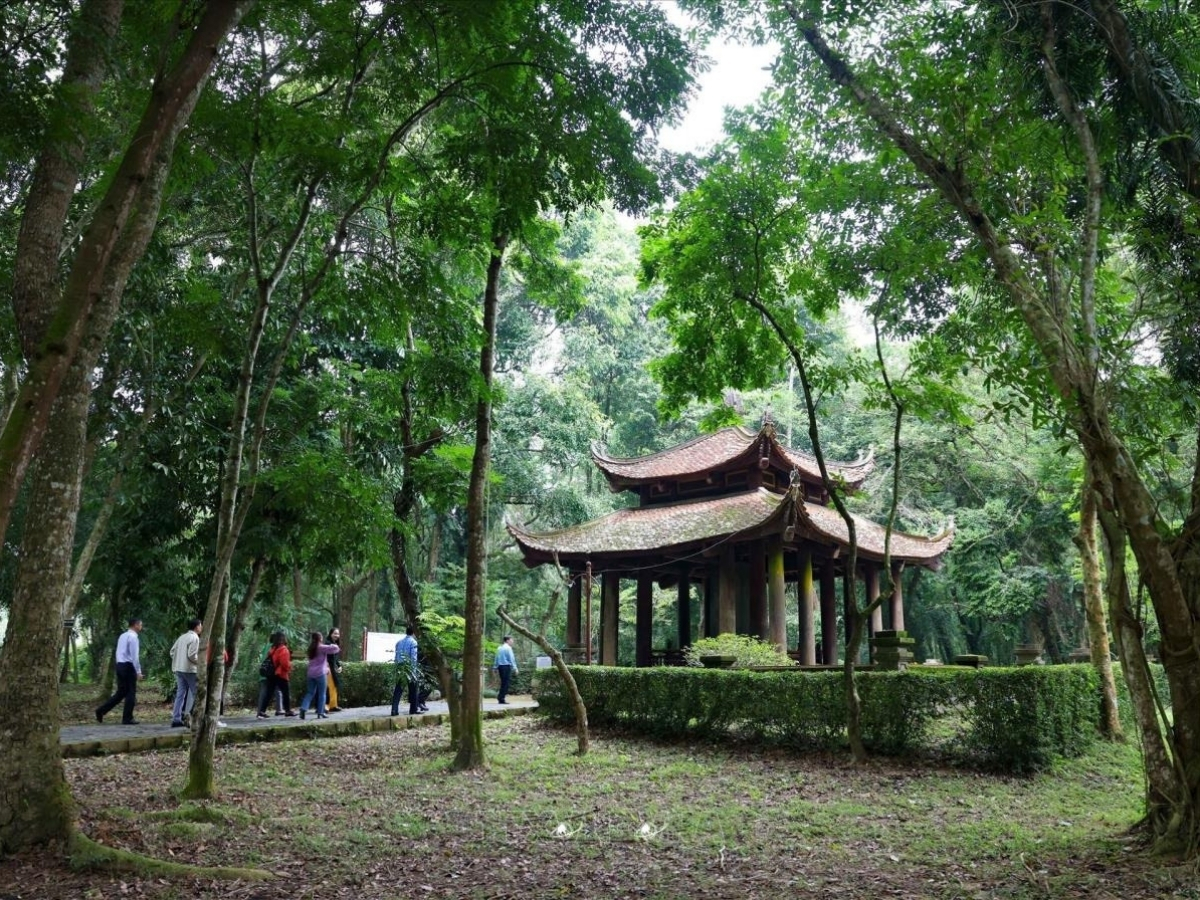
The area around the Vinh Lang Stele. (Source: Collected)
The entrance to the Vinh Lang Stele is paved with solid stone, flanked by ancient trees casting dense shade, making visitors feel comfortable during their movement. The area around the stele is designed to be spacious, allowing observation of the relic from multiple angles and facilitating photography.
Next to the stele is a clear blue lake that enhances the landscape. The natural sounds of wind, leaves, and water create a peaceful atmosphere, helping visitors easily focus on understanding the historical value of the relic.
When visiting the Vinh Lang Stele , visitors can spend time observing the inscription with its 750 Han characters neatly carved on the stone surface. Even without being able to read Han characters, admiring each stroke conveys the effort and skill of ancient artisans.
The patterns on the stele - dragons, six-clawed turtles, clouds, and stylized flora - are details that attract viewers with their aesthetic appeal and symbolic meanings characteristic of the Early Le dynasty. These patterns help viewers understand the beliefs, aesthetics, and concepts of power of the dynasty.
The relic site is equipped with information boards and introductory materials, helping visitors gain a clearer understanding of the historical context. Through these, visitors can visualize the life and career of King Le Thai To and the significance of erecting the stele in the nation's history.
After visiting the Vinh Lang Stele , visitors can continue to explore the tomb of Le Thai To, located about 300 meters away. The tomb has a solemn architecture with stone steps and surrounding walls, reflecting the scale of a royal mausoleum.
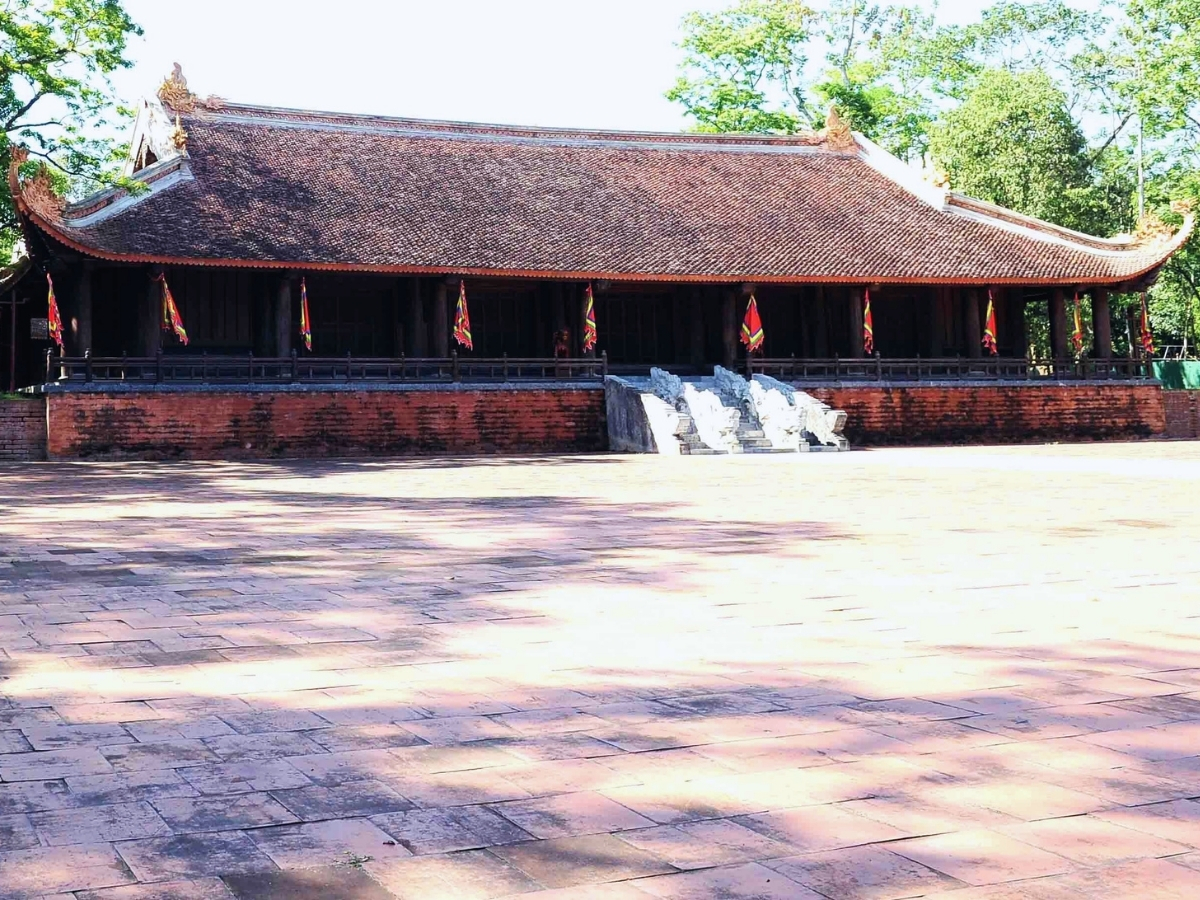
The scene of the Dragon Courtyard at the Lam Kinh historical site. (Source: Collected)
Ngoc Well is the next notable location with its special water supply structure within the relic complex. Bach Bridge (or Tien Loan Bridge) is also a unique architectural highlight, harmoniously combining a bridge and a house, carrying the East Asian imperial architectural style.
The Dragon Courtyard (courtyard) covers an area of about 3,500 m² and was once the venue for important court ceremonies. From here, visitors can observe the layout of the Lam Kinh Main Palace, consisting of three buildings set on a 1.8 m high foundation, and the Thai Mieu system arranged in a semicircle around it. The overall architecture bears the strong imprint of imperial style and the historical value of the Later Le dynasty.
To ensure a complete and comfortable visit to the Vinh Lang stele, visitors can refer to the following notes to prepare appropriately for the Lam Kinh historical site.
It is recommended to choose early morning or late afternoon to enjoy the fresh air for your visit.
It is recommended to prioritize polite attire to show respect for the cultural and spiritual space at Lam Kinh.
It is recommended to bring drinking water and a sun hat, especially during summer days, to protect your health when visiting outdoors.
It is recommended to maintain a reasonable distance when observing the stele to ensure the safety of the relic and for a more comprehensive view.
It is recommended to refrain from touching the stele or carved details to contribute to the preservation of the heritage for future generations.
After visiting the Vinh Lang stele, visitors can continue their journey to Trieu Lady Temple, about 30 km from Lam Kinh. This is the place that worships the heroine Trieu Thi Trinh, who is respected by the people for her resilient spirit against foreign invaders and her strong desire for independence.
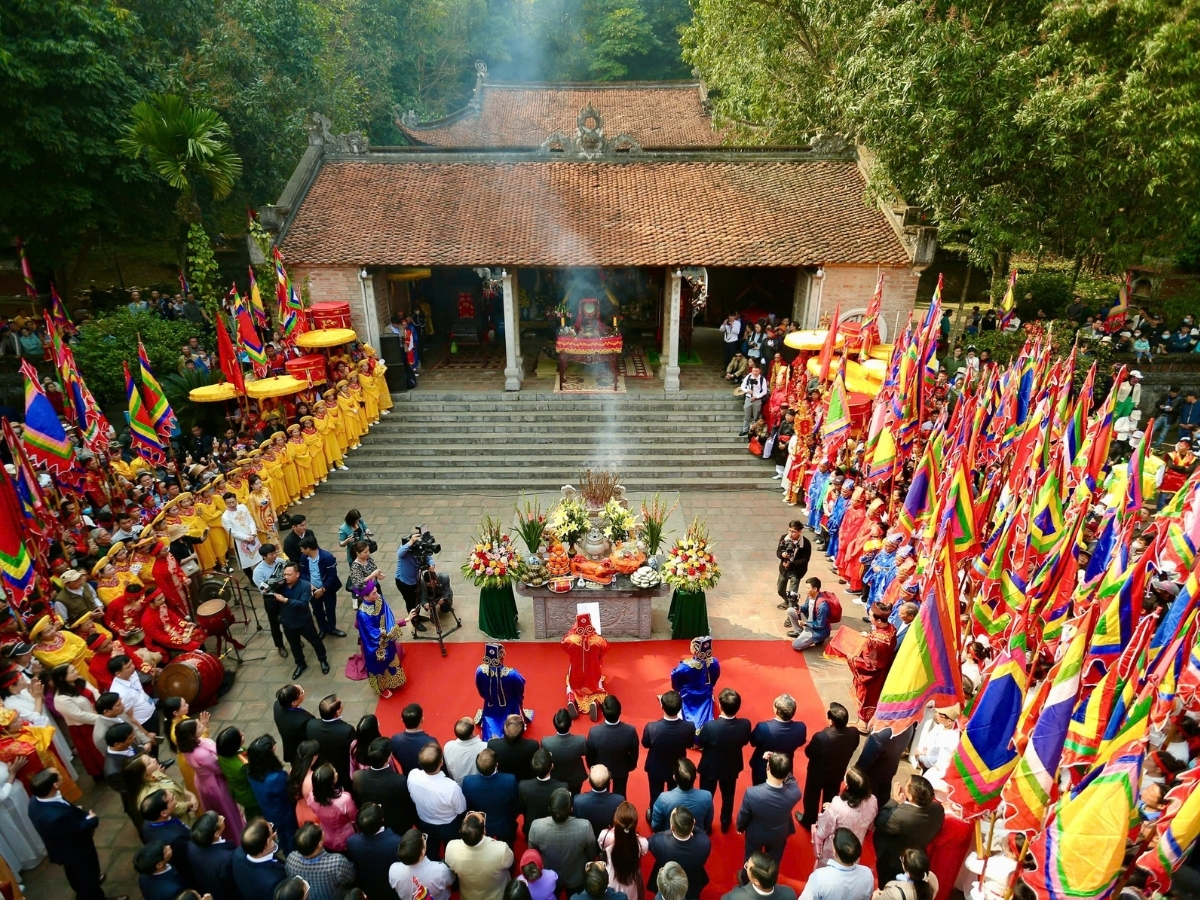
Scene of the traditional festival at Ba Trieu Temple. (Source: Collected)
The temple space is located amidst airy hills and mountains, bringing a sense of tranquility, helping visitors easily feel the will and spirit of the female general. Visiting Ba Trieu Temple is also an opportunity to learn more about the history of the early period of the Vietnamese people's efforts to preserve the country.
Located in the center of Thanh Hoa, Le Hoan Temple is a memorial to King Le Dai Hanh, the first king of the Tien Le dynasty. He made great contributions to consolidating the nation and protecting the borders. The temple's architecture bears the spiritual imprint of Thanh Hoa with a harmonious layout and ancient space. When combining a visit to Le Hoan Temple with the Vinh Lang Stele, visitors will have a more comprehensive view of the two Le dynasties, periods that played important roles in Vietnamese history. This is also an opportunity to learn more about the cultural flow in the Thanh Hoa region over many centuries.
About 15 km from the center of Thanh Hoa, Nui Nua - Am Tien is a prominent destination for those who love spiritual tourism combined with nature exploration. This area is associated with the heroine Ba Trieu, and also possesses airy mountain scenery, creating a suitable space for pilgrimages or cultural experience activities.
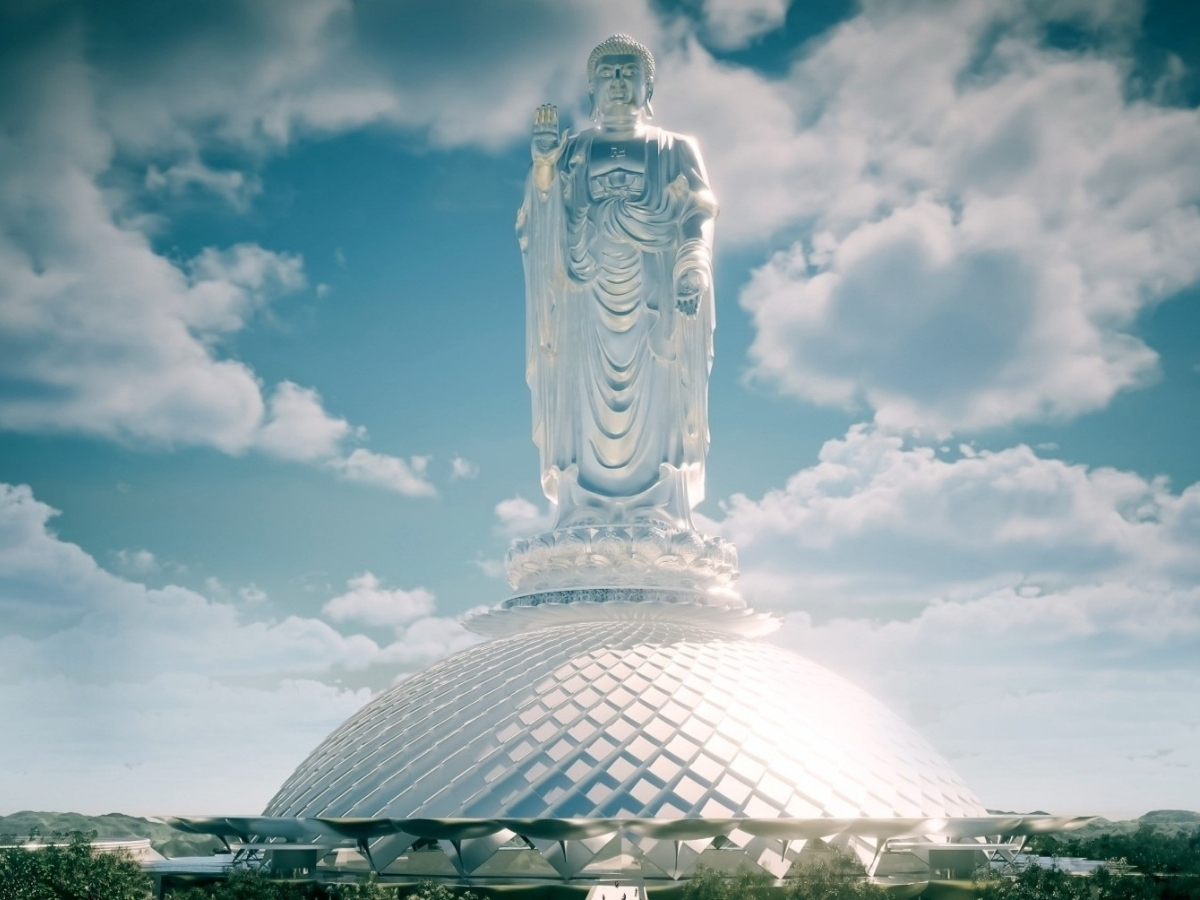
A world-record-holding Buddha statue is expected to appear at the Huyen Tich Am Tien project. (Source: Collected)
Besides its existing historical and religious values, the place also attracts attention thanks to the Huyen Tich Am Tien project currently being implemented. The project aims to preserve and promote the cultural and spiritual values of the area, promising to add many new highlights in the future. This is an ideal suggestion for tourists to extend their journey after visiting Lam Kinh and the Vinh Lang Stele, thereby fully experiencing the cultural depth of the Thanh Hoa land.
The Vinh Lang Stele is not only a historical relic but also a bridge helping us understand more deeply about the nation's cultural traditions. Please arrange time to directly experience the beauty of this national treasure and discover the fascinating historical stories at the Lam Kinh relic site!
Let's start your vacation!

Special offer up to 30% when booking tickets on the Sun Paradise Land app
Related topics

