


Travel News

Your Essential Fansipan Travel Guide from A to Z - Most Detailed 2026
If you are planning to conquer the "Roof of Indochina", a detailed Fansipan travel guide will be an indispensable companion. With a height of 3,143 m above sea level, Fansipan is not only famous for the majestic beauty of the Hoang Lien Son mountain range but also attracts tourists with its floating sea of clouds, a four-season climate in one day, and a large-scale system of spiritual cultural works on the mountaintop. Today, thanks to the modern cable car system and developed tourism infrastructure, the journey to conquer Fansipan has become easier than ever, suitable for all subjects from families with young children, the elderly to international tourists.
This article will summarize complete information from the ideal time to visit, how to get there, ticket prices, sightseeing itineraries to useful experiences to help you have a smooth, economical, and memorable trip. Let's explore the Fansipan travel guide from A-Z below.
Located in the southwest of Sa Pa town (Lao Cai province), Fansipan is the highest mountain in Vietnam and the entire Indochinese peninsula with a height of 3,143 m above sea level. The peak belongs to the Hoang Lien Son range – a massive mountain range stretching about 180 km, considered the "backbone" of the Northwest region. Thanks to its high terrain and characteristic temperate climate, this area possesses an extremely rich ecosystem with thousands of plant species, many rare animal species, and primeval forests preserved almost intact.
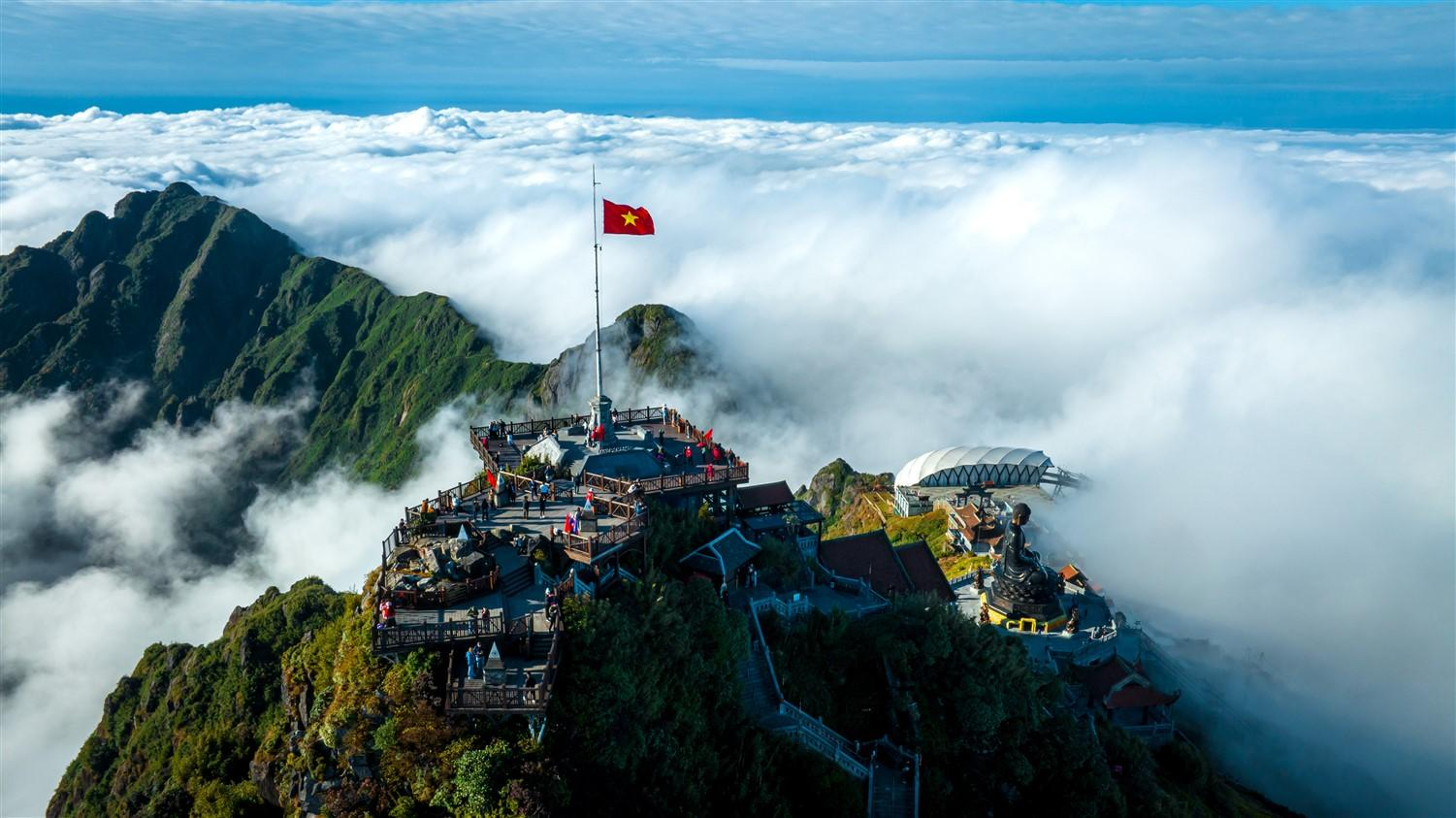
Majestic natural scenery on the summit of Fansipan
Not only famous for its altitude, Fansipan is also a convergence of Vietnam's most outstanding landscapes. From the cable car cabin, visitors can admire Muong Hoa valley with its winding terraced fields, ethnic villages, and endless green forests. On days with favorable weather, seas of clouds cover the mountainsides, creating a scene like a fairyland, becoming the reason why many tourists choose Fansipan to hunt for clouds and watch the sunrise. Besides the majestic nature, Fansipan also stands out with a large-scale complex of spiritual cultural works located at an altitude of over 3,000 m. Along the journey to the summit, visitors will encounter the bronze Great Buddha statue of Amitabha, Bao An Zen Monastery, Kim Son Bao Thang Pagoda, the Arhat path, and many structures bearing the imprint of Vietnamese Buddhist architecture. The serene space amidst the mountains and forests creates an experience that combines nature exploration with a search for cultural values and spiritual life, which is rare in many other tourist destinations.
The combination of majestic nature, characteristic high mountain climate, modern cable car system, unique spiritual cultural works, and diverse experiences has helped Fansipan become the leading destination in Northwest tourism. Whether you are a nature lover, a photography enthusiast, want to conquer the peak, or simply want to enjoy the spectacular scenery of Vietnam's mountains and forests, Fansipan offers a memorable journey.
Fansipan is a destination that can be visited year-round, as each season offers its own beauty and experience. Located at an altitude of over 3,000 m, the summit area has a cool climate all year round, with temperatures usually 7–10°C lower than in Sapa town. This difference in altitude causes the landscape and weather on Fansipan to change continuously with the seasons, even within the same day, creating a special attraction for nature lovers.
The period from March to May is considered one of the most beautiful seasons to explore Fansipan. The weather at this time is quite pleasant, with clear skies, little rain, and temperatures ranging from about 15–25°C in the Sapa area. This is also the season when azaleas bloom brilliantly across the slopes of Hoang Lien Son mountain, with dozens of species and many different colors such as red, pink, white, and yellow. The natural scenery combined with seas of clouds and blue skies creates an ideal setting for sightseeing, photography, and cable car experiences.
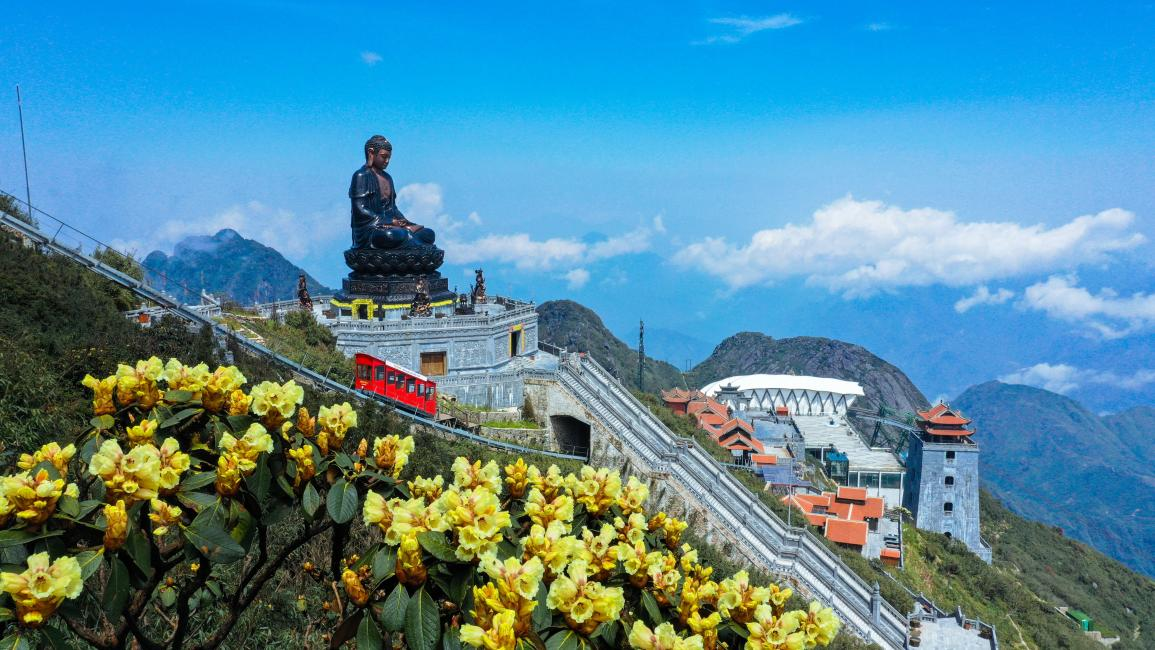
Fansipan each season brings its own unique beauty and charm
From September to November, Fansipan enters autumn – a time many tourists consider the most beautiful of the year. The dry air and clear, cloudless skies provide a wider and clearer view from the mountaintop. This is also an ideal season for cloud hunting, with fluffy white clouds appearing in the early morning or late afternoon. If combined with a visit to Sa Pa, you also have the opportunity to admire the golden terraced rice fields in Muong Hoa valley during the ripe rice season.
In winter (December to February), Fansipan is adorned with a mystical beauty with dense fog, and the temperature on the summit can drop below 0°C. Frost or snow sometimes appears, attracting many tourists to experience a rare sight in Vietnam. However, the weather during this season changes quickly and is quite cold, so you should monitor the weather forecast and prepare warm clothes, gloves, scarves, and non-slip shoes for a safe and convenient trip.
Cost is one of the information many tourists are interested in when planning a trip to Fansipan. Currently, the ticket system at Sun World Fansipan Legend is divided into many types to suit different sightseeing needs. Prices may change depending on the time or promotional programs, so you should check the latest information on the official website before departing.
According to 2026 prices, round-trip cable car tickets for out-of-province visitors are 850,000 VND/adult and 550,000 VND/child (from 1m to under 1.4m tall). Children under 1m are free. The cable car ticket includes the journey from Hoang Lien station to Fansipan station, saving visitors significant time compared to traditional trekking.
In addition to cable car tickets, visitors can purchase tickets for the Muong Hoa mountain climbing train from Sun Plaza to Hoang Lien station and the Fansipan mountain climbing train from Fansipan station to near the summit. These two train routes are not mandatory but are very suitable for the elderly, families with young children, or those who want to reduce the walking distance. Besides, Sun World Fansipan Legend also regularly offers combo packages combining cable car tickets with dining services or promotions for in-province guests, helping visitors optimize costs.
👉 BOOK FANSIPAN CABLE CAR TICKETS NOW HERE!
A complete Fansipan trip depends not only on the itinerary but also on thorough preparation before departure. Due to the terrain at an altitude of over 3,000m, the weather on the mountaintop can change very quickly, from sunny to foggy or light rain in a short time. Therefore, monitoring the weather forecast 2-3 days in advance will help you choose suitable clothing and departure times.
Clothing should prioritize comfort while still providing adequate warmth. Even in summer, the temperature on Fansipan peak is still quite low, especially in the early morning and late afternoon. You should prepare a windbreaker or a thin thermal shirt, sports shoes or hiking boots with good grip for easy movement over stone steps. If traveling in winter, bring gloves, scarves, woolen hats, and thick jackets to protect your body from temperatures that can drop below 0°C.
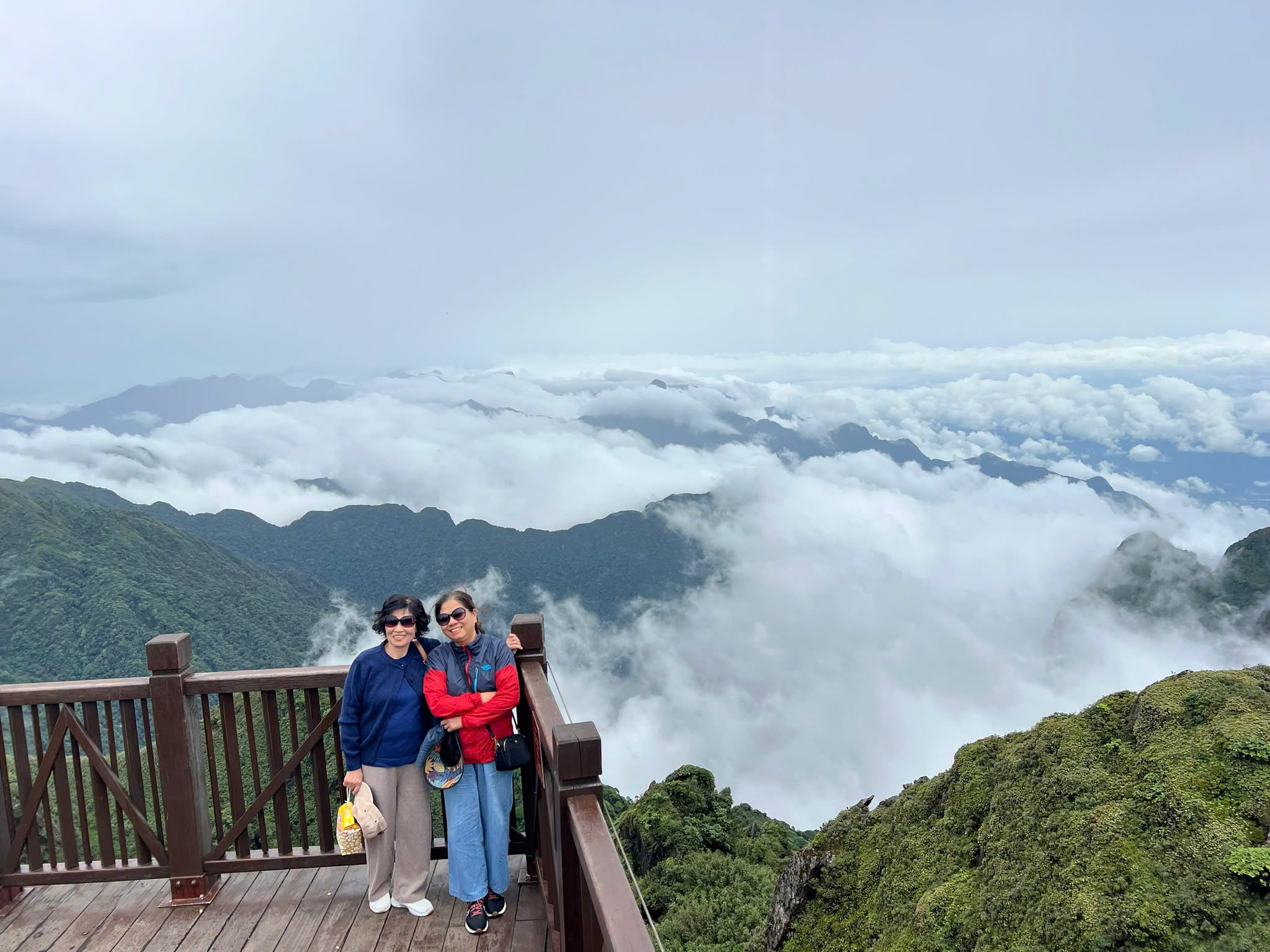
Visitors should prepare warm clothing to ensure their health when reaching the summit
Besides clothing, some personal items such as sunscreen, sunglasses, drinking water, power banks, and personal medication are also essential. Due to the stronger UV intensity in high mountainous areas compared to plains, using sunscreen will help protect your skin even on cloudy days. At the same time, fully charge your phone and camera so you don't miss out on cloud hunting moments or admiring the panoramic view of Hoang Lien Son from above.
If you are traveling with young children or the elderly, you should choose morning hours to have more time for sightseeing and avoid crowds on weekends or holidays. Besides, booking cable car tickets in advance, planning your itinerary reasonably, and bringing some light snacks will make your Fansipan exploration journey smoother, more comfortable, and more memorable.
To conquer Fansipan, visitors first need to get to Sa Pa, the tourist center of Lao Cai province and the starting point for all journeys to the "Roof of Indochina". If departing from Hanoi, sleeper buses and limousines are the options chosen by many tourists due to their convenience. Buses operate continuously day and night, with a travel time of about 5-6 hours via the Noi Bai – Lao Cai expressway. Buses usually drop passengers off right in the center of Sa Pa town, which is very convenient for continuing the journey to Sun Plaza or the hotel. Meanwhile, limousines are suitable for tourists who want more spaciousness, better service, and slightly faster travel times.
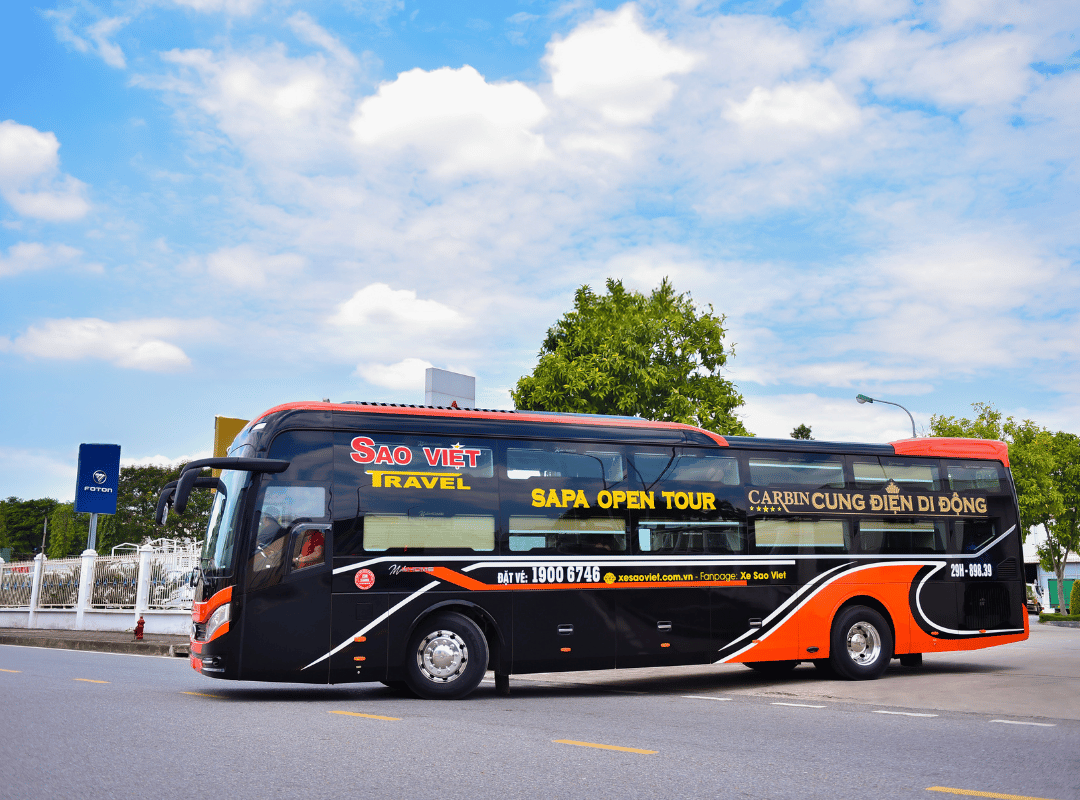
Sleeper buses are a favorite mode of transport for many tourists
For those who want to enjoy a scenic journey, the Hanoi – Lao Cai train is a worthwhile option. Trains usually depart in the evening, allowing tourists to rest on board and arrive at Lao Cai station the next morning. From here, you can continue by bus or taxi for about 35 km to reach the center of Sa Pa. Although the travel time is longer than by bus, the train offers a gentle experience, less motion sickness, and is suitable for families with elderly people or young children. If you love exploring, you can also drive a car or ride a motorbike to Sa Pa. The Hanoi – Lao Cai expressway makes traveling by car quite convenient, while the motorbike route through the Northwest mountain passes will offer many interesting experiences.
After arriving in the center of Sa Pa, the journey to explore Fansipan begins from the Sun Plaza station right in the town center. From here, tourists can choose to experience the Muong Hoa mountain train, a route about 2 km long that takes tourists across the Muong Hoa valley to the Hoang Lien cable car station. With its classic European-style design and the romantic mountain scenery on both sides of the road, it is not only a means of transport but also an experience worth trying during the journey. The Muong Hoa train takes tourists from Sun Plaza station to Muong Hoa station, then you just need to walk a short distance to reach the Hoang Lien cable car departure station.
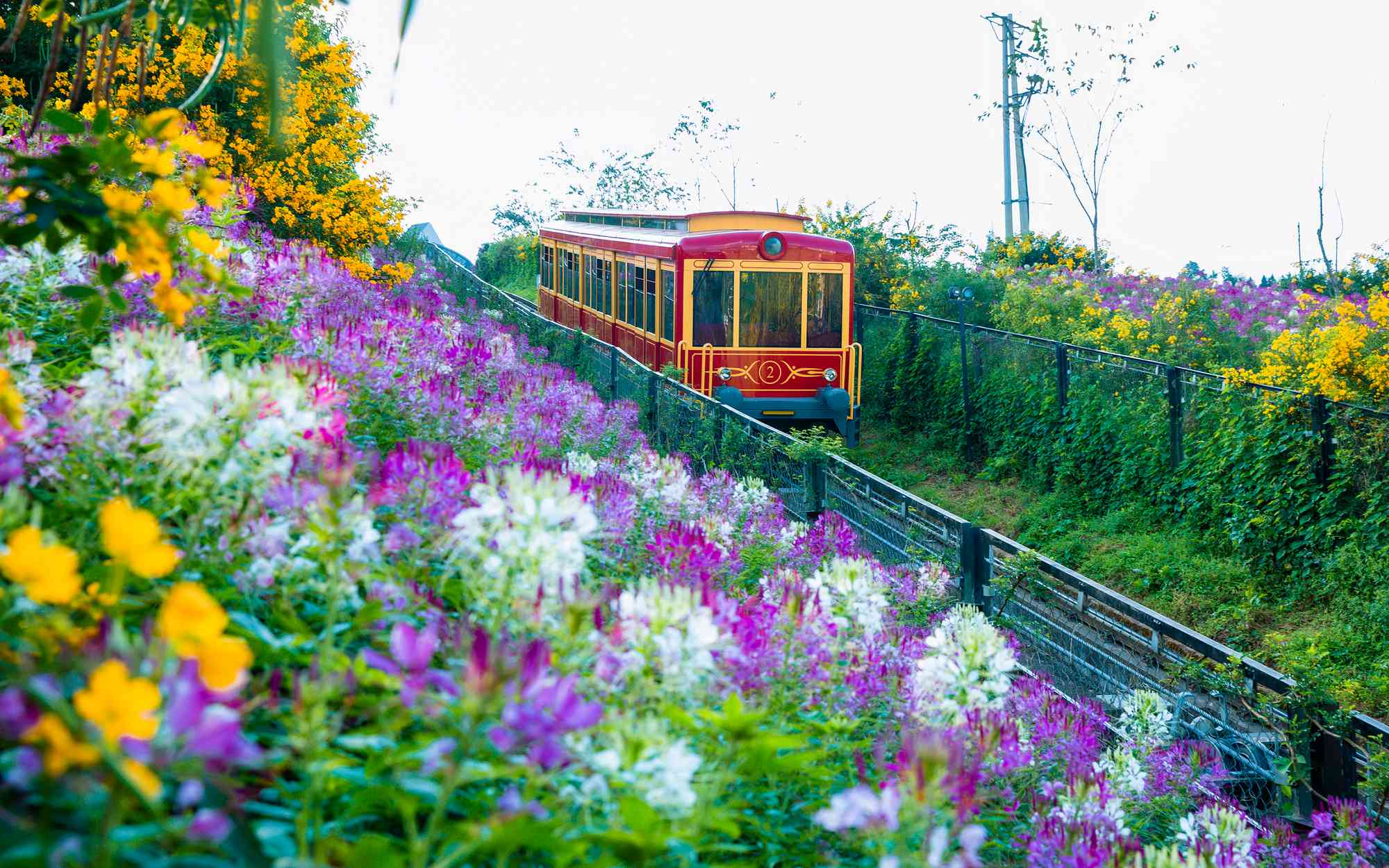
Muong Hoa mountain train takes tourists across the Muong Hoa valley
If you do not use the mountain train, you can still take a taxi or electric car from the center of Sapa to the Hoang Lien cable car station. The distance is about 5 km, and the travel time is only 10–15 minutes. This is a suitable option for tourists who want to save costs or have previously experienced a mountain train on past trips.
To ensure a smooth journey, you should arrive at the cable car station about 20–30 minutes before your departure time, especially on weekends, holidays, or during peak cloud-hunting seasons. If you have booked tickets online, have your QR code or e-ticket ready for quick check-in. At the same time, you should check the weather forecast for the day, as fog or strong winds can affect visibility when viewing the scenery from the cable car cabin.
From Hoang Lien station, tourists continue to travel by cable car to Fansipan station. The cable car ride lasts about 15–20 minutes, taking you over majestic mountains, primeval forests, and seas of clouds. The cable car system significantly shortens the time to conquer the mountain peak compared to the traditional trekking journey, while also offering a panoramic view of the Hoang Lien Son mountain range that few other means can provide.
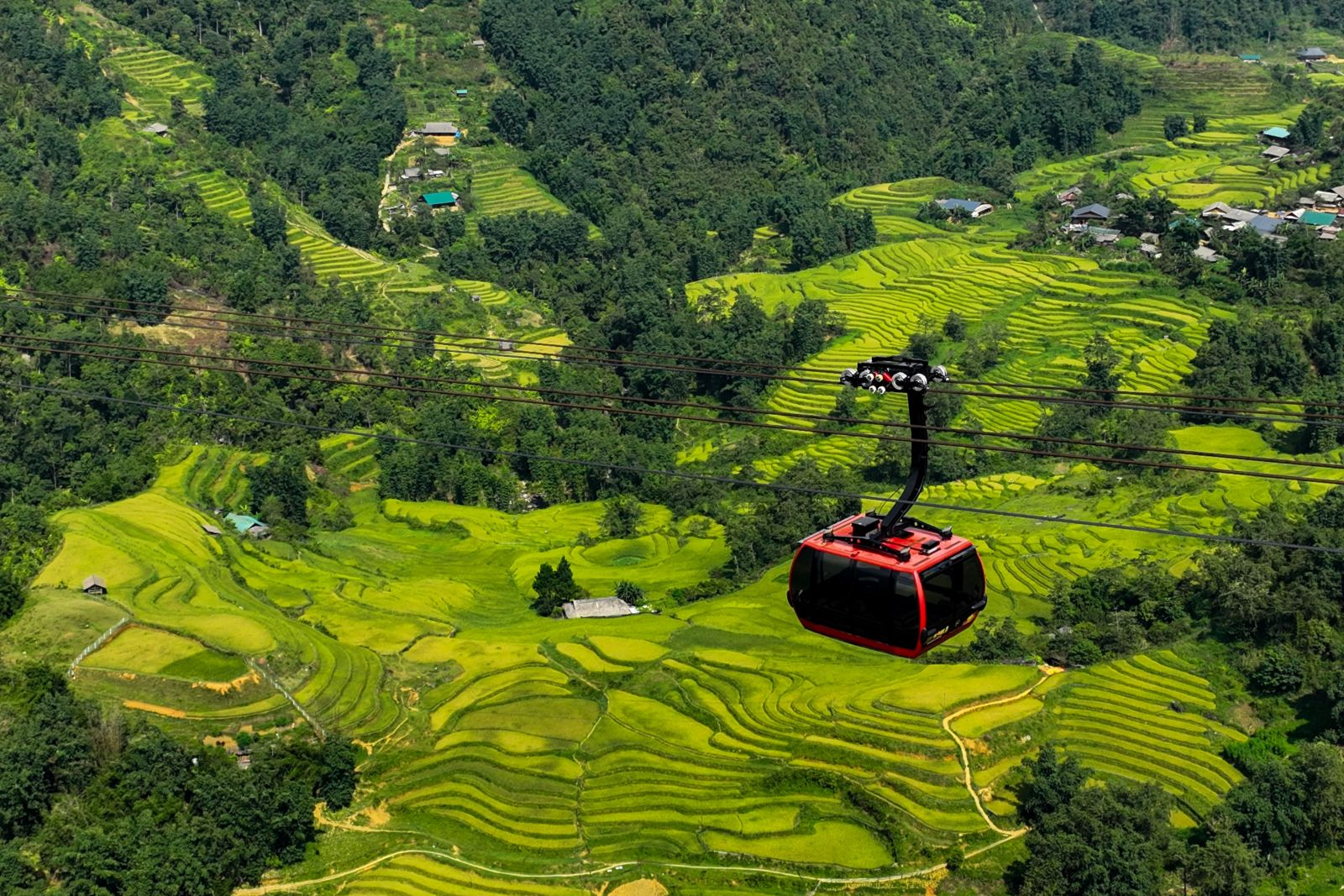
Majestic Northwest mountain and forest scenery viewed from the Fansipan cable car
One of the most attractive points of the journey is the spectacular scenery observed from the cable car cabin. Through the wide glass windows, you will admire primeval forests, winding streams, Muong Hoa terraced fields, and floating seas of clouds covering the mountainsides. On clear days, the view can extend for tens of kilometers, giving the feeling of flying amidst the vast Northwest wilderness. This is also the ideal time to capture rare panoramic photos that are difficult to obtain with any other means.
After descending at the Fansipan station, visitors have two options to reach the 3,143m milestone. If you want to save energy, you can take the Fansipan mountain climbing train, which takes visitors close to the summit in just a few minutes. Conversely, those who want to feel the conquering journey more intensely can climb the 600 stone steps. Along the way, you will successively encounter famous spiritual cultural works such as the Amitabha Buddha Statue, Kim Son Bao Thang Pagoda, Bao An Zen Monastery, the Arhat path, and many stops for sightseeing.
If asked about the most worthwhile experience in the Fansipan travel guide, cloud hunting is definitely an unmissable activity. Cloud hunting is the most anticipated experience when visiting Fansipan and also the reason why millions of tourists choose to conquer the "Roof of Indochina" each year. At an altitude of 3,143m, Fansipan peak is often above the cloud layer, creating a dreamy scene like a fairyland. On days with favorable weather, you will witness vast white seas of clouds covering valleys and mountain peaks, while above is a rare clear blue sky.
The best time for cloud hunting is usually from September to April of the following year, especially in the morning from 8 AM to 10 AM or late afternoon. After rain or when the air humidity is high, the possibility of seeing seas of clouds increases. However, mountain weather changes very quickly, so you should monitor the weather forecast before your trip and prioritize clear days for the best views.
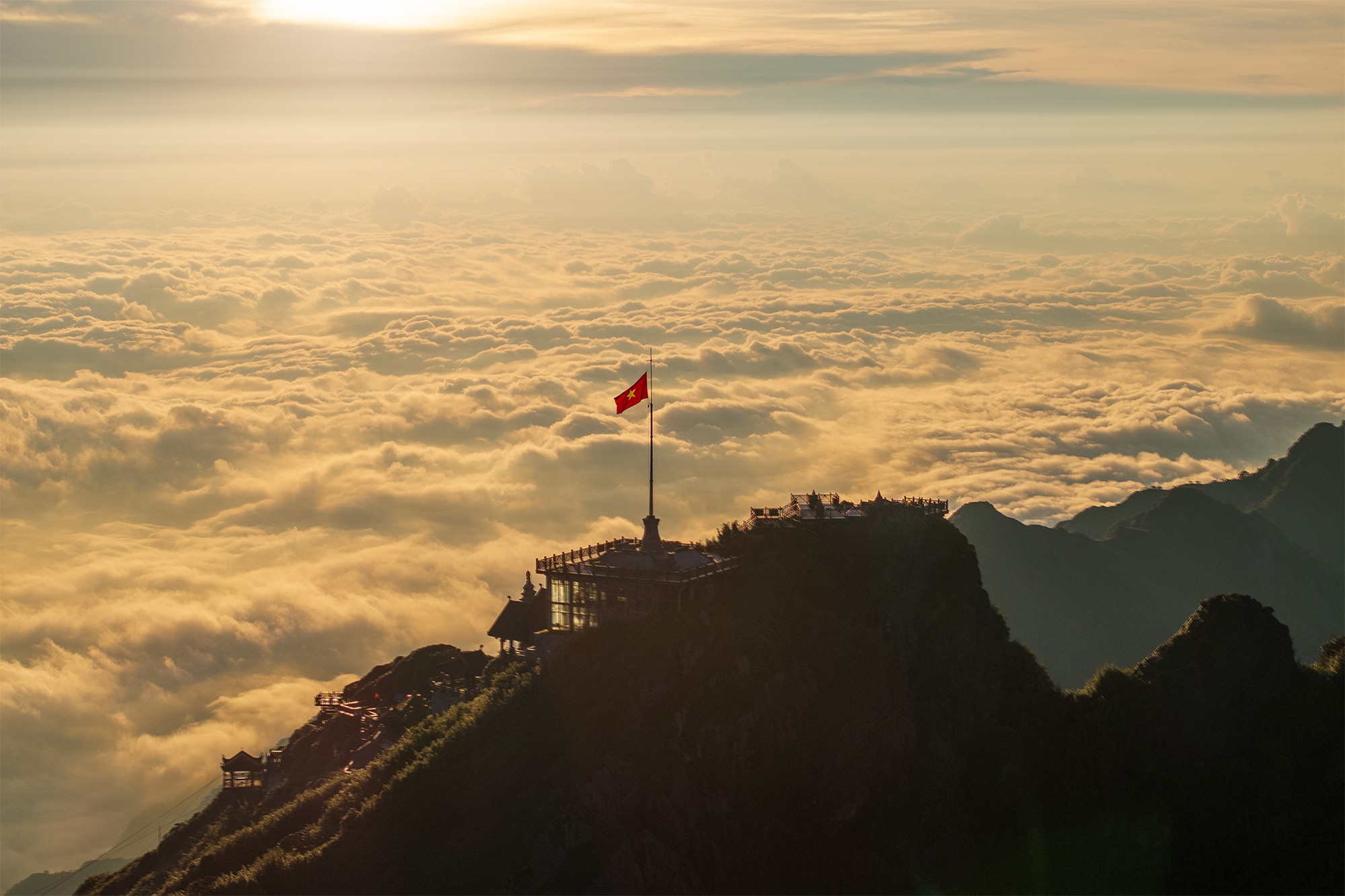
A picturesque sea of white clouds surrounding the Fansipan mountain peak
Besides the 3,143m milestone area, many spots along the journey from Fansipan station to the summit are also ideal cloud-watching spots. The spacious courtyards in front of the Great Buddha Statue of Amitabha, the Kim Son Bao Thang Pagoda area, or the paths along the mountainside all offer panoramic views of the majestic Hoang Lien Son range. These are also the locations many photographers choose to capture moments of sunrise or sunset over the sea of clouds.
For a complete experience according to the Fansipan travel guide, you should start early, check the weather forecast before your trip, and prepare a warm jacket. When weather conditions are favorable, you will have the opportunity to capture beautiful sea of clouds photos from the 3,143m milestone or the Great Buddha Statue of Amitabha area.
👉 BOOK FANSIPAN CABLE CAR TICKETS NOW!
In any Fansipan travel guide, checking in at the 3,143m milestone is always considered an iconic experience. The stainless steel milestone with the inscription "FANSIPAN 3.143m" has become a famous symbol of Vietnamese tourism, marking the highest point on the Indochinese Peninsula and serving as a testament to overcoming personal limits.
After descending from Fansipan station, visitors can choose to take the mountain climbing train or walk the final stone steps to reach the milestone. Along the way, the majestic mountain scenery, the leisurely drifting clouds, and the fresh air will make the journey easier. Especially in the early morning, sunlight piercing through the sea of clouds creates a spectacular scene, making every step to the summit a memorable experience.
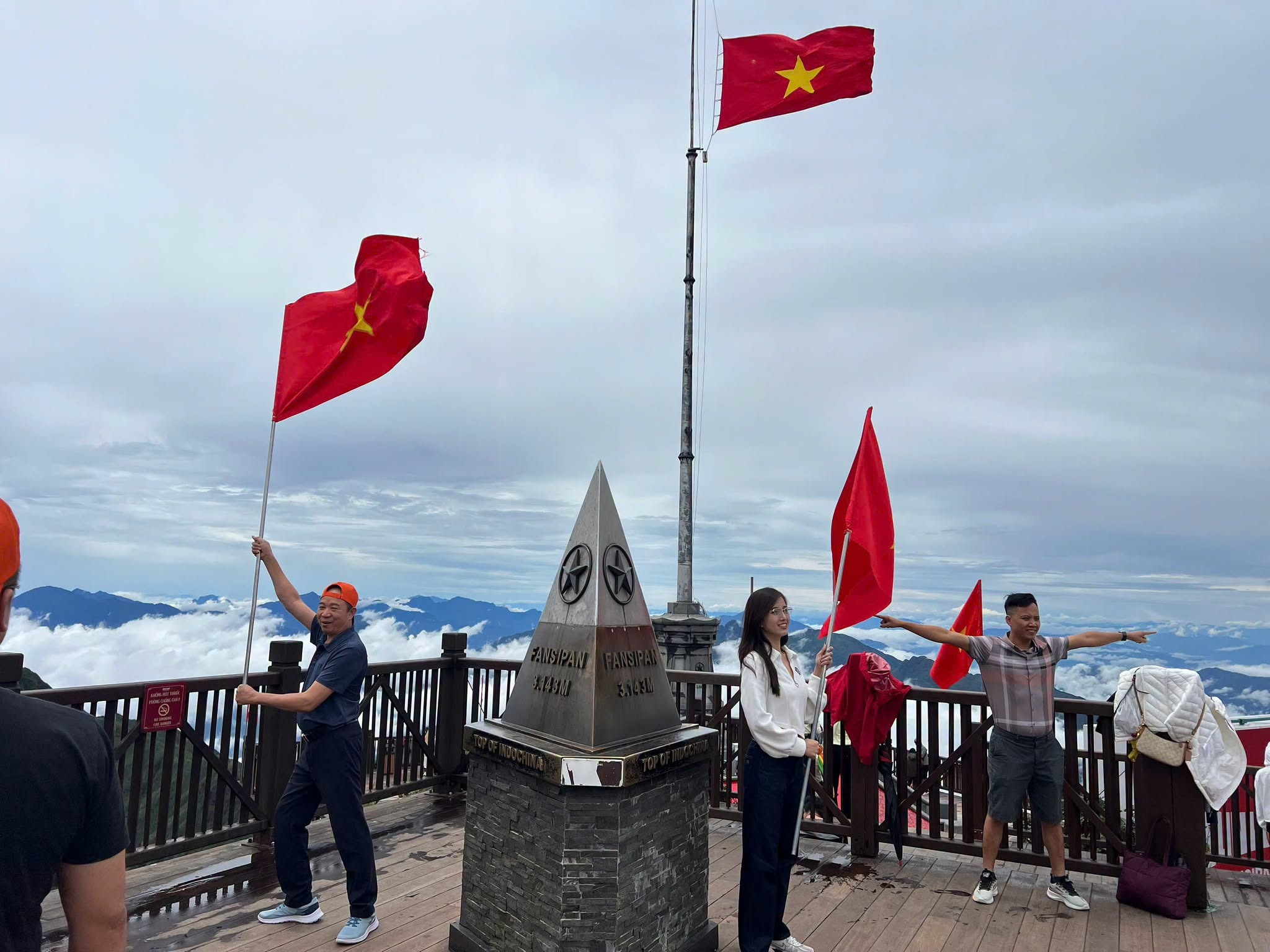
Tourists excitedly check-in at the 3,143m milestone
The milestone area is always a place that attracts a large number of tourists, especially on weekends and peak seasons. To get beautiful photos without waiting too long, you should go to the summit in the early morning or late afternoon. This is also the time when the light is soft, helping the photos stand out more with the backdrop of the sea of clouds and the Hoang Lien Son mountain range.
Not only a famous check-in spot, the Fansipan milestone also holds special meaning for many people. It is the feeling of conquering the summit, completing a long-cherished goal, and preserving memories at the place considered the "roof" of Vietnam. Therefore, this is always an unmissable stop in every Fansipan exploration itinerary.
Not only famous for its natural landscape, the Fansipan travel guide also always suggests tourists spend time exploring the spiritual cultural complex on the mountaintop. The structures bearing the strong imprint of Vietnamese Buddhist architecture not only create a unique landscape but also offer a serene space for tourists to find peace amidst the majestic nature.
The prominent highlight is the towering bronze Amitabha Buddha statue, tens of meters high, majestic amidst the sea of clouds. From here, tourists can gaze at the panoramic view of the Hoang Lien Son mountain range and feel the harmony between nature and spiritual architecture. Continuing the journey, you will encounter Kim Son Bao Thang Pagoda, Bao An Zen Monastery, the Arhat path, and many other structures built with bluestone and wood, bearing the distinct style of traditional Vietnamese architecture.
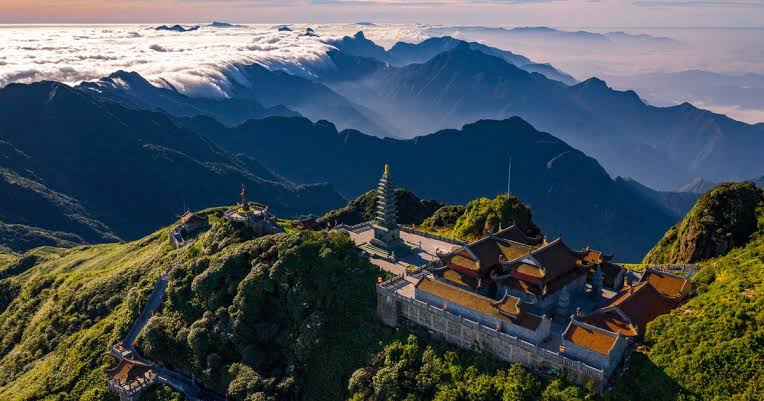
Majestic spiritual complex at Fansipan
The space on Fansipan peak is especially quiet in the early morning, as the temple bells ring amidst the sea of clouds, creating a sense of relaxation and sacredness. Many tourists come here not only to visit but also to pray for peace, health, and luck for their families. This is also why Fansipan has become a beloved destination during early spring or major Buddhist holidays.
To make the visit more meaningful, visitors should choose polite attire when entering the temple area, maintain cleanliness, and avoid making noise. If you have time, the Fansipan travel guide recommends spending at least 1-2 hours to visit the entire complex, enjoying the scenery while learning about the cultural, historical, and architectural values of each structure.
Another highlight in the Fansipan travel guide is the experience of admiring seasonal flowers. Not only famous for its sea of clouds and majestic mountains, Fansipan is also known as the "kingdom of flowers" as each season of the year adorns itself with a unique color. Thanks to the high mountain climate, the flora here is extremely rich, offering visitors different experiences each time they visit.
Spring, from about March to May, is the most prominent period with rhododendrons blooming vibrantly on the slopes of Hoang Lien Son mountain. Dozens of rhododendron species in various colors such as red, pink, yellow, white, and purple create a vibrant scene amidst the mountains and forests. This is also the season when many flower activities and festivals take place, attracting a large number of tourists and photography enthusiasts.
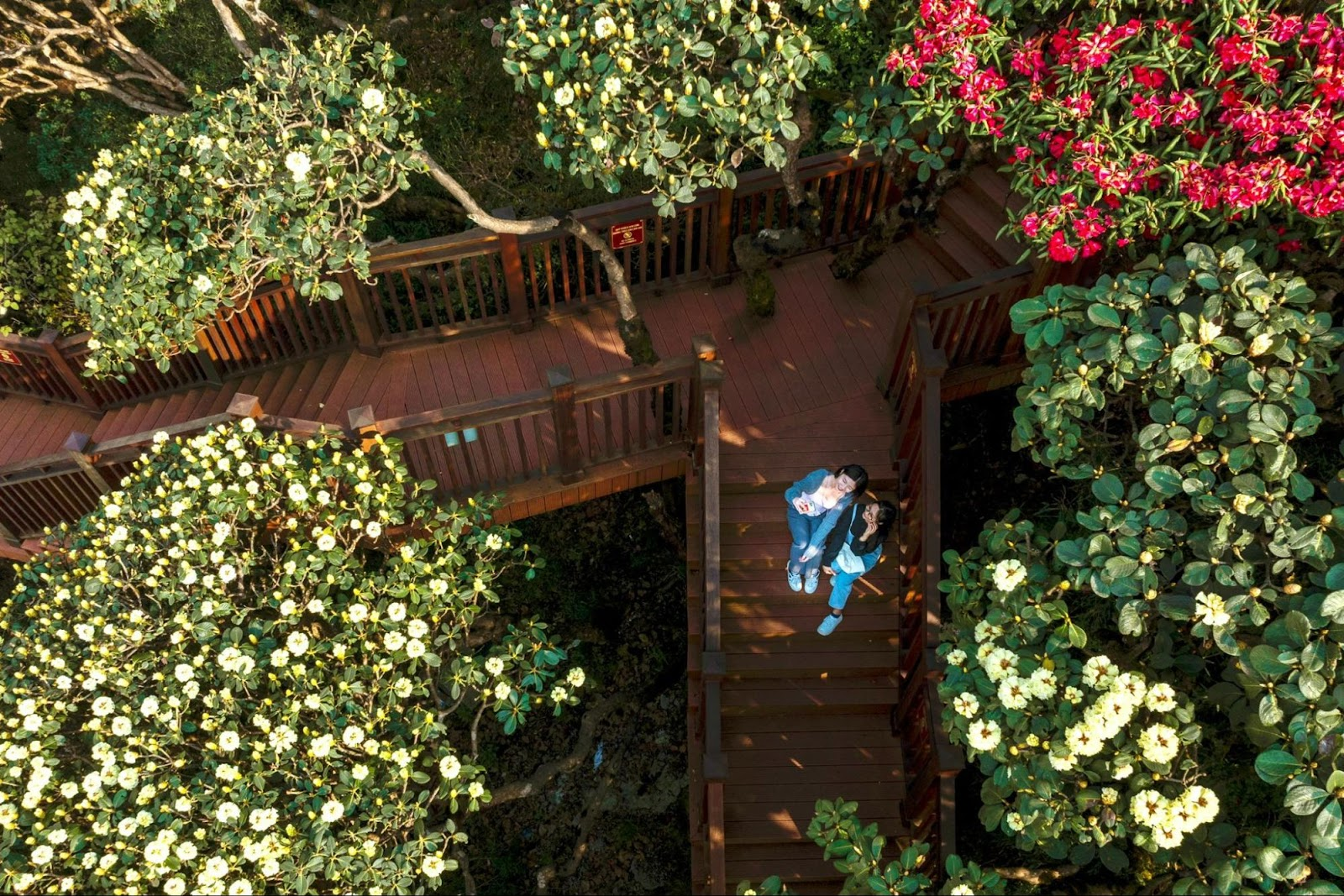
Tourists experience the azalea season at Fansipan
In summer, the Sun World Fansipan Legend area is covered with many temperate flowers such as hydrangeas, climbing roses, firecracker flowers, or seasonal miniatures. When autumn arrives, the cool air combined with the clear blue sky makes the scenery more romantic. In winter, although many flowers enter their dormant period, the misty, frosty landscapes and dew-covered branches still create a unique beauty for Fansipan.
For tourists who love photography, you should spend more time strolling around the flower gardens, squares, and paths in the tourist area to capture beautiful moments. Each season brings a different backdrop, keeping the journey to explore Fansipan fresh even if you have visited many times. If you are planning according to the Fansipan travel guide, you should choose a time that suits your favorite flower season for the most complete experience.
Besides the journey to conquer the mountain peak, the Fansipan travel guide also suggests tourists visit Ban May – a space that recreates the unique cultural life of ethnic groups in the Northwest region right within the Sun World Fansipan Legend tourist area. This is where the traditional beauties of the H'Mong, Red Dao, Tay, Giay, Xa Pho, and Ha Nhi ethnic groups converge through residential architecture, handicrafts, cuisine, and folk cultural activities.
Strolling through Ban May, visitors will encounter wooden houses, rammed-earth houses, and stilt houses restored according to traditional prototypes. Alongside them are local artisans demonstrating brocade weaving, blacksmithing, basketry, musical instrument making, or preparing specialty dishes. This is an opportunity to learn more about the life, customs, and cultural values that have been preserved for generations by the highland communities.
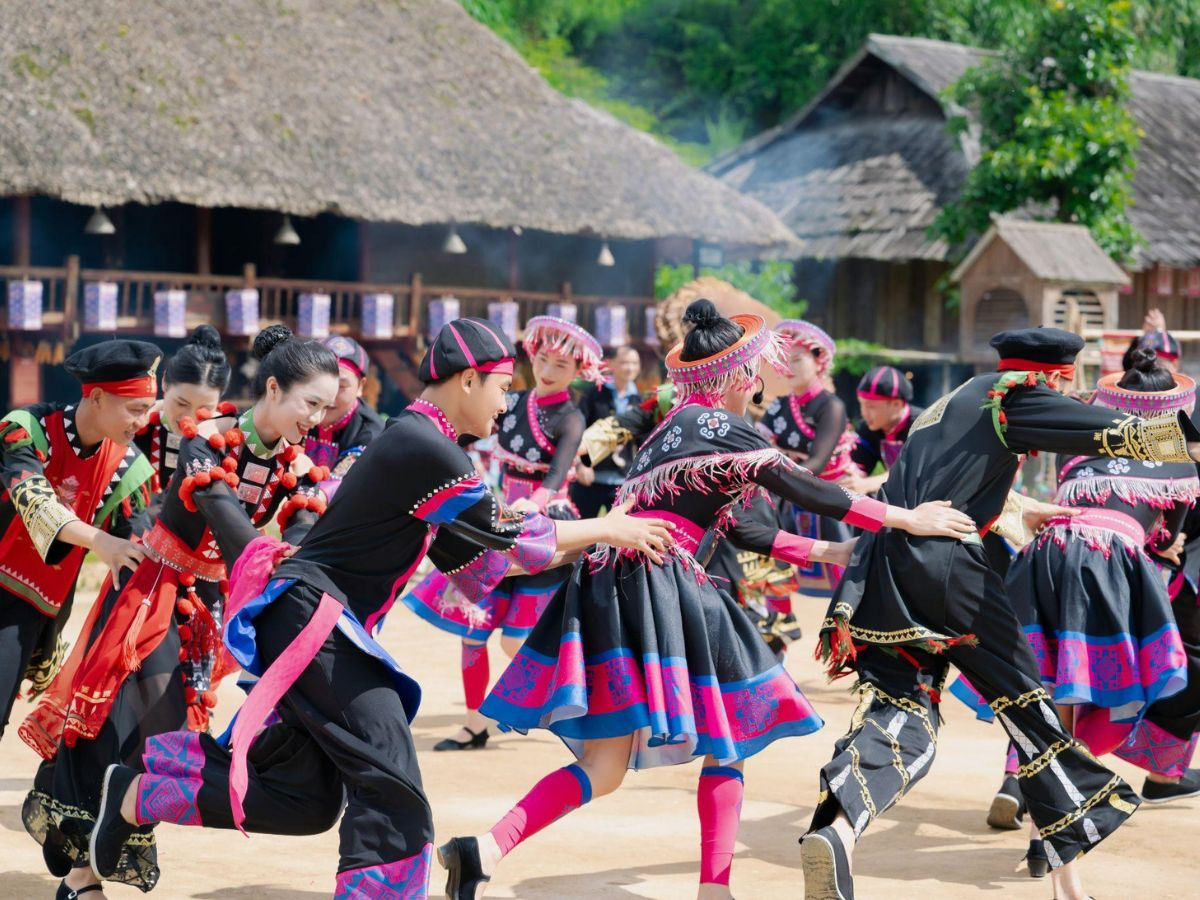
Artistic programs recreating highland life at Ban May impress many tourists
One of the most attractive points at Ban May is the folk art performance programs held at various times of the day. The sound of H'Mong flutes, the Xoe dance, the Dao people's bell dance, or traditional folk games create a vibrant atmosphere, allowing tourists not only to observe but also to participate directly. This is also an ideal place to enjoy Northwest specialties such as Thang Co, local pork, Cơm Lam, Xoi Ngu Sac, or local herbal teas.
Ban May is not only a tourist destination but also contributes to preserving and spreading the cultural identity of the ethnic groups in the highlands to domestic and international tourists. Therefore, if you have time, you should spend at least 1-2 hours exploring this space before finishing your journey at Fansipan. Concluding the journey according to the Fansipan travel guide, Ban May will offer a more complete perspective on the people, culture, and life of the Northwest mountains, making the trip more meaningful.
After exploring the "Roof of Indochina," choosing accommodation and enjoying local specialties will make the trip more complete. Not only boasting majestic natural landscapes, Sa Pa is also famous for its diverse system of hotels, resorts, and a culinary scene deeply imbued with the Northwest's identity. Whether you choose a short trip or a long vacation, planning accommodation and dining in advance will save time, optimize costs, and provide a better experience.
According to the Fansipan travel guide, choosing accommodation near Sun Plaza will save you significant travel time and be more convenient for taking the cable car early in the morning. The central area of Sa Pa town has many 3-5 star hotels, homestays, and resorts with diverse price ranges, as well as easy access to famous attractions such as the Stone Church, Sa Pa Lake, night market, and the Muong Hoa mountain climbing train line.
If you want to enjoy a luxurious holiday, Hotel de la Coupole – MGallery Sapa is one of the most outstanding choices. The hotel was designed by architect Bill Bensley, inspired by the Indochina period combined with the cultural nuances of the Northwest highlands, offering a high-class resort experience with many impressive check-in spots. Notably, the hotel is located right in the Sun Plaza building and has a direct connection to the Muong Hoa mountain climbing train station, making it easy for tourists to start their journey to conquer Fansipan without traveling far. Besides the luxurious room system, the hotel also boasts a restaurant, spa, indoor hot pool, and a bar with panoramic views of Sa Pa town.
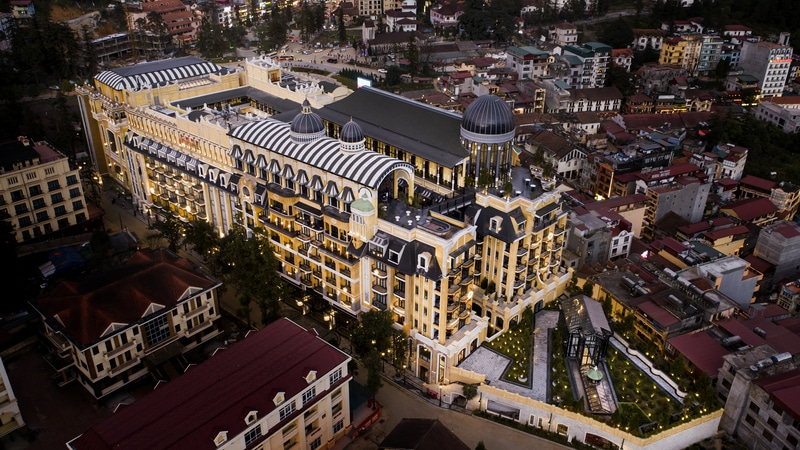
Aerial view of Hotel de la Coupole from above
Besides MGallery, tourists can also choose many hotels and homestays around the central area depending on their budget. For those who love quiet spaces, resorts located along Muong Hoa valley will offer a resort experience amidst mountains and forests with views towards the Hoang Lien Son mountain range. However, if you plan to go to Fansipan early in the morning to hunt for clouds, staying in the central area is still the most convenient option.
To get a good price, the Fansipan travel guide recommends booking rooms 2–4 weeks in advance, especially during the rhododendron season, rice harvest season, cloud hunting season, or holidays and Tet. Booking early not only helps you have more choices but also makes it easier to receive promotions from hotels or online booking platforms.
An indispensable part of the Fansipan travel guide is the culinary experience right at the tourist area. After your journey or before continuing to explore Fansipan peak, enjoying a hot meal amidst the chilly weather will help you recharge and fully enjoy your trip. Among the dining options, Van Sam buffet and Sharia restaurant are two prominent choices that meet the needs of many tourist groups.
If you love Northwestern cuisine, the Van Sam Restaurant Buffet is a must-visit stop. The restaurant is located on the 2nd floor of the Hoang Lien cable car departure station, boasting a spacious area with large capacity and serving over 50 dishes ranging from local specialties to familiar dishes. The menu features river fish, free-range chicken, smoked buffalo meat, five-colored sticky rice, wild vegetables, grilled dishes, and many attractive desserts, suitable for both group and family guests. This is an ideal choice for a meal before heading to the peak or resting after exploring Fansipan.
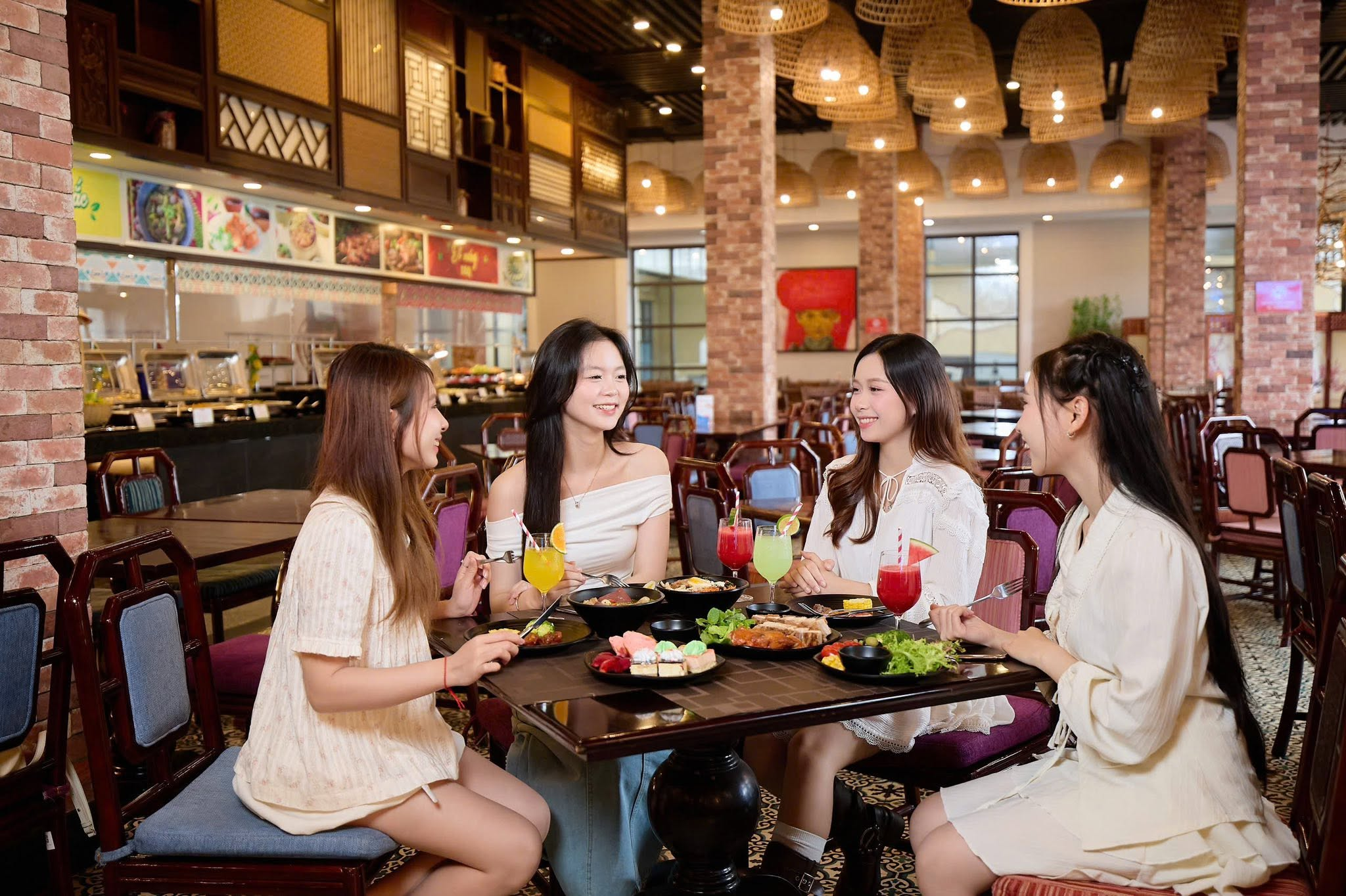
Tourists enjoy experiencing specialty dishes at Van Sam buffet restaurant
For Muslim tourists or those wishing to enjoy Halal cuisine, the Sharia Restaurant is a new highlight at Sun World Fansipan Legend. The restaurant serves a Halal-certified menu with processes for selecting ingredients, preserving, and preparing that strictly adhere to standards for Muslims. The menu combines traditional Halal dishes with international cuisine, meeting the needs of tourists from Malaysia, Indonesia, Brunei, India, the Middle East, and many other countries. The presence of the Sharia restaurant also contributes to making Fansipan a more friendly destination for international tourists.
Besides the two locations above, after returning to the center of Sa Pa, you should also take time to enjoy famous specialties such as salmon hot pot, sturgeon, thang co, grilled wild boar, black chicken, or grilled dishes at the night market. According to the Fansipan travel guide, combining nature exploration with local culinary experiences will make the trip more complete and memorable.
Although conquering the "Roof of Indochina" has become easier today thanks to the modern cable car system, thorough preparation still plays an important role in ensuring a smooth and safe trip. From choosing the departure time, monitoring the weather, preparing clothing, to arranging the itinerary, each factor directly affects your experience at the Fansipan peak. Therefore, before concluding the Fansipan travel guide, please refer to the following experiences for the most complete journey.
One of the most important experiences in the Fansipan travel guide is choosing the right time for cloud hunting. Although Fansipan can offer sea of clouds year-round, the success rate for cloud hunting is usually higher from September to April of the following year, especially after rainy days or when the air humidity is high. During this period, thick layers of clouds cover the valleys, creating a spectacular scene that any tourist wishes to behold.
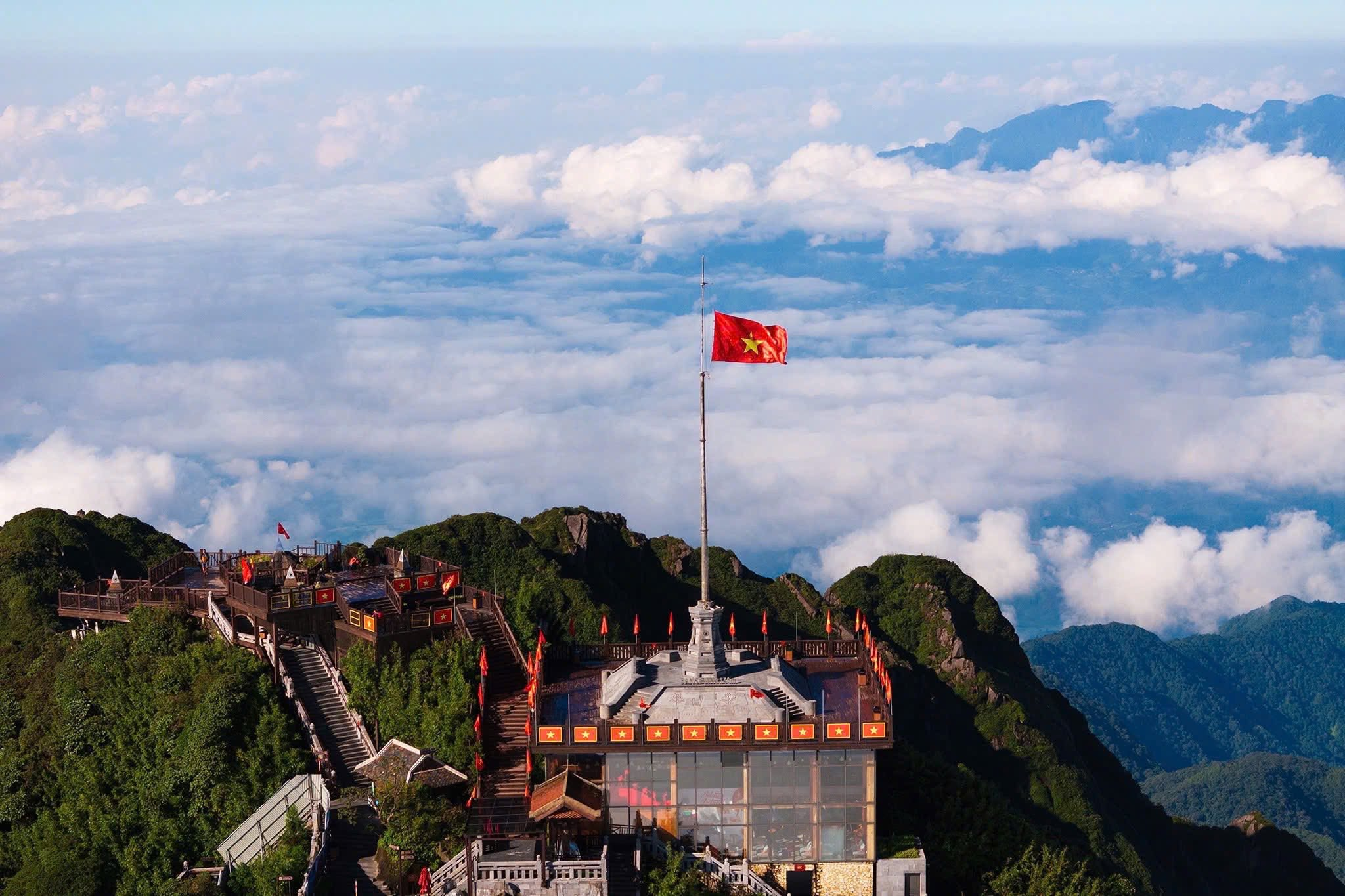
The sea of clouds scenery at Fansipan attracts many tourists to experience
Besides choosing the right season, the time to reach the summit is also very important. According to the experience of many tourists, around 8:00 AM – 10:00 AM is the ideal time to admire the sea of clouds when the sunlight begins to penetrate the cloud layers, creating a brilliant scene and beautiful views. If you want to take photos, you should prioritize clear, less windy days and check the weather forecast 1–2 days before your trip to increase your chances of successful cloud hunting.
Don't forget to bring a light jacket, a power bank, and clean your camera or phone lens before shooting. Moisture and fog on the mountaintop can cause photos to be blurry if not prepared carefully. A little proactivity will help you capture the most beautiful moments on your journey to explore Fansipan.
According to the Fansipan travel guide, the weather on the mountaintop is always 7–10°C lower than in Sa Pa center and can change very quickly within the same day. Regarding attire, you should prioritize neat, easy-to-move-in clothing that can keep you warm. Even in summer, the temperature on Fansipan peak is still quite cool, especially in the early morning and late afternoon. A windbreaker or a light thermal jacket, combined with sports shoes with good grip, will help you move conveniently on the stone steps and paths within the tourist area. If traveling in winter, prepare extra scarves, gloves, woolen hats, and thick jackets to protect your body from temperatures that can drop below 0°C.
Besides clothing, you should also bring sunscreen, sunglasses, drinking water, personal medication, and a power bank. Although the temperature is not high, the UV intensity in mountainous areas is still quite strong, especially on clear days. For the elderly or young children, it is advisable to take time to rest after reaching the summit to allow the body to adapt to the change in altitude before continuing the tour.
According to the Fansipan travel guide, if you are only visiting the summit area and the spiritual complex, you should allocate about 3–4 hours. If you combine exploring Ban May, experiencing the mountain climbing train, dining, and visiting Sa Pa center, a 1-day itinerary would be more suitable.
Not mandatory. After taking the cable car to Fansipan station, tourists can choose the Fansipan mountain climbing train to get close to the milestone or hike the final stone steps. Families with young children and the elderly often prefer to take the train to save energy.
Each season has its own charm. March–May is the season for azaleas, September–November is suitable for cloud hunting and admiring terraced fields during the ripe rice season, while December–February offers the chance to see frost or snow if the weather is favorable. Depending on your preference, you can choose the right time for the best experience.
Yes. The Fansipan travel guide recommends that tourists book tickets online before their trip, especially on weekends, holidays, or peak seasons. Buying tickets early helps save queuing time, allows for a proactive itinerary, and you may receive special offers from Sun World Fansipan Legend.
Absolutely. Thanks to the modern cable car system and mountain climbing train, the journey to Fansipan is suitable for most tourists. However, the elderly with cardiovascular or blood pressure conditions should consult their doctor before the trip and rest if they feel tired due to altitude changes.
Hopefully, the Fansipan travel guide above will help you easily plan your journey to explore the "Roof of Indochina" smoothly and completely. From choosing the ideal time, transportation, buying cable car tickets to must-do experiences like cloud hunting, checking in at the 3,143m milestone, exploring the spiritual cultural complex, or enjoying Northwestern cuisine, each stop promises to bring memorable moments.
Don't forget to book tickets and plan your itinerary before your trip to manage your time proactively, especially during the cloud hunting season, azalea season, or holidays and Tet. With thorough preparation and the suggestions in the Fansipan travel guide, you will have the opportunity to fully enjoy the beauty of the Hoang Lien Son nature and unique experiences only available at Sun World Fansipan Legend. We wish you a safe, emotional journey and many memorable moments at the highest peak in Vietnam.
Let's start your vacation!

Special offer up to 30% when booking tickets on the Sun Paradise Land app

