


Cuisine

Thanh Hoa's Banh Rang Chua: A simple, chewy, and fragrant rural treat
Banh Rang Bua Thanh Hoa, also known as Banh La Rang Bua, originates from Trung Lap village, Xuan Lap commune – a land rich in Thanh cultural traditions. This cake is associated with a historical anecdote about King Le Dai Hanh. Legend has it that, at the beginning of spring, the king performed the ritual of plowing the fields to encourage agricultural production. To commemorate that event, local people created this special cake and used it as an offering to the king.
The cake has a long, slender shape, slightly pointed at both ends and gently bulging in the middle, mimicking the tooth of a harrow – a familiar agricultural tool in rice cultivation. More than just a dish, the cake symbolizes diligent labor, the rice civilization, and the life closely tied to the fields of the Thanh Hoa people through generations.
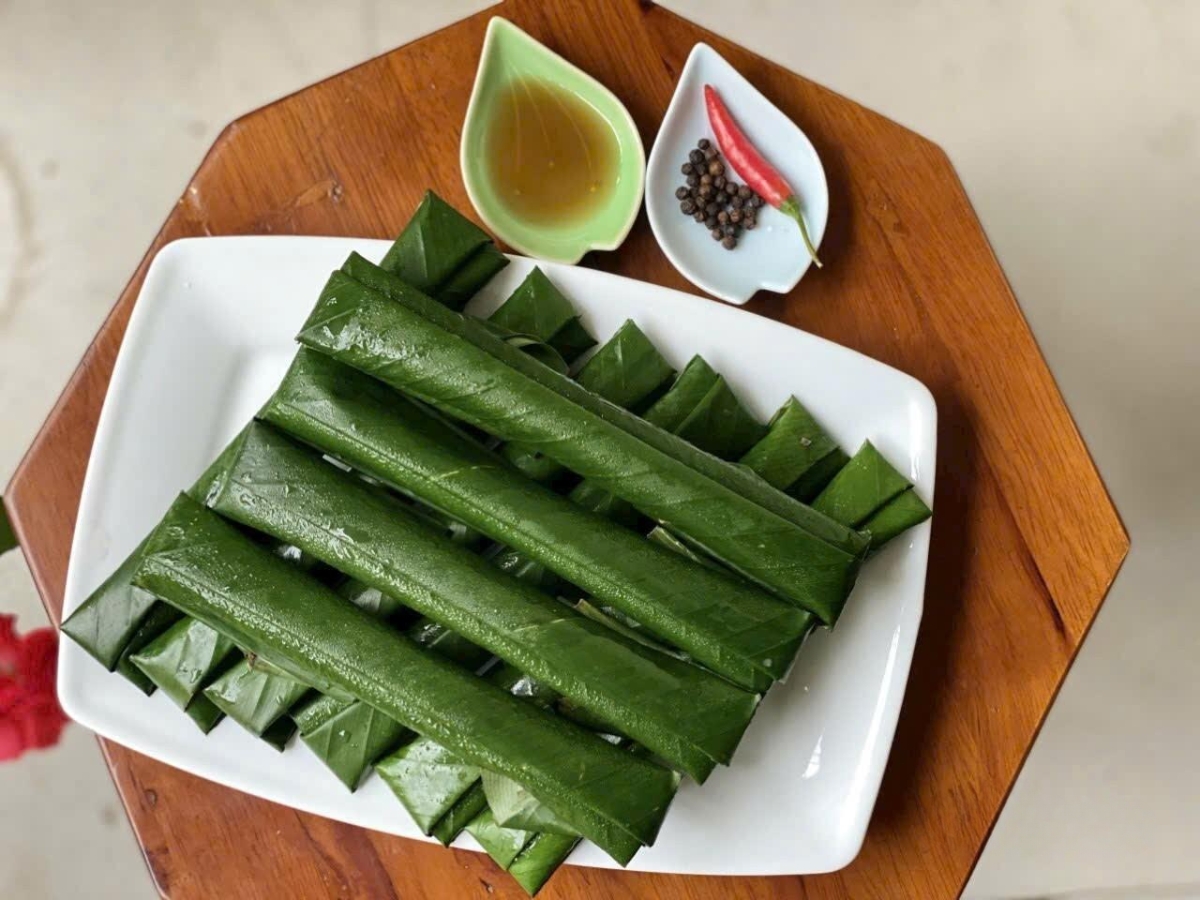
Banh rang bua Thanh Hoa is associated with a historical anecdote about King Le Dai Hanh. (Source: Collected)
Banh rang bua Thanh Hoa , although rustic, requires meticulousness from the ingredient selection stage to be made in the traditional flavor. Each ingredient contributes to creating the harmonious flavor and characteristic texture of the Banh rang bua Thanh Hoa dish:
Rice: Choose rice with moderate stickiness, even grains, usually new rice after harvest, so that when ground into flour, it creates a soft, smooth, yet not crumbly bánh crust.
Filling ingredients: Mainly includes minced pork belly, finely chopped wood ear mushrooms, and fragrant fried shallots, creating a rich, slightly fatty, and attractively aromatic filling.
Spices: Pepper, salt, and fish sauce are seasoned moderately, giving the filling a savory, slightly spicy flavor but not overpowering the natural sweetness of the meat.
La dong leaves: Use tender leaves, neither too young nor too old, to make wrapping easy, prevent tearing during boiling, and help the bánh have a gentle aroma and a beautiful green color.
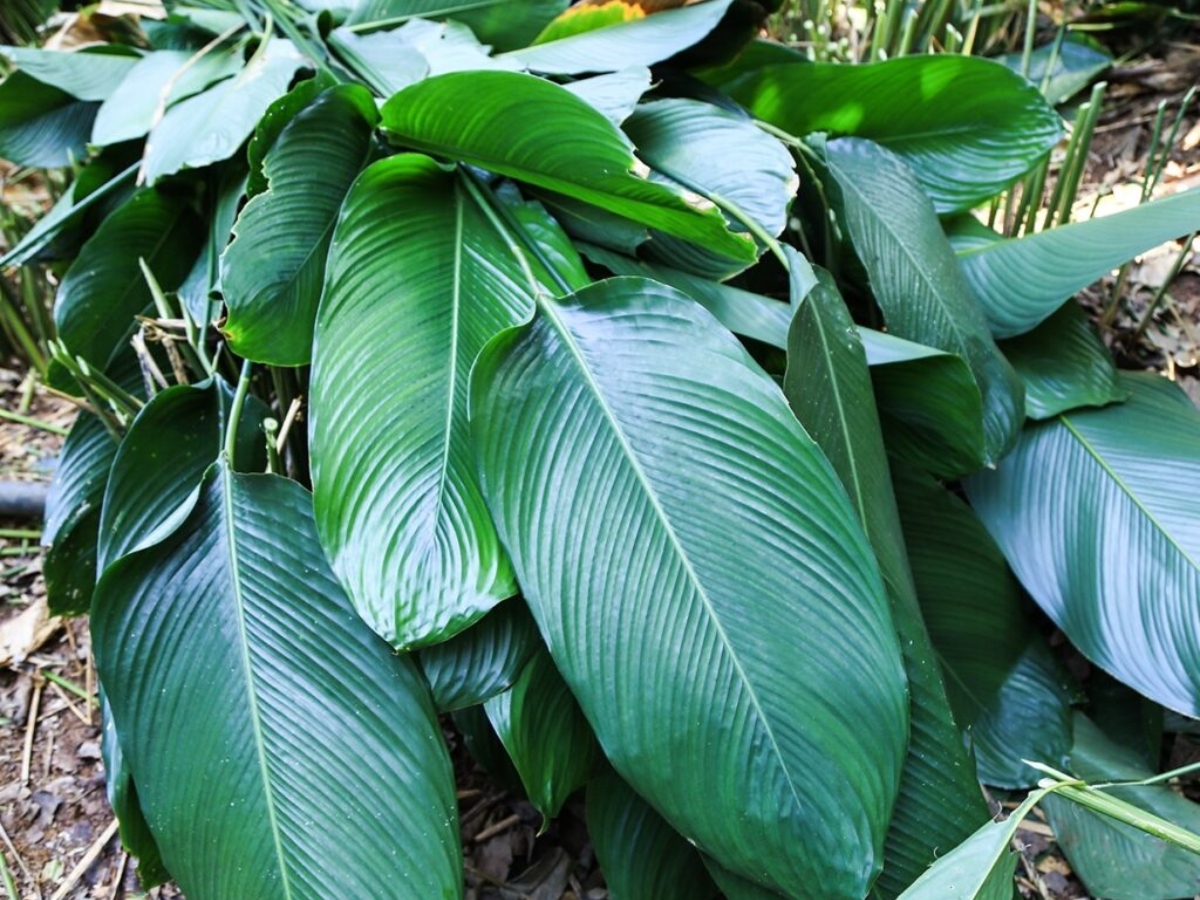
Dong leaves for wrapping cakes must be young, tender leaves with a beautiful green color. (Source: Collected)
To make the traditional Thanh Hoa Rang Bua cake, the preparation stage needs to be done carefully and in the correct order. First, the rice is soaked in cold water for about 2 – 3 hours until the grains soften, then it is ground finely using a manual grinder to maintain the smoothness and coolness of the flour. The resulting rice flour is cooked over a small flame, stirred continuously by hand until the mixture thickens and becomes smooth and pliable, then it is removed from the heat and allowed to cool naturally.
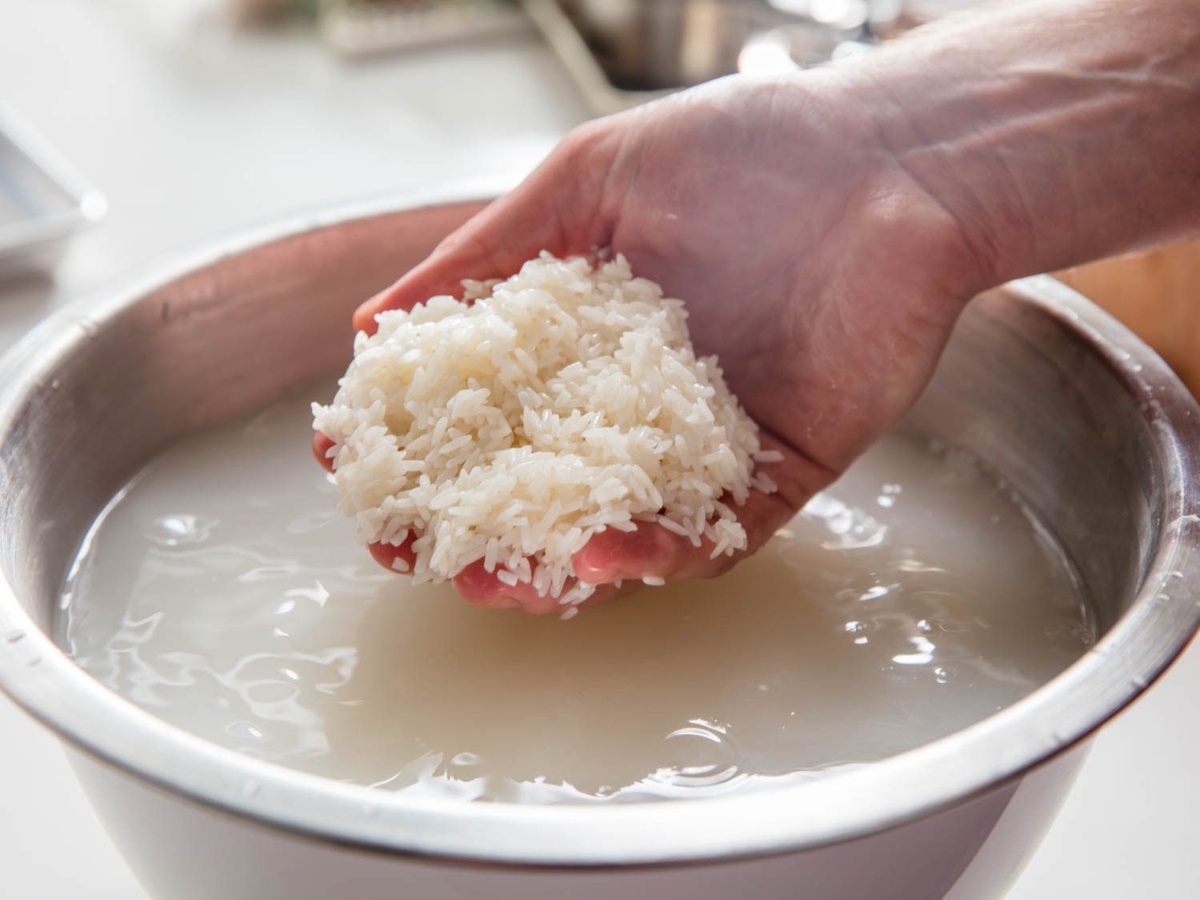
Soak rice in cold water for 2-3 hours until the grains soften. (Source: Collected)
Meanwhile, pork belly, wood ear mushrooms, and onion are finely chopped, mixed with seasonings such as salt, pepper, and fish sauce to absorb the flavors, then stir-fried until cooked for about 5-10 minutes until the filling is fragrant and drained. Finally, dong leaves are washed thoroughly, dried with a clean cloth to prepare for the cake wrapping stage, ensuring the cakes are not tainted by strange smells and retain their natural aroma when steamed.
After preparing the dough and filling, the wrapping process significantly determines the characteristic shape of Thanh Hoa Rang Chua cakes. The cake maker uses chopsticks to take an adequate amount of dough and place it on the dong leaf, spreading it evenly lengthwise to create a long, slender cake body. The fragrant stir-fried filling is placed in the center of the dough layer, ensuring the filling is evenly distributed so that the crust and filling are harmoniously visible when the cake is cut.
Next, the two edges of the leaf are folded lengthwise, creating a slight curve in the middle so the cake bulges in the middle and tapers at both ends, resembling a plow tooth. Gently press and wrap tightly to prevent the dough from leaking out when cooked. The wrapped cakes are then arranged in a circle in a pot and steamed for about 20-30 minutes until the cake crust turns a light translucent color and the aroma of dong leaves and rice flour rises, indicating they are ready.
Thanh Hoa Rang Chua cakes are memorable first and foremost for the gentle aroma of dong and banana leaves mixed with the scent of cooked rice and the rich stir-fried pork and onion filling. When the outer leaves are peeled away, the cake crust appears lush green, soft, and slightly translucent, revealing the attractive pinkish-brown filling inside. Taking a bite, visitors will experience the slight chewiness of the rice flour, the richness of the pork, and the crunchy texture of the wood ear mushrooms combined with warm pepper. The cakes are best enjoyed dipped in fish sauce mixed with lime and chili, or sprinkled with a little ground pepper, creating a simple, rustic flavor combination that is increasingly addictive with every bite.
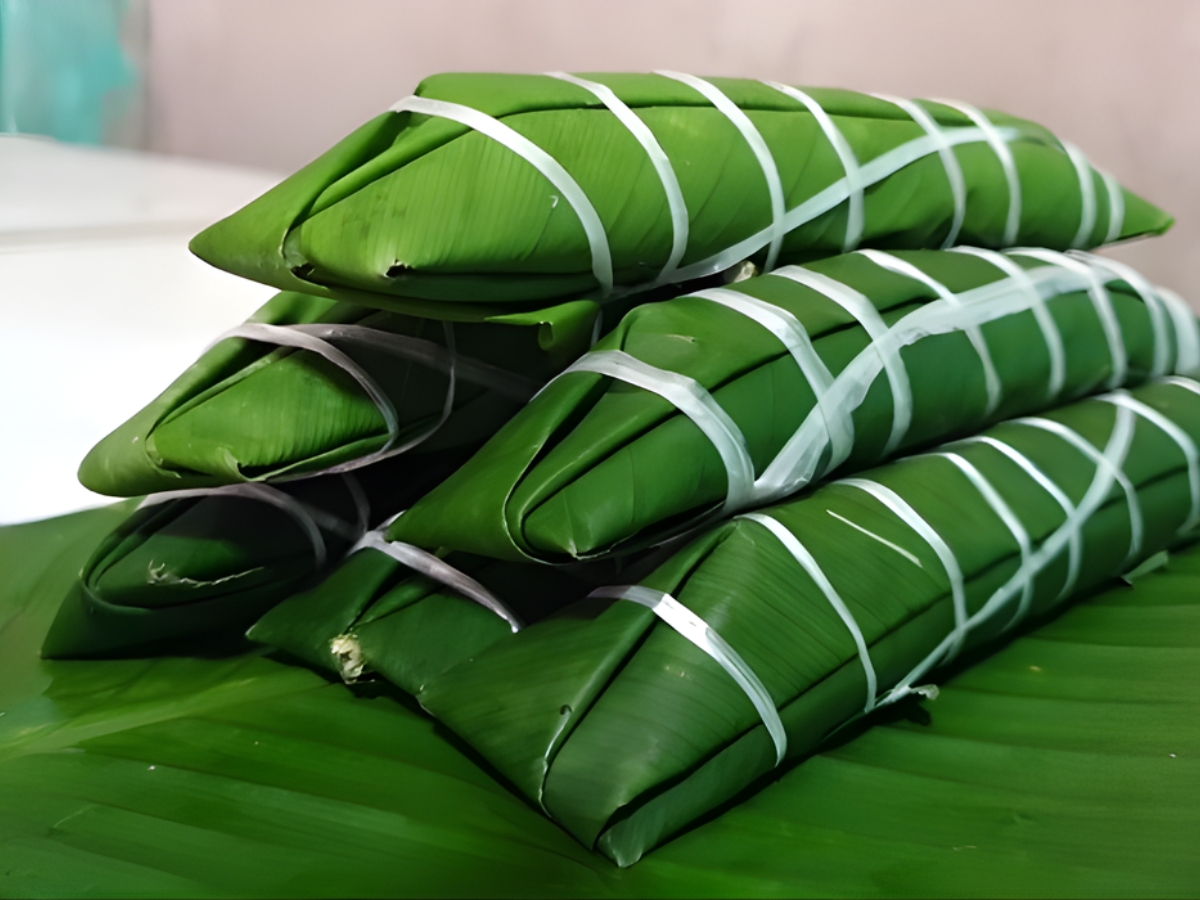
Răng Bừa cake is a rustic but extremely delicious dish. (Source: Collected)
Amidst the many delicacies of this land of spiritual and heroic people, Thanh Hoa's Răng Bừa cake holds a very special place thanks to its simplicity yet deep cultural significance. The cake is not elaborate in ingredients or preparation, originating from agricultural life, linked to historical anecdotes and the diligent spirit of the people of Thanh Hoa. From the shape of a "plow tooth" to its rustic flavor, everything reflects a simple, hardworking lifestyle, valuing labor and family traditions.
More than just a dish, the cake is present in festivals, Tet holidays, and ancestor worship ceremonies as part of the collective memory of many generations. Over time, even as modern cuisine becomes increasingly diverse, this small cake is preserved as a symbol of local culinary culture, reminding people of their roots and the affectionate lifestyle of the people of Thanh Hoa.
In the journey of exploring local cuisine, this is a specialty that tourists should definitely try to fully appreciate the "countryside essence" of this region. It is not just a filling meal; Thanh Hoa's Răng Bừa cake also offers a cultural experience, where tourists can gain a deeper understanding of the history, customs, and how people embed their homeland's stories into each rustic dish.
Enjoying the hot cake, dipped in a slightly spicy fish sauce amidst a rural setting, at a traditional market, or at tourist stops will make the experience more complete. This very simplicity creates a profound impression, so that whenever one remembers Thanh Hoa, tourists recall not only the beautiful scenery but also the familiar taste of this traditional cake.
Thanh Hoa's Răng Bừa cake was previously only available on special occasions such as festivals, Tet holidays, full moon days, or ancestor worship ceremonies. However, nowadays, this traditional cake is made daily by locals to serve the needs of tourists from near and far. Thanks to this, tourists can easily find hot, soft, chewy cakes with the aroma of dong leaves in many residential areas, craft villages, or local specialty shops without having to wait for a festival.
If you visit Thanh Hoa around the 7th – 9th day of the 3rd lunar month in Tho Xuan, you can not only enjoy Răng Bừa leaf cake with its traditional flavor but also immerse yourself in the atmosphere of the Le Hoan festival – an event to commemorate King Le Dai Hanh. During these days, people use the cake to offer to their ancestors, and simultaneously organize many vibrant folk activities such as fish catching, eel catching, and cake making competitions, creating an atmosphere that is both solemn and lively, deeply imbued with the cultural identity of Thanh Hoa.
Besides festival occasions, tourists can also buy cakes at traditional markets such as Dien Bien Market, Vuon Hoa Market, and many other local markets. At famous tourist spots or along the streets, street vendors also sell this rustic cake, making it convenient for tourists to enjoy on the spot or buy as gifts.
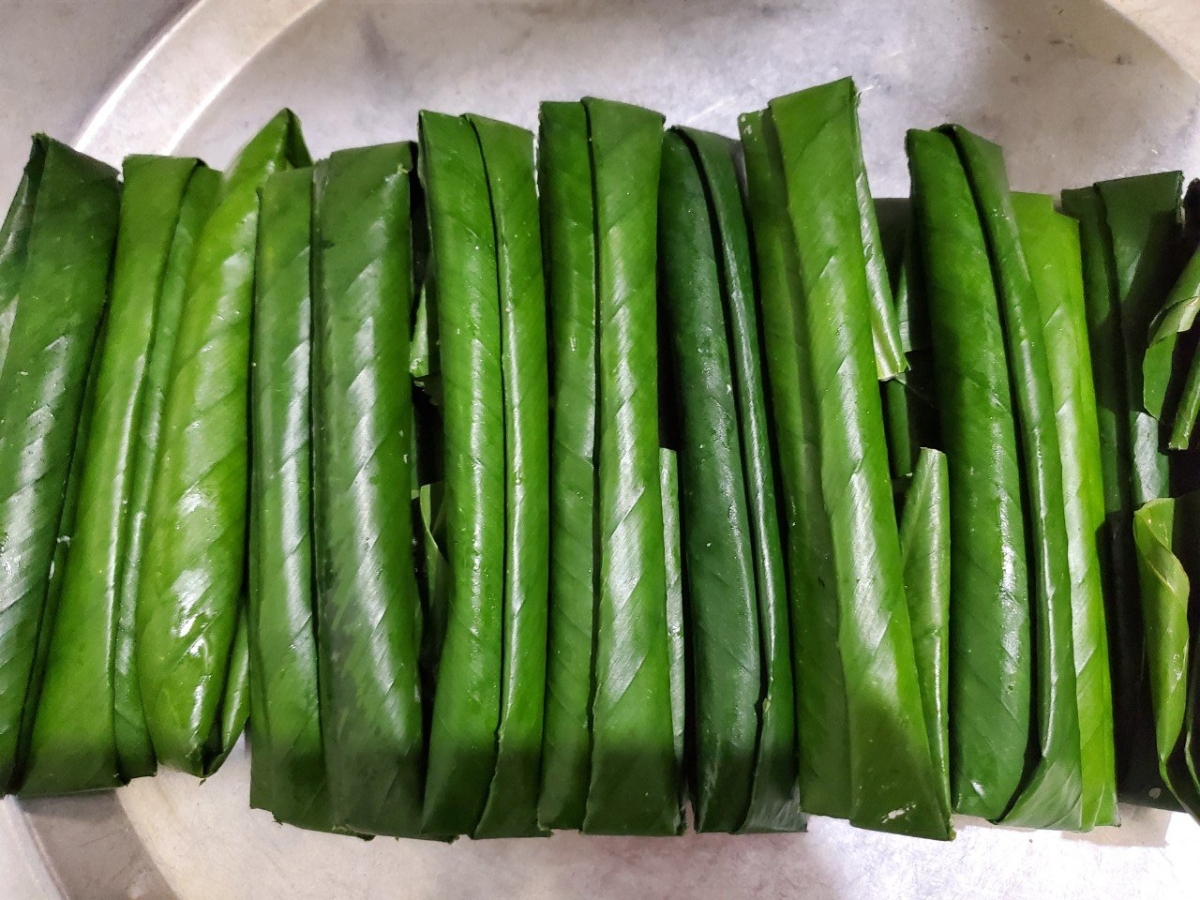
Tourists can buy banh rang bua at markets and street vendors in Thanh Hoa. (Source: Collected)
Enjoying banh rang bua will be more complete when tourists combine it with a journey to explore the outstanding destinations of Thanh Hoa province. After strolling amidst the picturesque natural scenery in Sam Son, visiting the sacred spiritual complex at Doc Cuoc Temple, or immersing yourself in the cool green ecological space of Pu Luong, tourists can stop to enjoy this rustic dish as a way to fully "taste" the homeland's flavor. Each destination has its own character, from the sea, mountains to spiritual culture, but all share a very characteristic rustic charm of Thanh Hoa.
In the future, this journey can be extended to the spiritual ecological tourist area of Huyen Tich Am Tien in Nui Nua, which is expected to become a major pilgrimage site in the North. Combining visits to the world cultural heritage site of Ho Citadel, the fascinating Cam Luong fish stream, and exploring the peaceful Hai Tien beach, tourists will not only admire the diverse scenery but also have the opportunity to enjoy banh rang bua right at the local markets along the way. The intertwining of cuisine and tourism will make the Thanh Hoa trip more profound, satisfying both the eyes and the heart.
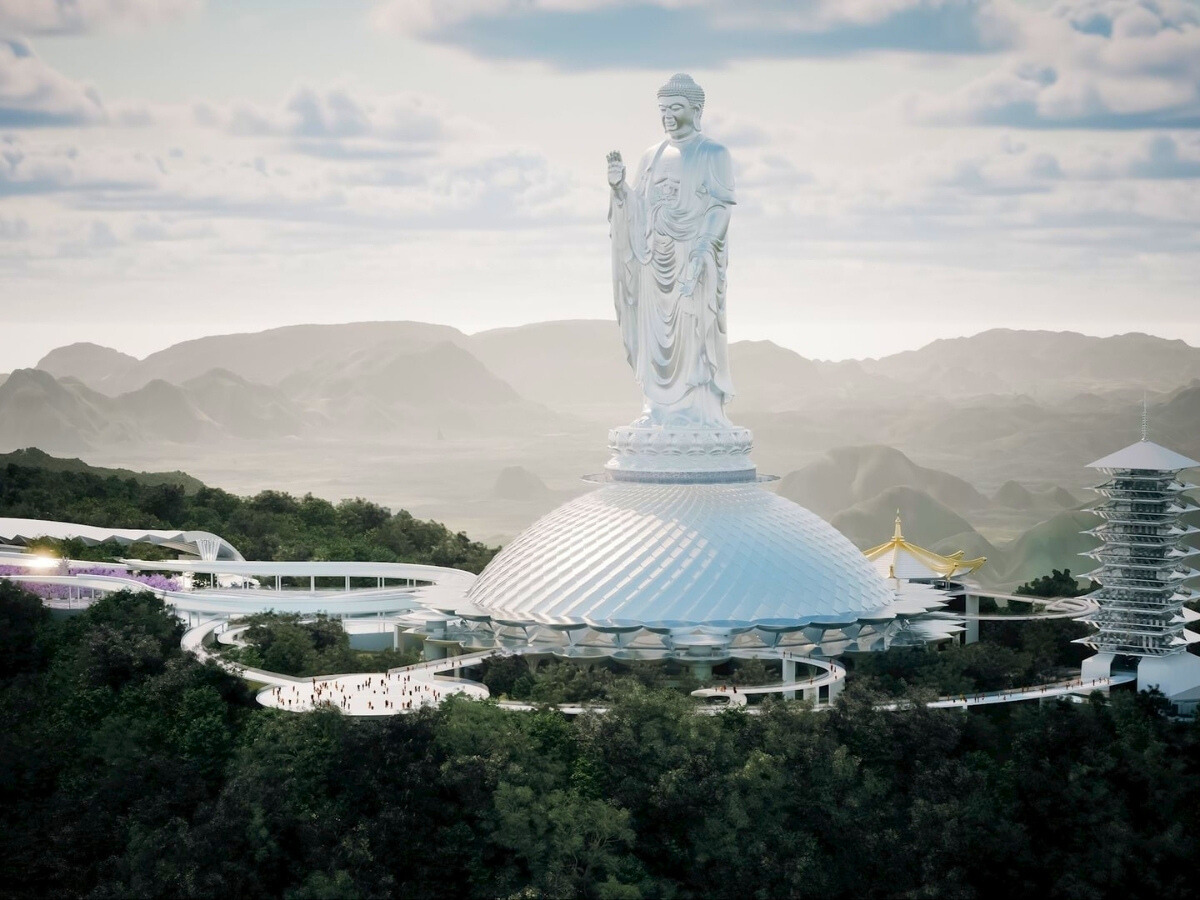
Perspective image of the Huyen Tich Am Tien project being built at Nui Nua - Am Tien. (Source: Collected)
Simple yet rich in identity, Banh Rang Chua Thanh Hoa is not just a rustic dish but also a flavor associated with the memories of rural life and the working culture of Thanh Hoa people. From the soft, smooth dough crust fragrant with the scent of leaves to the rich filling inside, everything creates a simple yet unforgettable culinary experience for tourists whenever they visit. If you have the chance to visit Thanh Hoa, don't forget to enjoy and bring some back as gifts to fully appreciate the essence of local specialties.
Let's start your vacation!

Special offer up to 30% when booking tickets on the Sun Paradise Land app

