


Cuisine

Discover the famous OCOP specialty, Cam Thuy arrowroot noodles, from Thanh Hoa.
Cam Thuy Glass Noodles are a typical traditional culinary product of Cam Thuy district, now the communes of Cam Thach, Cam Tu, and Cam Van. The noodles are primarily produced from the starch of the dong rieng (arrowroot) plant. The distinctive characteristic of this type of noodle lies in its manual processing, without the use of preservatives or chemical additives, ensuring the natural qualities of the ingredients are preserved.
Thanks to being produced entirely from pure dong rieng starch, Cam Thuy Glass Noodles meet food safety and hygiene requirements, becoming a product trusted and chosen by consumers.
The craft of making glass noodles in Cam Thuy is believed to have originated during the Later Le dynasty, when some artisans from other regions settled and passed down noodle-making techniques. With the unique natural conditions of the northwestern low mountainous area of Thanh Hoa province, which has a large proportion of hills and mountains, the dong rieng plant grows favorably, forming the foundation for the noodle-making craft to emerge and develop.
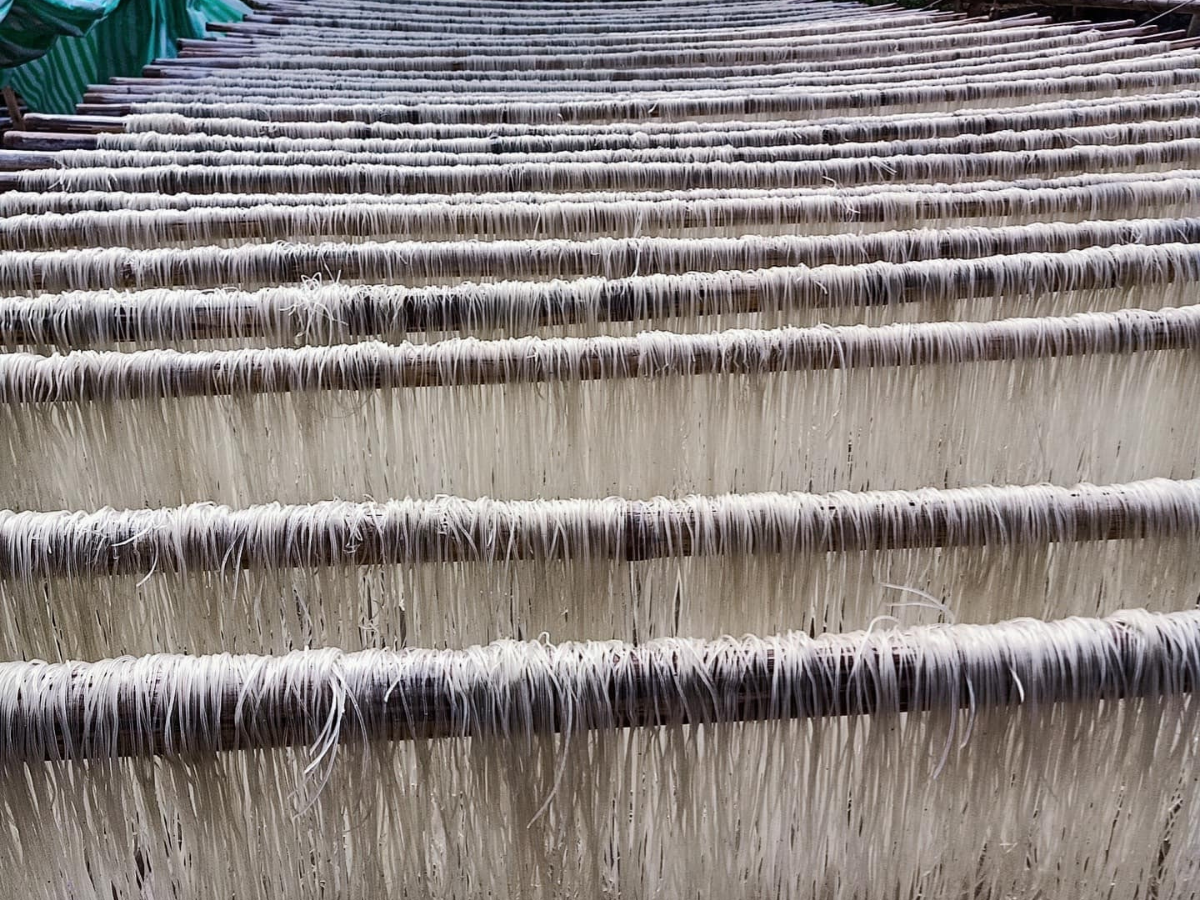
Vermicelli making has a history of hundreds of years. (Source: Collected)
Through many generations, the production of vermicelli has been maintained within artisan village households. In particular, Cam Binh commune is considered a concentrated production area, where people still preserve traditional secrets in the vermicelli making process.
In recent years, some stages have been supported by machinery to increase productivity and meet market demand. However, the core processing methods and the spirit of traditional craft are still preserved, contributing to ensuring the quality and identity of the product.
Cam Thuy vermicelli plays an important role in rural economic development, creating a stable income source for many households in Cam Thuy district and some neighboring areas. The vermicelli making craft not only helps solve employment but also maintains a sustainable livelihood linked to local agriculture.
In culinary life, Cam Thuy vermicelli is commonly used in family meals with various preparation methods such as stir-frying, soup cooking, or mixing. Especially during the Lunar New Year, vermicelli often appears on traditional feasts, symbolizing abundance and good fortune.
The development of the Cam Thuy vermicelli artisan village contributes to enhancing the value of local products, while also promoting Thanh Hoa's culinary image to domestic and international markets, creating pride for the local community.
The quality of Cam Thuy vermicelli originates from cassava roots grown in areas with soil conditions suitable for cassava. The mineral-rich soil helps cassava grow well, yielding a high starch content that meets the requirements for traditional vermicelli production.
Among these, Cam Binh commune is a concentrated area for cassava cultivation, supplying the main raw material for vermicelli production facilities. The application of safe cultivation processes helps ensure stable input quality, creating a foundation for vermicelli products to achieve uniformity in color and texture.
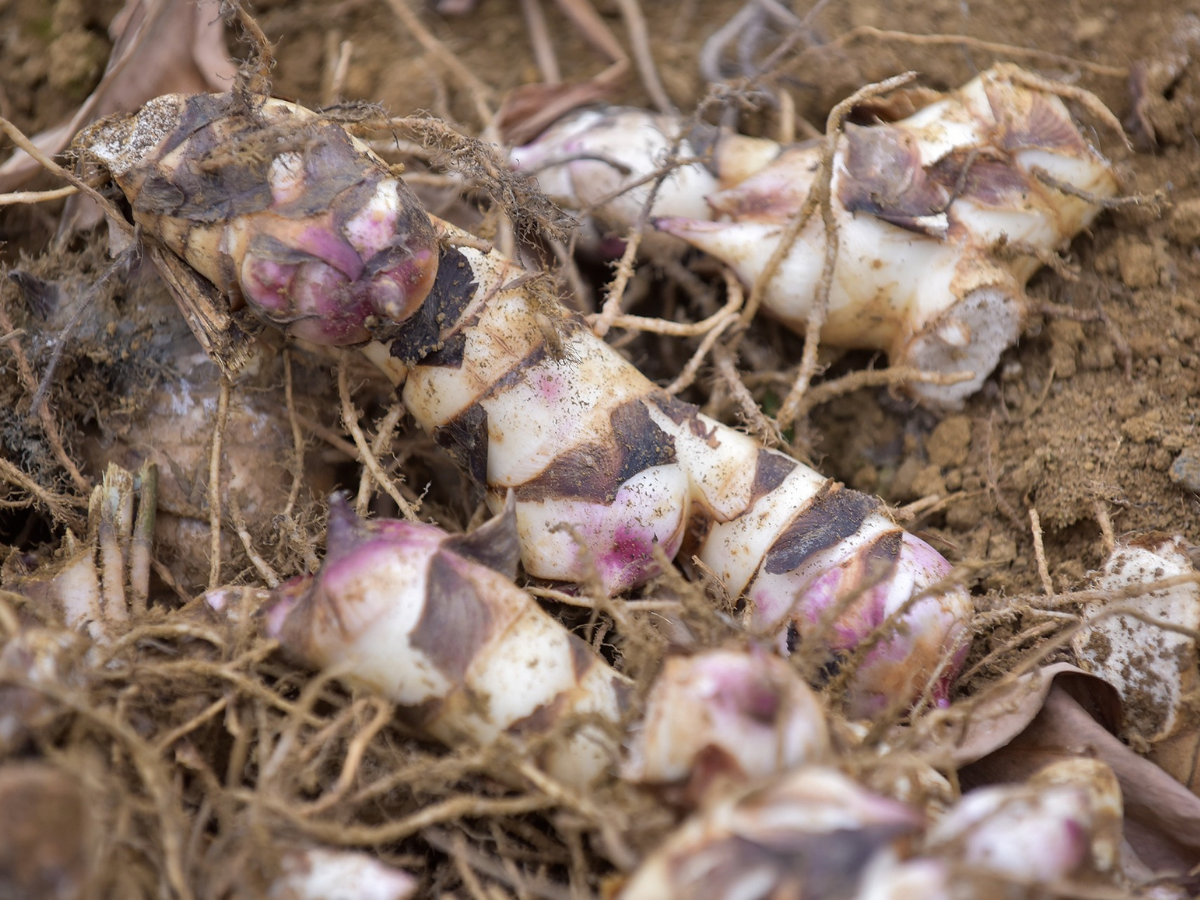
Arrowroot is the characteristic ingredient of Cam Thuy arrowroot noodles. (Source: Collected)
Arrowroot in Cam Thuy has a high amylose content, combined with good crystallization ability during processing, contributing to the creation of chewy, durable noodles with a naturally sweet and clear taste.
Cam Thuy arrowroot noodles are highly appreciated for their moderate chewiness, not breaking during soaking, boiling, or stir-frying. This characteristic makes the noodles suitable for various cooking methods, from soup dishes to stir-fries.
The noodles have a natural clear color, a smooth surface, creating a clean and attractive appearance when serving dishes. Thanks to a strictly controlled production process, the noodles maintain their durability and do not break apart when cooked at high temperatures.
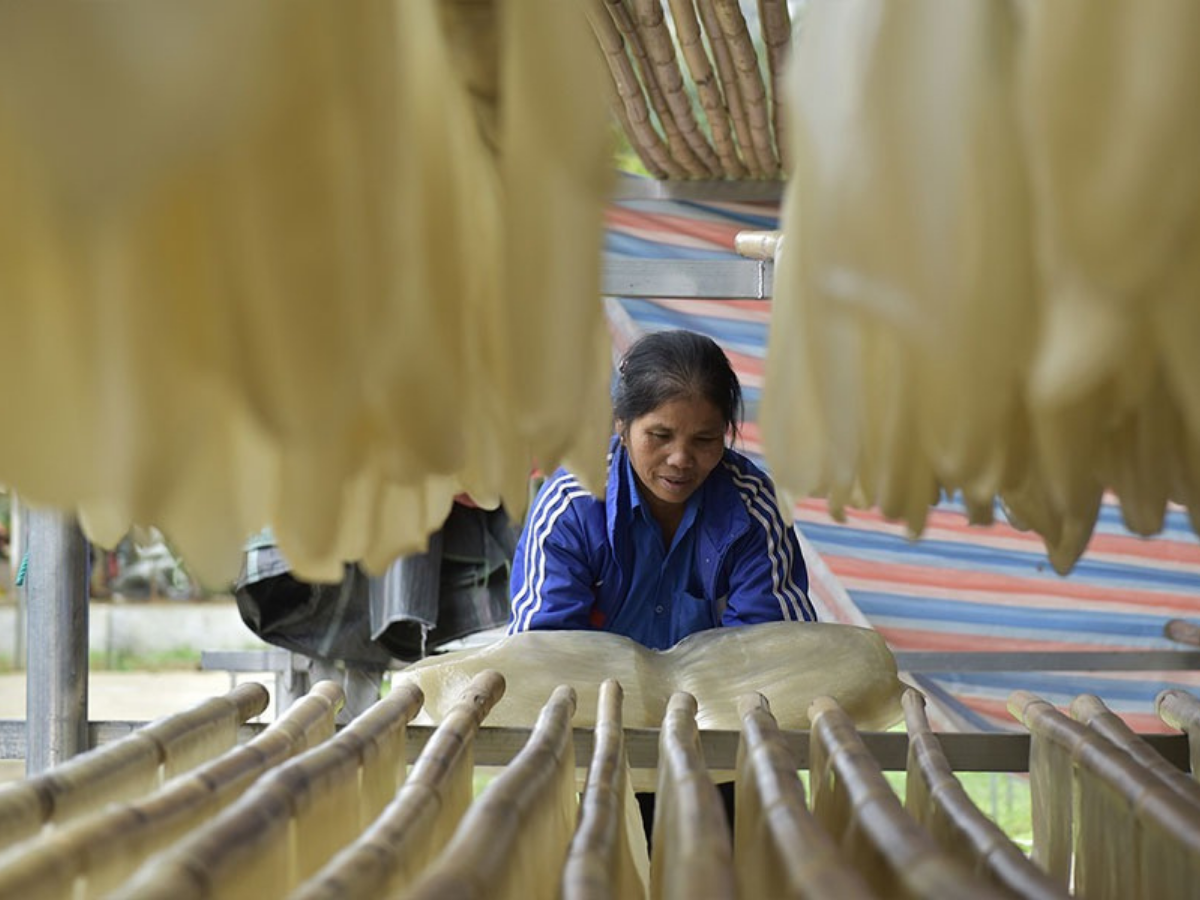
Cam Thuy arrowroot vermicelli is famous for its clear strands. (Source: Collected)
Currently, many facilities use machines to cut the strands to ensure uniform size. Meanwhile, some households still maintain the manual cutting method, meeting the demand of consumers who prefer products with a traditional touch.
Cam Thuy arrowroot vermicelli is produced entirely from arrowroot starch, not mixed with other starches like rice or cassava. Thanks to this, the product retains its original and unique flavor.
During the production process, the vermicelli does not use preservatives or food coloring, ensuring safety for consumers. The light aroma and sweet taste of the vermicelli come entirely from natural ingredients.
With its low sugar content and absence of additives, Cam Thuy arrowroot vermicelli is suitable for many users, including vegetarians and those interested in a healthy diet.
Arrowroot is usually harvested in winter, a time that local people consider the most suitable to ensure the quality of the raw material. At this time, the arrowroot tubers have fully developed, with high and stable starch content for the vermicelli production process.
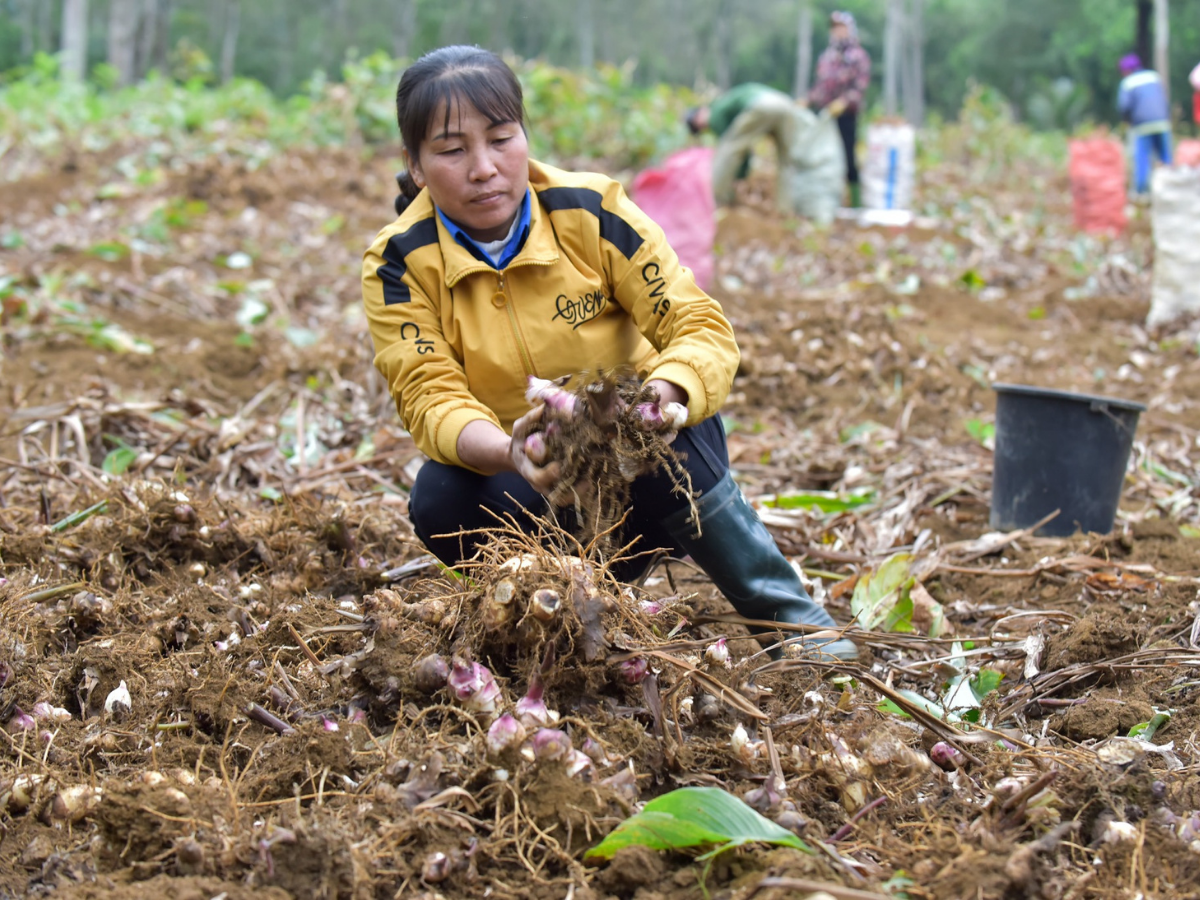
Locals of Cam Thuy harvest arrowroot tubers. (Source: Collected)
After harvesting, the arrowroot tubers are cleaned of soil and sand, washed thoroughly with water, then chopped small or pre-processed to prepare for the grinding stage. The pre-processing is carried out carefully to preserve the natural color and quality of the starch.
The pre-processed arrowroot tubers are then ground using machines or traditional stone mortars to extract the starch. The resulting starch undergoes multiple filtering steps to remove pulp and impurities.
The starch settling process is performed in separate tanks, using clean water for the starch to settle naturally. Controlling the time and water quality during this stage directly affects the clarity, chewiness, and flavor of the subsequent vermicelli noodles.
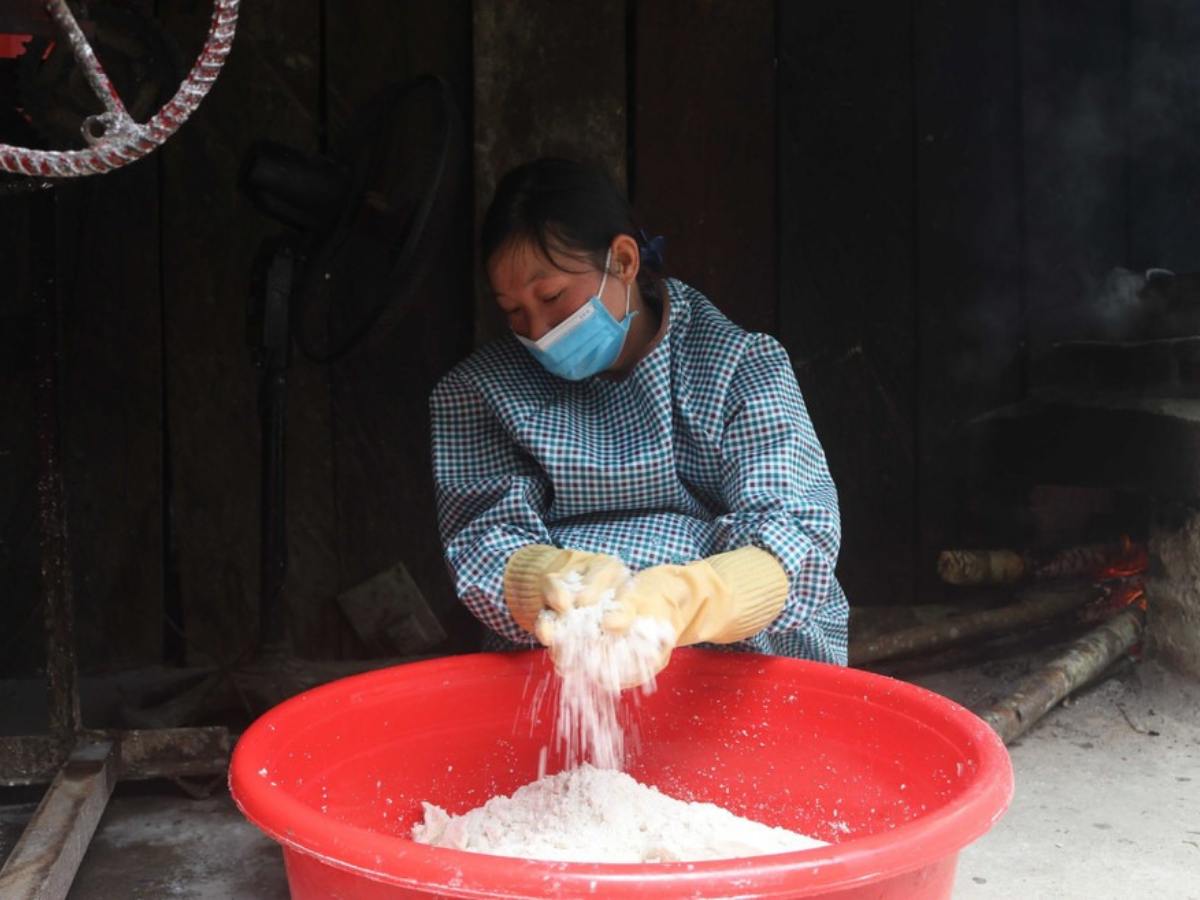
The process of filtering starch when making mien noodles. (Source: Collected)
Arrowroot starch, after settling, is mixed according to traditional ratios to achieve the right consistency. The starch mixture is spread into thin layers on a spreading frame or specialized equipment. This is a step that requires experience and skill to ensure the sheets are even, not too thick or too thin.
After spreading, the sheets are steamed for a specific time to achieve the necessary chewiness. The cooked sheets are then removed and allowed to cool completely before moving to the drying stage.
The mien sheets are dried on bamboo sieves or traditional mats, utilizing the natural sun and wind of the mountainous region. This natural drying method allows the sheets to dry slowly, preserving their clarity and the characteristic flavor of arrowroot starch.
Drying time can range from one to several days, depending on weather conditions. Producers closely monitor the process to adjust drying times, ensuring the sheets dry evenly and are not affected by humidity.
Once the sheets reach the required dryness, the cutting stage begins. Depending on the production scale, the mien strands can be cut by hand with a knife or by a cutting machine. Hand-cut mien is still preferred by many for maintaining its traditional quality and natural strand texture.
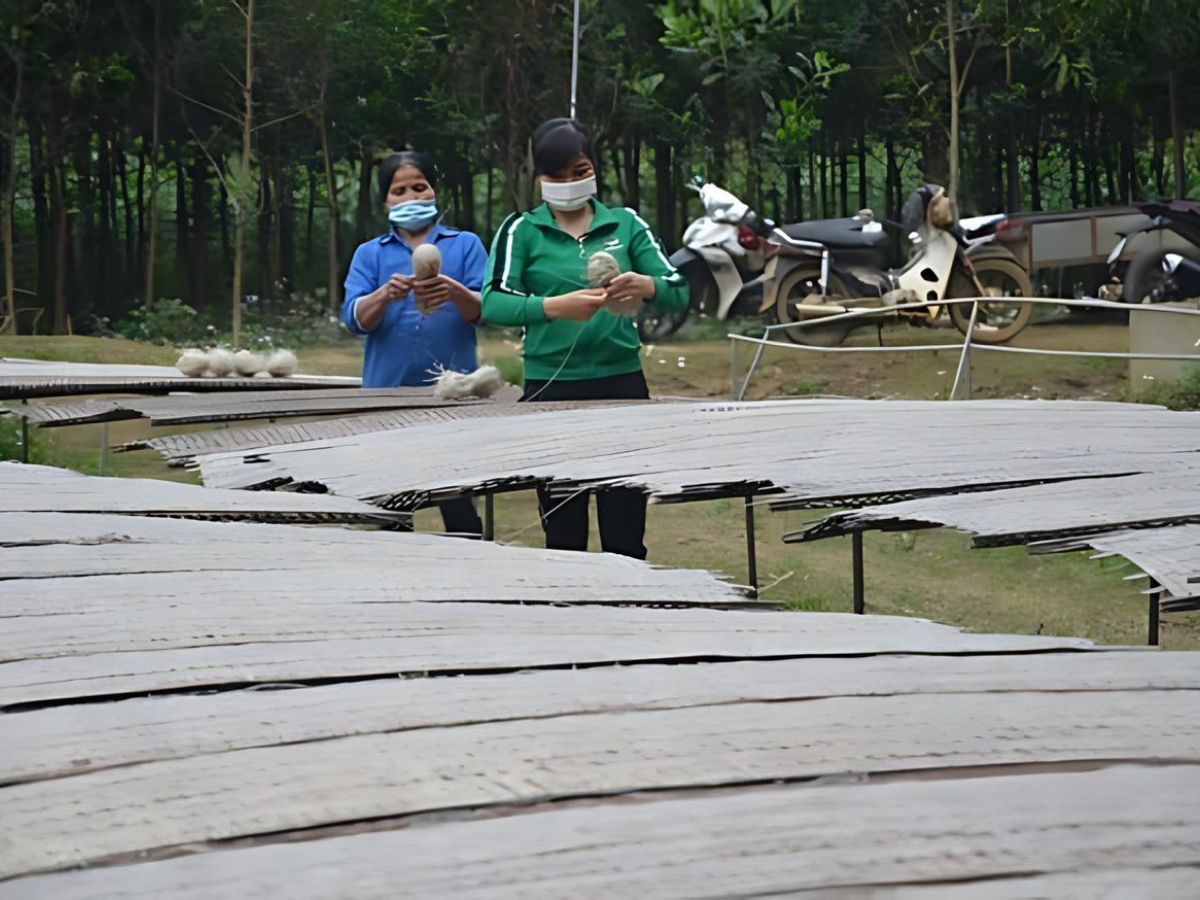
The vermicelli is rolled up and packaged by the locals after drying. (Source: Collected)
After cutting, the vermicelli is dried once more to completely remove the remaining moisture. Finally, the product is packaged and stored according to regulations, ready to be brought to market with stable quality.
Stir-fried arrowroot vermicelli is a popular dish, making good use of the chewy texture and ability to absorb flavors of Cam Thuy arrowroot vermicelli . When combined with vegetables such as carrots, cabbage, and potatoes, the dish has harmonious colors and high nutritional value.
Arrowroot vermicelli can be stir-fried with pork, chicken, beef, or seafood such as shrimp and squid to create variety. During the cooking process, the vermicelli strands retain their chewiness, do not break when stir-fried at high temperatures, and easily absorb seasonings evenly.
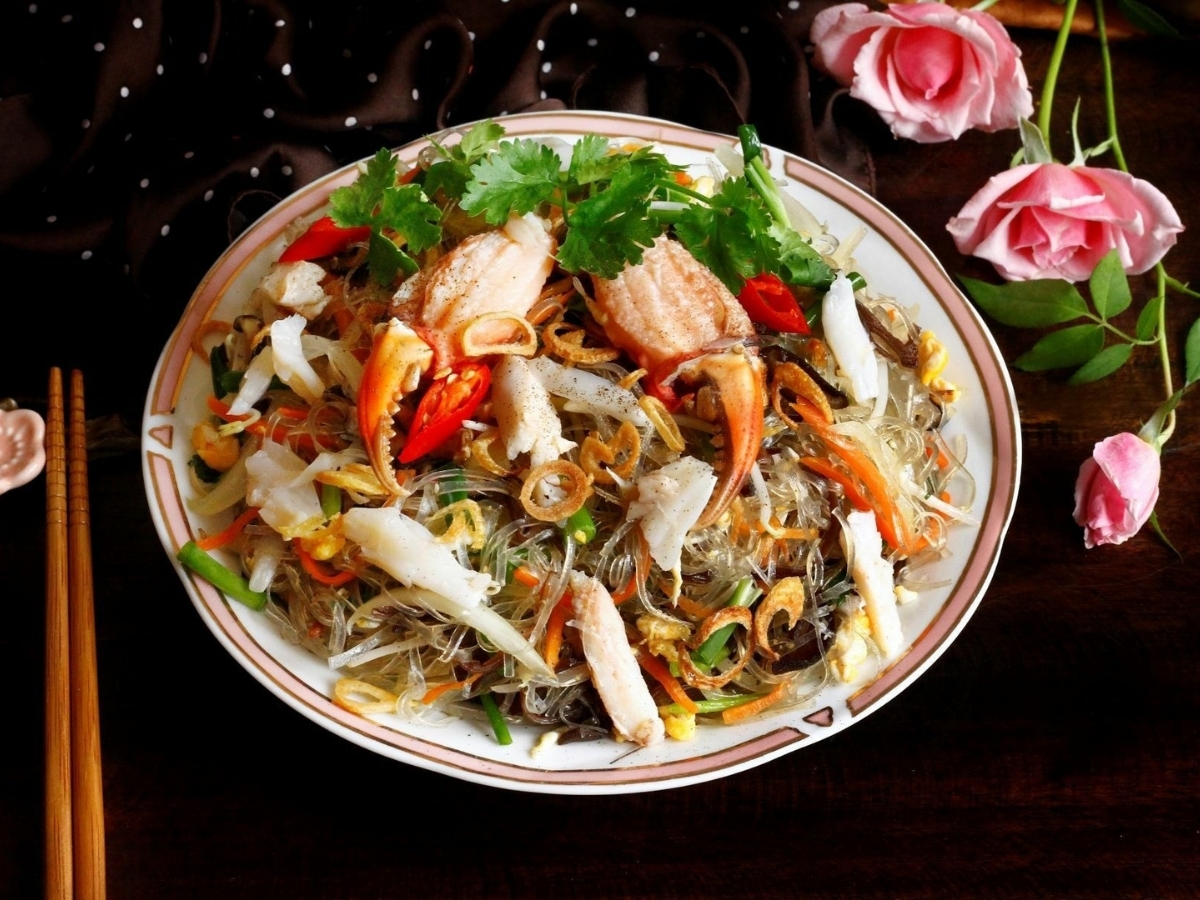
Dong vermicelli can be used to make stir-fried vermicelli dishes. (Source: Collected)
To achieve a quality dish, the vermicelli should be soaked in warm water for about 10-15 minutes before stir-frying and cooked quickly over high heat, helping the vermicelli strands to be tender but not mushy.
Dong vermicelli served in broth is a familiar way to enjoy it in daily meals. This simple dish still retains the full natural flavor of dong vermicelli.
The vermicelli is usually served with broth simmered from pork or chicken bones, creating a light, sweet taste. Minced meat, green vegetables, and herbs are added to enhance the flavor and balance nutrition.
Thanks to its cooling properties, dong vermicelli soup is suitable for light meals or in hot weather conditions.
Cam Thuy dong vermicelli is used flexibly in many family soup dishes. Traditional soups like ngot leaf soup, potato soup, or crab soup, when combined with dong vermicelli, bring a natural sweetness and a pleasant eating experience.
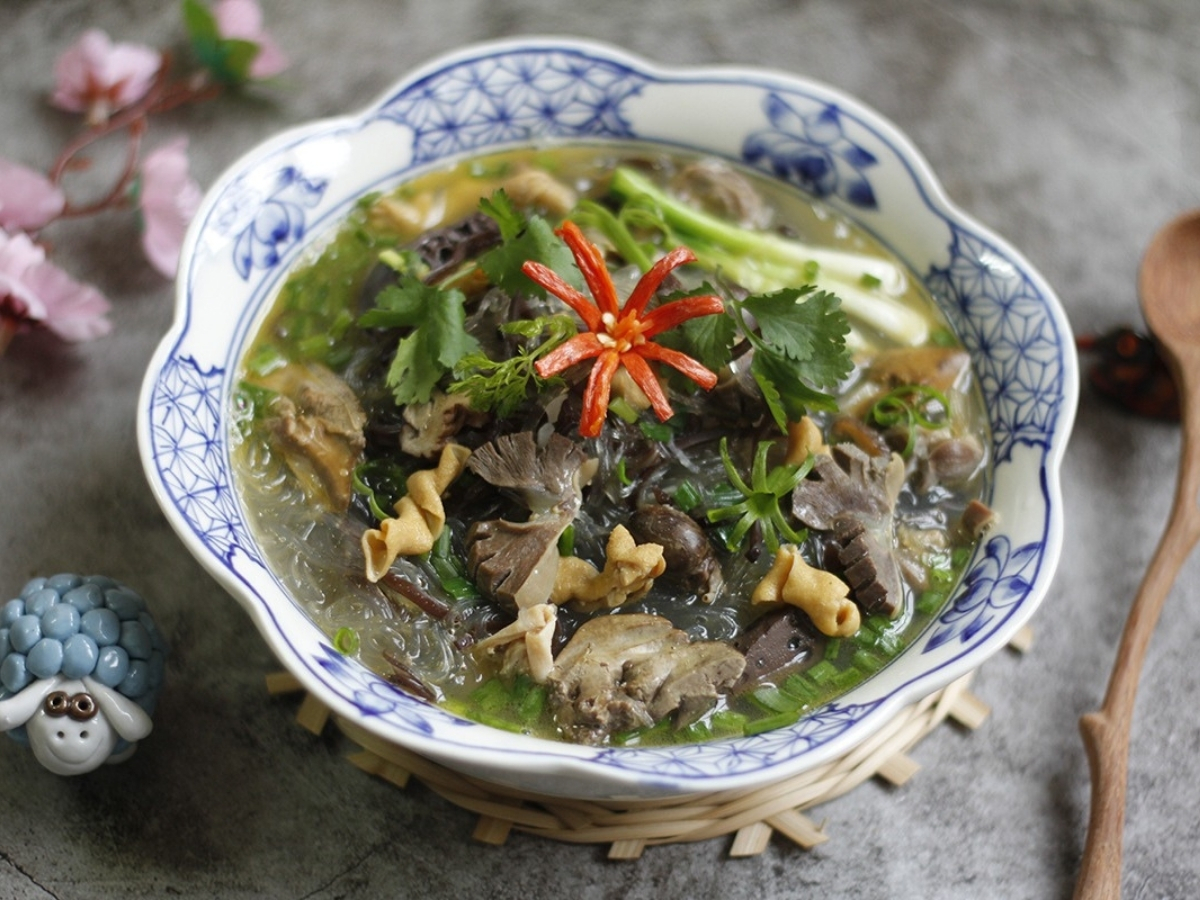
Cam Thuy arrowroot noodles are also suitable for making soup dishes. (Source: Collected)
Additionally, arrowroot noodles are suitable for vegetarian soup dishes such as wood ear mushroom soup, lotus seed soup, or mushroom soup. During cooking, the noodles do not break, retaining their chewiness and shape, which helps the soup dish have a harmonious texture.
Mixed arrowroot noodles are a simple dish, suitable for a quick meal or a light snack. After boiling, the noodles are mixed with sesame oil, seasoned fish sauce, and herbs such as perilla leaves and Vietnamese balm.
Depending on taste, minced meat or stir-fried shrimp can be added to enhance the richness. Fried shallots, chili, and some vegetables like cucumber are used to create crispness and balance the flavors. The dish is both easy to prepare and meets daily nutritional needs.
To choose quality Cam Thuy arrowroot noodles, consumers need to pay attention to some important criteria. Currently, there are many arrowroot noodle products on the market with similar appearances but uneven quality and origin, so correctly identifying the product is key.
When purchasing, prioritize products with clear labeling such as "100% tapioca starch", "no artificial colors", "no preservatives". These are signs that the noodles are produced using traditional methods and are safe for health.
The origin should be clearly stated. Genuine Cam Thuy arrowroot noodles often indicate the production address in Cam Thuy or villages with traditional craft villages like Cam Binh, Thanh Hoa. High-quality products are made from pure tapioca starch, undergoing a meticulous selection and processing procedure.
In terms of appearance, good arrowroot noodles have thin, uniform strands with a natural translucence. They should not have any strange odors or chemical smells. When cooked, the noodles have a characteristic mild sweetness of tapioca, different from other mixed starch noodles.
The selling price of Cam Thuy arrowroot noodles currently ranges from approximately 60,000 to 100,000 VND/kg, depending on the type and packaging. This price reflects the effort of manual production and the quality of the ingredients, and it helps buyers avoid choosing low-quality goods at excessively low prices. To ensure authenticity, it is recommended to buy arrowroot noodles at cooperatives, traditional craft villages in Cam Thuy, long-standing specialty stores, or major e-commerce platforms with clear information and positive consumer reviews.
Cam Luong Fish Stream is a famous tourist destination closely associated with the long-standing spiritual life of the Muong community. The stream is not large in length but is always clear and cool year-round, serving as home to thousands of fish, big and small, which locals call "sacred fish".
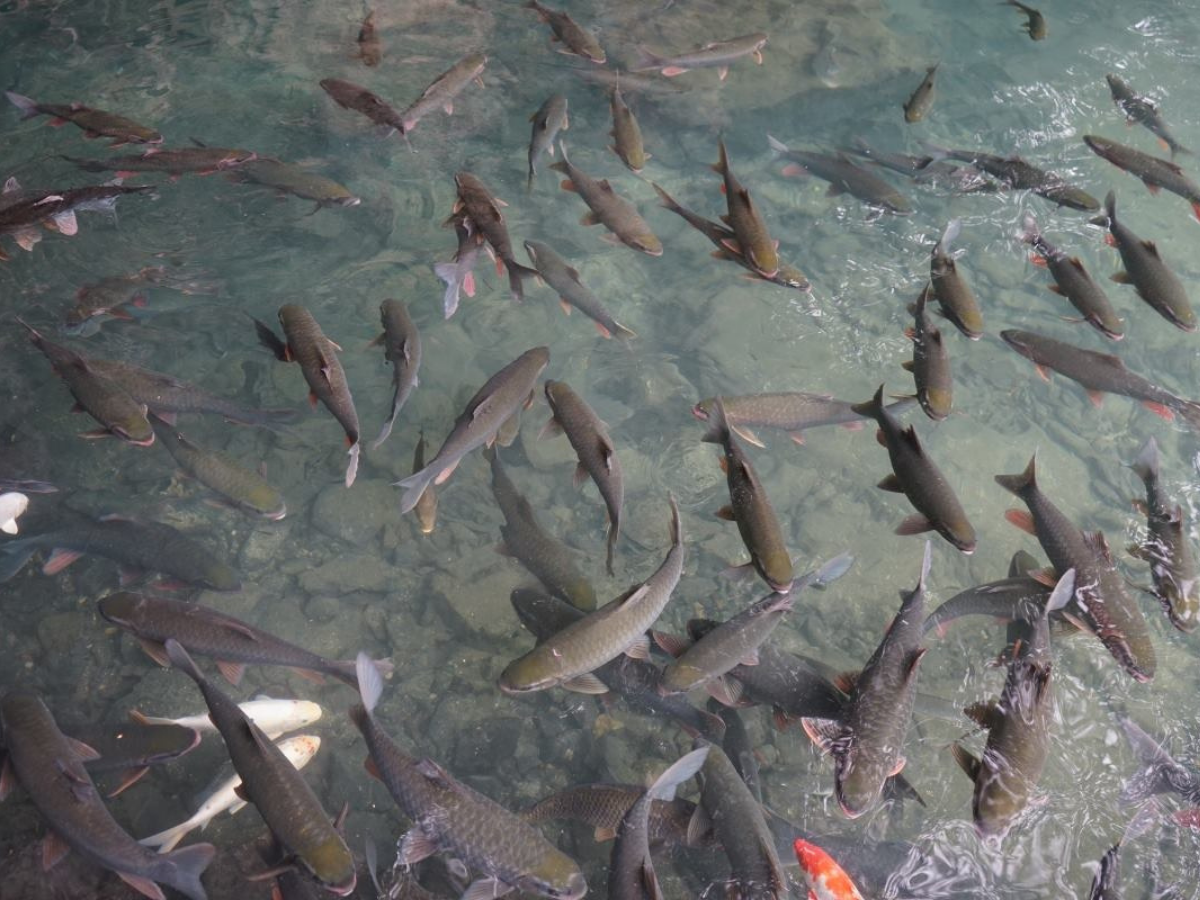
Sacred fish school at Cam Luong sacred fish stream. (Source: Collected)
According to local beliefs, the fish school carries sacred elements and is therefore strictly protected, absolutely not to be caught or harmed. Visitors coming here can stroll along the stream, observe the fish swimming naturally, and listen to folk tales associated with the fish stream through the narration of the locals.
The quiet, harmonious space between the mountains, forests, and water makes Cam Luong sacred fish stream an ideal stopover on the journey to explore the western region of Thanh Hoa, especially suitable for ecotourism and cultural tourism.
Cau Luong Temple, located on Na Son Hill, is one of the important spiritual sites of Cam Thuy district. The structure is associated with the history of the land's formation and the spiritual life of the local residents, especially the Muong community.
From the temple area, visitors can gaze out at the vast valley, admiring the landscape of mountains interspersed with terraced fields characteristic of Thanh Hoa's mountainous region. The spacious environment and fresh air bring a sense of relaxation, suitable for visits combined with rest and worship.
During festivals or full moon days, Cau Luong Temple attracts a large number of people and tourists to offer incense, pray for peace, health, and favorable harvests. This is a suitable stopover when combining the Cam Thuy - Cam Luong tourist route.
Nui Nua - Am Tien is a famous complex of scenic spots and historical-spiritual relics of Thanh Hoa, associated with the legend and the uprising of Lady Trieu. The space here converges both majestic natural elements and historical depth, attracting many tourists who love exploration and worship.

Huyen Tich Am Tien Project has an estimated scale of over 300 hectares. (Source: Collected)
Currently, the Huyen Tich Am Tien project is being implemented to preserve and upgrade tourism infrastructure here. The project aims to build Am Tien into a typical spiritual - cultural tourism highlight of Thanh Hoa, connecting with the tourism routes of Western Thanh Hoa.
When visiting Cam Thuy, tourists can not only enjoy dong noodles but also have the opportunity to learn about the traditional noodle-making process at the craft village. Visiting production facilities, interacting with artisans, and witnessing firsthand each step of creating the noodle strands will make the trip more meaningful.
Cam Thuy dong noodles are the crystallization of tradition, culture, and the dedication of the people of Thanh Hoa. Thanks to their quality and distinctive flavor, the products have become the pride of the region, favored by diners everywhere. Come to Cam Thuy to fully experience the flavor of this specialty and discover the interesting things at the traditional craft village!
Let's start your vacation!

Special offer up to 30% when booking tickets on the Sun Paradise Land app

