


Travel News

Xuan Pha Performance: A Unique Heritage in Thanh Hóa
Tro Xuan Pha is a unique folk art form of the Thanh Hoa region, considered one of three precious cultural heritages alongside the Ma River folk songs and Dong Anh folk songs. While Ma River folk songs and Dong Anh folk songs reflect the daily life and labor of the people, Tro Xuan Pha carries a courtly atmosphere, embodying the diplomatic spirit and cultural exchange between nations in history.
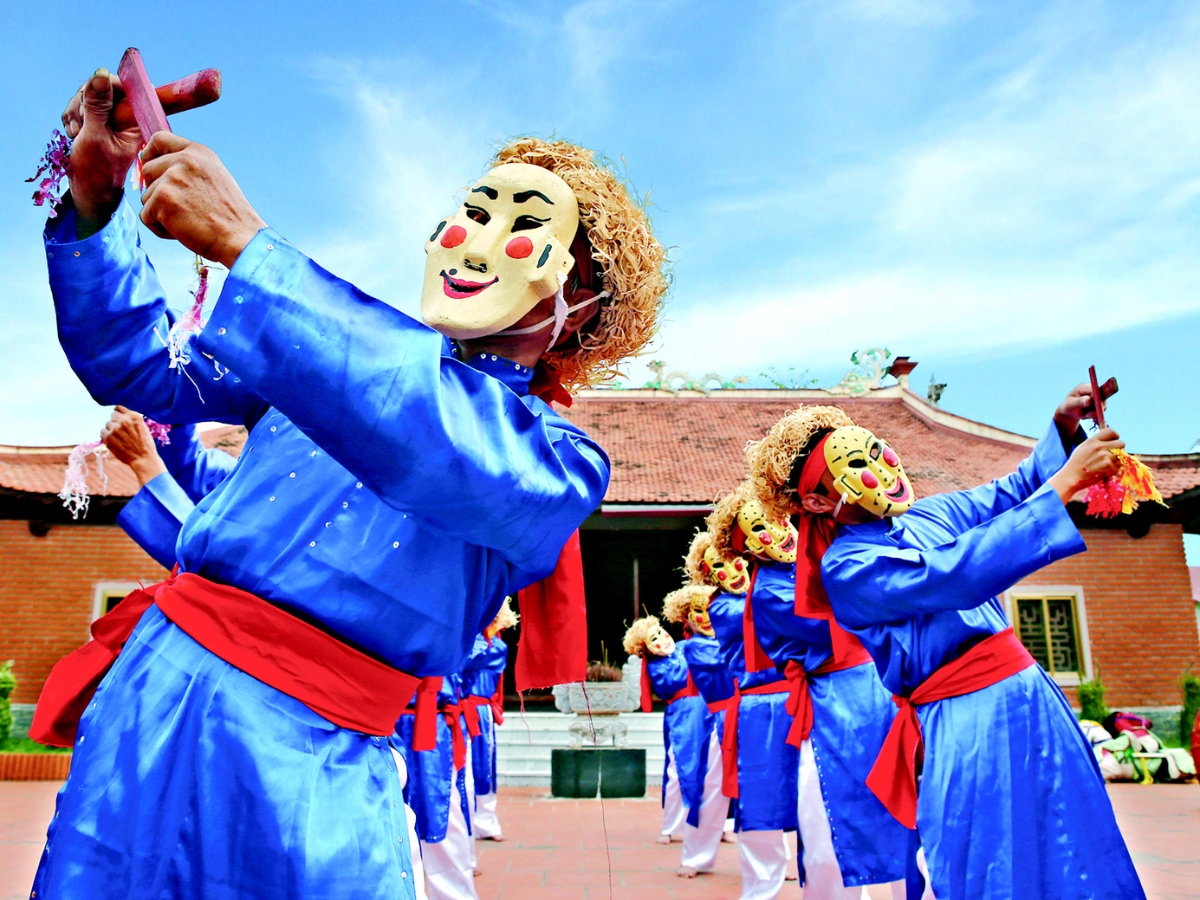
Tro Xuan Pha is a unique folk art form of the Thanh Hoa region. (Source: Vietnam Women's Newspaper)
The content of Tro Xuan Pha recreates the scene of five ancient nations: China, Holland, Tu Huan, Champa, and Ai Lao, bringing gifts along with their people's characteristic dances and songs to congratulate the Vietnamese Emperor of ancient times. Each performance is elaborately staged with characteristic music, costumes, and dance moves, both expressing reverence for the king and praising the spirit of harmony among nations. Thanks to its artistic value and profound historical significance, Tro Xuan Pha has been recognized as a National Intangible Cultural Heritage, becoming a source of pride for the people of Thanh Hoa in particular and Vietnamese culture in general.
According to legend, Tro Xuan Pha originated during the Dinh Dynasty, when the country was in danger due to foreign invaders. During the journey to find a strategy to save the country, a royal envoy passing through the Chu River area, near Xuan Pha village (now Tho Xuan commune, Thanh Hoa province), encountered heavy rain and wind, forcing them to take shelter in a small shrine by the river. That night, the tutelary god of Xuan Pha village manifested in a dream, revealing to the envoy how to defeat the invaders. The envoy reported this to the king, and when the king followed the god's instructions, the enemy forces were quickly defeated, and the country returned to peace.
To thank the tutelary god, the king ordered the construction of a temple and bestowed the title “Great Sea Dragon King General Hoang Lang.” On the victory celebration day, vassal states and neighboring tribes came to offer congratulations, bringing their people's characteristic dances and songs, such as those from Champa, Ai Lao, Hoa Lang, Ngo Quoc, and Tu Huan. Appreciating this gratitude and righteousness, the king bestowed these five dances upon the villagers to perform annually during the festival commemorating the tutelary god. From then on, Tro Xuan Pha was born, becoming a symbol of gratitude, solidarity, and a precious cultural heritage preserved for centuries in the Thanh Hoa region.
Over more than a thousand years of history, Tro Xuan Pha has gone through many changes over time but has still been preserved and passed down to subsequent generations by the people of Xuan Pha village. From feudal times to the present, the performance has been regularly held during village festivals, especially the tutelary god festival. Although there were periods of decline due to war and difficult living conditions, thanks to their love for their homeland and cultural pride, local residents have quietly passed down the ancient dances and songs to their children and grandchildren, ensuring the performance is not forgotten.
Today, Tro Xuan Pha has been recognized by the State as a National Intangible Cultural Heritage and has become a source of pride for Thanh Hoa province. Folk clubs, artisans, and the younger generation in the village continue to participate in training and performances, contributing to spreading the heritage's value to domestic and international tourists. The solidarity of the village community, along with the attention from local authorities, has helped Tro Xuan Pha not only survive but also revive strongly, affirming the enduring vitality of a cultural heritage deeply imbued with the national spirit.
Annually, from the 10th to the 12th day of the second lunar month, Tro Xuan Pha is held at the Xuan Pha Shrine historical site, Tho Xuan commune, Thanh Hoa province. This is an occasion for local people to commemorate the merits of the village tutelary god and honor the precious cultural heritage that has existed for hundreds of years. The festival not only attracts a large number of local residents but also draws many tourists from everywhere to admire and experience the traditional festival atmosphere rich in Thanh Hoa's identity.

The Xuan Pha Festival is held at the Xuan Pha Shrine, from the 10th to the 12th of the 2nd lunar month. (Source: Collected)
The Xuan Pha Festival, also known as “Tribute from Five Neighboring Kingdoms”, is a complex of five distinctive folk dances, simulating the image of neighboring kingdoms coming to congratulate the king of Dai Viet. Each dance has its own style, clearly expressing the unique culture, costumes, and music of each nation, creating a vivid picture of the nation's spirit of exchange and harmony. The performances all bear the village name as a unique mark, showing the pride of the people of Tho Xuan commune.
The Chiêm Thành Dance expresses majesty and mystery. The main character is a lord wearing a pink silk robe, the army wearing bean-colored robes, heads wrapped in red square scarves, faces hidden behind intricately carved wooden masks. The image of the lord reading the eulogy, two attendants offering incense, and the army presenting tribute evokes a sacred and solemn atmosphere, symbolizing the friendly relations between Dai Viet and Chiem Thanh.
The Hoa Lang Dance features a dominant sea blue color, performed by characters representing grandfather, grandson, aunt, and ten soldiers. Each person wears an áo dài, a tall cowhide hat adorned with peacock feathers, and a white-painted mask. When the drums sound, the dance movements combine harmoniously, both graceful and joyful, expressing the inclusive spirit and the vibrant cultural beauty of the Hoa Lang region.
The Ai Lao Dance simulates a hunting scene amidst majestic mountains and forests. The performers wear indigo blue robes, wrap themselves in brocade leggings, hold bamboo castanets, and move to the lively rhythm of the drums. Ten soldiers, along with elephants and tigers, appear in the dance, creating a vivid scene, demonstrating the strength, endurance, and free spirit of the ancient Ai Lao people.
The Ngo Quoc Dance carries lyrical and witty tones. The characters include a lord, two fairies, ten soldiers rowing a boat, and many villagers with various professions such as vendors, fortune tellers, and street singers. The dance begins with cheerful movements, then gradually transitions to a gentle rhythm, concluding with a scene of boat rowing with melodious singing, expressing the bond between people and their homeland.
The Tu Huan (Luc Hon Nhung) Dance depicts the sacred mother-child relationship. In the dance, a mother and her ten children hold fans and castanets, moving back and forth around the altar. The performers wear indigo blue robes, bamboo hats shaped like gray hair, and walk rhythmically to the slow beat of the drums. This dance expresses filial piety, solidarity, and the traditional moral principle of 'drinking water, remembering its source' of the Vietnamese people.
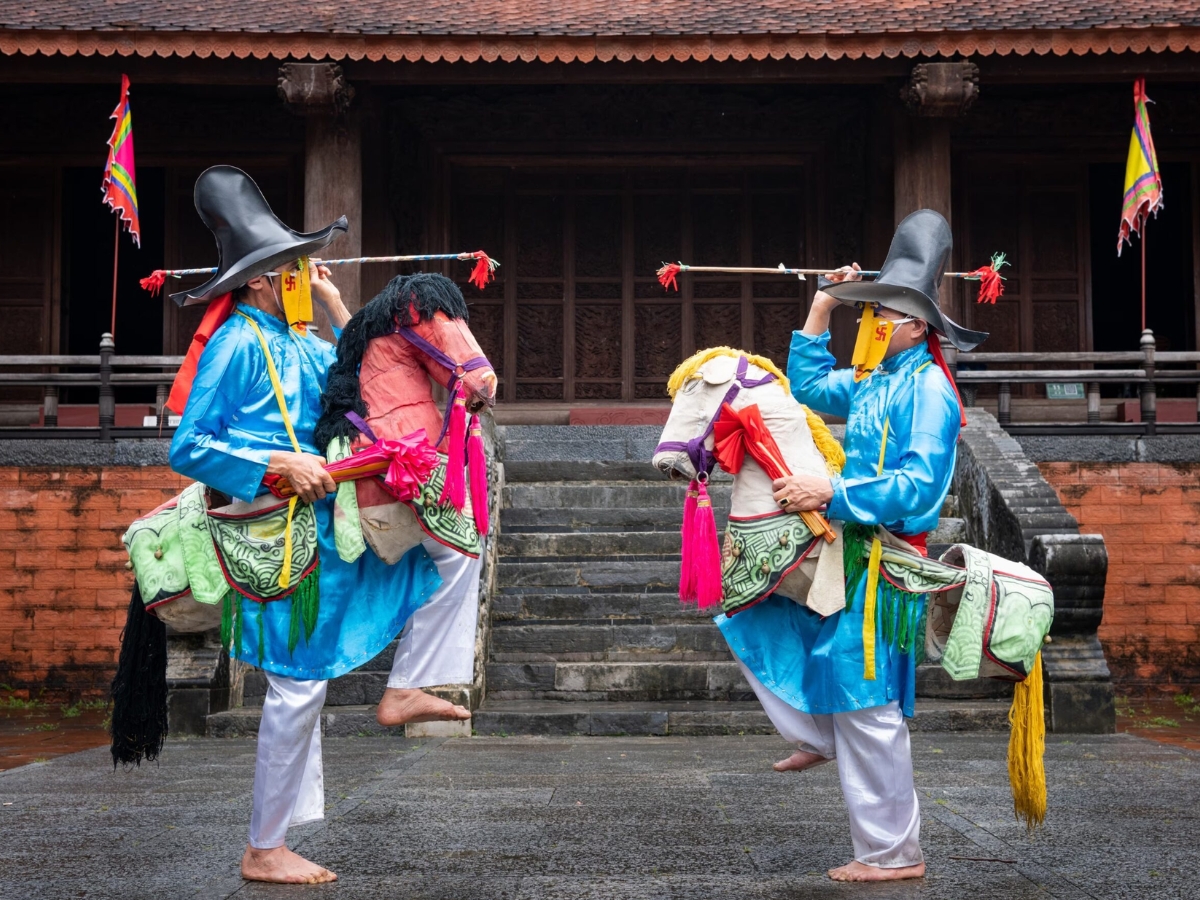
Tro Xuan Pha consists of five folk dances, simulating the image of neighboring countries coming to congratulate the King of Dai Viet. (Source: Collected)
In Tro Xuan Pha, most roles are performed by men, including female roles like 'me nang' or 'ba dong'. This originates from ancient tradition, when men often represented strength, agility, and flexible expressiveness on the folk stage. The artists must practice diligently to express the spirit and emotions of each character, from the majesty of the lord, the cheerful demeanor of the soldiers, to the gentle, graceful appearance of the female roles.
The dance art in Tro Xuan Pha carries the characteristic feature of 'within softness, there is strength', meaning a harmonious combination between strength and flexibility. Each movement has a clear rhythm, both decisive and graceful, expressing emotional depth and high symbolic value. Artists often use many characteristic props such as fans, sticks, bamboo rattles, oars, masks, or elaborately carved headdresses. Each prop not only enhances the aesthetic appeal of the performance but also helps the artist convey the story, character personalities, and the festive atmosphere. Thanks to the combination of performance skills, music, costumes, and props, Tro Xuan Pha becomes a unique form of performance art, rich in emotion and deeply imbued with the folk cultural identity of Thanh Hoa.
The music in Tro Xuan Pha carries strong traditional folk characteristics, created from the combination of drums, gongs, cymbals, wooden clappers, and bamboo rattles. The lively, decisive drumbeats blend with the resonant sound of gongs, creating a rhythm that is both powerful and sacred, guiding the audience through each dance, each movement of the artist. The lyrics in the performance are mainly 'hat noi' and 'hat ke', are laudatory, recount legends, and express the loyalty, filial piety, and peaceful relations of the nations. The lyrics are simple yet rich in imagery, combined with rustic singing voices, creating an ancient resonance, evoking feelings of both pride and familiarity.
An indispensable unique feature in Tro Xuan Pha is the art of using traditional masks. Artists often wear wooden or leather masks, elaborately carved and colored, clearly expressing the demeanor of each character. When performing, the artist holds their mouth closed or wears a mask covering the lower half of their face, using only their eyes, movements, and posture to express emotions. This unique performance technique helps the performance retain its ancient charm, enhancing the mystery and sacredness of the dances. Thanks to the harmonious combination of music, lyrics, and masks, Tro Xuan Pha becomes a comprehensive performance art piece, reflecting the cultural depth and creativity of the people of Thanh Hoa.
Sam Son Beach is a must-visit destination when visiting Thanh Hoa. This place captivates visitors with its long golden sandy beach, clear blue waters, and rolling waves carrying the breath of the ocean. At Sam Son Beach, visitors can immerse themselves in the cool water, play on the sand, or enjoy fresh seafood at seaside restaurants, experiencing the rich flavors of the Thanh Hoa coast.
After swimming and relaxing, visitors can stroll, sightsee, and take photos at the Sam Son Beach Square. The square's spacious and airy atmosphere is highlighted by a brightly lit fountain, rows of green trees swaying in the wind, and a bustling, vibrant pedestrian street. As dusk falls, the square seems to come alive in the shimmering light, with lively music blending with the sound of the waves, creating a vibrant yet romantic scene. Strolling under the brightly lit night sky, gazing at the distant sea, and capturing memorable photos at the square is an experience that makes a trip to Sam Son more memorable and complete than ever.
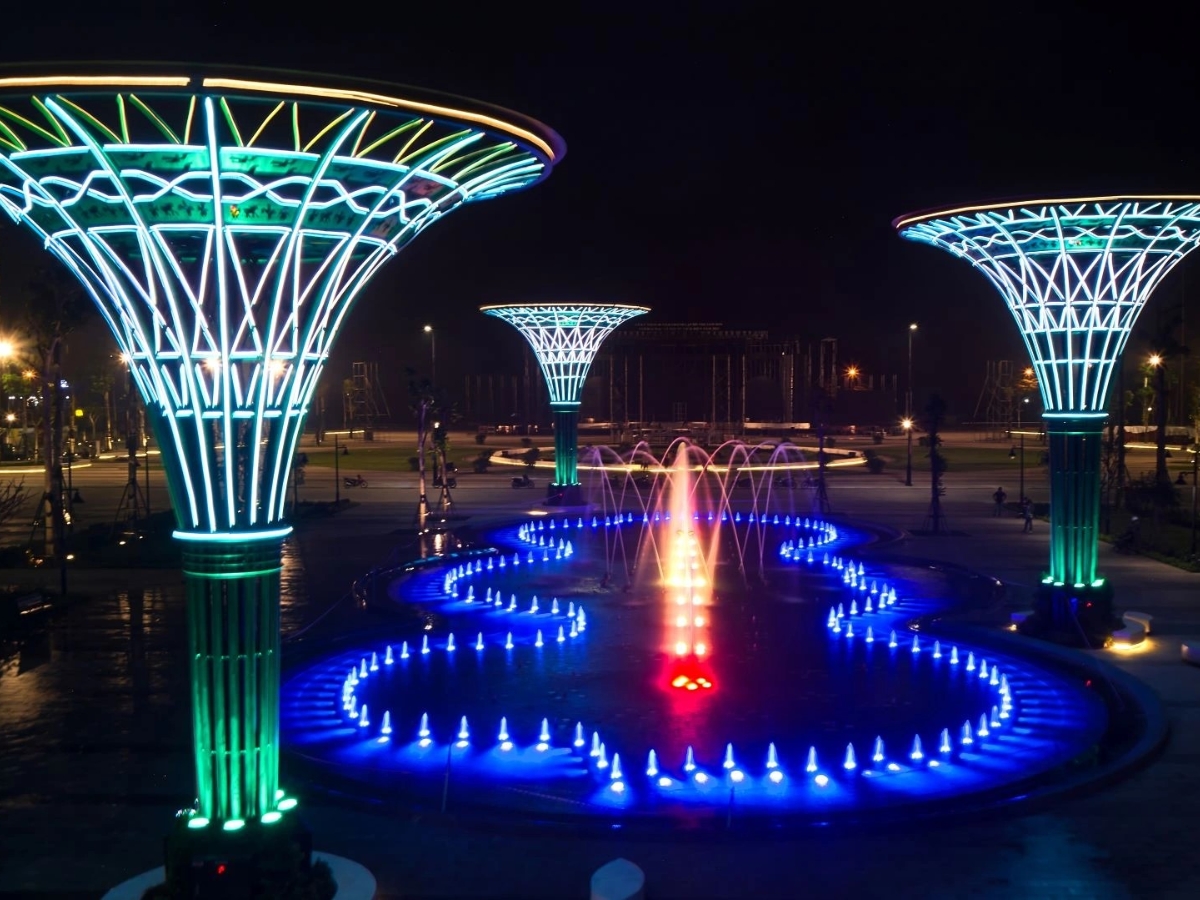
Water music system at Sam Son beach square. (Source: Collected)
Trieu Temple is one of the typical historical and cultural relics of Thanh Hoa. The temple was built to commemorate Lady Trieu – the national heroine who led the uprising against the Dong Ngo army in the 3rd century. The temple space is solemn and ancient, surrounded by lush green trees and a winding small river, creating a peaceful and sacred landscape. Every year, from the 19th to the 22nd of the second lunar month, the Trieu Temple festival is solemnly held, attracting a large number of visitors from all directions to offer incense, commemorate, and participate in traditional cultural activities. Visiting Trieu Temple, tourists not only pay homage to and learn about the life of the "long-haired heroine who rode elephants to fight invaders," but also deeply feel the patriotic spirit and indomitable will of the people of Thanh land.
The Lam Kinh historical site complex is a special historical relic complex associated with the Le dynasty and the Lam Son uprising led by Le Loi. This place was once the second capital of Dai Viet after the country gained independence, and the resting place of King Le Thai To and many kings and queens of the Le dynasty. The Lam Kinh space is ancient and majestic with its citadel gate, dragon courtyard, Lam Kinh Palace, and ancient lim trees casting lush green shade, evoking a solemn and sacred feeling. Annually, on the 22nd of the eighth lunar month, the Lam Kinh festival is solemnly held to commemorate the merits of King Le Thai To and the ancestors. Visiting the Lam Kinh historical site complex, tourists can admire the harmonious beauty between ancient architecture and nature, and relive the heroic atmosphere of a time of nation-building and defense of the people.
Xuan Pha folk performance is not only a precious intangible cultural heritage of Thanh land but also a vivid testament to the creativity and artistic soul of the Vietnamese people. Through each dance, drumbeat, song, and performance, viewers are taken back to the solemn, brilliant, and proud atmosphere of a heroic historical era. Today, Xuan Pha folk performance is still preserved and spread, becoming a source of pride for the people of Thanh Hoa in particular and the entire Vietnamese nation in general. If you have the opportunity to visit Thanh Hoa, come to Xuan Pha village once, immerse yourself in the bustling festival atmosphere, listen to the lively drumbeats, and fully experience the quintessence of this unique folk art form.
Let's start your vacation!

Special offer up to 30% when booking tickets on the Sun Paradise Land app
Related topics

