


Cuisine

Pu Luong Bamboo Tube Rice: Value, How to Make, Best Places to Eat in Thanh Hoa
Pu Luong bamboo-tube sticky rice is a sticky rice dish cooked in fresh bamboo or nipa palm tubes, then grilled over glowing charcoal, very characteristic of the life of the Thai people in Pu Luong commune, Thanh Hoa province. When cooked, the rice grains are soft and chewy, with a natural sweetness, combined with the aroma of new sticky rice and the scent of bamboo, nipa palm, and banana leaves. This dish is not merely food but also represents a culture closely tied to the mountains and forests.
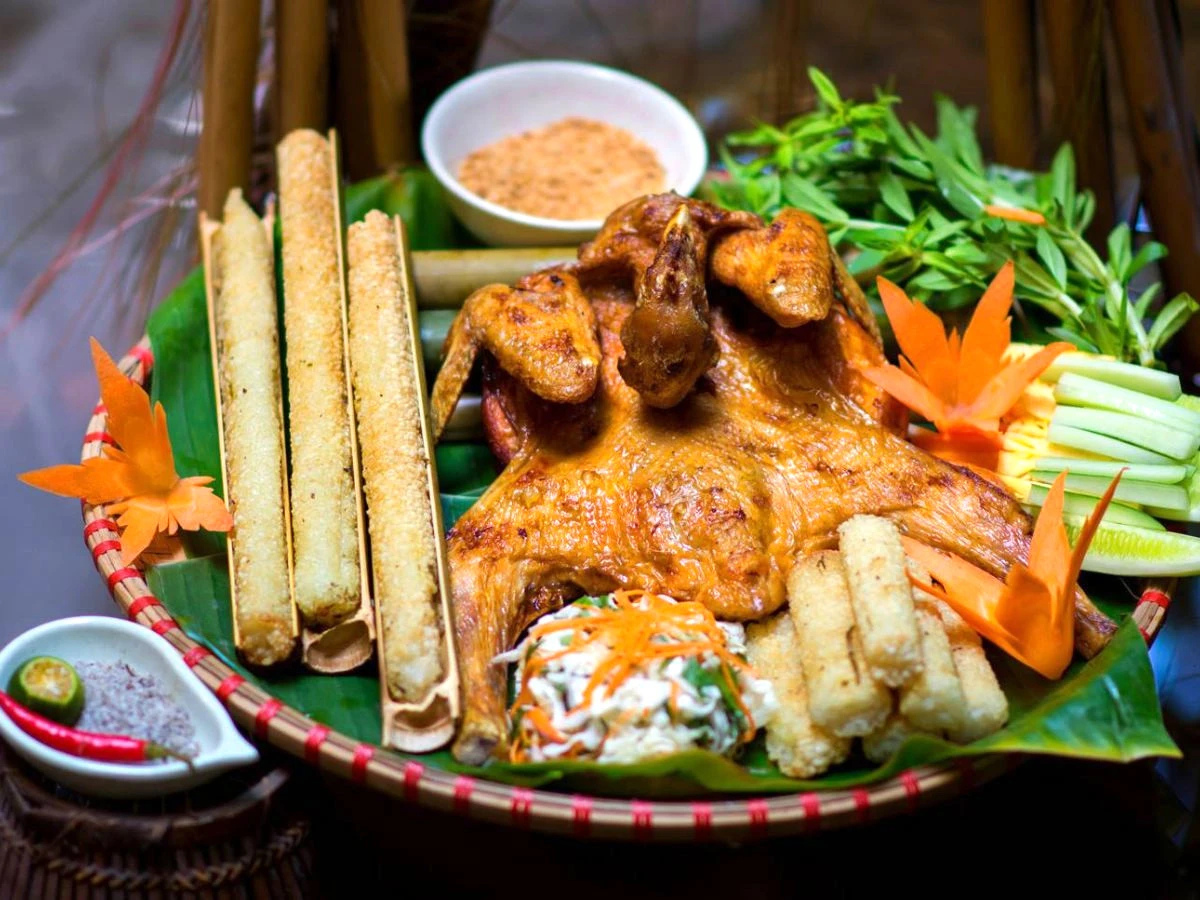
Pu Luong Com Lam is sticky rice cooked in fresh bamboo or rattan tubes, then grilled over red charcoal. (Source: Collected)
In Thai, "lam" means to grill over fire. Com Lam is made by putting rice and water into bamboo or rattan tubes, then grilling over charcoal until evenly cooked. This name not only refers to the cooking technique but also embodies a life philosophy emphasizing the full utilization of nature's gifts.
The Thai people recount that Com Lam originated from the practical needs of long trips into the forest or to the fields. They would only bring rice, knives, and flint, then use the young bamboo or rattan tubes growing in the forest as containers to cook rice. Cooking rice in bamboo tubes helps retain heat for a long time, resulting in sticky, delicious rice that is easy to preserve, making it very suitable for laborers working far from home. Over time, Com Lam has become an integral part of their lives, evolving into a traditional dish passed down through generations.
In daily life, Com Lam is a convenient meal for trips to the forest or fields, often eaten for lunch in the fields or during long journeys. On important occasions, Com Lam appears on tables to entertain guests, in festival feasts, weddings, and housewarmings, signifying the host's respect for distinguished guests. Furthermore, it serves as a bridge connecting younger generations with culinary traditions, as many community-based tourism households still maintain the old cooking methods to introduce to visitors.
Many articles about Pu Luong mention Com Lam alongside grilled stream fish, free-range chicken, uoi soup, wild vegetables, and can wine as characteristic culinary elements of the local Thai community. Com Lam is not merely a dish but also reflects a lifestyle deeply connected to the mountains and forests, through the use of ingredients like mountain sticky rice, bamboo tubes, banana leaves, and stream water. This reflects a mindset of thriftiness and skillful utilization of forest and mountain products in daily life.
Pu Luong is currently one of the prominent destinations for eco-tourism and community-based tourism in Thanh Hoa, renowned for its terraced fields, Thai ethnic villages, and local cuisine. Among the experiences here, Com Lam has become an unmissable dish when staying at homestays or community stilt houses. Many articles even liken specialties such as Com Lam, can wine, and grilled stream fish to "tourism culture ambassadors" that bring the image of Pu Luong closer to tourists.
Each tube of Com Lam is a synthesis of sticky rice from terraced fields, bamboo and rattan from the forest, and stream water – elements that create the distinctive ecosystem of Pu Luong. Upon arrival, visitors can witness firsthand or directly participate in grilling Com Lam, enjoying it while listening to stories about the labor life and rituals of the Thai people, thereby gaining a deeper appreciation for the local culture. The connection between people, nature, and culture is clearly expressed through this dish.
Com Lam is often served at community stilt houses, homestays, and small restaurants in the villages, while also contributing to increased income for the Thai ethnic group through tourism. It is also an easily packable dish to take home as a gift, further expanding the tourism value of Pu Luong.
The Thai people in Pu Luong often prioritize using freshly harvested mountain sticky rice, with large, plump grains that emit a fragrant aroma. This can be either white sticky rice or black sticky rice. This type of sticky rice is cultivated on terraced fields under a cool climate, producing rice that is glutinous, sweet, and less prone to breaking, making it highly suitable for Com Lam. Due to the specific land and climate of the mountainous region, the mountain sticky rice here is distinctly different from sticky rice grown in the plains.
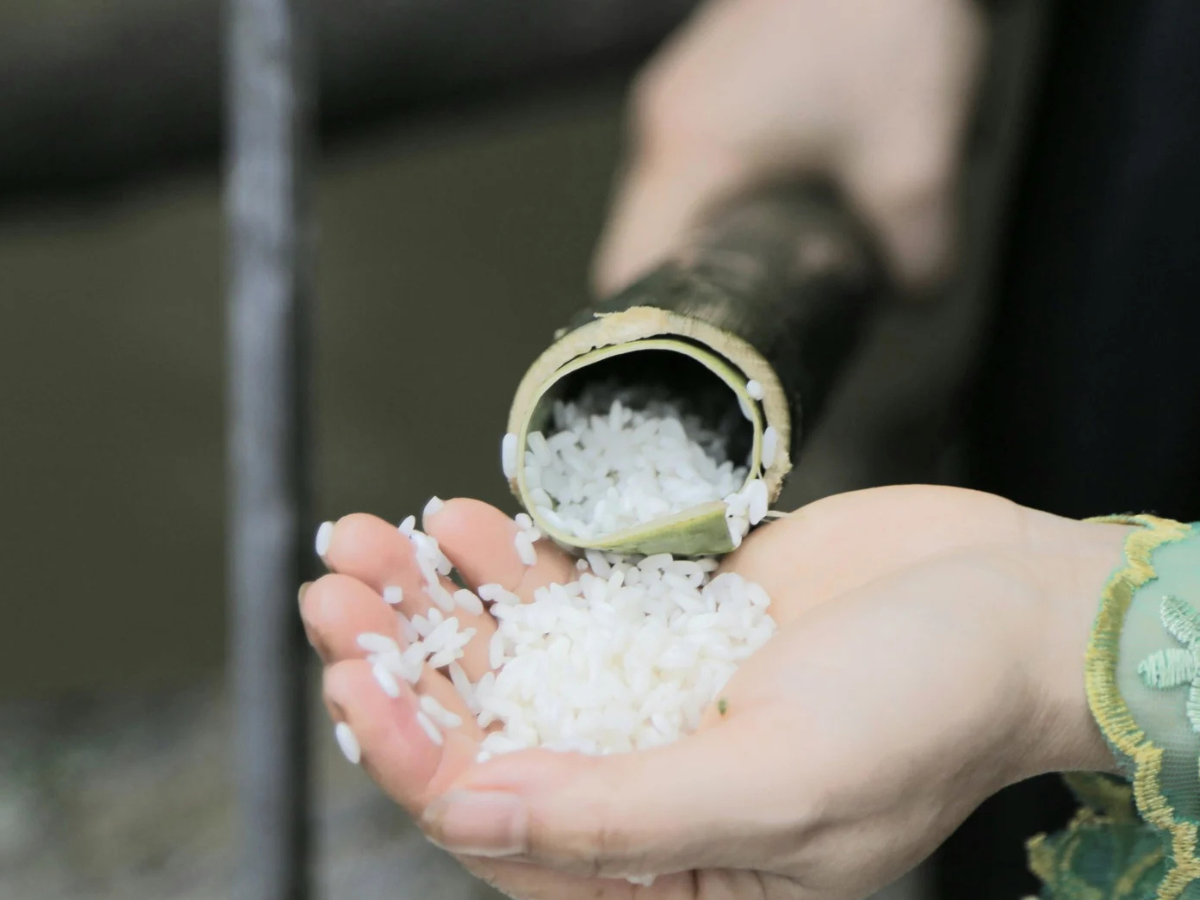
Thai people in Pu Luong often prioritize using freshly harvested mountain sticky rice, with large, plump grains that are fragrant. (Source: Collected)
According to folk experience, the bamboo or reed tubes chosen for making com lam must be fresh, with green skin, free from pests, and neither too young nor too old. The tubes are usually cut to about 30-50 cm long, with a moderate diameter and thin walls for even heat transfer while retaining moisture.
Fresh banana leaves are washed, dried, and cut into suitable pieces to seal the bottom of the tube and line the inside. This layer of leaves prevents the rice and water from spilling out, while also imparting a characteristic aroma to the com lam. Using young, green, un-torn banana leaves helps preserve the most natural flavor.
The cool, clear stream water in Pu Luong is often used to fill the tubes, giving the com lam a subtly sweet taste and ensuring hygiene. When the rice is cooked with stream water and fresh bamboo tubes, the grains absorb the full aroma of the bamboo, banana leaves, and natural minerals, creating a distinct difference compared to cooking in a regular pot. The combination of new mountain sticky rice, clean stream water, fresh bamboo/reed tubes, and banana leaves creates a unique flavor that is hard to find in any other type of com lam.
First, the sticky rice is cleaned of stones and shriveled grains, and washed multiple times until thoroughly clean. Thai people in Pu Luong often soak the rice for about 30 minutes to 1 hour before cooking, which helps the grains swell evenly and cook to a soft texture. Soaking the rice for just the right amount of time retains the natural chewiness of the mountain sticky rice.
Fresh bamboo or reed tubes are cut into sections, washed thoroughly, and drained. Banana leaves are cleaned, dried, and then cut into pieces, rolled up to seal one end of the tube to prevent rice and water from falling out. Many people also line the inside of the tube with a thin layer so that the rice does not stick to the bamboo when it is split open.
The soaked and drained rice is carefully poured into the reed tube lined with banana leaves. It is important not to pack the rice too tightly or fill it to the brim, allowing space for the grains to expand when cooked, resulting in fluffy rice without overflowing. Thai people often preserve the natural flavor of the rice, sometimes adding a little salt to enhance its richness.
Cool, clear stream water is added to cover the rice, just enough to cook it until fluffy without being mushy. The other end of the bamboo tube is then sealed with banana leaves and tied with rattan or forest vines to prevent water from splashing out during grilling.
The bamboo tubes are placed at an angle around a glowing fire, grilled over charcoal. The grilling process requires rotating the tubes evenly, controlling the heat to avoid excessive charring. The grilling time usually lasts about 1 hour, depending on the size of the tube and the amount of rice. Constant rotation during grilling is the secret to making com lam fragrant and evenly cooked.
When steam is seen rising from the opening of the tube, a characteristic aroma of sticky rice and bamboo is detected, and the tube becomes soft, it means the rice is cooked. Experienced Thai people know the rice is ready simply by "squeezing the lam tube until it feels soft." At this point, remove the tube from the heat, let it cool slightly, then use a knife to split off the outer layer of bamboo, keeping a thin inner layer, ready to be enjoyed.
Choosing bamboo tubes of the appropriate age determines the quality of the com lam. Tubes that are too young tend to crack easily, have too much sap, and burn easily, while tubes that are too old have thick skins, are less fragrant, and difficult to cook evenly. The tubes must be fresh, green, and free from pests to retain their aroma and natural sweetness when grilled.
Do not pack the rice too tightly or fill the tube to the brim; leave a space near the opening for the rice to expand when cooked, ensuring fluffy, chewy grains that are not undercooked or hard. This technique helps Pu Luong com lam achieve an ideal texture, preserving the flavors of the mountains.
During the grilling process, adjusting the heat to a moderate level and continuously rotating the tubes are essential. Always use glowing charcoal, avoiding direct strong flames that can scorch the tubes and destroy the aroma of the sticky rice. Even rotation ensures the rice cooks from the inside out, without burning on one side. Stable temperature helps the rice achieve perfect chewiness, infused with the scent of bamboo.
When separating the rice from the tube, avoid doing so while it is too hot, as the soft rice is easily broken, and the rapid escape of steam causes the grains to dry out quickly. Let it cool down a bit, split off the outer bamboo layer, keeping only a thin layer so the rice retains its shape and stays warm when served. Only peel off the remaining layer along with the banana leaf when eating, and the aroma will be distinctly released.
Pu Luong com lam stands out with its chewy grains, natural sweetness, and the aroma of new sticky rice blended with the scent of kitchen smoke, bamboo, and banana leaves. When split open, the outside of the rice is slightly firm, but the inside remains soft and chewy, not dry or crumbly. All these elements create a harmonious flavor thanks to the combination of natural ingredients and traditional cooking methods.
Compared to other Northwestern regions, com lam in Pu Luong carries distinct characteristics of Thanh Hoa province. The sticky rice here is grown on terraced fields with unique soil and climate conditions, creating a special sweetness and chewiness, different from the sticky rice of Northwestern provinces like Dien Bien and Son La. The soil and climate conditions of the Thanh Hoa mountainous region contribute to the unique identity of this dish.
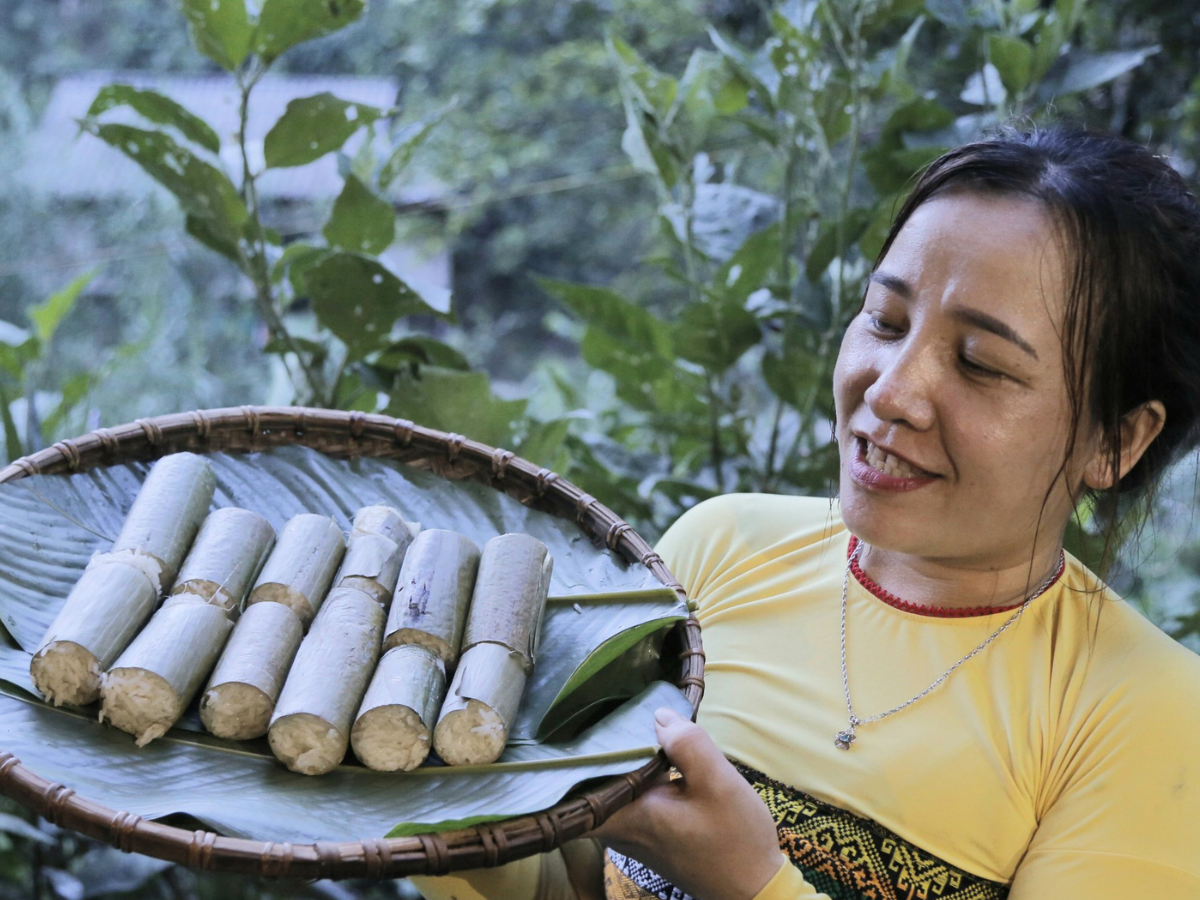
Lam rice in Pu Luong carries unique characteristics of Thanh Hoa. (Source: Collected)
Regarding the grilling method, lam rice in Pu Luong is usually grilled using local forest firewood, in the stilt house kitchens of the Thai people, so the smoky smell is very light and not too strong. Unlike some places that use coal or gas, the use of natural firewood has brought a distinctive aroma that deeply permeates each grain of rice.
The way of enjoying it and the accompanying dishes are also highlights. In Pu Luong, lam rice is often served with grilled stream fish, hill chicken, wild vegetables, and cham cheo. This combination creates a unique flavor profile that only this land possesses.
When served, the lam rice tubes are cut into small pieces and arranged on a mat or plate. Diners will peel off the thin bamboo skin and banana leaves, revealing the sticky white rice, usually broken into small pieces by hand. The cutting and presentation of lam rice also require skill, showing respect for this traditional dish.
Toasted sesame and peanut dip is an indispensable accompaniment when enjoying lam rice . Salt, sesame, and roasted peanuts are finely ground, creating an attractive salty, nutty, and aromatic flavor. Cham cheo is a traditional dipping sauce of the Thai people, spicy and fragrant with wild herbs, also often served with grilled dishes, including lam rice .
Besides, lam rice in Pu Luong is often enjoyed with grilled or steamed hill chicken, bamboo-skewered pork, grilled stream fish, boiled or blanched wild vegetables with cham cheo, and leaf-fermented rice wine. The variety of side dishes contributes to a meal that is rich in mountain flavors.
To fully enjoy it, break off a piece of lam rice , dip it lightly in toasted sesame and peanut dip or cham cheo, and eat it with a piece of grilled meat or stream fish to experience the chewy, nutty, sweet, spicy, and faintly smoky taste. Locals often enjoy lam rice in the stilt house or on the veranda, gazing at the terraced fields, sipping rice wine, and chatting, creating a friendly and community-bonding atmosphere.
In the morning, from your homestay, you can start a walk through the terraced fields, visiting Don, Bang, Kho Muong, and Hieu villages, learning about water wheels, streams, forests, and the local people's production life. These activities help tourists better understand the culture, origin, and significance of lam rice .
Lunch is the perfect time to stop at a homestay or stilt house in the village to enjoy a meal with Pu Luong lam rice , hill chicken, grilled stream fish, wild vegetables, uoi soup, cham cheo, and rice wine. This is not only a chance to refuel but also a valuable experience with local cuisine.

Legend of Am Tien (Nua Mountain): A highly anticipated cultural-spiritual project in Thanh Hoa. (Source: Collected)
In the afternoon, you can continue to visit terraced fields, scenic spots, swim in streams, waterfalls, or visit a local market if you go on a market day. If you love journeys with cultural-spiritual depth, you can also keep in mind another anticipated option for Thanh Hoa: the Legend of Am Tien project at Nua Mountain. Although the project is still under construction and not yet open, it is expected to offer an experience of worship and exploration of the legend of Lady Trieu with cultural depth and architectural imprints, as an additional piece to the journey of exploring Thanh Hoa land.
In the evening, experience a campfire, cultural exchange, and Xoe dance with the Thai community, and enjoy more com lam and grilled dishes to conclude a memorable day.
The itinerary combining “morning trekking, noon com lam at the village, afternoon visits to terraced fields, water wheels, streams, waterfalls, evening cultural exchange, and enjoying com lam and wine” will bring you a complete experience of Pu Luong. The interweaving of exploration, relaxation, immersion in nature, and cultural learning is the unique charm of this trip.
Visitors can choose to buy com lam at community tourism villages, stilt houses, or specialty shops around the Pu Luong area. It is recommended to buy from the place where you enjoyed it and found it delicious, and you can also ask them to grill extra portions to take home as gifts. Choosing a reputable address is a way to ensure the quality of com lam when bringing it back.
Com lam can be preserved in cool, dry conditions; if stored longer, the rice will lose its chewiness and aroma. When you bring it home, keep it in the bamboo tube, do not peel the rice beforehand, wrap it in paper or a breathable bag, and avoid sealing it tightly while still hot to prevent mold. Upon arriving home, you can re-grill or lightly steam it before peeling and eating to make the rice softer and chewier.
The price of com lam is usually calculated per tube or per bunch, depending on the size and place of sale, with reasonable prices suitable for gifting to relatives and friends. The uniqueness and meaning of the dish make com lam a memorable gift.
Besides com lam , you can also choose to buy other gifts such as leaf-fermented wine, wild honey, dried wild vegetables, or handicrafts like Thai ethnic skirts, shirts, scarves, and bags. A diverse gift set will help the recipient better understand the culture and life of the Thai people in Pu Luong.
Pu Luong com lam is not just a chewy and fragrant dish but also a cultural symbol associated with the lifestyle, customs, and worldview of the Thai people in Thanh Hoa. In the context of Pu Luong becoming an ecotourism and community tourism destination, com lam is gradually being seen as an "ambassador" that allows tourists to touch the depth of local culture. Visitors to Pu Luong should not miss the experience of tasting com lam right in the village, sitting in a stilt house overlooking the terraced fields, to fully appreciate the flavors of Thanh Hoa's mountains and forests.
Let's start your vacation!

Special offer up to 30% when booking tickets on the Sun Paradise Land app

