


Cuisine

The complete culinary secrets of Thanh Hoa's Banh Duc with sauce.
Banh Duc with Sauce is a rustic dish that has long appeared in the daily life of the people of Thanh Hoa. This dish is often sold as street food, appearing in village markets, residential areas, or near schools every afternoon. With simple preparation and familiar ingredients, Banh Duc with Sauce is associated with the daily rhythm of life for many generations.
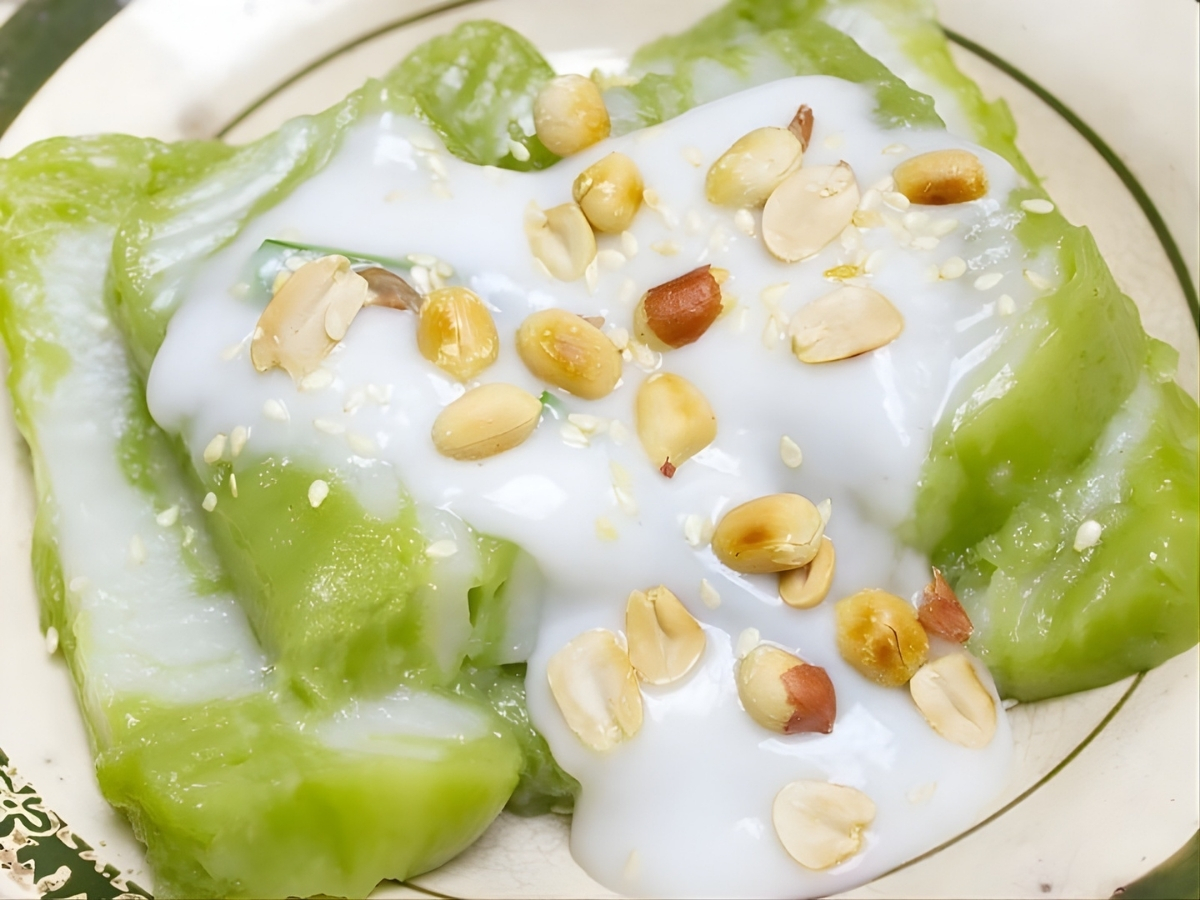
Banh Duc with sauce is a specialty of Thanh Hoa. (Source: Collected)
In the memory of local people, the image of carts of banh duc with sauce emitting heat by the roadside or in the afternoon market is a familiar aspect of life. The dish is not elaborate in appearance but carries spiritual value, reflecting the simplicity and closeness in the traditional culinary culture of Thanh Hoa.
The most recognizable feature of Thanh Hoa banh duc with sauce is its characteristic jade green color. This green hue is created from the juice of cải (mustard greens) or fresh ngót (sweet leaf), which after being pounded and filtered to extract the clear liquid, is mixed with rice flour. When the cake is cooked, the light, clear, and smooth green color creates a unique and unmistakable mark.
Unlike the white banh duc common in some other regions, usually served with peanuts, sesame seeds, or soy sauce, Thanh Hoa banh duc with sauce has a light, fresh flavor from the vegetable water, a soft, chewy, and smooth texture. The cake is often enjoyed hot, served in small bowls, bringing a warm and pleasant eating experience.
In daily life, banh duc with sauce is a familiar afternoon snack for many Thanh Hoa residents. The dish is often chosen after work or study, especially on cool days. Thanks to its reasonable price and mild flavor, banh duc with sauce is suitable for all ages.
For those who have moved away from their hometown, Thanh Hoa banh duc with sauce is not just a dish but also evokes childhood memories and the rural landscape. The image of a hot bowl of cake with its distinctive green color has become a part of culinary memory, contributing to the unique identity of Thanh Hoa.
Rice is the main ingredient that determines the quality of banh duc with sauce . The rice is carefully selected, with firm grains, no impurities, then washed, soaked until soft, and ground into a fine flour. The right type of rice helps the cake achieve a moderate chewiness, not dry or hard, and provides a smooth sensation when eaten.
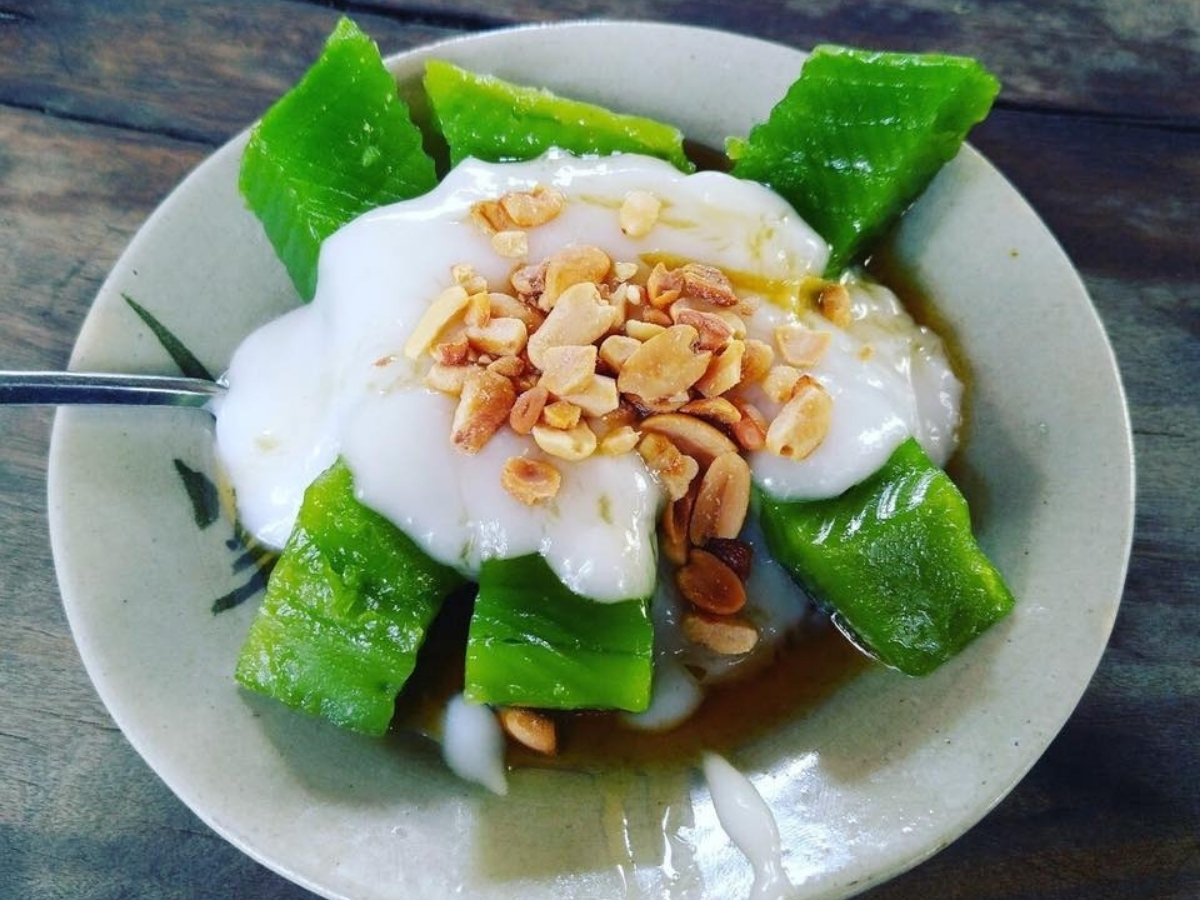
The characteristic green color of Thanh Hoa banh duc sot. (Source: Collected)
Lime water is an important ingredient in the traditional recipe. When mixed with rice flour in the appropriate ratio, lime water helps the cake achieve a chewy texture, maintain its structure, and prevent it from becoming mushy during cooking. At the same time, lime water also contributes to the distinctive flavor of banh duc sot .
The highlight that creates the difference of Thanh Hoa banh duc sot is the water from fresh mustard greens or ngot vegetables. The vegetables are pounded, squeezed, and carefully filtered to extract the clear water, which is then mixed with rice flour. Thanks to this, the cake has a natural jade green color and a light, easy-to-eat flavor.
After grinding, the rice flour is mixed with lime water, clean water, and a small amount of salt and cooking oil. The mixture needs to be stirred well to dissolve the flour completely and prevent lumps.
The vegetable water is added gradually, combined with continuous stirring to distribute the green color evenly throughout the batter. The amount of vegetable water needs to be adjusted carefully to ensure the cake has a harmonious color and a light flavor, not too strong a vegetable aroma.
After mixing, the batter is left to rest for about 3 hours. This resting period helps the batter stabilize, reduces the lime taste, and allows the cake to develop a more balanced aroma and flavor when cooked.
The batter stirring process is the most crucial step in making banh duc sot. The batter mixture is placed in a pot and cooked over a wood or charcoal stove on medium heat. Maintaining a stable temperature helps the batter cook evenly and prevents scorching.
Throughout the cooking process, the cook uses a large spatula to stir continuously and evenly for about 45-60 minutes, until the batter transforms from a liquid state to a thick, viscous consistency. Stirring with the correct technique ensures the batter is smooth, glossy, does not separate, and maintains a uniform jade green color.
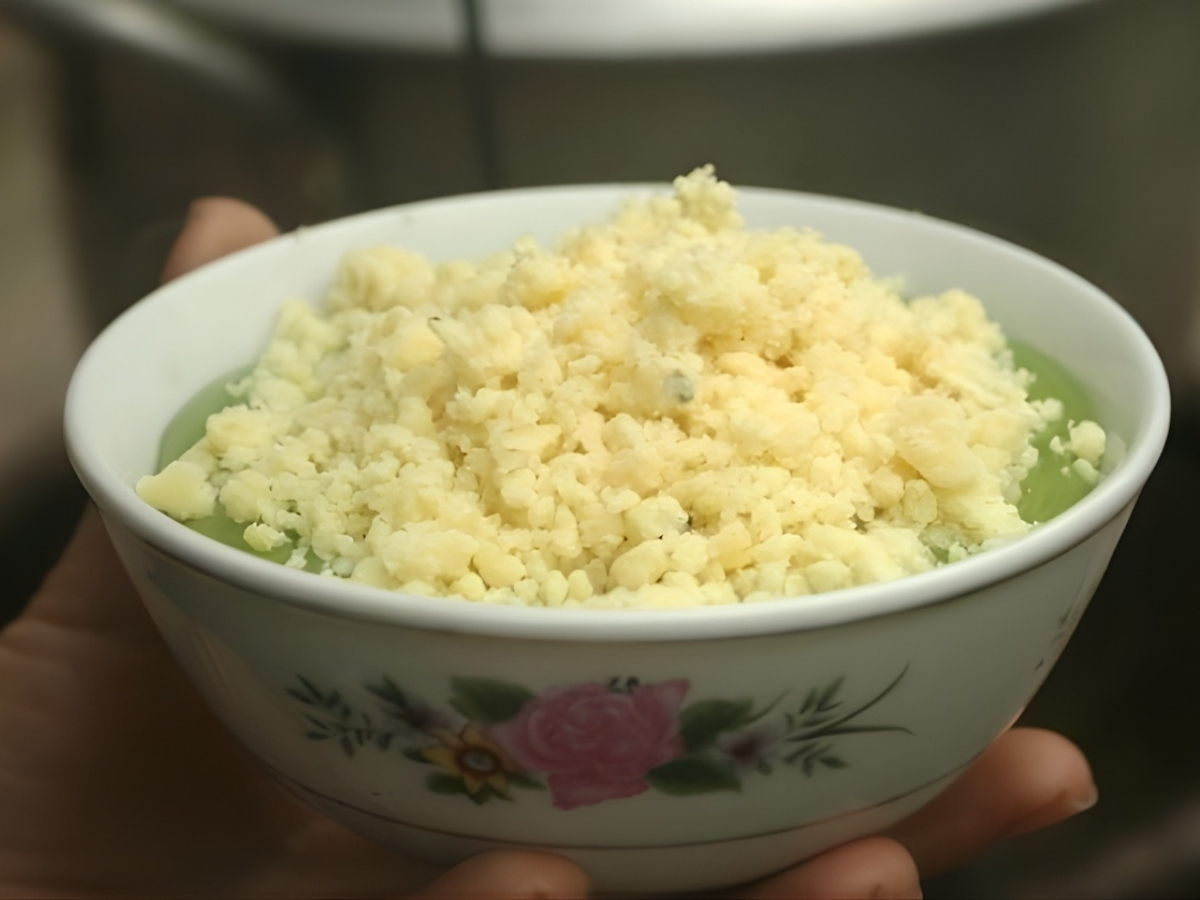
A bowl of delicious finished Banh Duc Sot. (Source: Collected)
When the cake meets the requirements, the pot of cake is removed from the stove and kept hot by covering it tightly or storing it in a bamboo basket. As a result, the cake is always hot when sold, ensuring quality and flavor when enjoyed.
Thanh Hoa Banh Duc Sot is usually enjoyed hot, right after being scooped into a bowl. In this state, the cake retains its smooth, chewy texture and the characteristic aroma of rice, limewater, and vegetable water. This is also why the dish is called "Banh Duc Sot".
When eating, the most noticeable sensations are the softness and chewiness of the cake. The rice flour is stirred carefully to create a smooth texture, not mushy and without any raw flour taste. The combination of rice and limewater gives the cake a moderate thickness, making it easy to eat and not greasy.
The aroma of mustard greens or spinach mixed with the scent of rice creates a light, refreshing taste. The vegetable aroma does not overpower but only serves to balance, making the overall flavor harmonious and pleasant, especially suitable for hot consumption.
Green beans are an important ingredient in a bowl of Banh Duc Sot. The beans are steamed, mashed, and sprinkled on top of the cake when served. The layer of green beans adds a nutty flavor, creates a filling sensation, and increases the nutritional value of the dish.
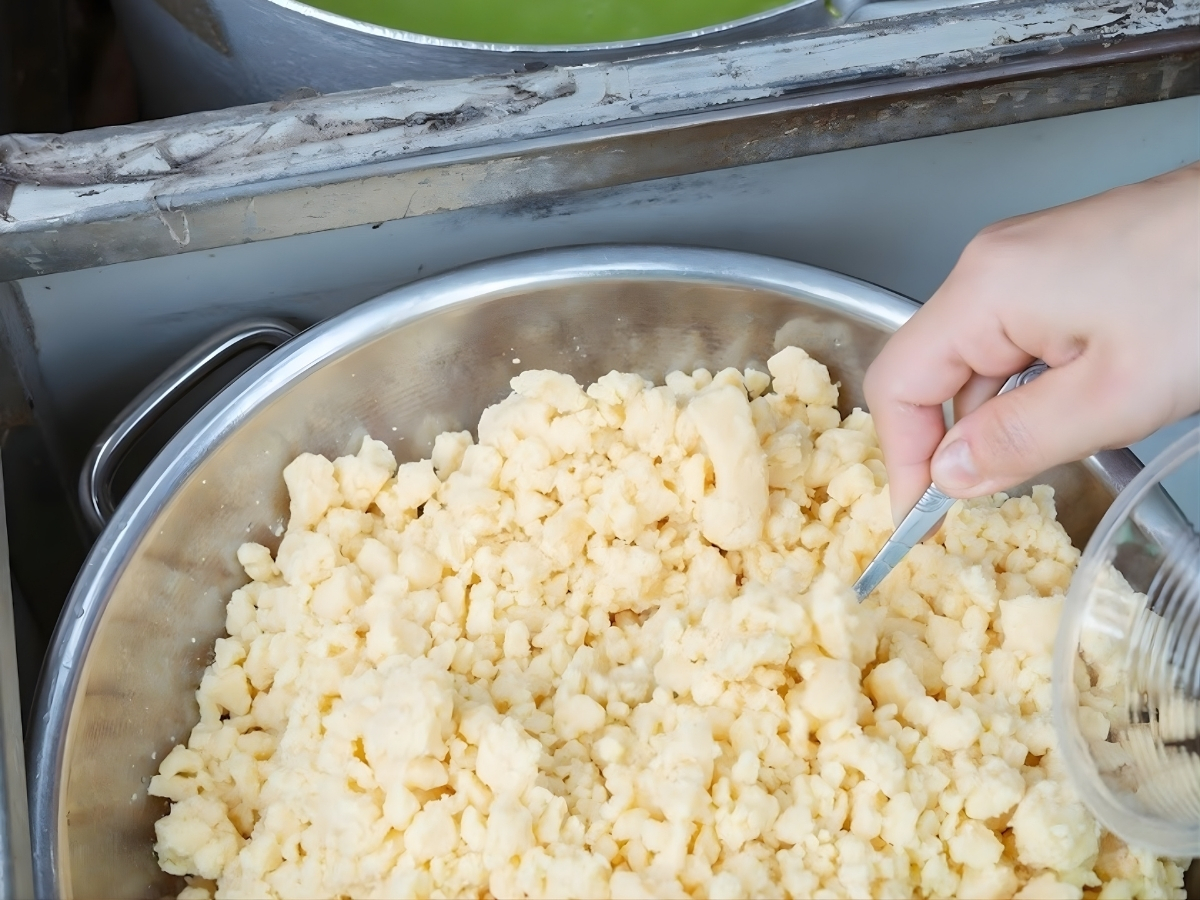
Mung beans are often eaten with Thanh Hoa sauce-covered rice cake. (Source: Collected)
Fried shallots and crispy pork fat are often used as the final topping. The shallots are thinly sliced and fried golden, combined with crispy pork fat to create aroma and textural contrast. When eaten with the chewy cake and smooth mung beans, these ingredients help make the bowl of cake more complete in flavor.
Thanh Hoa sauce-covered rice cake is a combination of many layers of flavor and texture: a chewy and smooth cake base made from rice flour, the nutty taste of mung beans, and the aroma from fried shallots and crispy pork fat. These ingredients complement each other, creating a balanced culinary experience.
The light, refreshing taste from the vegetable broth throughout the bowl of cake prevents it from being too rich, even when eaten in large quantities. This element also creates a distinct difference compared to the common white rice cake found in some other regions.
Thanks to its distinctive color, the practice of eating it hot, and its unique flavor, Thanh Hoa sauce-covered rice cake is considered one of the typical rustic dishes, contributing to the local culinary identity.
To enjoy sauce-covered rice cake with its traditional flavor, visitors should seek out long-standing establishments that still maintain traditional preparation methods and use local ingredients.
In the central Thanh Hoa area and its surrounding wards, sauce-covered rice cake is commonly sold at traditional markets or by street vendors. The afternoon is when the cake appears most frequently, associated with the local habit of snacking after work and school.
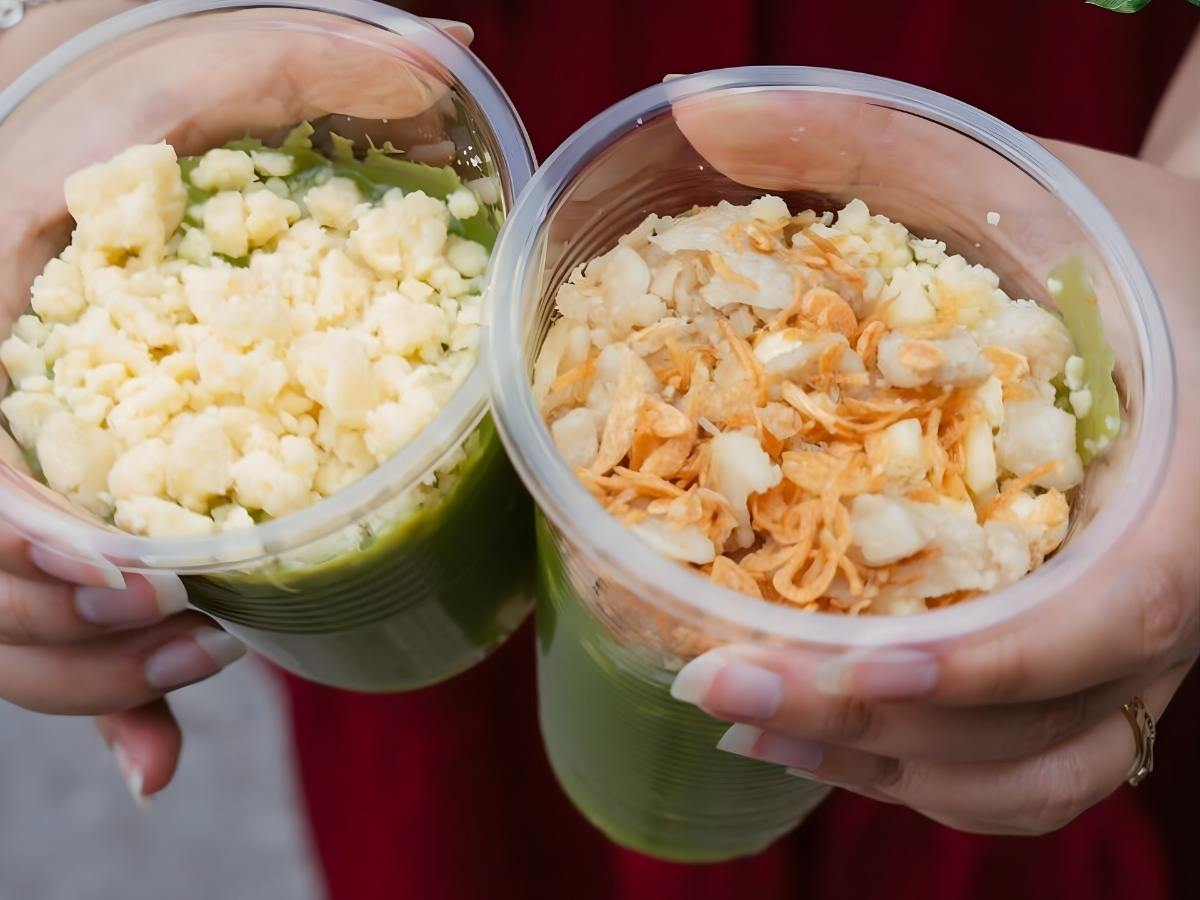
Tourists can experience Thanh Hoa's banh duc sot in many places. (Source: Compilation)
Besides street vendors, banh duc sot is also available at some breakfast eateries and snack stalls in residential areas or near schools. These places usually serve the cake from morning until late afternoon, convenient for enjoying at various times of the day.
Reference addresses:
Some street vendors in the Le Hoan intersection area, Thanh Hoa
Vuon Hoa Market
Nam Thanh Market
Sam Son is a typical beach tourist destination of Thanh Hoa, and it is a convenient area to combine in an itinerary for exploring local cuisine and culture. Tourists can participate in activities such as swimming, walking along the sandy shore, or enjoying the sea breeze in the early morning and late afternoon.

Scene of Sam Son beach square. (Source: Collected)
In recent years, Sam Son beach square has become a new cultural and tourist space, frequently hosting events, community activities, and serving as a check-in spot for tourists. After visiting and relaxing in Sam Son, returning to the central Thanh Hoa area to enjoy local dishes like banh duc sot is a suitable choice, helping to balance the experience between beach tourism and traditional cuisine.
Pu Luong Nature Reserve stands out with its mountain forest ecosystem, terraced fields, and Thai ethnic villages rich in cultural identity. The cool climate year-round and relatively pristine landscape make Pu Luong a suitable destination for ecotourism and resort stays.
Here, tourists can choose to stay in homestays, participate in light trekking routes, explore villages, or admire the seasonal terraced fields. The journey to Pu Luong is often combined with Thanh Hoa city, making it convenient to experience local cuisine before or after the trip to the mountainous area.
Nui Chua - Am Tien is a complex of historical and spiritual sites associated with the legend of Ba Trieu, holding significant importance in the cultural life of Thanh Hoa. The space here combines elements of belief and mountainous scenery, suitable for visits focused on historical exploration.
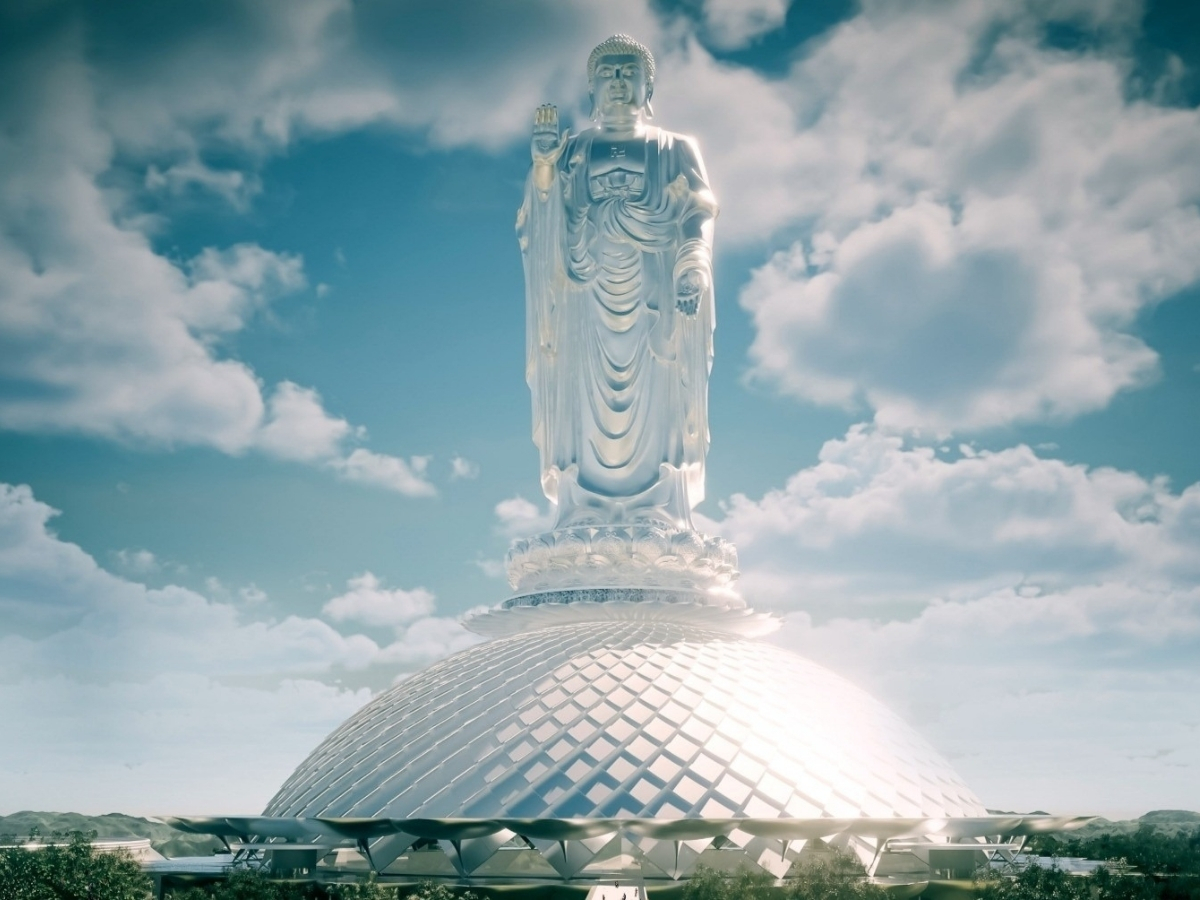
World record-holding Buddha statue built at the Huyen Tich Am Tien project. (Source: Compilation)
Currently, this area is being developed through the Huyen Tich Am Tien project. The project serves the objectives of preserving relics, completing infrastructure, and promoting historical - cultural values associated with natural landscapes. In the future, Am Tien is expected to become a highlight in the spiritual - historical tourist routes of Thanh Hoa.
Thanh Hoa's Noodle Soup with Sauce is not just a simple dish but also a culinary pride of the Thanh Hoa people. With its unique jade green color, captivating fresh taste, and warm, heartfelt serving style, this dish deserves to be an unmissable experience in your journey to discover Thanh Hoa.
Let's start your vacation!

Special offer up to 30% when booking tickets on the Sun Paradise Land app

