


Vouchers

Song Son Temple: History, Festivals, and Notable Spiritual Experiences
Located on a high ground beside National Highway 1A, in Quang Trung ward, Thanh Hoa province, Song Son Temple is known by many people thanks to its convenient location, helping visitors easily come to worship. This place is prominent as one of the famous Mother Goddess worship centers in the North Central Coast region.

Song Son Temple is one of the famous centers for worshipping Mother Goddesses in the North Central Coast region. (Source: Collected)
The spiritual value of Song Son Temple is deeply associated with the ritual of worshipping Saint Mother Lieu Hanh, a deity belonging to the Four Immortals in Vietnamese folk beliefs. Many local people and tourists spread word about the sacredness of this place, often praying for peace, wealth, and prosperity, making Song Son Temple a popular destination for those seeking peace and good fortune.
After many years of development, the temple was recognized by the Ministry of Culture and Information as a National Historical and Cultural Relic in 1993. Despite being renovated and restored many times, Song Son Temple still retains its ancient architectural features and enduring spiritual value.
The history of Song Son Temple originates from the Later Le Dynasty. Based on ancient documents and preserved legends, during the Vinh To period (1619-1628), an old man from Co Dam village was instructed in a dream by the Fairy Lord, guiding him to the location to build the temple on this land full of spiritual energy.
The temple's name also changed interestingly through historical periods. According to records on ancient steles, initially, the temple was named Sung Son, also known as Sung Tran Mieu. Later, the name "Song Son" became popular, showing greater closeness and familiarity with the local community.
According to legend, the appearance of Song Son Temple is linked to the story of Saint Mother Lieu Hanh manifesting in this land. Locals also recount how the Fairy Lord possessed an elder, guiding everyone to establish the temple for worship, thereby bringing peace to the hamlet. To express gratitude, the people built the temple for worship.
The architecture of Song Son Temple bears strong cultural imprints from the Le Trung Hung and Nguyen periods, clearly showing the traditional style of Vietnamese communal houses and temples. The entire complex is built in the shape of the character "tam" (三), a traditional layout creating a solemn and peaceful atmosphere.
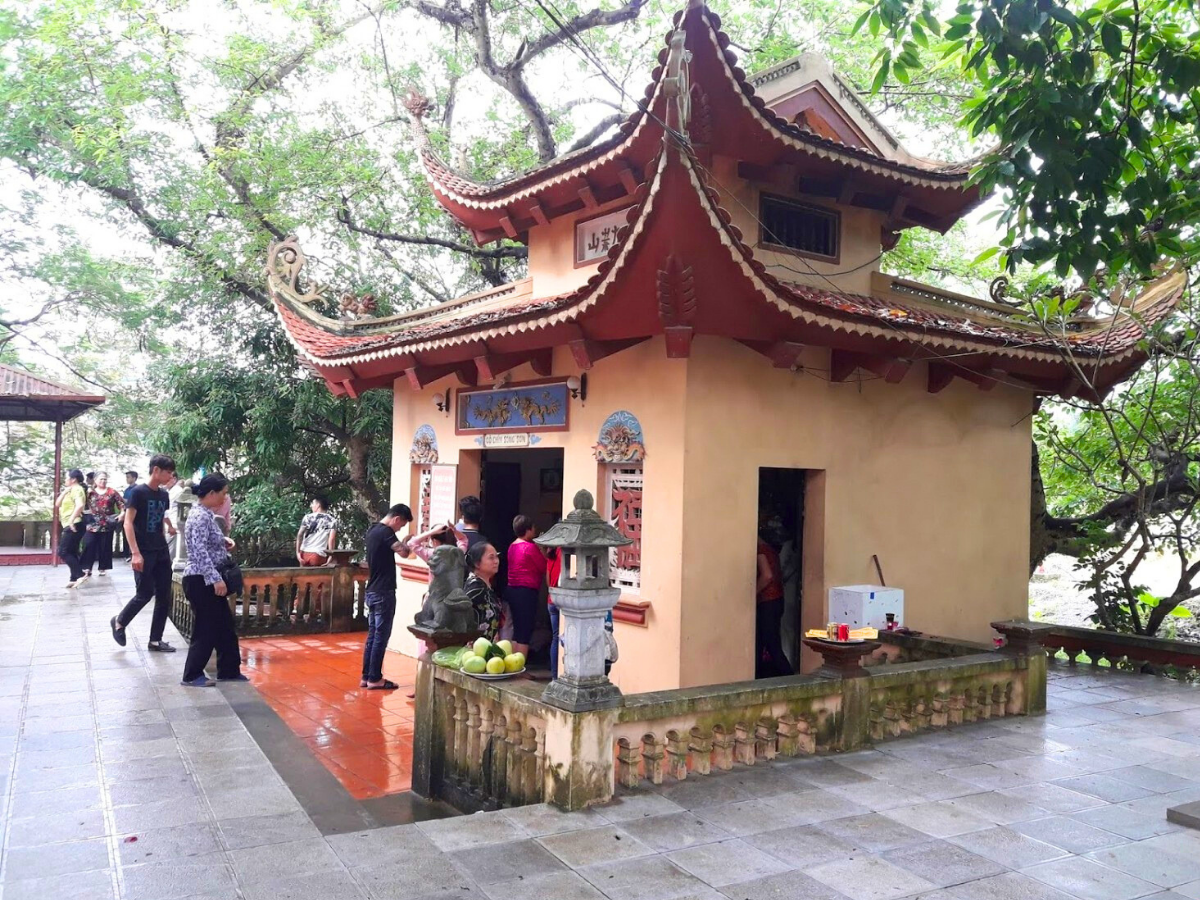
The architecture of Song Son Temple bears the strong cultural imprint of traditional Vietnamese communal house and temple styles. (Source: Collected)
The temple has a main structure consisting of three consecutive areas: Front Hall, Middle Hall, and Rear Sanctuary. Upon entering through the gate, visitors are immediately impressed by the imposing Tam Quan gate, with three doors named Cua Gioi, Cua Dinh, and Cua Tue respectively. Each door holds profound meaning within Buddhist philosophy and folk beliefs.
The construction materials of Song Son Temple demonstrate the skill and talent of ancient artisans. The large pillars in the worship hall are placed on intricately carved stone bases with hexagonal patterns, along with the gilded and lacquered "cua vong" shining brilliantly. These details reflect the excellent carving skills of artisans from Nhoi village, the renowned cradle of stone carving in Thanh Hoa.
The carving and sculpting techniques at Song Son Temple strongly impress anyone who visits. From the depictions of dragons, phoenixes, and the Four Sacred Beasts to the reliefs praising the Holy Mother, all are rendered with great sophistication, creating an artistic space rich in Vietnamese identity.
Around the temple complex, auxiliary structures also bear distinctive cultural imprints. Statues of Avalokitesvara Bodhisattva, altars dedicated to Duc Thanh Tran, and the Council of Holy Officials are arranged harmoniously and logically. The connection between the deities in the Mother Goddess worship contributes to creating a sacred and solemn space, meeting the traditional spiritual needs of the people.
The image of Holy Mother Lieu Hanh is passed down by the people as a symbol of compassion and benevolence. According to legend, the Holy Mother was Princess Quynh Nuong, the second daughter of the Jade Emperor, who was once banished to the mortal world for committing a mistake in the heavenly realm.
During her three descents to the mortal world, Holy Mother Lieu Hanh always showed compassion, helped the people, resolved difficulties, and inspired people to live virtuously. Thanks to these contributions, she was revered by the people as "Mother of the Realm" and recognized as one of the Four Immortals in Vietnamese folk culture.
The last time the Holy Mother manifested was deeply connected to the land of Thanh Hoa – the area where Song Son Temple was built. Here, the people built a temple to worship her, passing down many sacred stories about the Holy Mother, making Song Son Temple an important site for Mother Goddess worship within the Vietnamese belief system.
Song Son Temple is a place that connects and spreads the Mother Goddess worship between the North and Central regions. It is a convergence point for indigenous beliefs, and also contributes to maintaining and preserving the traditional spirit of Mother Goddess worship, having a significant impact on the spiritual life of the community in Thanh Hoa.
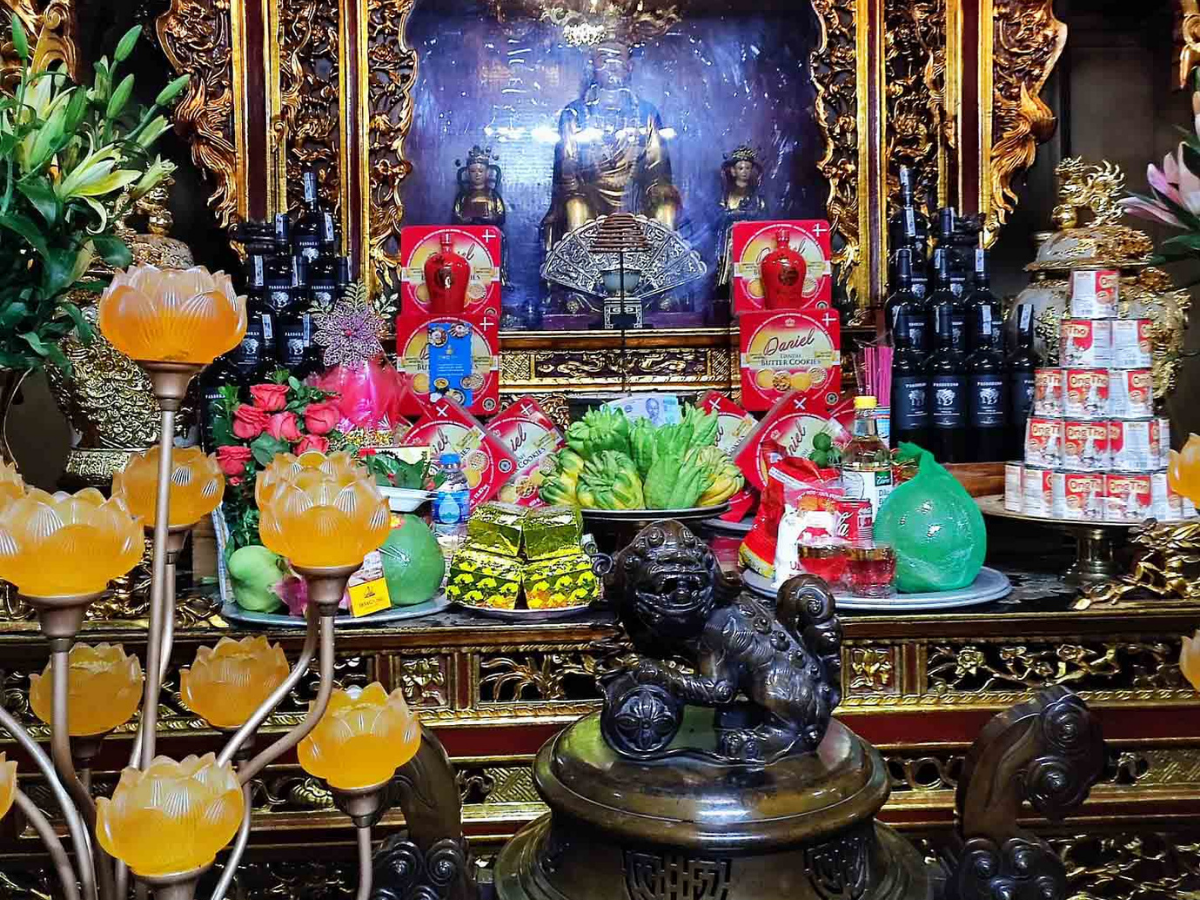
Song Son Temple is a convergence point of indigenous beliefs, greatly influencing the spiritual life of the resident community in Thanh Hoa. (Source: Collected)
The sacredness of Song Son Temple has been recounted by the people through many generations, with numerous stories of prayers for peace, for children, and for prosperity being answered. Worship activities such as offering rituals, offering incense, and performing Hau Dong dances are still regularly held, attracting a large number of devotees to pay homage during festival occasions.
The rituals at Song Son Temple still retain the traditional characteristics of Mother Goddess worship beliefs. In each ceremony, each incense offering ritual, the sacred atmosphere creates a strong bond between people and faith, between individuals and the community.
The Song Son Temple - Deo Ba Doi Festival is held from the 24th to the 26th day of the 2nd lunar month. This event always attracts a large number of visitors from everywhere, creating a sacred and solemn atmosphere.
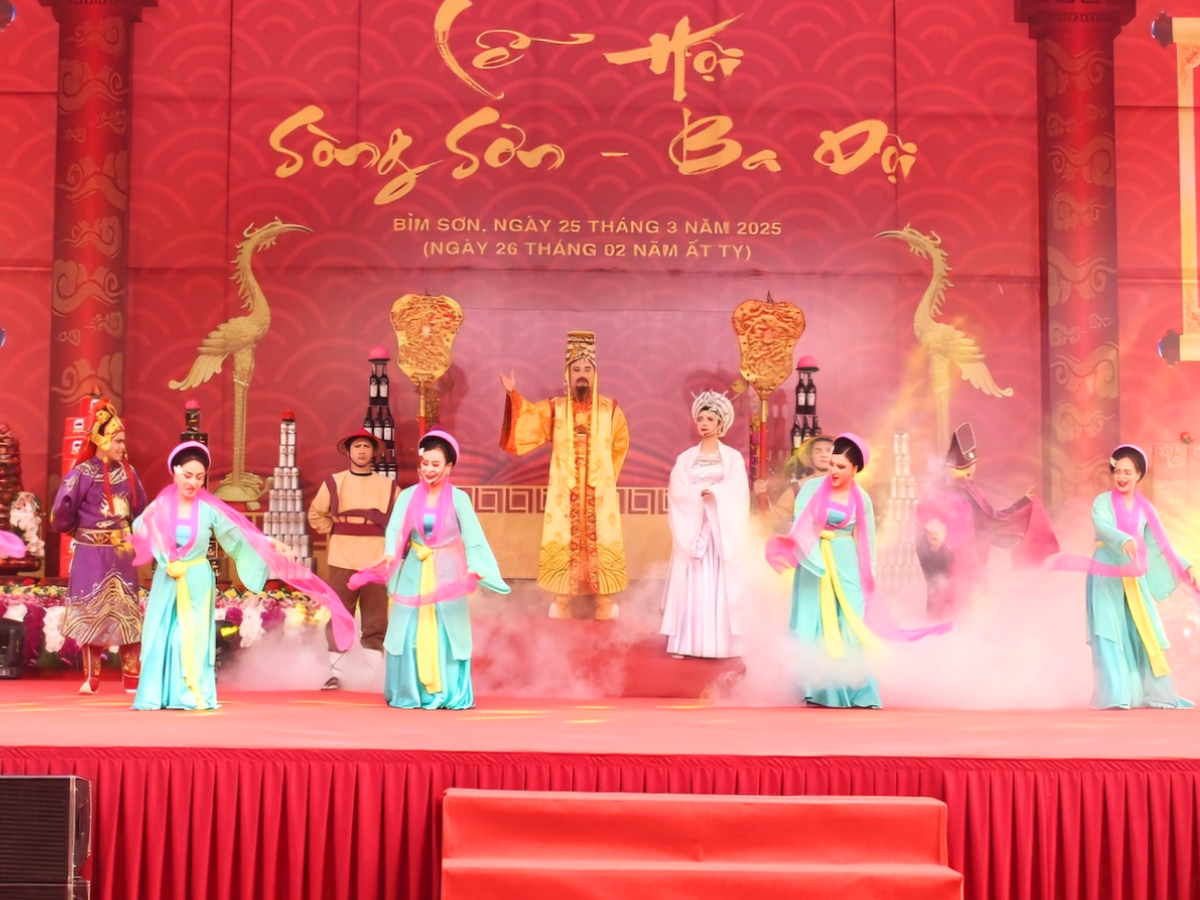
The festival of Song Son Temple attracts a large number of visitors, creating a sacred and solemn atmosphere. (Source: Collected)
The solemn nature of the festival is expressed through many special rituals. The ritual of carrying the palanquin of Holy Mother Thanh Mau is elaborately organized with the participation of many local people and tourists. The sacrificial rites and folk parades clearly recreate the local culture, expressing reverence and gratitude towards Holy Mother Lieu Hanh.
Incense offering rituals at auspicious hours, rituals to thank Holy Mother, and prayers for national peace and people's well-being are conducted meticulously. The festival atmosphere at Song Son Temple exudes solemnity and warmth, bringing a sense of connection among everyone in the community as well as visitors from everywhere.
The art of Chau Van singing and Hau Dong dancing play a leading role in the festival of Song Son Temple . The profound melodies and flexible dance movements connect the spiritual world and humans, creating a sacred and mystical atmosphere during the grand festival days.
Besides traditional rituals, the festival also organizes many cultural and artistic activities with local characteristics. Folk music and dance performances and performances of regional folk songs contribute to making the festival atmosphere more lively, helping tourists understand Thanh Hoa culture more deeply.
The culinary area with stalls of Thanh Hoa specialties and traditional dishes makes the trip more interesting. Community activities and folk fairs further enrich the experience, helping the festival of Song Son Temple become a colorful cultural celebration.
The imposing Tam Quan gate of Song Son Temple is always the first stop for visitors, possessing both ancient architectural beauty and profound spiritual significance. The main hall, with its exquisite carved details, is also an ideal spot to capture memorable moments. Especially, the procession route during festival occasions always brings many vivid images of folk belief culture.
The spiritual experience at Song Son Temple will be more complete if visitors come early in the morning or during the time of major rituals, when the fresh, sacred atmosphere and traditional ceremonies make the trip more meaningful.

Thanh Hoa Che Lam is one of the local dishes that cannot be missed. (Source: Collected)
Local cuisine around Song Son Temple is also an unmissable attraction. Delicious specialties such as nem chua, fragrant banh gai, or sweet che lam are always ready to serve visitors at stalls around the temple and nearby markets, leaving a unique imprint of the Thanh Hoa region.
A half-day itinerary at Song Son Temple is suitable for those who want to experience spiritual beauty in a short time. Visitors can explore the entire temple complex, offer incense, participate in cultural activities, and learn about local customs.
If you have more time, a full-day itinerary will provide a deeper experience. After visiting Song Son Temple, you can stop by Bim Son Market to buy specialties, or continue your journey to explore nearby relics such as Co Bo Temple, Khong Minh Tu Temple, while immersing yourself in the local community life.
A new attractive spot is about to emerge: the Huyen Tich Am Tien project, located near Song Son Temple. This project is expected to offer more unique experiences, contributing to cultural and spiritual highlights, and creating new appeal for Thanh Hoa tourism.
When visiting Song Son Temple, the choice of attire should particularly emphasize respect for the spiritual space. Visitors should prioritize modest, polite clothing with gentle colors. Avoid short, tight-fitting, or inappropriately designed outfits for the solemn atmosphere.
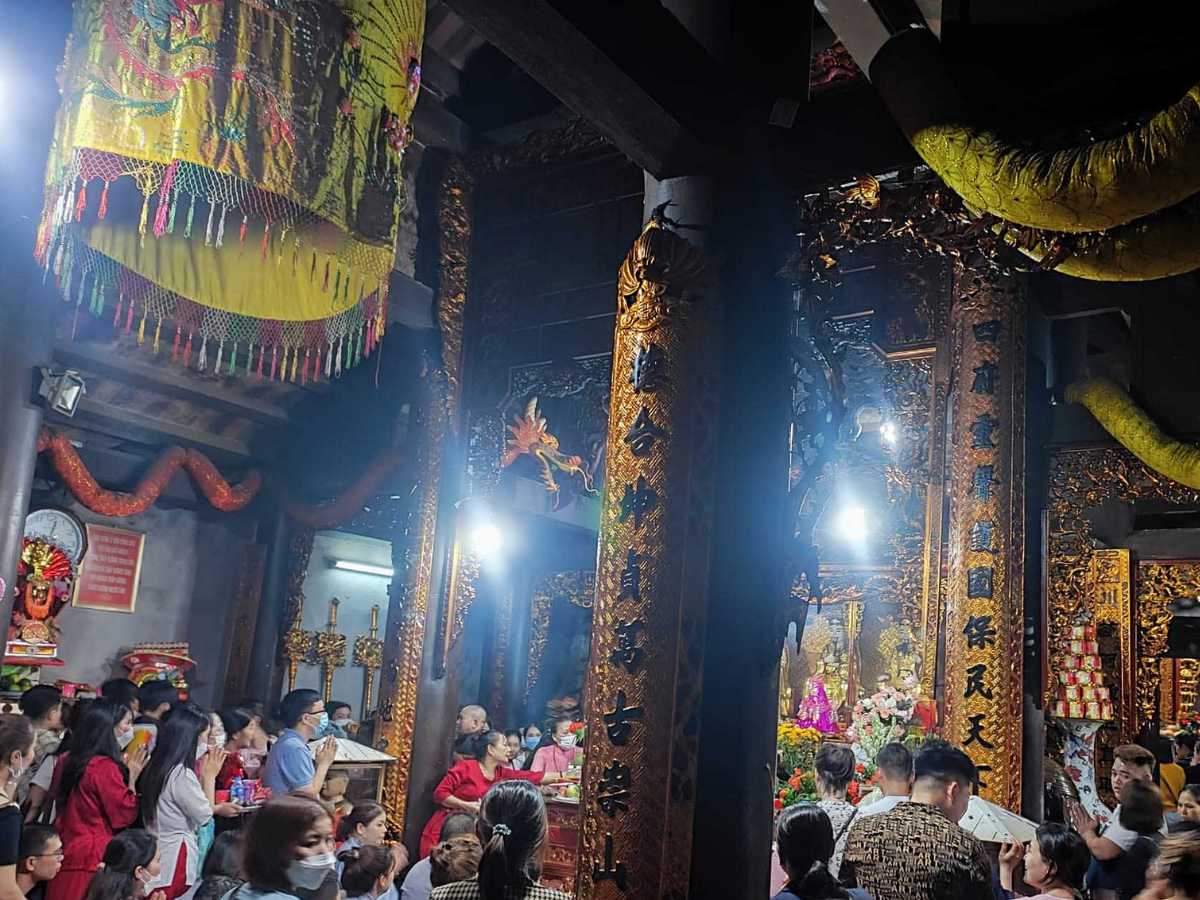
Visitors should prioritize modest, polite attire with soft colors. (Source: Collected)
Offerings at Den Song Son according to the tradition of Mother Goddess worship usually include incense, fresh flowers, fresh fruits, candies, oản (sticky rice cakes), and votive paper. The quantity of offerings only needs to be sufficient, focusing on showing sincerity is key. Additionally, savory offerings such as five-colored sticky rice and whole boiled chickens are also very suitable for the Mother Goddess worship ritual.
Regarding the timing of offerings, it is advisable to choose quiet times, avoiding major ceremony hours or when crowded, to ensure the ritual is conducted solemnly and peacefully. A peaceful state of mind with sincerity will help you have a meaningful spiritual experience at Den Song Son .
When visiting Den Song Son , visitors should behave politely, maintain order, speak softly, and avoid jostling during the worship ceremony. Civilized queuing, respecting the spiritual space, as well as fellow worshippers, is very important.
The timing and method of performing the ritual also need to be considered reasonably. To avoid crowds, it is advisable to limit offerings close to the main ceremony or auspicious hours. You can also consult with the monument management board to choose the most suitable time for offering incense and praying.
Photography and videography at Den Song Son should only be done outside the temple grounds or in designated areas. Avoid using flash when photographing inside the main hall. Additionally, be mindful not to strike inappropriate poses and comply with all management board instructions to ensure the sanctity of the sacred place.
Den Song Son is a vivid testament to the crystallization of the typical historical, cultural, and spiritual values of Thanh Hoa. As one of the largest centers for Mother Goddess worship in Vietnam, associated with the sacred legend of Saint Mother Lieu Hanh, this place offers unmissable experiences: from participating in unique festivals, exploring ancient architecture, to enjoying local cuisine rich in local identity. Please share your feelings and travel plans to visit Den Song Son to spread the value of spiritual tourism to the community!
Let's start your vacation!

Special offer up to 30% when booking tickets on the Sun Paradise Land app
Related topics

