


Cuisine

Explore the special national monument of Sung Nghiem Dien Thanh Pagoda
Sung Nghiem Dien Thanh Pagoda , also known as Duy Tinh Pagoda, is located in Duy Tinh village, Hau Loc commune. This is one of the oldest pagodas in Thanh land, bearing strong imprints of the history, culture, and Buddhism of the Ly Dynasty. Not only a place for religious activities, the pagoda is also associated with the formation and development of the Cuu Chan - Chau Ai region. This land was once an important political, economic, and cultural center of Thanh Hoa for many centuries.
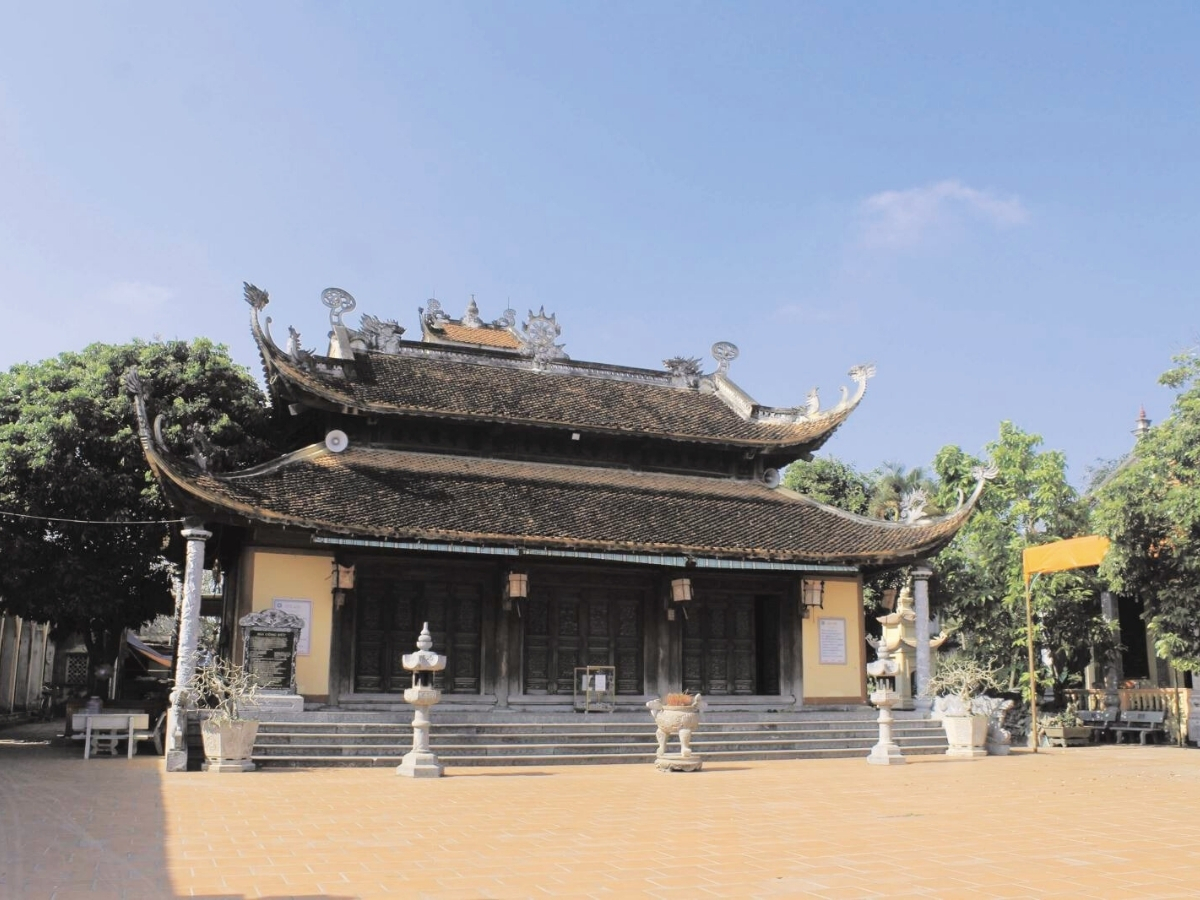
Sung Nghiem Dien Thanh Pagoda is also known as Duy Tinh Pagoda. (Source: Collected)
Duy Tinh was formerly a prosperous area with fertile fields, chosen as the administrative center of the Thanh region for nearly 400 years (1009-1400). During the Le Dynasty, this place continued to serve as the center of Ha Trung prefecture - comprising four districts: Hau Loc, Hoang Hoa, Tong Son (now Ha Trung), and Nga Son. Despite many changes, the Duy Tinh - Cho Phu area remained a typical economic and cultural center of Hau Loc, contributing to the preservation of the traditional values of the Thanh people.
Sung Nghiem Dien Thanh Pagoda has an ancient dating. Notably, the pagoda underwent a major renovation in 1118, according to inscriptions on an ancient stone stele, which is currently considered the oldest Ly Dynasty stele still existing in Vietnam. According to historical records, in 1116 (the 7th year of the Hoi Tuong Dai Khanh era), King Ly Nhan Tong, during his southern tour, stopped at the administrative center of Ai Chau (Thanh Hoa). To express their gratitude to the king, Chu Cong, the Military Governor of Thanh Hoa, along with local officials and the people of Duy Tinh, initiated the project to rebuild the ruined ancient pagoda, assigning District Magistrate Le Chieu to supervise the construction. After two years, the pagoda was completed on a large scale, intricately carved, becoming a famous Zen monastery center of Ai Chau.

Sung Nghiem Dien Thanh Pagoda holds many cultural and historical values. (Source: Collected)
According to records, Grand Tutor Ly Thuong Kiet, when governing Thanh Hoa (1082-1101), had this pagoda repaired during his time stationed in Duy Tinh. Therefore, Sung Nghiem Dien Thanh Pagoda is not only a Buddhist symbol but also a historical testament associated with outstanding figures and the prosperous development period of Dai Viet.
With its great historical, artistic, and spiritual value, Sung Nghiem Dien Thanh Pagoda was recognized as a National historical-cultural relic in 1990, and in 2019, it was included in the list of provincial tourist destinations in Thanh Hoa. The pagoda is not only a source of pride for the people of Duy Tinh - Hau Loc, but also a vivid testament to the long-standing cultural and religious traditions of Thanh Hoa.
From the center of Thanh Hoa, the journey to Sung Nghiem Dien Thanh Pagoda is very convenient, with a distance of about 25 km. Visitors can choose motorcycles or cars heading towards National Highway 10 towards Hau Loc commune, following the tree-lined Duy Tinh village road to reach the pagoda gate. If starting from Hanoi, travel along the Hanoi - Ninh Binh expressway, reach the center of Thanh Hoa, then turn onto National Highway 10 towards Hau Loc. The total distance is about 160 km, with travel time ranging from 3.5 to 4 hours by private car, ideal for a day trip.

The pagoda is located in Hau Loc commune, Thanh Hoa province. (Source: Collected)
As soon as you arrive at the pagoda, the ancient Tam Quan gate appears majestically amidst the peaceful countryside. On both sides of the gate are a pair of elaborately carved stone elephant statues in attendance. This is a symbol of the power, protection, and majesty of Buddhism.
Sung Nghiem Dien Thanh Pagoda is a destination that can be visited year-round, as Thanh Hoa's climate is generally mild, and the scenery here has its own unique beauty each season. To fully experience the festive atmosphere, visitors should choose spring, when the pagoda enters its most beautiful period of the year.
From the 1st to the 3rd lunar month, the weather is cool and mildly sunny, very suitable for sightseeing, worshiping, and photography. The pagoda grounds are filled with the colors of spring, lush green trees, lotus ponds, and gardens emitting a gentle fragrance, creating a peaceful and serene picture. Golden sunlight shining through the moss-covered tiled roofs further highlights the ancient charm of the thousand-year-old pagoda.
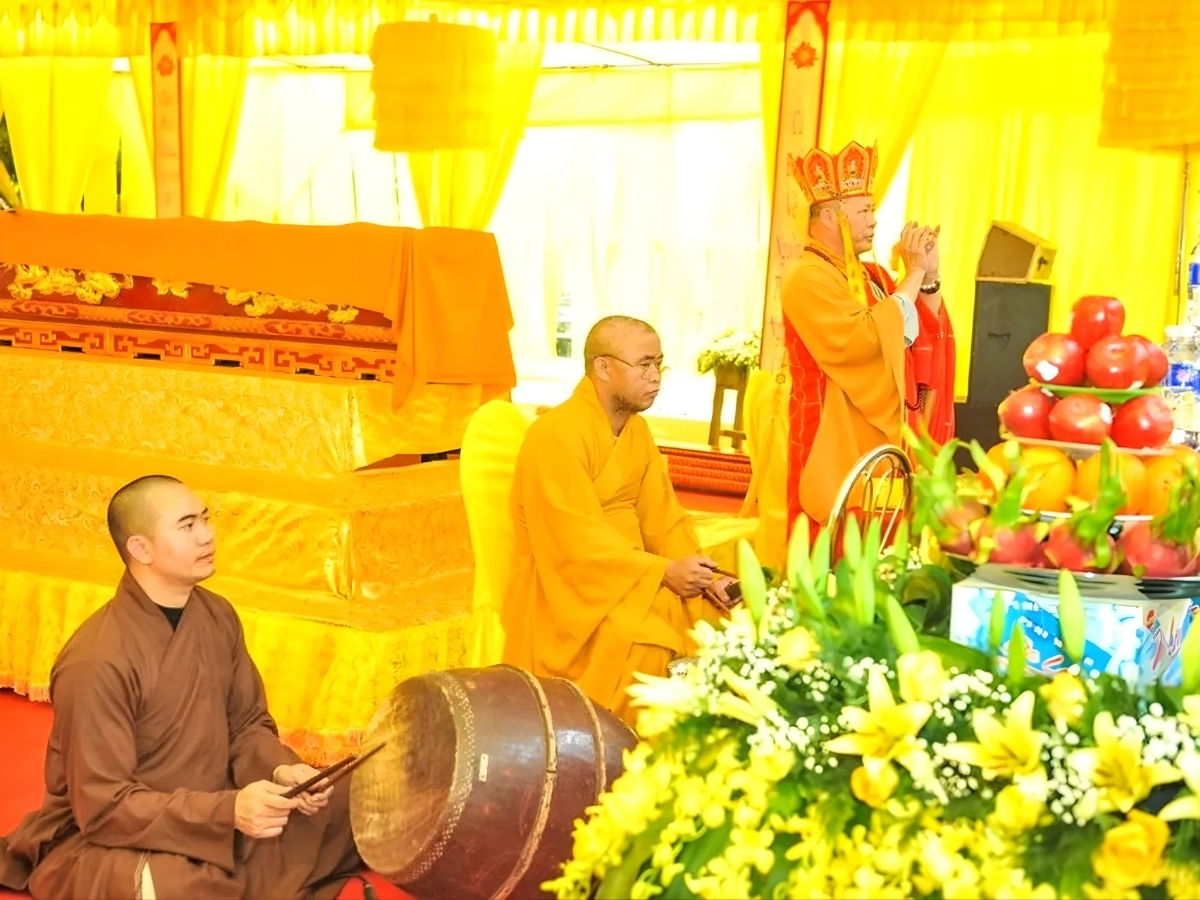
Sung Nghiem Dien Thanh Pagoda is suitable for visiting all year round. (Source: Collection)
Besides, there is the Sung Nghiem Dien Thanh Pagoda festival, taking place from the 8th to the 10th day of the 2nd lunar month. This is one of the typical cultural and religious events of the Thanh region. The ceremony is solemnly conducted with traditional rituals such as the opening ceremony, procession of the deity Cao Son Doc Cuoc's palanquin, ceremony to worship Saint Mother Hoang Cam Linh Nham, and the grand ceremony.
Not only is it an occasion for pilgrimage and prayer for peace, but the festival also carries the meaning of gratitude to ancestors, honoring the merits of predecessors, and expressing the spirit of “drinking water, remembering its source” characteristic of the people of the Thanh region. Regardless of the season, visitors can still feel the sacred, serene space and the atmosphere rich in the traditional cultural identity of the sacred land of Hau Loc.
Sung Nghiem Dien Thanh Pagoda is considered one of the most ancient and exquisite religious structures remaining from the Ly Dynasty in Thanh Hoa. The pagoda's architecture is elaborately built, bearing the strong imprint of medieval art with its characteristic slipper-shaped roof tiles, and gracefully curved eaves resembling flying pheasants and dancing phoenixes. The columns and beams are intricately carved, depicting images of dragon - unicorn - turtle - phoenix and stylized floral motifs that strongly reflect the artistic style of the Ly Dynasty.
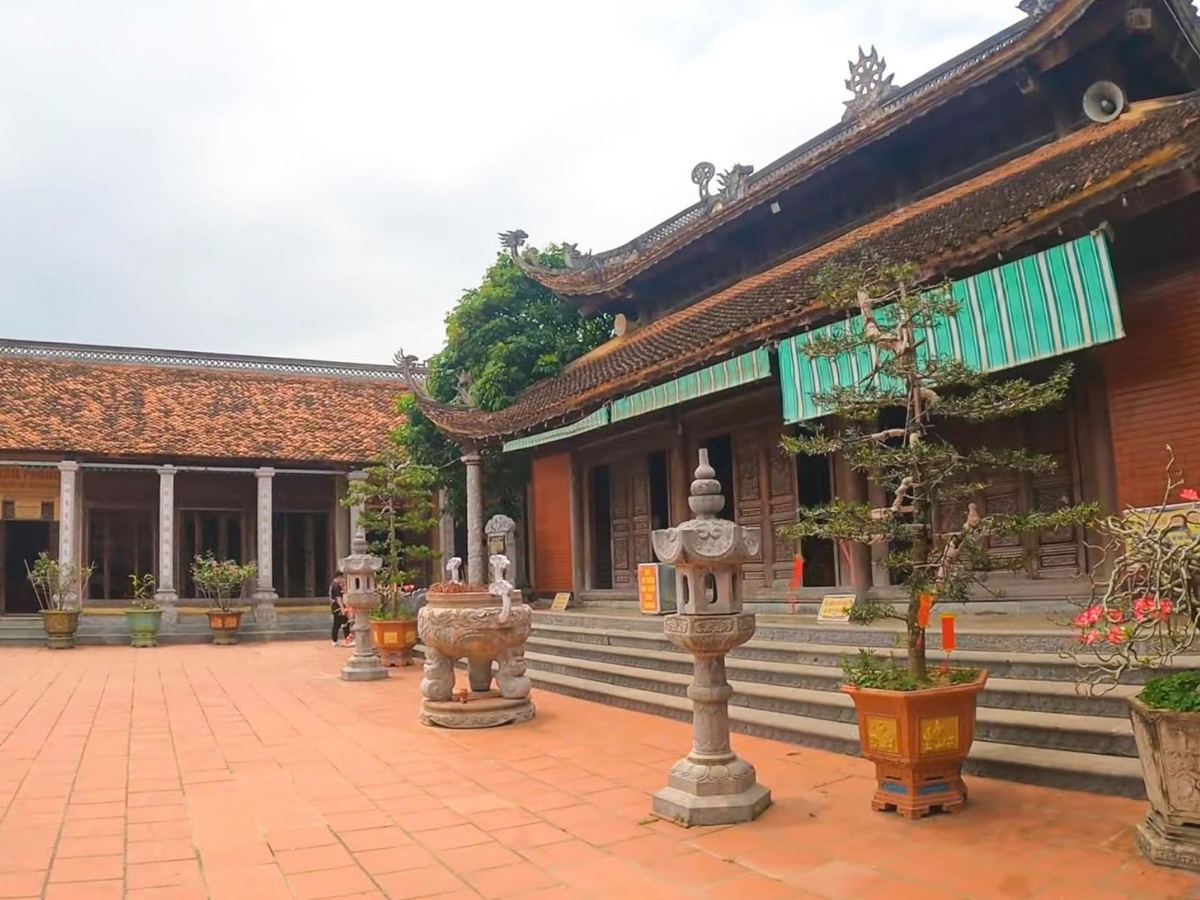
The architectural space inside Sung Nghiem Dien Thanh pagoda. (Source: Collected)
The pagoda grounds are spacious, with two symmetrical stone elephant statues in front of the Tam Quan gate, symbolizing sacred protection. Above the Tam Quan is an ancient bell tower, where each ringing bell creates a serene sound. Surrounding the pagoda is an ancient corridor, a fragrant orchid garden, and a cool lotus pond. All blend together to create a tranquil space, separate from the hustle and bustle of the city.
The most distinctive feature of Sung Nghiem Dien Thanh pagoda is the stone stele inscribed in 1118, the oldest Ly Dynasty stele still preserved in Vietnam. On the stele's surface, over 2,400 Chinese characters are intricately carved, depicting coiling dragons and delicate chrysanthemum vines. The stele records the pagoda's restoration during the reign of King Ly Nhan Tong, while praising the spirit of 'protecting the nation and pacifying the people' and the merits of the pagoda's builders.
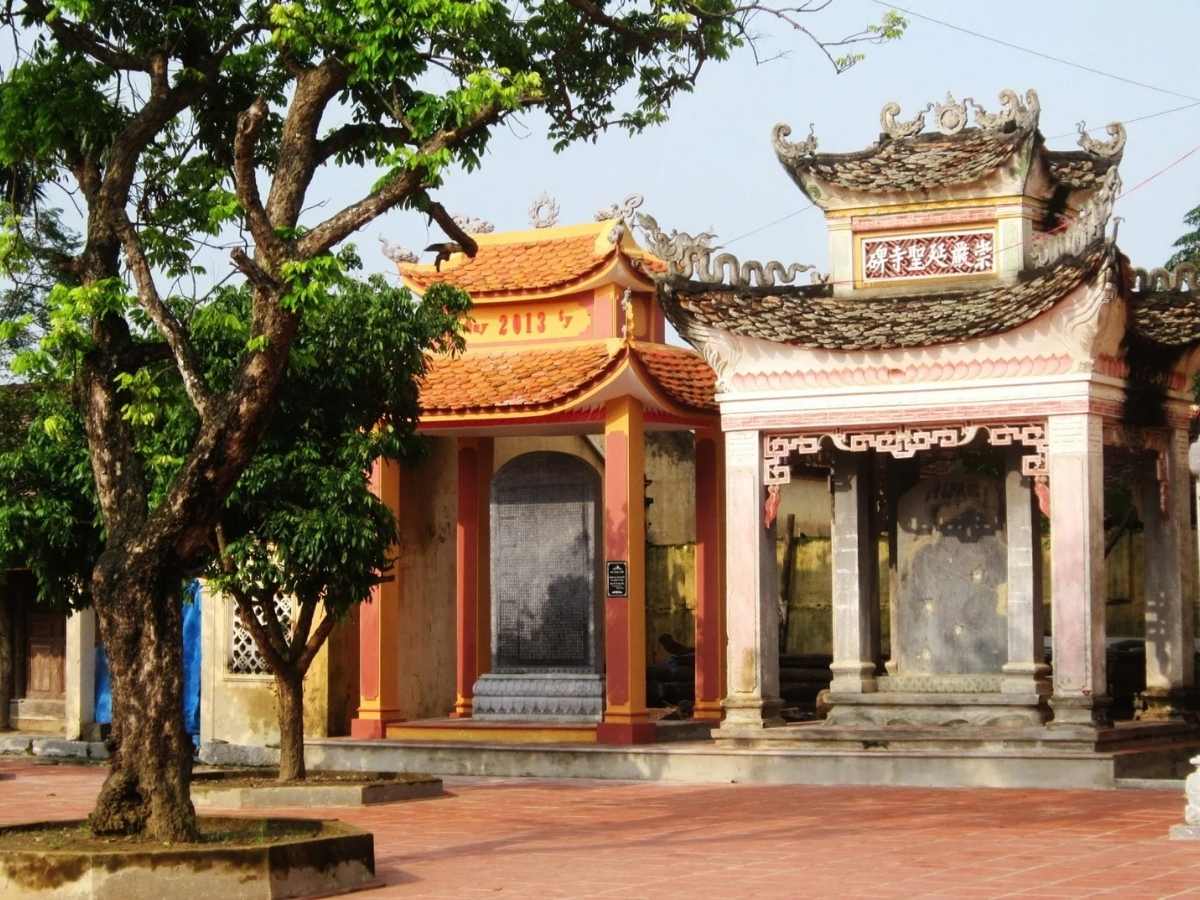
Ancient stone stele from the Ly Dynasty located at the pagoda. (Source: Collected)
In addition, the pagoda also preserves many rare artifacts such as stone steles from the Le Dynasty (1604), bronze bells cast in the 17th year of Gia Long (1818), stone pedestals shaped like lions supporting lotus thrones, ancient wooden statues from the 17th century, along with lotus-shaped tiles and decorative reliefs from the Ly Dynasty. Each artifact is a vivid testament to the cultural history and religious art of Vietnam over the past 900 years.
Every year, from the 8th to the 10th day of the second lunar month, the festival of Sung Nghiem Dien Thanh Pagoda is solemnly organized, attracting thousands of Buddhists and visitors from all directions. The ceremony includes traditional rituals such as opening the festival, procession of the palanquin of the deity Cao Son Doc Cuoc, the worship ceremony for Saint Mother Hoang Cam Linh Nham, and the grand worship ceremony. The palanquin procession goes around Duy Tinh village in a sacred atmosphere, with flags, ceremonial music, and lively lion dances.
The festival part is rich in folk colors with traditional games such as human chess, tug of war, rice cooking competition, cockfighting, card running, along with many cultural performances and mass sports activities. This is not only an occasion for the people to remember the merits of their ancestors, pray for national peace and popular well-being, but also an opportunity to honor the long-standing cultural and historical essence of the Hau Loc land.

The Buddha statues at Sung Nghiem Dien Thanh pagoda. (Source: Collected)
The festival and the ancient pagoda over a thousand years old are vivid proof of the blend between Buddhist beliefs, national traditions, and the identity of Thanh Hoa region, bringing visitors a sacred and profound spiritual experience.
To have a meaningful pilgrimage and worship trip at Sung Nghiem Dien Thanh pagoda, visitors should note the following points:
Choose modest, polite attire, avoid wearing clothes that are too short or expose shoulders to show reverence at the sacred Buddhist site.
Maintain a calm attitude, speak softly in the worship area, do not laugh loudly or cause disorder.
Limit photography or filming in the main hall; if you want to capture images, you should ask for permission beforehand to ensure respect.
Bring drinking water, a hat, or an umbrella for sun protection, wear low shoes or soft-soled sandals to move easily within the large grounds of the pagoda.
Maintain general hygiene, do not litter, follow the instructions of the pagoda and the festival organizers to help maintain the solemnity and beauty of the relic.
Not far from the pagoda, the Ham Rong historical site is a destination with special historical and scenic value in Thanh Hoa. This place once marked glorious victories in the resistance war against the US with the legendary Ham Rong Bridge. Standing from Ngoc Mountain peak, visitors can admire the panoramic view of the winding Ma River, the vast plains, and the modern Thanh Hoa center in the distance, both majestic and poetic.

Ham Rong Bridge is associated with the resistance war against America. (Source: Collected)
If you want to find some relaxation after your pilgrimage journey, Hai Linh Beach is an ideal choice. The smooth sandy shore, emerald green water, and quiet space make it an attractive stopover for sea-loving tourists. In the morning, you can watch the brilliant sunrise over the sea; after that, you can stop for camping. Hai Linh Beach will help tourists have a unique feeling about the natural beauty of Thanh Hoa's coastal region.
Sam Son cannot be missed, the most famous coastal tourist center in the North. From Sung Nghiem Dien Thanh Pagoda , just over 40 km away, tourists can immerse themselves in the vibrant atmosphere of the blue sea, golden sun, and rolling waves.
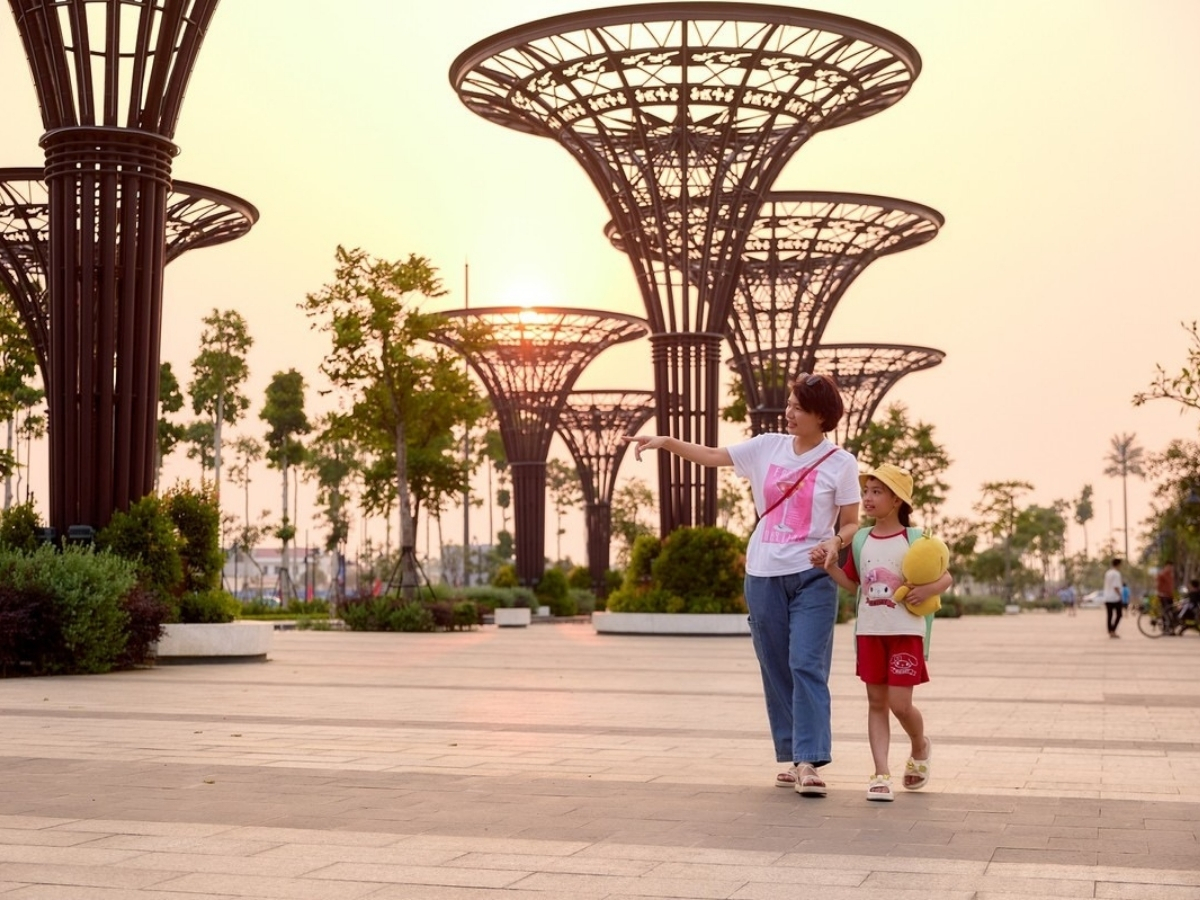
Sam Son Sea Square is a must-visit check-in spot. (Source: Collected)
Among them, Sam Son Sea Square is an impressive highlight with its open and airy space suitable for strolls, photography, or watching the sunset. This place frequently hosts prominent entertainment events in Sam Son.
Sung Nghiem Dien Thanh Pagoda is not only a historical symbol but also opens up a journey to explore the profound spiritual values of Thanh Hoa land. Plan your pilgrimage to Sung Nghiem Dien Thanh Pagoda today to fully experience the ancient, sacred, and peaceful beauty of this place.
Let's start your vacation!

Special offer up to 30% when booking tickets on the Sun Paradise Land app

