


Travel News

Discover the stone carving craft at Nhồi village, Thanh Hoa.
Nhoi Village , also known by its ancient name An Hoach, is located at the foot of Nhoi Mountain (An Hoach Son) in Hac Thanh Ward. This is a land famous for its rare precious stones and the most fascinating scenery in the Thanh region. Nhoi Mountain is formed from many large rocks stacked naturally, containing blue stones and jade stones with a characteristic deep blue color and quality rarely found in Vietnam. This rich resource has fostered the Nhoi stone carving craft village for nearly a millennium.
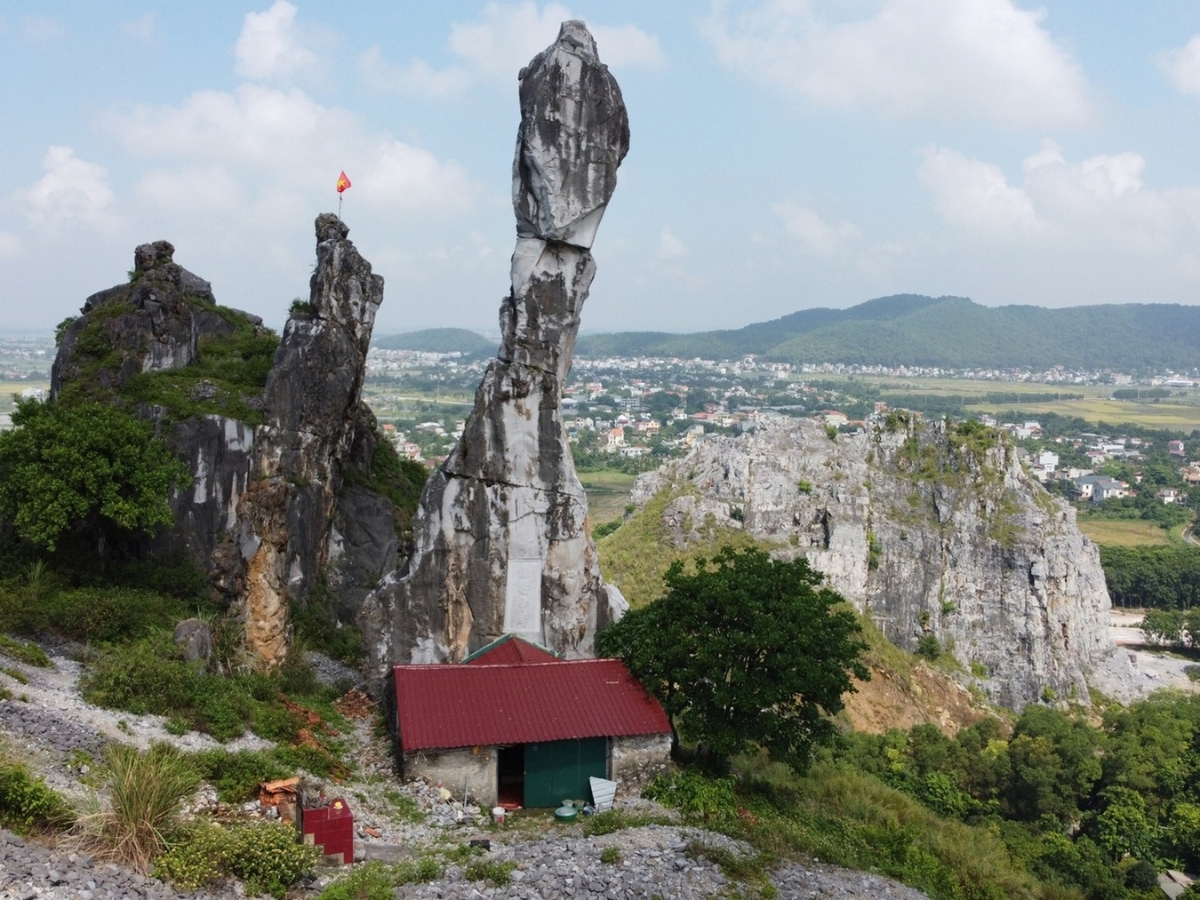
Nhồi Village lies at the foot of the mountain of the same name in Thanh Hoa. (Source: Collected)
The people here are born among stone, grow up with stone, and live by stone carving. The sound of chisels echoing throughout the village has become a familiar sound, reflecting the enduring vitality and pride of a traditional craft village that has passed through generations.
According to the “Collection of Thanh Hoa stele inscriptions”, on the stele of Bao An pagoda built at An Hoach mountain in 1100, it is recorded that Grand Tutor Ly Thuong Kiet was the first to bring the stone carving craft to teach the people of Nhồi Village. The stele clearly states: “This mountain stone is a precious product of the State, its color shimmering like sapphire, its blue hue like faint smoke… carved into gongs, it produces a sound that travels ten thousand miles, and used as steles, it lasts for a thousand years.” From then on, the stone carving craft in An Hoach was formed and developed strongly, initially involving only a few households, and later spreading throughout the region.
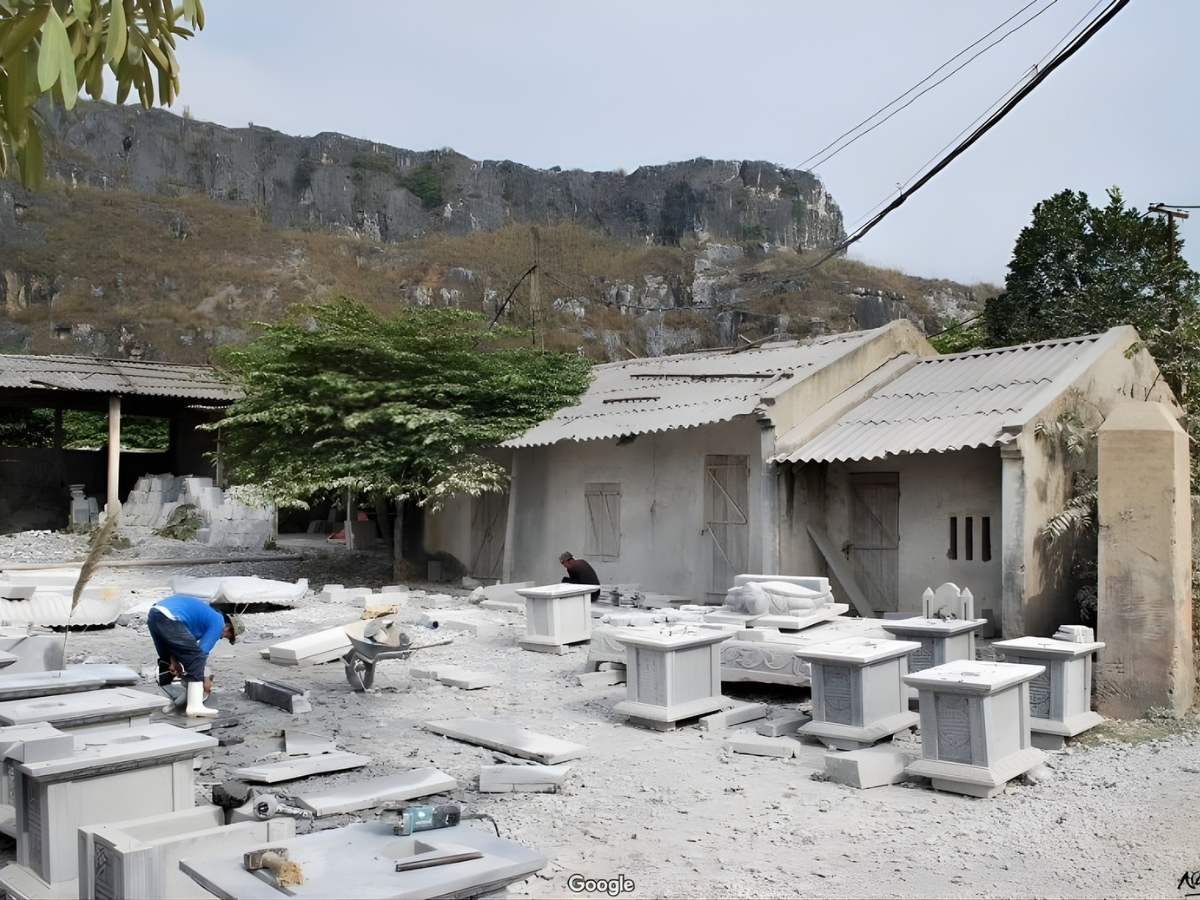
The stone carving craft in Lang Nhoi dates back hundreds of years. (Source: Collection)
During the Ly-Tran dynasties, when Buddhism flourished, the demand for building pagodas, steles, and statues increased, creating conditions for the Nhoi stone craft to develop outstandingly in both scale and skill. An Hoach stone carvers not only served within the province but also traveled everywhere, contributing to the construction of many famous architectural works nationwide.
Through the Tran, Le, and Nguyen dynasties, artisans of Lang Nhoi were always highly valued for stone carving for major projects such as the Temple of Literature - Quoc Tu Giam, Thang Long Citadel, Ho Dynasty Citadel, Lam Kinh historical site, Bao An pagoda... The exquisite sculptural imprints remaining to this day are proof of the master craftsmanship of the Nhoi artisans of the past.
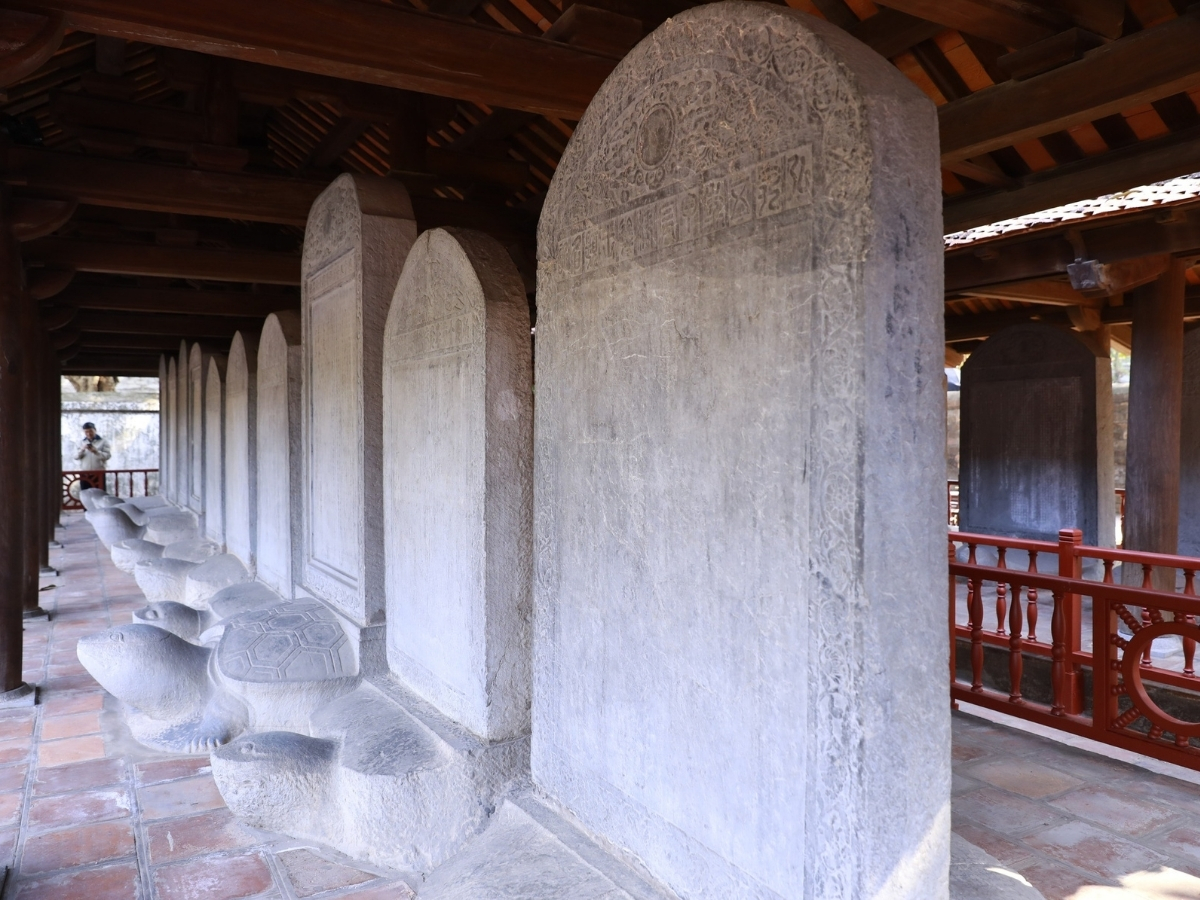
Stone artisans at Nhồi Village contribute to famous constructions. (Source: Collected)
Along with famous craft villages such as Ninh Van (Ninh Binh), Ngu Hanh Son (Da Nang), or Buu Long (Dong Nai), Nhồi Village is considered one of the cradles of Vietnamese stone carving art. Although it experienced a period of decline in the 1980s, since the early 1990s, the craft village has been restored and developed strongly. Currently, the village has about 60 production households with over 500 workers, continuing the ancestral craft heritage, preserving traditional culture, and contributing to local economic development.
Nhồi Village today is not only a place for stone work, but also a symbol of the creative spirit and perseverance of the people of Thanh Hoa, where each stone artwork not only carries material value but also holds the soul and history of a land of a thousand years of civilization.
From Thanh Hoa city center, getting to Nhồi Village is very easy as the distance is only about 5 km to the southwest. Visitors can choose to travel by motorbike, taxi, or private car, taking only 10-15 minutes along the National Highway 1A route, then turning into An Hung street to reach the craft village area located right at the foot of Nhoi mountain.
If starting from Hanoi, the distance to Nhồi Village is about 160 km. Visitors can take the Hanoi - Ninh Binh expressway with a travel time of about 2.5-3 hours. Upon reaching Thanh Hoa city center, continue turning towards An Hung ward, and it's only another 10 minutes to arrive.
On the journey, you will encounter vast green fields, ancient houses nestled at the foot of the mountain, and the sound of stone chisels echoing regularly from the processing workshops. All create a vivid picture of the craft village right in the heart of Thanh Hoa.
Nhồi Village can be visited year-round, as the weather in this area is quite temperate and convenient for outdoor tourism activities. However, the most ideal time to fully experience the beauty of the craft village is from January to April and from September to December. This is a period of dry climate, light sunshine, very suitable for wandering around carving workshops, observing artisans at work, or taking souvenir photos at the foot of the majestic Nhoi mountain.
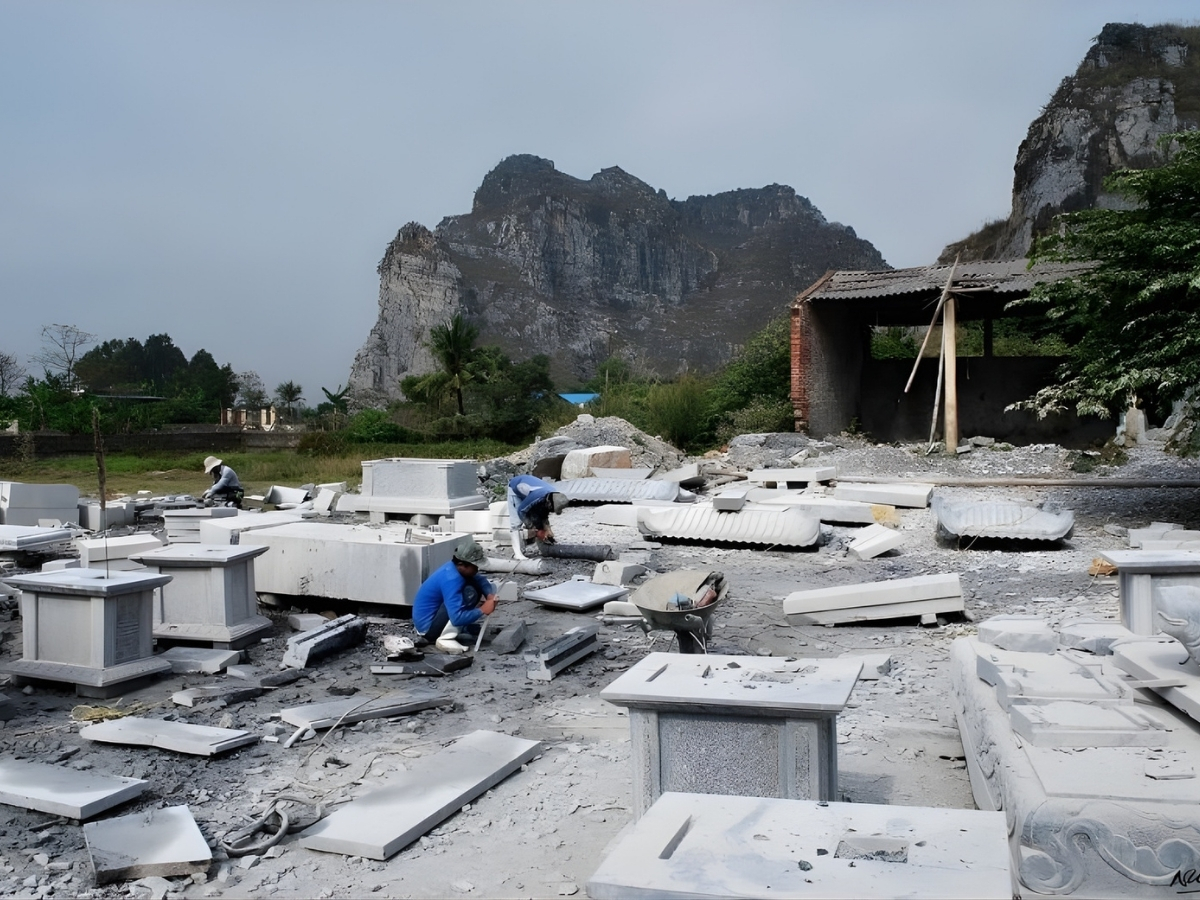
Nhoi Village is suitable for visiting year-round. (Source: Collected)
Visitors can combine a visit to Nhoi Village with other famous tourist attractions such as Thanh Ha Pagoda, Nhoi Mountain, or travel about 15 km to Sam Son Beach. A journey combining culture - craft village - nature will bring a complete experience, helping visitors explore the quintessence of traditional art while enjoying the fresh atmosphere of Thanh Hoa land.
When visiting Nhoi Village , visitors will witness the traditional stone carving craft preserved and developed through many generations. Since 2003, the demand for stone has increased sharply, along with market expansion, creating favorable conditions for the craft to develop sustainably.
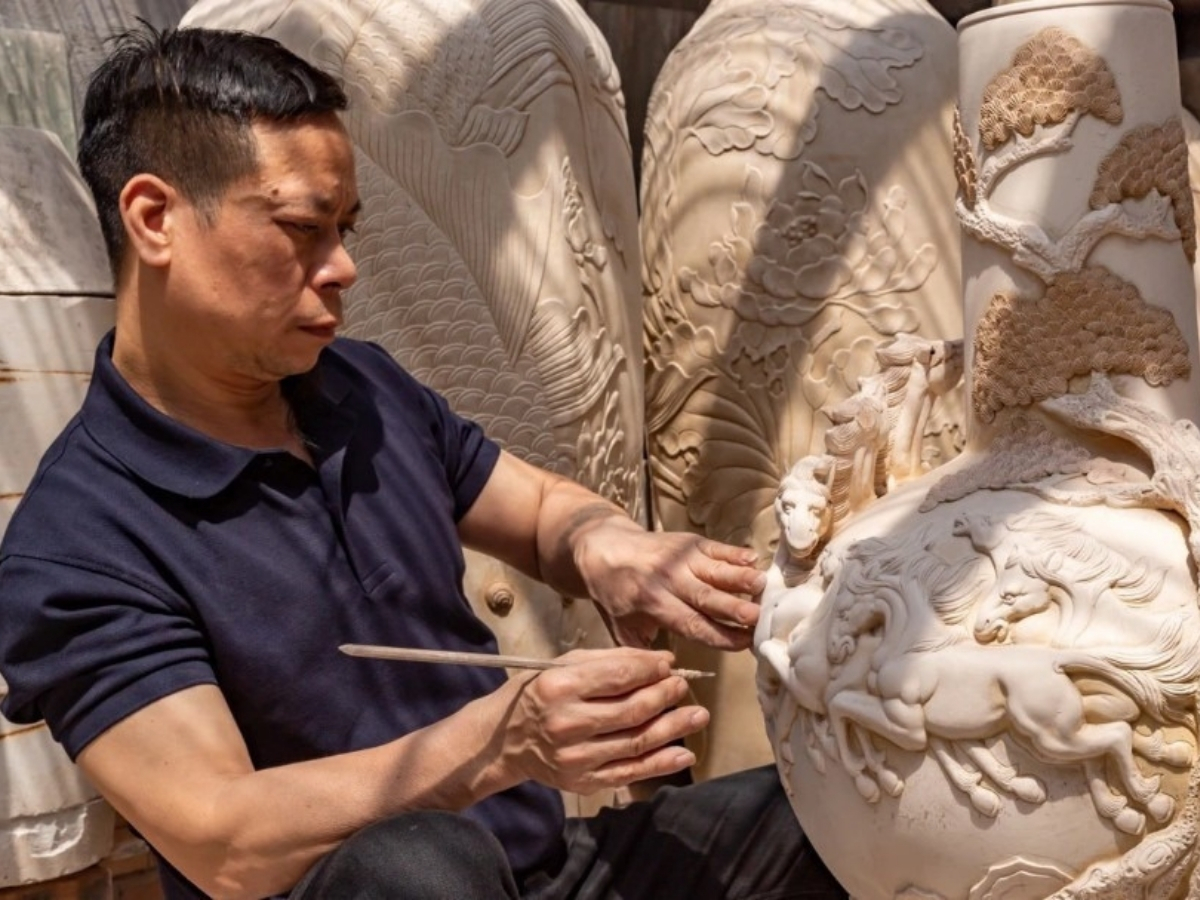
Stone artisans in Nhoi village pass down traditional crafts through many generations. (Source: Collected)
Most households in the village have their own workshops, hire additional workers, and invest in modern machinery and equipment to increase productivity, but still keep many stages performed entirely by hand. It is this combination of meticulous handicraft techniques and technological innovations that has created products with a strong traditional style, reflecting the ideology and culture of the craft village.
Stone sculptors in Nhoi village are divided into three groups:
Traditional pattern carving group: Specializes in producing products in the traditional style, serving communal houses, pagodas, and tombs, expressing Vietnamese culture.
Custom order processing group: Serves individual customers, villas, churches, and hotels with modern, diverse designs.
Self-composition artist group: Composed of master craftsmen who create unique works for art exhibitions or continuously innovate designs.
The techniques and talented hands of Nhoi village artisans have been affirmed through many typical architectural works of the country. The exquisite carvings of the stone workers here are present in works such as the Temple of Literature and National University, the ancient Thang Long Citadel, Ho Citadel, Lam Kinh, or the sacred Bao An Pagoda. These works all bear the strong artistic imprint of Nhoi village, contributing to enriching the fine art traditions of Thanh Hoa province.
Notable works include the statue of Khong Minh at Hinh Son pagoda, large Buddha statues, stone steles inscribed with history, and intricately carved screens, all products of the hands of Nhoi village artisans. Notably, Nhoi village artisans participated in crafting the tombstone of Phan Dinh Phung, the stele of Le Loi by the Da River, and many prominent monuments across the country. Some works have also been exported to France for projects such as Truc Lam Zen Monastery, demonstrating the far-reaching influence of the craft village's stone art beyond its borders.
When visiting Nhoi village, besides admiring the stone carving art, visitors should note some tips to make the trip both safe and enjoyable:
Prepare suitable clothing and wear closed shoes for easy movement on surfaces with many small stone fragments and to prevent slips.
Wear a mask when necessary, especially on windy days, to limit stone dust.
Avoid moving too close to stone cutting machines or dusty areas to ensure safety and avoid affecting equipment.
Listen to the guidance of the artisans to understand the carving techniques and professional experience.
Look for authentic souvenirs such as mini mascot statues, feng shui items, paperweights, and small decorative screens for home decoration.
Choose products that fit your budget, from small items around VND 100,000 to large works costing several million VND, and receive advice from artisans on their meaning and usage.
After exploring Nhoi village, visitors can continue their journey to Sam Son, one of Thanh Hoa's famous beach tourist destinations. Here, the vast and modern Sam Son beach square is an ideal place for strolling, taking photos, or participating in outdoor activities.

The Sea Square is a venue for large-scale cultural and entertainment events. (Source: Compiled)
The fine sandy beach with gentle waves, along with surrounding amenities, allows visitors to relax and experience the vibrant rhythm of the coastal life. Sam Son's convenient location also helps visitors easily combine visits to other attractions in the province within a single day.
Not far from the Thanh Hoa coast, Hon Me Island stands out with its pristine landscape, clear blue waters, and white sandy shores. Visitors can experience the journey from the pier to the island or enjoy a quiet space, separate from the hustle and bustle of urban life. Hon Me is also an ideal spot for nature exploration and photography.
About 100 km from Thanh Hoa center, Pu Luong offers a vast mountainous forest space with beautiful terraced rice fields. Visitors can participate in trekking, visit ethnic villages, and experience the culture and life of the Thai and Muong people. The fresh climate and majestic natural scenery make Pu Luong an ideal stopover for those who love ecotourism.

Scenery of terraced fields at Pu Luong. (Source: Collected)
Nhoi Village is not only a destination to learn about culture but also takes visitors on a journey to feel the value of traditional Vietnamese art. The sound of hammers, chisels, and stone works bearing the strong imprint of the craft village will leave a deep impression on everyone who visits. Plan your visit to Nhoi Village now to experience traditional stone art firsthand and bring back unforgettable memories.
Let's start your vacation!

Special offer up to 30% when booking tickets on the Sun Paradise Land app
Related topics

