


Promotions

Discover Phu Sung with its unique cultural and spiritual values
Mau Temple Phu Sung is located in Nhu Thanh commune, Thanh Hoa province. This place is one of the typical historical - cultural and architectural relics dedicated to Mother Goddess worship in the Thanh Hoa region. The temple is nestled amidst serene mountains and lush greenery, offering a sacred and peaceful atmosphere, ideal for visitors seeking spiritual solace and local cultural experiences.
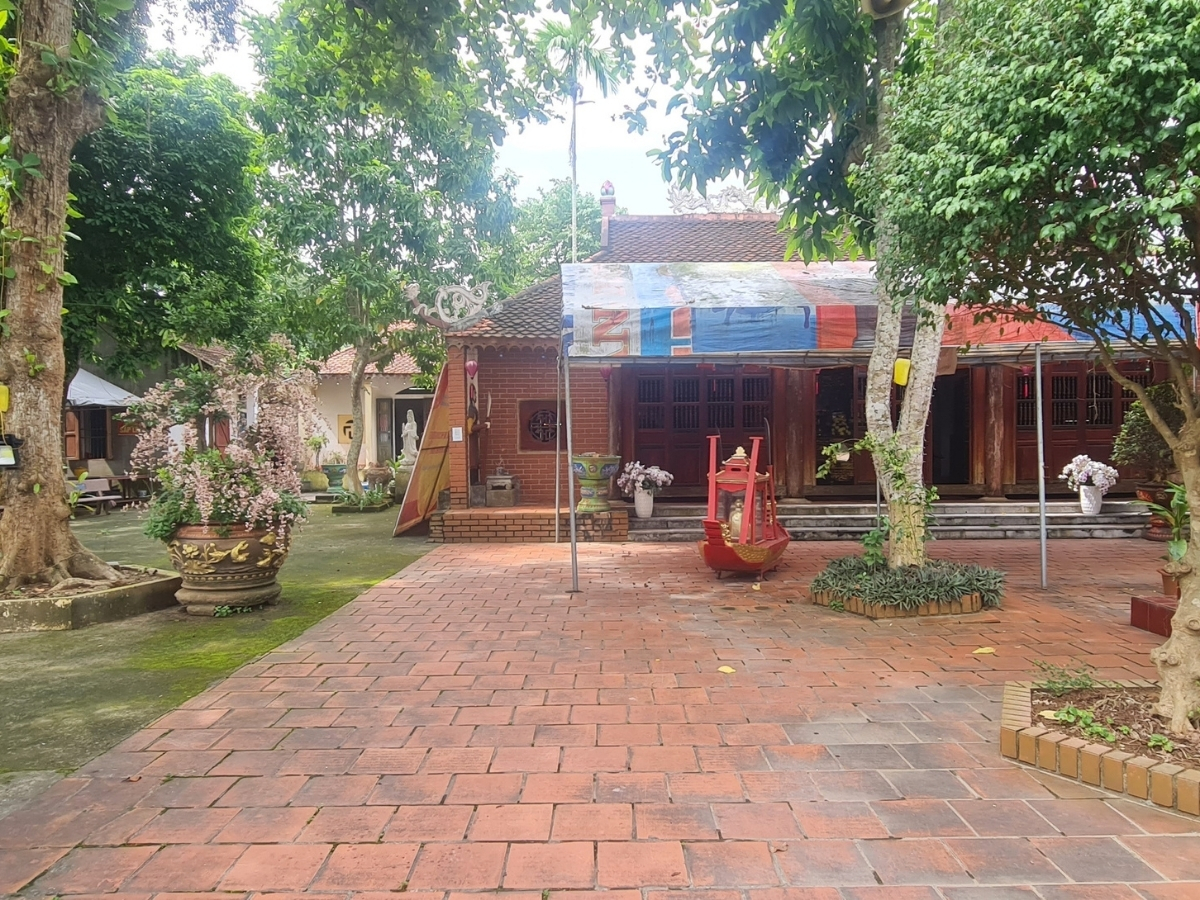
Phu Sung is located in Nhu Thanh commune, Thanh Hoa. (Source: Collected)
From the center of Thanh Hoa, visitors can travel about 50 km along National Highway 45 to the Southwest to reach Ben Sung. The route is convenient for both cars and motorbikes, taking visitors through peaceful village paths, lush green fields, and gentle rolling hills. All this opens up a journey of discovery to one of Thanh Hoa's prominent spiritual tourist destinations.
According to historical records and folk legends, Phu Sung is where Saint Mother Lieu Hanh is worshipped, one of the Four Immortals of Vietnamese beliefs. In folklore, it is believed that Princess Lieu Hanh was the daughter of Ngoc Hoang, banished to the mortal world three times, each incarnation leaving a deep impression on the people. On her third descent, the Saint Mother, along with two maids, came to the Pho Cat area (Thach Thanh, Thanh Hoa), and later manifested her divinity and was worshipped in many places, including Song Temple (Bim Son) and Phu Sung (Nhu Thanh). It was in this land that the people established a temple to commemorate the merits of the Mother, a goddess of benevolence, who punishes the wicked, blesses the virtuous, and symbolizes the virtue and compassion of Vietnamese women.
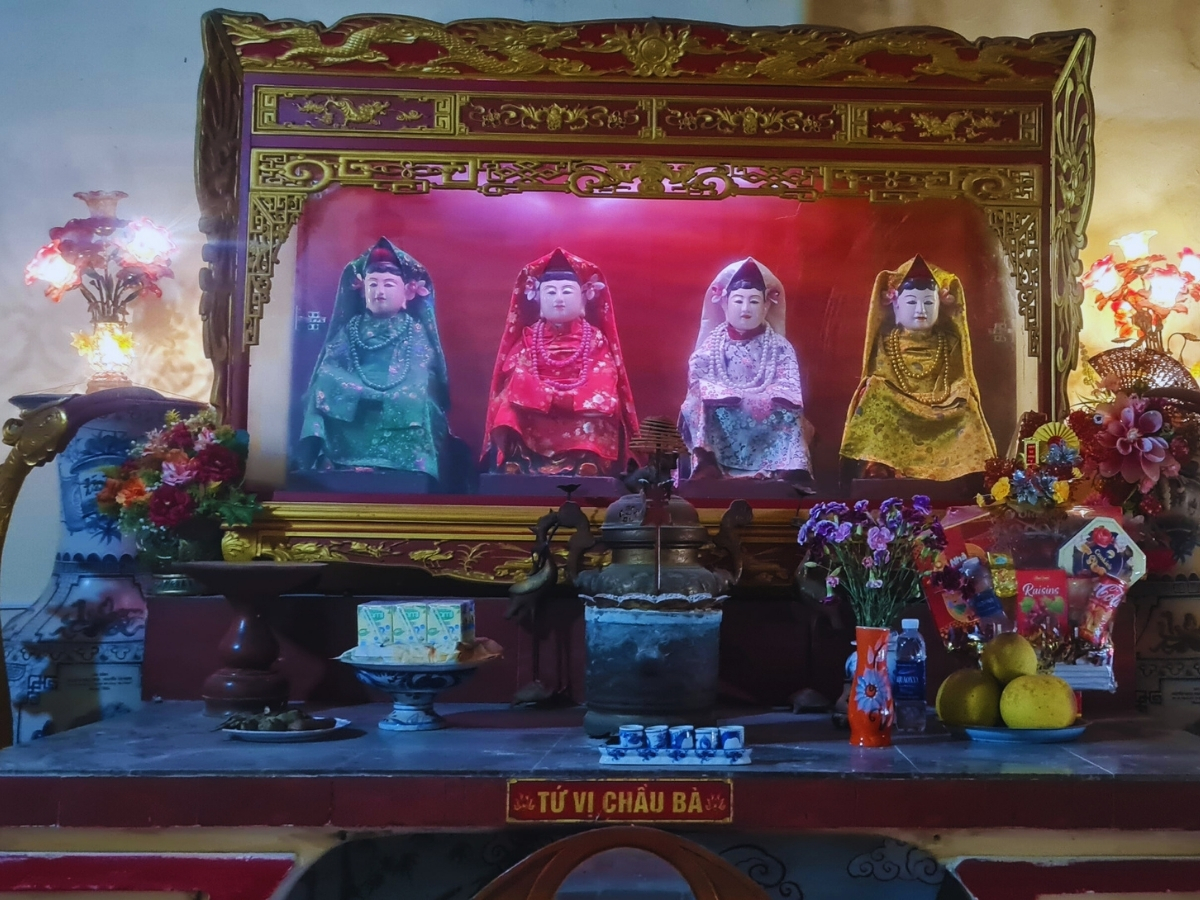
Phu Sung worships Thanh Mau Lieu Hanh, one of the Four Immortals of Vietnamese folk religion. (Source: Collected)
With unique historical, architectural, and artistic values, in 1995, Phu Sung Mother Temple was recognized as a Provincial-level historical and cultural relic. During the period 2011-2015, the relic was renovated and restored with a budget of over 5 billion VND from the state budget and socialized funding, helping to restore the solemn appearance of the ancient temple, while preserving the original architectural and spiritual values.
Phu Sung is where local people and pilgrims often come to offer prayers for peace and blessings for their families. Each time they visit, everyone shows reverence to the ancestors, especially Thanh Mau Lieu Hanh. The traditional rituals at Phu Sung always maintain their sacredness, serving as a bridge between humans and the spiritual realm.
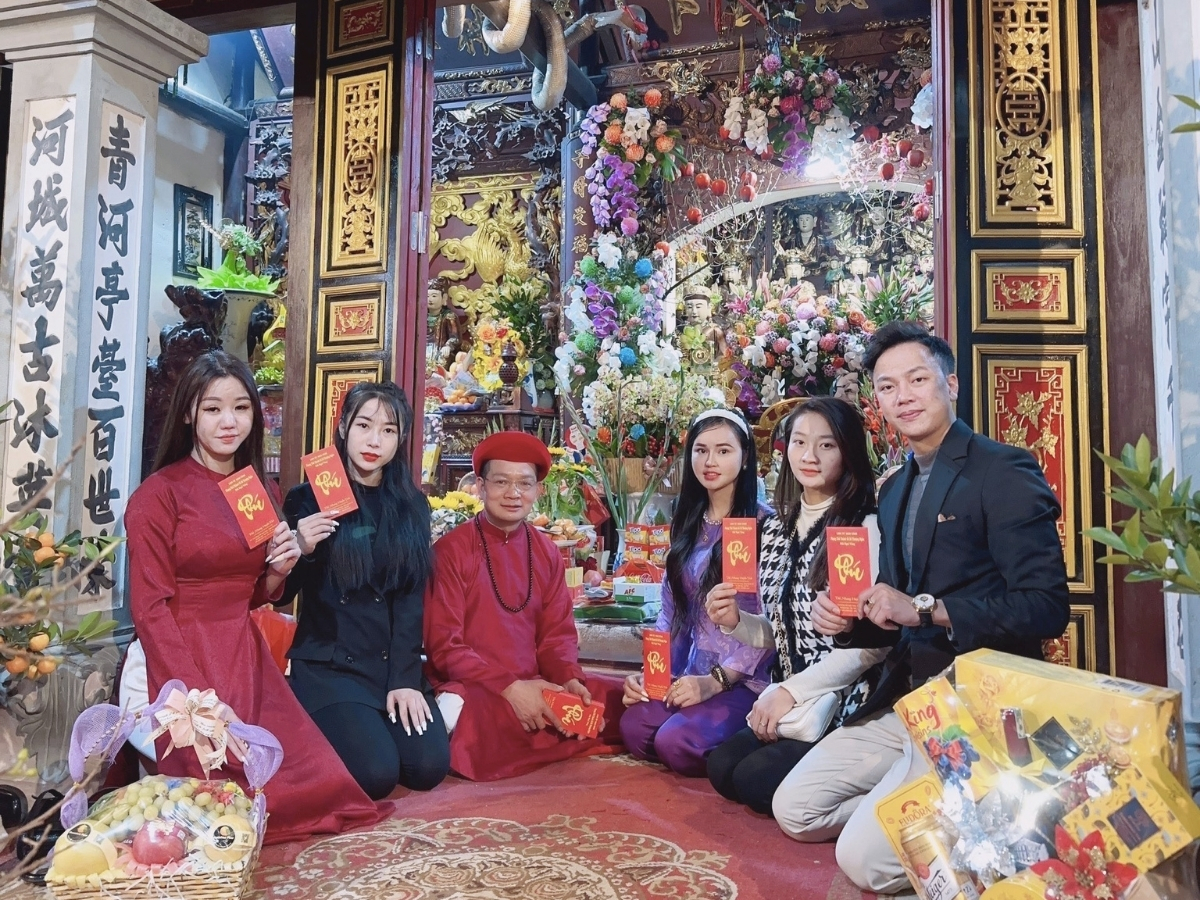
Nowadays, many tourists show interest in the Mother Goddess worship belief. (Source: Collected)
In the consciousness of the Thanh Hoa community, Phu Sung is not only a place that preserves tradition but also a symbol of spiritual culture. The temple vividly expresses the principle of 'gratitude', connecting generations in festivals and Mother Goddess worship practices. On every festive occasion, Phu Sung becomes a gathering place where people share faith and preserve the nation's cultural identity.
At Phu Sung, Saint Mother Lieu Hanh is worshipped in the central position, presiding over the temple and being the chief deity in the Tứ Phủ (Four Palaces) pantheon. Additionally, visitors can worship deities from the Tam Phủ (Three Palaces) - Tứ Phủ system such as Mẫu Thượng Ngàn (Mother of the Mountains), Mẫu Thoải (Mother of the Waters), Mẫu Địa (Mother of the Earth), along with Thành hoàng (Guardian Deities), Thổ công (Earth Gods), and local deities that have been revered and worshipped by the people for generations.
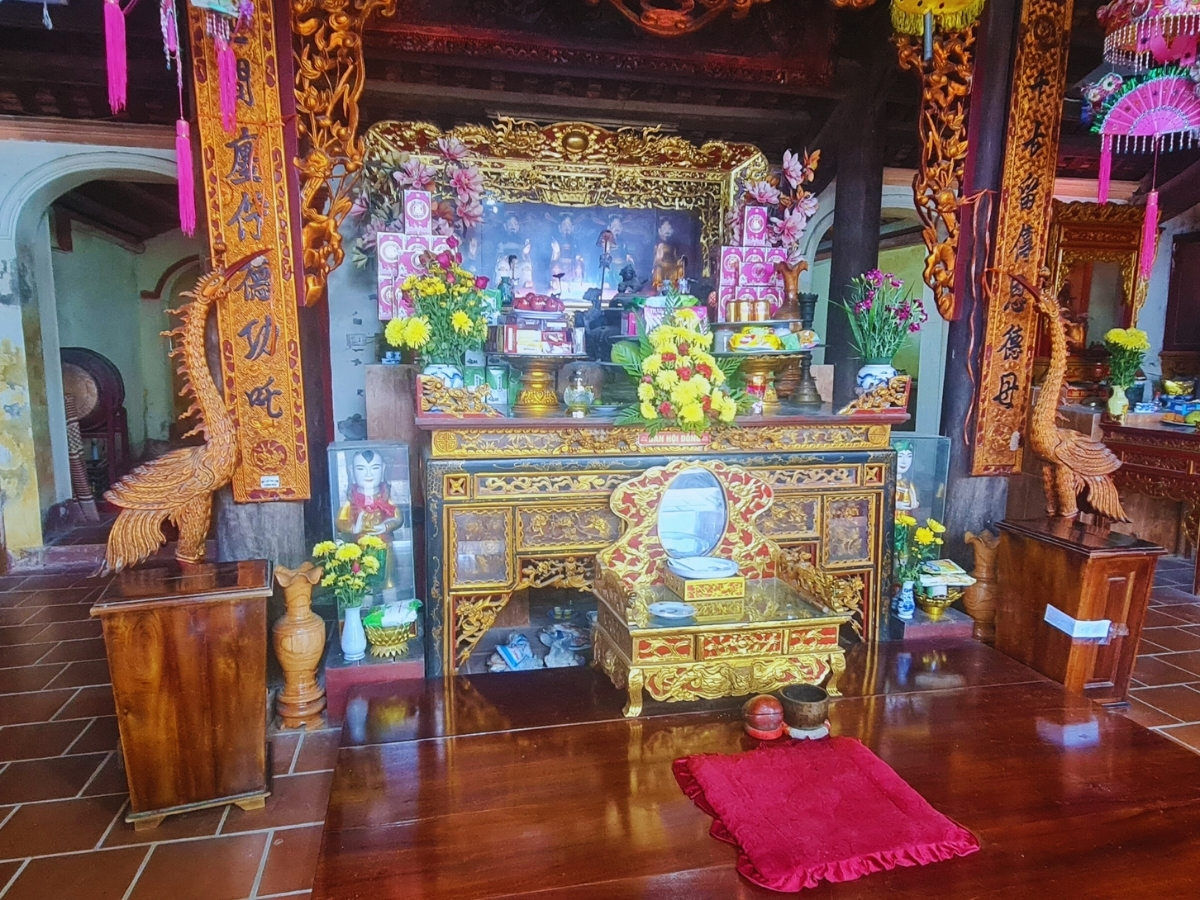
The sacred space inside Phu Sung. (Source: Collected)
Each deity represents a different domain of nature and life: Mau Thuong Ngan governs mountains and forests, Mau Thoai governs rivers and water, Mau Dia protects fields and human life. The convergence of these deities at Phu Sung creates a harmonious and complete spiritual space, reflecting the Vietnamese concept of balance between heaven - earth - humanity. This is also a distinguishing feature that helps Phu Sung become one of the typical Mother Goddess worship centers in Thanh Hoa.
Mother Goddess worship at Phu Sung is an important part of the “Practices of the Vietnamese belief in the Mother Goddess of the Three Palaces”, recognized by UNESCO as Intangible Cultural Heritage of Humanity. This event not only affirms the special value of Mother Goddess worship in the spiritual life of Vietnamese people but also contributes to making Phu Sung a typical destination on the world cultural heritage map.
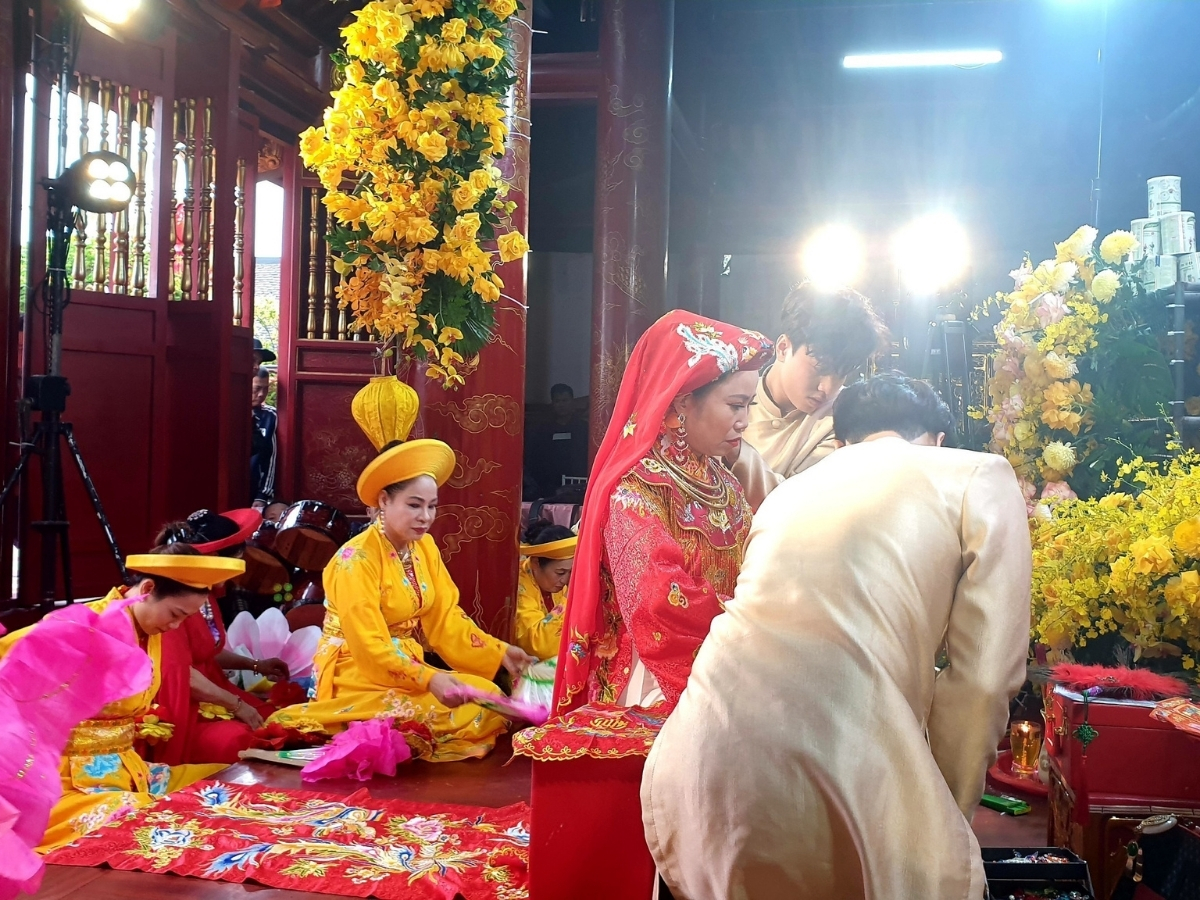
Rituals worshipping the Mother Goddess are performed at Phu Sung. (Source: Collected)
The rituals worshipping the Mother Goddess at Phu Sung bear strong imprints of folk culture, typically including Hau Dong, Hat Chau Van, incense offering ceremonies, and processions of the Mother Goddess. Each ritual contains profound aesthetic, artistic, and humanistic values, where people seek peace, prosperity, and express gratitude to the deities.
Annually, Phu Sung regularly organizes Mother Goddess worship festivals and district and provincial-level festivals of belief practices, serving as an occasion to honor artisans, preserve traditional rituals, and promote the local cultural image. These activities not only attract a large number of domestic tourists but also welcome many international friends, contributing to enhancing the position of Phu Sung as a typical cultural-spiritual center of Thanh Hoa region.
Phu Sung bears the architectural style of traditional Vietnamese ancient temples, with a harmonious layout, a solemn worship space, and a serene surrounding natural landscape. Viewed from the outside, the temple stands out with its soaring curved roofs, robust wooden pillar system, along with carved patterns of the four sacred animals (Tu Linh), flowers, leaves, and swirling clouds, demonstrating the exquisite artistic craftsmanship of the ancients. All create an architectural ensemble that is both ancient and familiar, reflecting the distinctive spiritual cultural beauty of Thanh Hoa region.
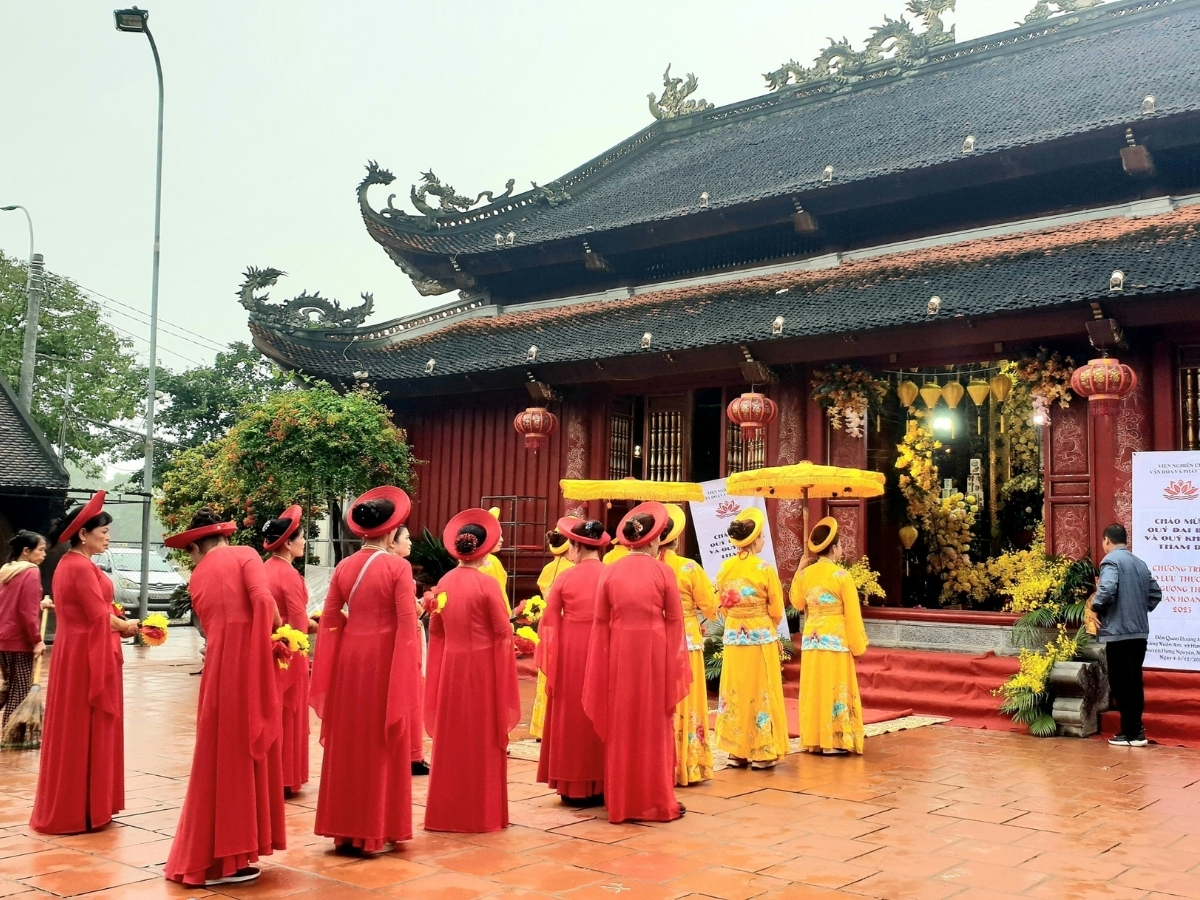
Cultural space and characteristic architecture of Phu Sung. (Source: Collected)
The interior arrangement of Phu Sung follows traditional rules: the outermost is the Nghinh Mon, followed by a temple yard of about 210 m², surrounded by brick walls on three sides. Further in is the five-bay, four-pillar, two-roofed worship hall, built with composite materials but still retaining an ancient appearance. The altar system is divided into three tiers:
The top tier worships Mother Lieu Hanh, the main deity of the temple.
The second tier places an incense burner in the middle, two bronze lamps, and a round incense censer from the Nguyen Dynasty.
The final tier has a central incense burner along with two bronze incense holders on the sides, this is where people and visitors offer sacrifices, pray for blessings and peace.
Every architectural detail in Phu Sung not only possesses aesthetic value but also reflects the philosophy of harmonious "heaven - earth - human", reflecting the spiritual depth and the Vietnamese spirit of reverence for deities.
Phu Sung currently preserves many ancient artifacts of high historical and artistic value, testifying to the monument's endurance over hundreds of years. The most prominent is the round bronze incense censer from the Nguyen Dynasty, an exquisite work showcasing the master bronze casting skills of ancient artisans. Besides that are two bronze incense holders, twelve stone blocks, and two ancient couplets inscribed with Han characters hung on the pillars of the central bay, all are preserved intact.
Each artifact not only serves the worship rituals but also serves as historical evidence, reflecting the reverence of the local people towards Mother Lieu Hanh and the deities being worshipped. Over the years, these artifacts have become cultural treasures, helping today's generation understand more about traditional craftsmanship as well as the folk beliefs of the land of Nhu Thanh.
In 2024, at the Phu Sung Mother Temple, the National Center for Historical Research and Cultural Heritage Preservation organized the Festival of the practice of worshipping the Three Palaces Mother Goddesses of Vietnamese people on April 10-11, 2024 (corresponding to March 2-3 of the lunar calendar). The event gathered hundreds of artisans, spirit mediums, shamans, and temple keepers from many provinces and cities across the country, to participate in exchanges, perform rituals, and share practical experiences in preserving and promoting the worship of the Mother Goddesses.
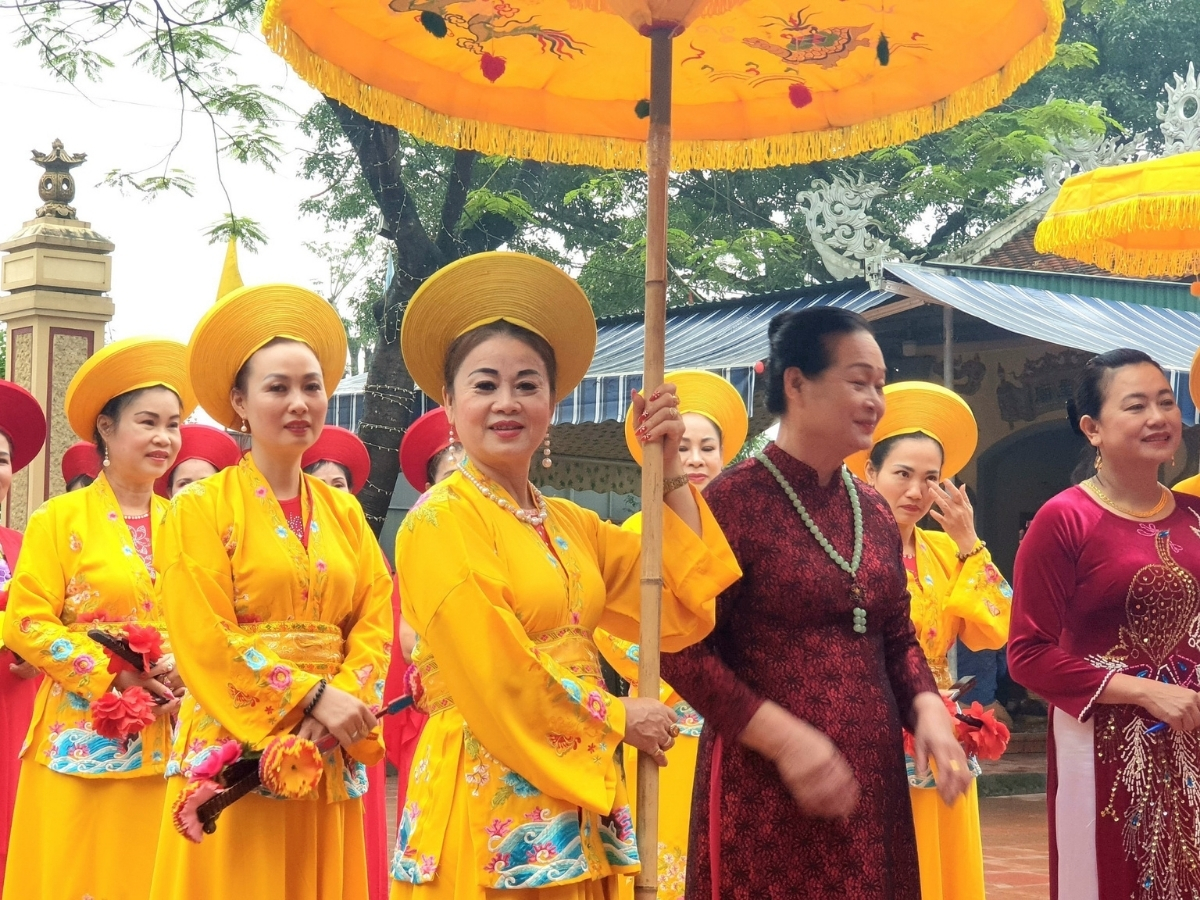
Artisan, Tran Thi Hoa participated in the festival at Phu Sung. (Source: Collected)
The festival atmosphere was solemn and lively, yet maintained its sacred spirit. Before each practical session, artisans and fellow practitioners all ascended the Cong Dong altar, to hear introductions of their biographies and achievements, then performed the 'loan gia hau' ritual to the rhythm of traditional 'chau van' chanting. Each performance was limited to 45 minutes with three 'gia hau' sessions, ensuring artistic merit and respect for ritual standards.
The event featured 30 outstanding performances, leaving a deep impression on the audience. The festival was not only an opportunity for artisans to interact and learn, but also contributed to spreading the spiritual and artistic values of the Mother Goddess worship (Tam Phu) to the general public and visitors from all directions. As a result, Phu Sung increasingly affirmed its position as a representative destination for preserving and promoting Vietnam's intangible cultural heritage.
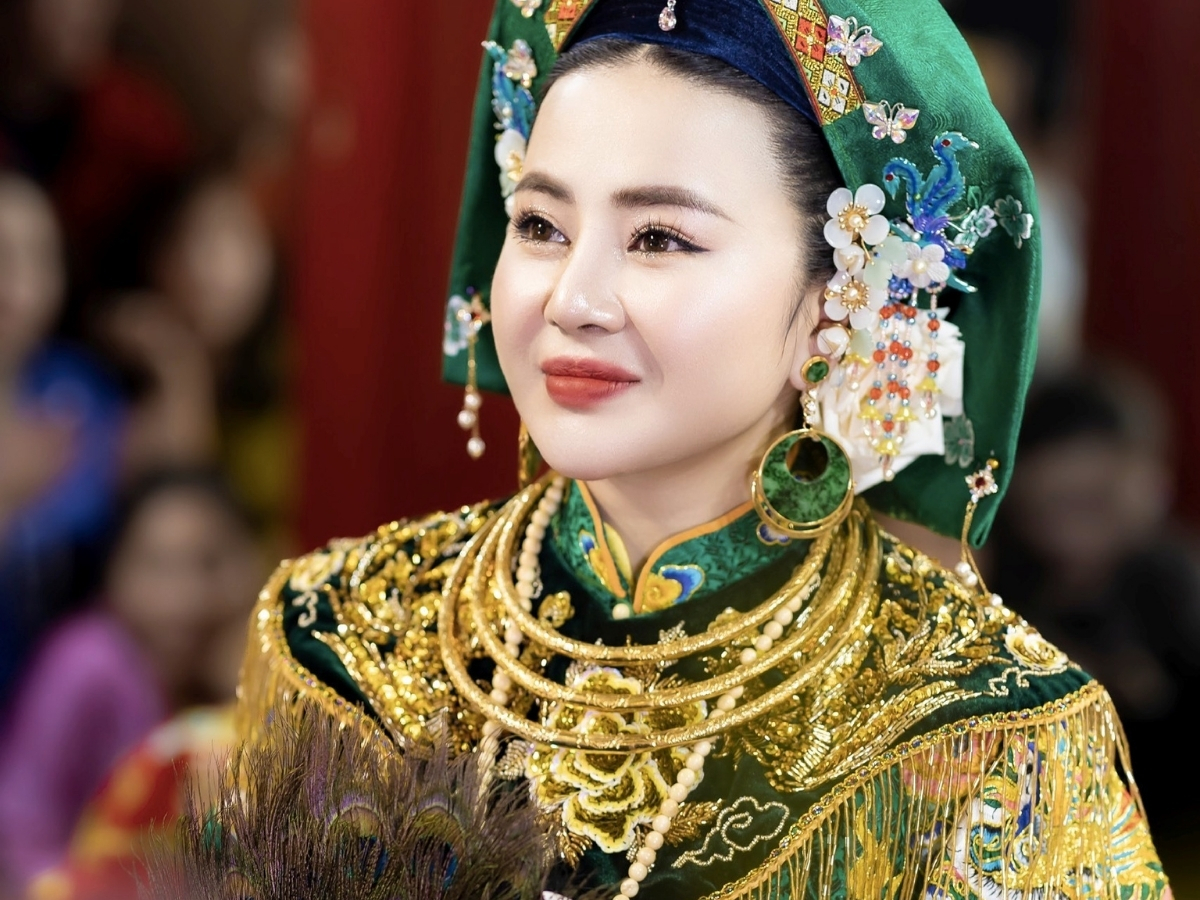
The image of Hau gia Chau de nhi thuong ngan in Mother Goddess Worship. (Source: Collection)
Besides the festival event, annually at Phu Sung, traditional Mother Goddess worship festivals also take place with rituals of incense offering, palanquin procession, Chầu văn singing, and spirit possession (Hau Dong). This is an occasion for people and pilgrims to express reverence for Thanh Mau Lieu Hanh, praying for national peace, abundant harvests, and prosperous lives. The festival atmosphere is both sacred and bustling, reflecting the deep spiritual life of the community, as well as a cultural exchange activity, fostering the Vietnamese spirit of "drinking water, remembering its source".
Nowadays, with the spread from cultural events and spiritual festivals, the Phu Sung Mother Goddess temple is not only a sacred place of worship but has also become a unique cultural tourism highlight of Thanh Hoa, attracting numerous domestic and international tourists to experience, explore, and worship.
Early morning is the ideal time to begin exploring the Phu Sung Mother Goddess temple. As the dawn breaks, the space here takes on a serene atmosphere, with the faint scent of incense and the distant sound of temple bells. Visitors can spend time worshipping Thanh Mau Lieu Hanh, visiting the worship areas, the main hall, and the temple courtyard, while learning about the ancient architecture and precious artifacts preserved.
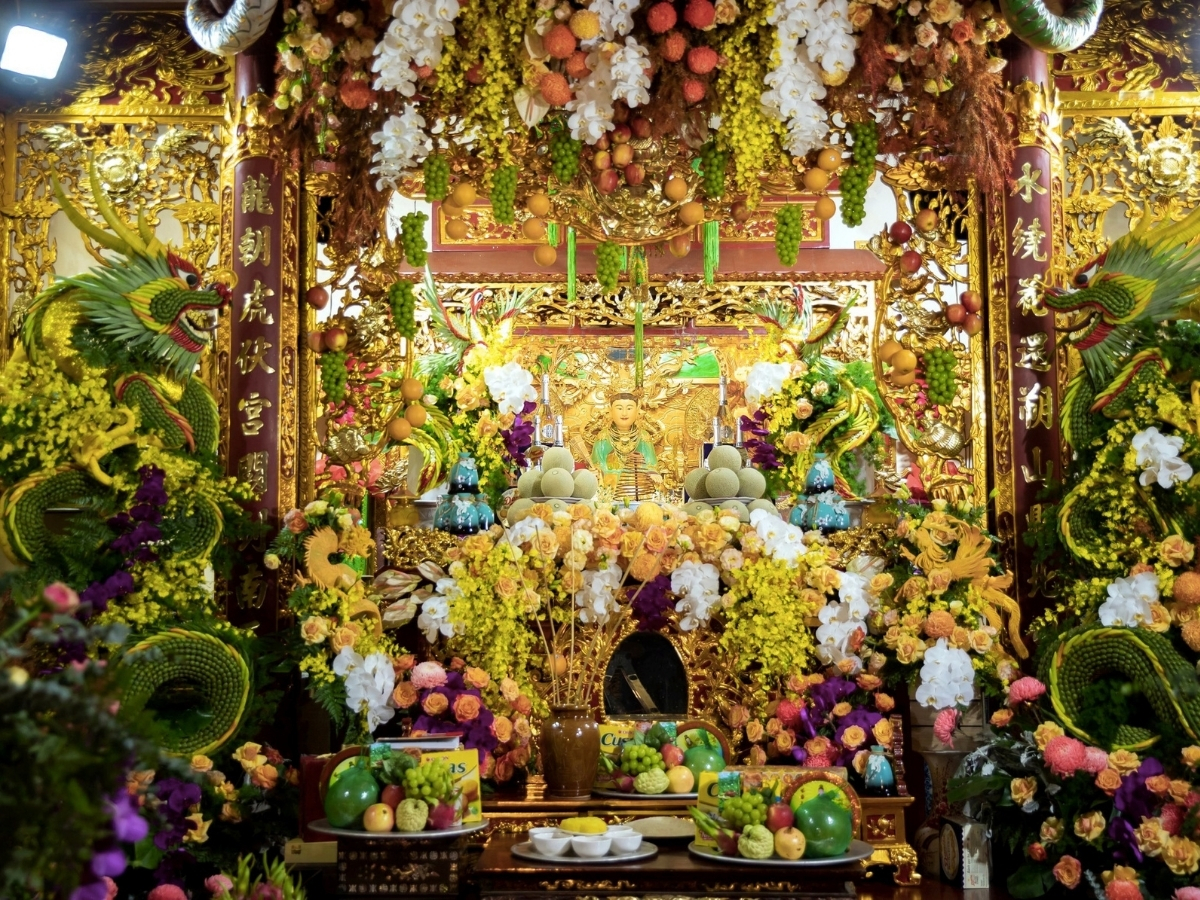
Characteristic worship of the Mother Goddess belief. (Source: Collected)
If visiting during the festival season (3rd lunar month), noon is when visitors can attend the Hau Dong ritual, sing Chau Van, or observe artisans practicing the Mother Goddess belief in a vibrant space. This is an opportunity to feel the Vietnamese folk cultural identity and the sacred reverence of the people of Thanh Hoa. In the afternoon, after a light rest, visitors can stroll around the temple grounds, admire the peaceful scenery, and take photos at the ancient corners. Don't forget to stop by the small stalls around the temple to buy traditional souvenirs.
When visiting Phu Sung, visitors should choose polite, modest attire with long-sleeved shirts, long pants, skirts below the knee, and subtle colors to show respect for the sacred space. It is advisable to wear flat shoes or light sneakers, convenient for moving around the temple courtyard and the worship area.
During the visit, maintain order, do not speak loudly, avoid crowding, and especially do not litter within the premises. Offer incense and pray solemnly, only take photos in permitted areas, and limit phone usage in the main hall. Furthermore, do not joke around, do not touch artifacts or worship tablets without permission, as each artifact here carries deep spiritual value.
After visiting Phu Sung, visitors can continue their journey to Nui Nua - Am Tien. This is a famous spiritual tourist destination in Thanh Hoa, associated with the legend of Ba Trieu and planned for the development of the 'Am Tien Legend' project, aiming to become a large-scale spiritual tourism center of Thanh Hoa.
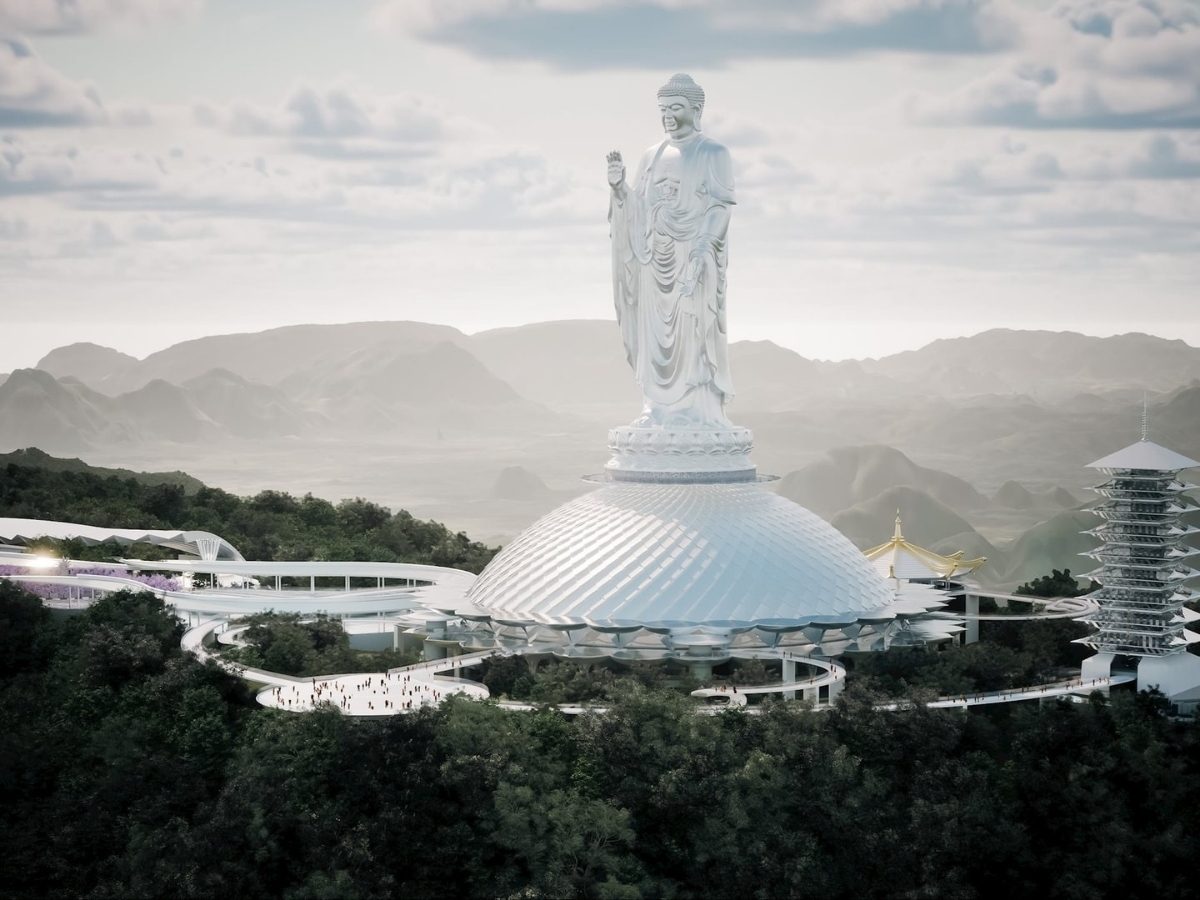
The 'Am Tien Legend' project is highly anticipated in Thanh Hoa. (Source: Collection)
The scenery here is like a paradise, with majestic mountains, misty veils, and a serene atmosphere, suitable for those seeking peace and tranquility of the soul. Combining a visit to Phu Sung and Am Tien not only enriches the journey but also offers an opportunity to experience the cultural, spiritual, and historical depth of Thanh Hoa.
Phu Sung possesses the unique spiritual cultural value of Thanh land, preserving the tradition of Mother worship and connecting generations over time. The temple is an unmissable destination on the journey to explore Thanh Hoa, offering a profound experience of historical depth and sacred space. Phu Sung opens up a multi-dimensional view of Vietnamese folk beliefs, helping visitors understand more about the national cultural identity.
Let's start your vacation!

Special offer up to 30% when booking tickets on the Sun Paradise Land app

