


Promotions

Explore the full story of the ancient relic Vom Temple in Thanh Hoa
Vom Pagoda , its Chinese names are "Dai Hung tu" and "Dai Khanh tu", is located at the foot of Ban A mountain in Dong Tien ward. The pagoda lies beside the gentle Ma River, surrounded by majestic mountain scenery, creating a pure and sacred space amidst nature.

Vom Temple is located in Dong Tien ward. (Source: Collected)
According to historical records, the temple was built in the Quang Thuan year (1460) during the reign of King Le Thanh Tong, and is one of the oldest temples with the longest history in Thanh Hoa. After more than half a millennium, Vom Temple has been renovated many times but still retains its ancient charm and characteristic architectural style of the Le - Nguyen periods. For a long time, this place has not only been a center of spiritual activities for the local people but also an important spiritual cultural symbol of the Thanh Hoa land.
The name "Vom Temple" originates from Vom Mountain itself, also known as Ban A Mountain, where the temple is located. According to folk legends, this mountain area is associated with the story of two famous "giant" figures in Thanh Hoa's legends: Mr. Vom and Mr. Bung. The traces of the legend combined with the natural landscape have created a special mysterious and attractive charm for the temple.

The worship space inside Vom Pagoda. (Source: Collected)
Vom Pagoda is designed in the 'leaning against the mountain - facing the water' style, nestled amidst lush green trees, bringing a sense of peace and tranquility to visitors. In terms of artistic value, this place preserves many stone steles, stupas, and ancient stone carvings reflecting the development of Buddhism during the Early Le Dynasty and the traditional stone carving techniques of Thanh Hoa region. With its rich history and profound spiritual value, Vom Pagoda is not only a sacred pilgrimage site but also a precious cultural heritage, contributing to enriching the cultural tourism map of Thanh Hoa city.
From the center of Thanh Hoa, visitors only need to travel about 7 - 10 km to the Southwest to reach Vom Pagoda . The journey begins from Tran Phu street, continues along Nguyen Trai, then turns into National Highway 47, taking about 20 - 30 minutes by car or motorbike. The road leading to the foot of Ban A mountain winds around the mountainside, with lush green scenery of forests on both sides, interspersed with birdsong and the gentle Ma River flowing around. The road is quite easy, suitable for all ages, especially ideal for those who want to find a peaceful space and feel the sacred essence of Thanh Hoa.
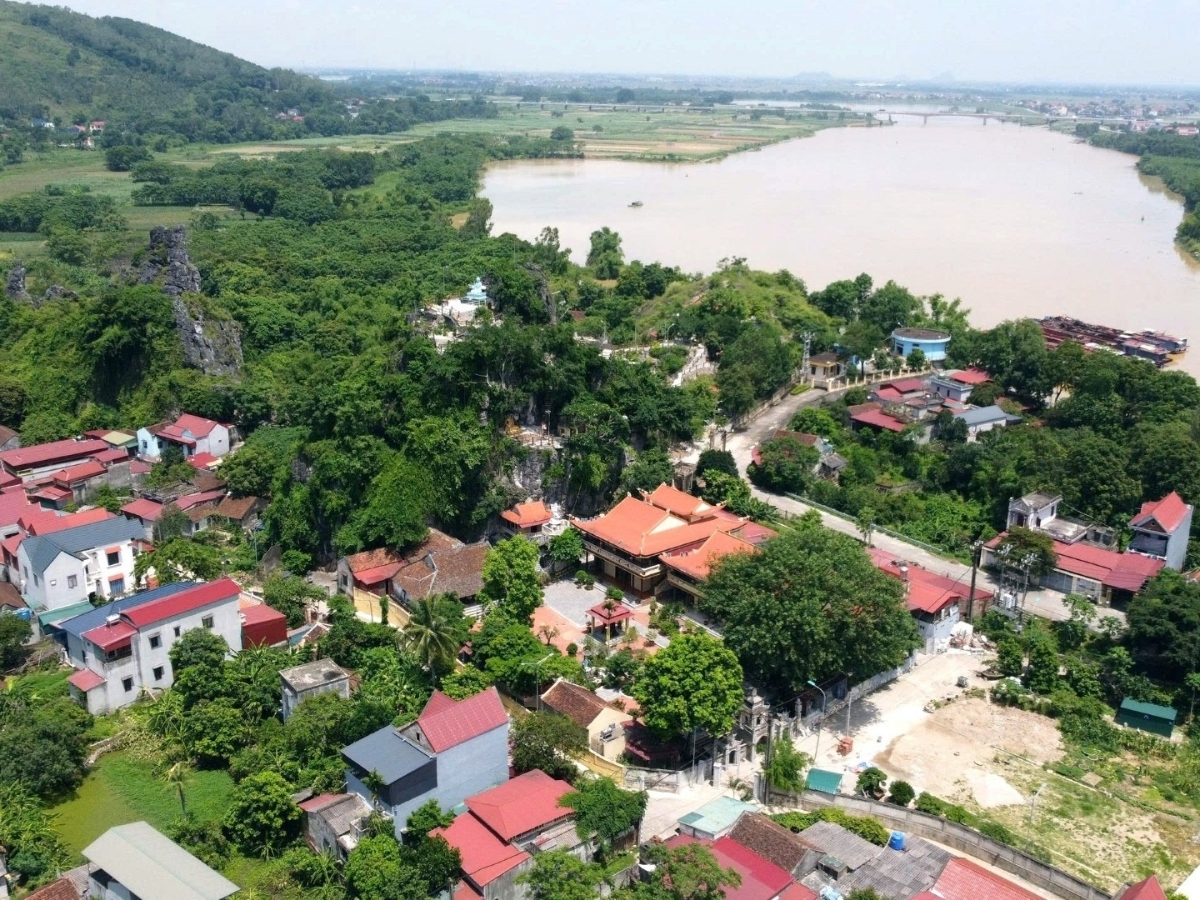
Panoramic view of Vom Pagoda from above. (Source: Collected)
From Hanoi, visitors can choose to travel by car, bus, or train to the center of Thanh Hoa. The journey is about 150 km long, with an average travel time of 2.5 - 3 hours. From the center, visitors continue along National Highway 47 to Thieu Khanh ward, turn onto Ban A mountain road to reach the pagoda. This is a convenient, easy-to-travel route, very suitable for a journey combining historical site visits and spiritual tourism.
Vom Pagoda can be visited year-round, with each season offering a unique experience. Spring, especially from the 1st to the 3rd lunar month, is the most ideal time for pilgrimage and worship. At that time, the weather is cool, the trees are lush green, and flowers bloom vibrantly, creating a brilliant natural picture surrounding the ancient pagoda at the foot of Ban A mountain. This is also the season for Buddhist festivals and traditional ceremonies, bringing visitors a sense of peace and tranquility when participating in spiritual activities such as praying for peace, praying for blessings, chanting scriptures, and listening to dharma talks.
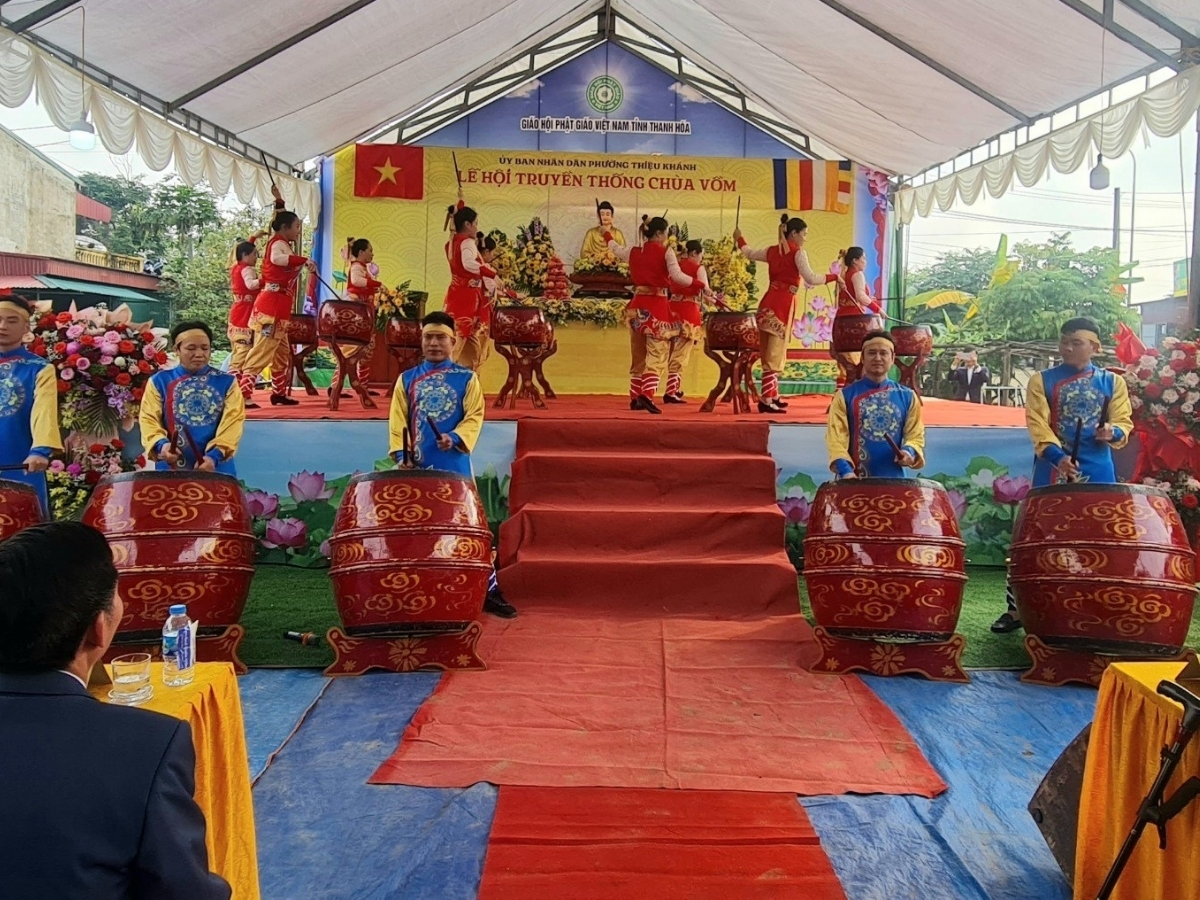
The Vom Pagoda Festival is held in the 2nd lunar month. (Source: Collected)
Especially, the Vom Pagoda festival is solemnly held annually from the 12th to the 14th of the 2nd lunar month, an occasion for the people of the Thieu Khanh homeland from all over the country to return and visit their ancestral land. In the sacred atmosphere mixed with the joy of reunion, visitors can deeply feel the spirit of community solidarity and pride in the cultural heritage of the Thanh homeland.
Having gone through hundreds of years along with many historical changes and harsh weather, Vom Pagoda still preserves valuable architectural traces from the Trần, Early Lê, Lê Trung Hưng, to the Nguyễn periods. The entire pagoda is built leaning against the slope of Bàn A mountain, using the mountain wall as walls and the cave ceiling as the roof, demonstrating a rare "pagoda in the mountain" architectural style.
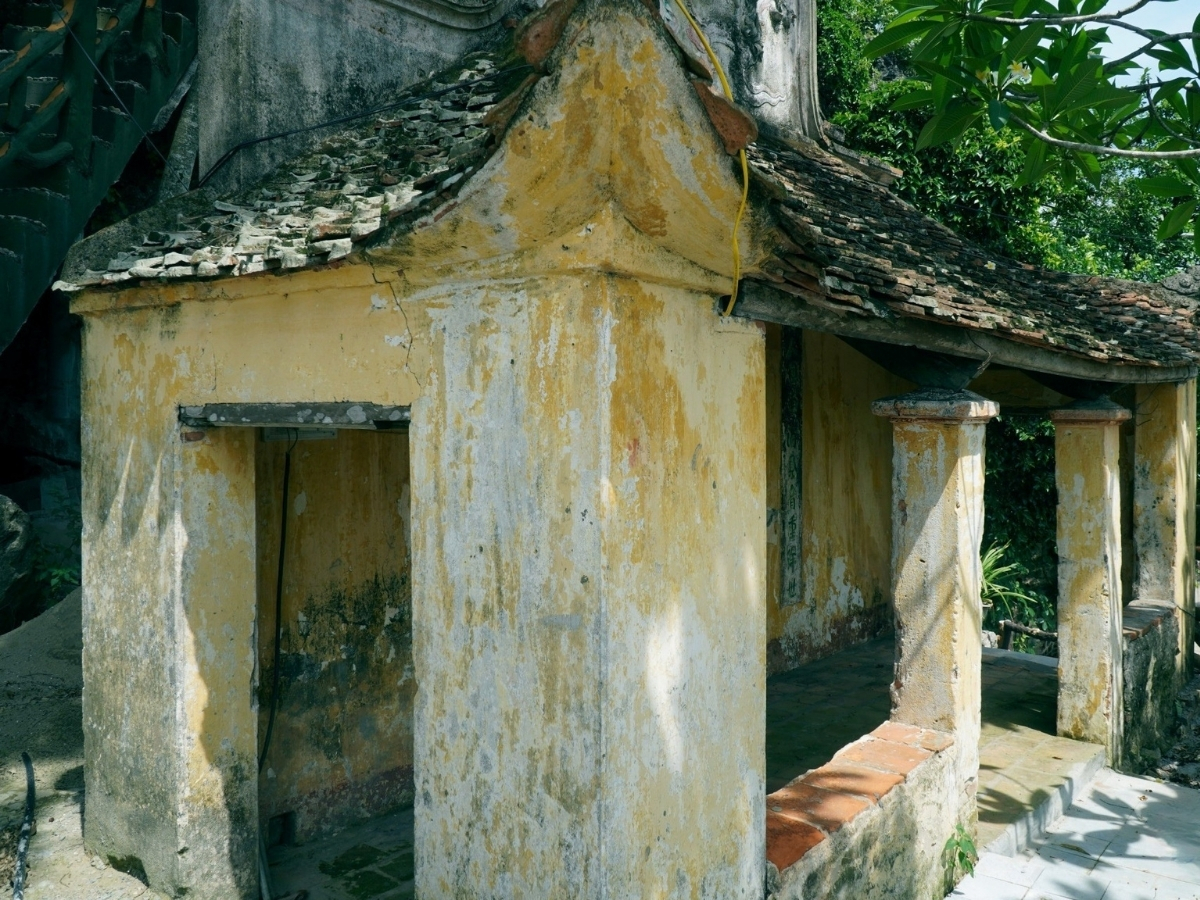
Ancient structures are still preserved at Vom Pagoda. (Source: Collected)
Passing through the ancient Tam Quan gate, visitors cross a curved brick bridge spanning a half-moon lake, entering a spacious courtyard leading to the main hall. The pagoda currently has about 40 sturdy large wooden pillars, on which are inscribed Chinese characters recording the merits of those who contributed to its construction during the major renovation in the 3rd year of Đồng Khánh (1887). The pagoda's roof is softly curved like a boat's prow, and the ridge is decorated with moon-shaped motifs, creating an elegant, gentle appearance like a boat cutting through waves in the tranquil space.

Ancient stone tower within the grounds of Chua Vom Pagoda. (Source: Collected)
The system of roof trusses, gong racks, purlins, and interlocking beams are securely connected by upper and lower beams, creating a sturdy wooden frame. The carved details at the junctions between columns and beams bear the strong style of the Le Trung Hung period, demonstrated through images of lotus flowers, creeping chrysanthemums, cloud patterns, dragons, phoenixes, turtles holding lotus flowers... Each motif is intricately carved, reflecting the artistic level and skillful craftsmanship of ancient artisans.
The most outstanding highlight of the pagoda is the Amitabha Buddha statue, carved directly into the rock face of the inner sanctuary using the bas-relief technique of the Tran dynasty. The statue is approximately 6m high and 3.1m wide, considered the largest Buddha statue carved into a cliff face in Vietnam today.
Ancient artisans chose the perfect location on the cliff face to sculpt the Buddha, demonstrating timeless talent and sophistication. Every carved line is soft and flowing, from the compassionate face and gentle eyes to the steady meditative posture, all creating a solemn and vivid beauty.
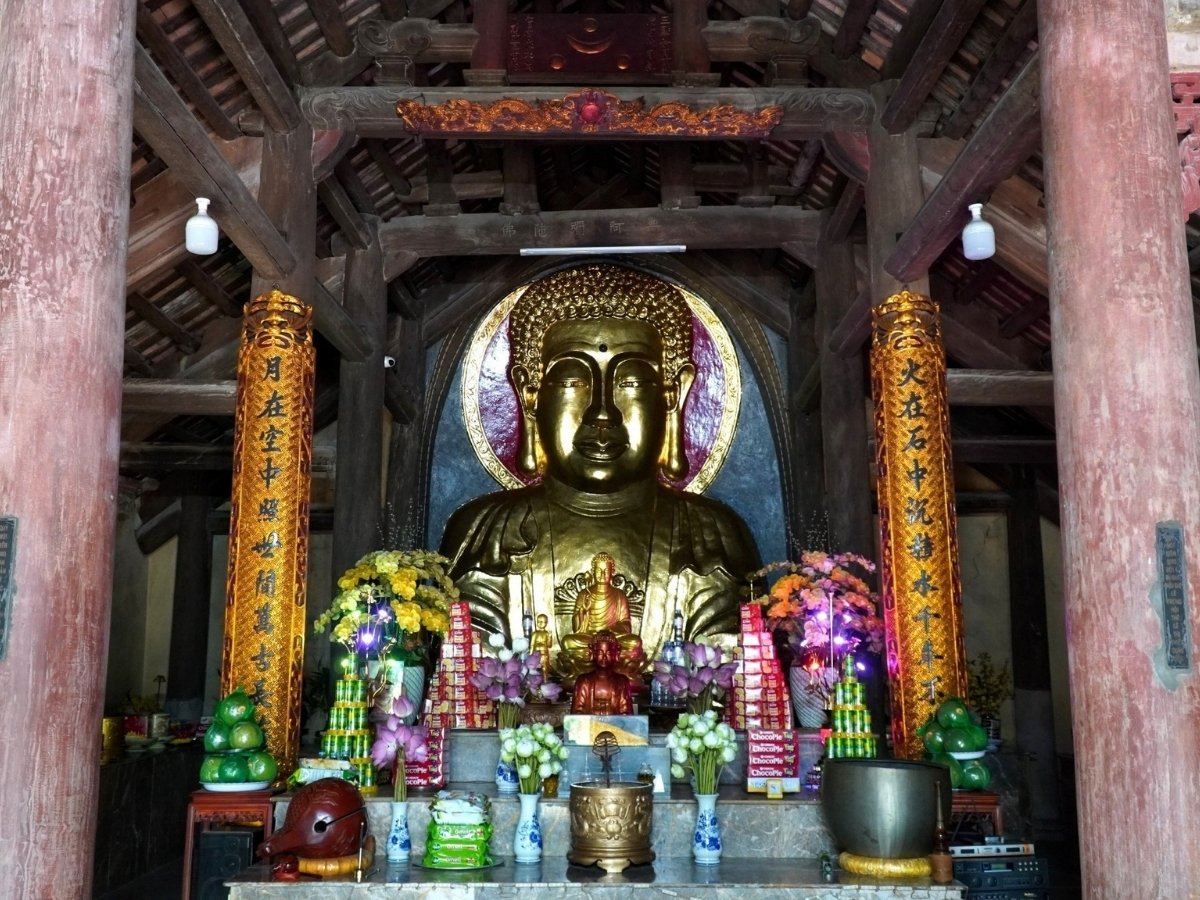
Famous Buddha statue at Chua Vom. (Source: Collected)
As light shines through the mountain pass, the Buddha statue seems to illuminate the serene space, bringing a sense of peace and tranquility to visiting tourists. This is not only a spiritual symbol but also a priceless stone sculpture of ancient Vietnamese art.
The grounds of Chua Vom still preserve many stone towers and ancient steles of great historical, architectural, and religious value. To the right of the pagoda are the remnants of the 9-story Pho Minh tower, built in 1900 (Thanh Thai era), which enshrines the relics of the monk Pho Duong Thong Tue Thien Su.
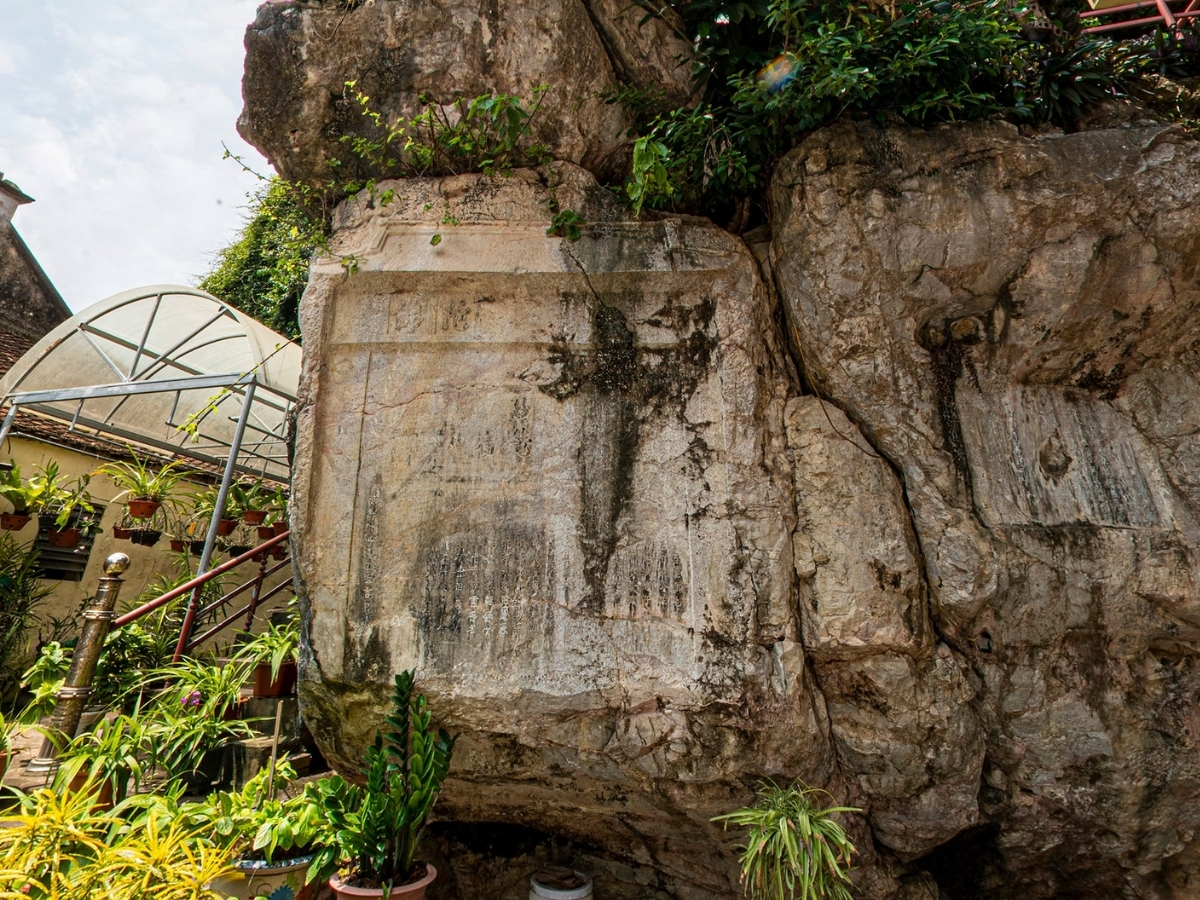
Ancient poem carved on the rock face at Vom Pagoda. (Source: Collected)
Next, to the left of the pagoda, there are two ancient stone towers located by the mountainside:
Tue Minh Temple worships Zen Master Chan Hy (Dharma name Tue Minh), with an inscription tablet dated the 13th Vinh Thinh year (1717) during the reign of King Le Du Tong.
Hai Oanh Temple worships Zen Master Hai Oanh, with the Duc Cong Thanh Dao Thap stele inscribed in the 1st Minh Mang year (1820).
Additionally, the pagoda also has the Dai Tue Vien Thong Thap stele (inscribed in the 14th Canh Hung year - 1754) dedicated to Zen Master Tinh Khong, and the Ky Dien Ky Van stele (inscribed in the 1717 Vinh Thinh year) recording the pagoda's donated land. These precious relics are vivid historical testaments, reflecting the role of Vom Pagoda in the development of Buddhism during the Le - Nguyen dynasties.
Nestled against Ban A mountain, facing the Ma River, Vom Pagoda possesses a rare and picturesque landscape of mountains and water. From the pagoda courtyard, visitors can gaze out at the river winding around the mountain base, feel the cool breeze, and the spreading tranquil atmosphere.
Vom Pagoda is also a famous check-in spot for tourists visiting Thanh Hoa. The moss-covered Tam Quan Gate, with its ancient curved roof; the crescent moon lake reflecting the mountains and sky; or the statue of Amitabha Buddha carved into the rock face are all impressive photo spots, deeply imbued with cultural and spiritual significance. The blend of ancient architecture, sculptural art, and natural scenery makes Vom Pagoda one of the most outstanding spiritual tourist destinations in Thanh Hoa.
To have a complete and meaningful visit to Vom Pagoda, visitors can refer to the following experiences:
Choose modest, polite attire, avoid wearing short or overly flashy clothes.
Prioritize long-sleeved shirts, long pants, made of breathable material to facilitate movement and maintain a solemn demeanor within the sacred area.
Wear sports shoes or shoes with good grip, convenient for walking on mountain paths or stone steps around the pagoda grounds, especially on damp days.
Pack light, only bring essential items such as a small water bottle, tissues; avoid carrying bulky items to move easily within the pagoda space.
Maintain a quiet, solemn attitude when entering the main hall; avoid talking loudly, playing music, or making noise that disturbs others.
Protect the landscape and environment, do not litter, do not touch statues or ancient artifacts.
Choose to visit in the early morning or late afternoon to enjoy the fresh air and beautiful lighting.
After visiting Vom Pagoda, visitors can visit the Ham Rong Historical Site, located only about 3 - 5 km from the pagoda. This place was once a fierce battlefield during the resistance war against America, associated with the historic Ham Rong victory.

Ham Rong Bridge is associated with the resistance war against the US. (Source: Collected)
Currently, the Ham Rong relic site is a complex including Ham Rong Bridge, Ngoc Mountain, and the Ham Rong Museum. The relic site offers visitors a journey to learn about history, while admiring the scenery of the Ma River winding around the foot of the mountain. This is an ideal stopover combining sightseeing, learning, and enjoying the peaceful natural beauty of Thanh Hoa land.
If you want a change of scenery after your pilgrimage, Sam Son Beach is a perfect choice. About 15 - 20 km from Vom Pagoda, Sam Son is famous for its long sandy beaches, clear blue sea, and vibrant atmosphere year-round. Visitors can combine a morning visit to Vom Pagoda, then move to Sam Son to enjoy a relaxing afternoon on the beach, savor fresh seafood, and stroll in the brightly lit space in the evening. This journey combining sacred mountains and blue seas offers a balanced and complete experience when exploring Thanh Hoa.
Nua Mountain - Am Tien is a famous historical and spiritual relic complex, associated with the uprising of Lady Trieu, the nation's heroine. Located at an altitude of nearly 600 m above sea level, this area boasts majestic scenery with year-round cloud cover, fresh air, and ancient religious structures.

The "Legend of Am Tien" project is anticipated in Thanh Hoa. (Source: Collected)
Notably, this place is being developed through the "Legend of Am Tien" project. This is a key project aiming to become a large-scale spiritual tourism center for the Thanh Hoa region. Upon completion, the tourist area will offer a space harmoniously combining natural landscapes, historical relics, and pilgrimage experiences, contributing to enhancing the cultural and spiritual values of the Thanh Hoa land.
Vom Pagoda is not only an ancient relic but also a journey to explore the profound spiritual culture of the Thanh Hoa region. If you have the chance to visit Thanh Hoa, don't forget to visit Vom Pagoda to immerse yourself in the tranquil atmosphere, pay homage to the Buddha statue, and experience a part of the spiritual essence of the Thanh Hoa region.
Let's start your vacation!

Special offer up to 30% when booking tickets on the Sun Paradise Land app

