


Travel News

Muong Xia Festival: Unique Cultural Heritage of the Thanh Hoa Border Region
The Muong Xia Festival is one of the typical traditional festivals of the Thanh border region, held in Son Thuy commune, Thanh Hoa province. The festival has a long-standing origin, associated with the legend of General Tu Ma Hai Dao, a hero revered by the people as the guardian deity of the local community. According to local historical records, he was once sent by the royal court to guard the western border, helping the people reclaim land, establish villages, fight foreign invaders, and bring a prosperous and peaceful life to the local residents. After his death, he was enshrined in a temple by the people, and an annual festival is held to commemorate the great contributions of this talented general.
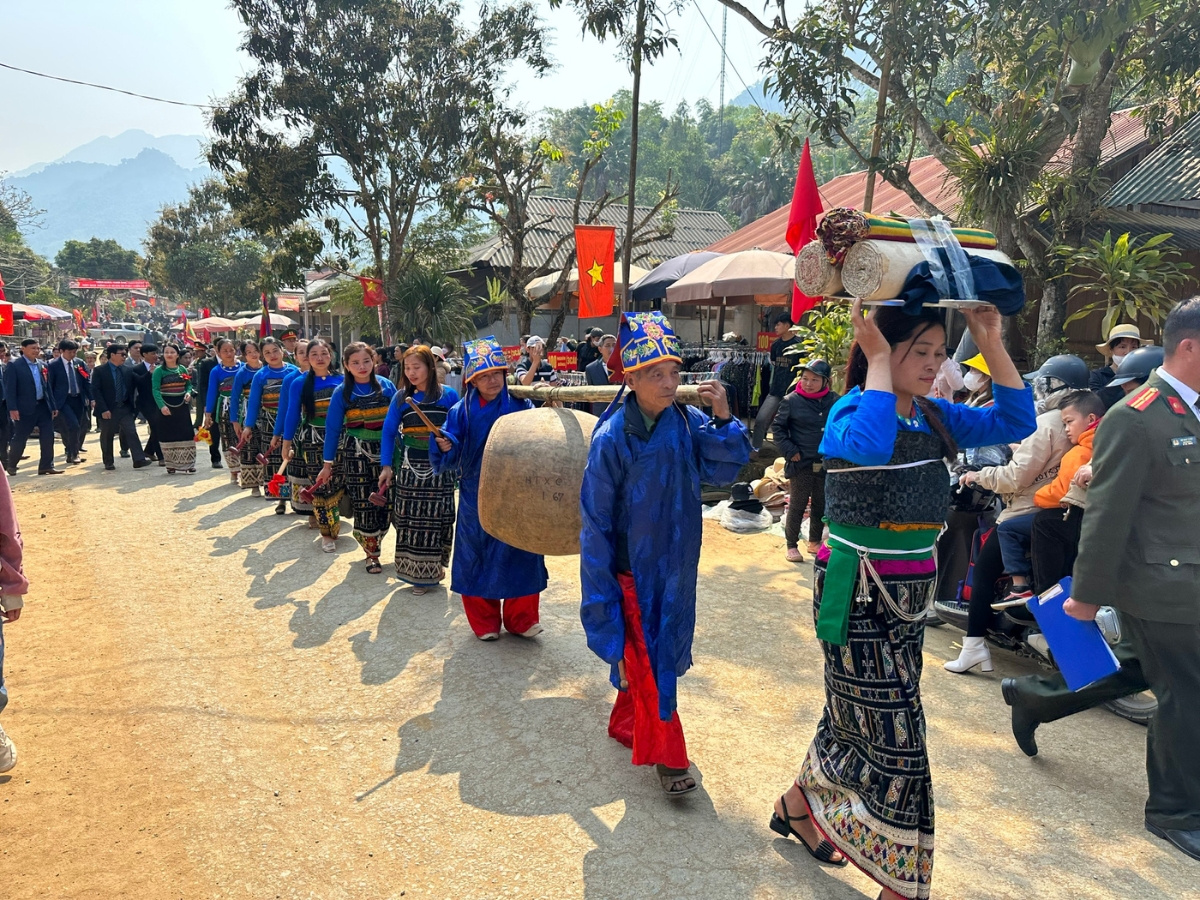
The Muong Xia Festival is a festival associated with the legend of General Tu Ma Hai Dao. (Source: Collected)
For the Thai ethnic people in Son Thuy, the Muong Xia Festival is not only an occasion for spring recreation but also a sacred ritual expressing the principle of "drinking water, remembering the source." During the festival days, people from the villages and communes gather to offer sacrifices, parade with palanquins, and perform ceremonies at the temple of Tu Ma Hai Dao, praying for favorable weather, good harvests, and peaceful villages.
Besides its religious value, the Muong Xia Festival is also an occasion for community bonding and nurturing the cultural identity of the Thai people of Thanh Hoa. The lively Xoe dances, the resonant sound of gongs, and the heartfelt Khap songs echoing through the mountains and forests are proof of the enduring vitality of folk culture. The festival helps younger generations feel prouder, cherish their homeland traditions, and become more conscious of preserving the cultural beauty of their ethnic group.
The Muong Xia Festival is usually held on the 9th and 10th days of the 2nd lunar month annually, when spring colors have covered the mountains and forests of Son Thuy. This is the time when people from the villages and communes eagerly gather, preparing offerings and costumes, and participating in sacred rituals deeply imbued with the identity of the Thai ethnic group.

The Muong Xia Festival is usually held on the 9th and 10th days of the 2nd lunar month annually. (Source: Education and Times Newspaper)
The center of the Muong Xia Festival is located in Chung Son village, Son Thuy commune. Amidst the majestic mountain scenery, Chung Son village appears peaceful with traditional stilt houses, wide grounds adorned with flags and flowers, and the resounding sound of gongs and drums filling the space. This is not only the venue for the festival but also a sacred land preserving the ancient spiritual and historical values of the Thai people. In this space where nature and humanity blend, the festival becomes a vivid testament to the enduring vitality of ethnic culture, both solemn and full of joy and pride.
In the Muong Xia Festival , the soul stone procession ritual is considered the most important and sacred part of the ceremony, clearly demonstrating the ancient spiritual beliefs of the Thai people in the Son Thuy region. According to ancient beliefs, the soul stone carries the spirit of the village community, a place where deities reside to bestow blessings upon the villagers. Every time the festival arrives, the people solemnly organize the stone procession with the wish for a year of favorable weather, prosperous crops, and a peaceful, abundant life. This ritual is also an occasion for descendants to remember the merits of their ancestors and express gratitude to General Tu Ma Hai Dao.
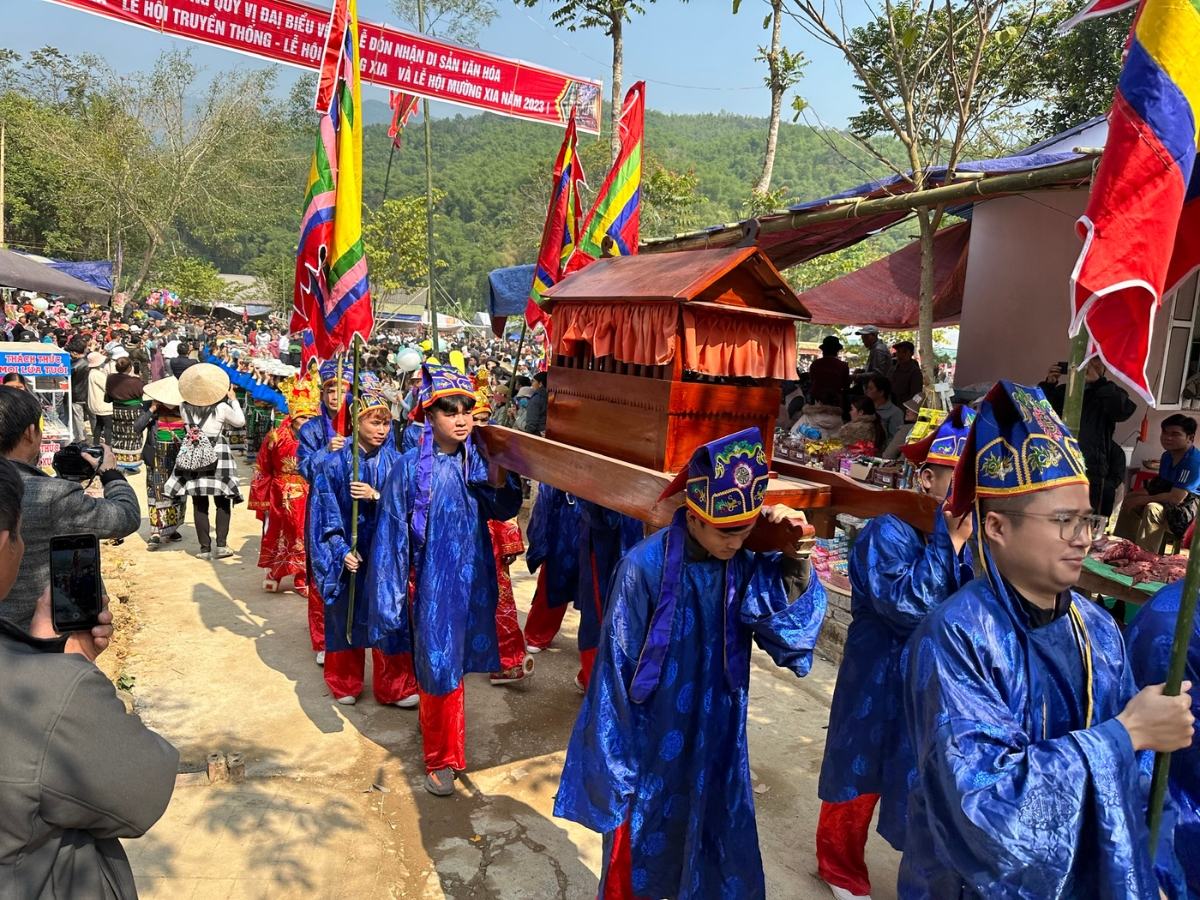
The ritual of carrying the da via stone is performed solemnly and solemnly. (Source: Tien Phong)
The da via stone carrying ceremony is conducted solemnly with the participation of elders, shamans, and many villagers from the hamlets. The sacred stone is placed on a palanquin covered with red cloth, decorated with vibrant flags and flowers, then carried by a procession around sacred sites such as the temple of Tu Ma Hai Dao, the spring area, and the central yard of Chung Son hamlet. The sounds of gongs and drums resound joyfully, harmonizing with reverent prayers, creating an atmosphere that is both sacred and warm. That ritual is not only a beautiful aspect of belief but also a symbol of the strong bond between humans and nature, between the present and the cultural roots of the Muong Xia festival.
Within the framework of the Muong Xia festival, the ritual of offering incense and sacrifices at sacred sites is an indispensable part, expressing the deep gratitude of the people towards the general Tu Ma Hai Dao and the guardian spirits of the hamlet. Each place of worship is associated with a sacred story, preserved and revered by the people through generations.
First is the temple of Tu Ma Hai Dao, the center of the festival and also the most sacred site. Here, the incense offering ritual is conducted solemnly, presided over by elders and shamans. Incense smoke spreads amidst the sounds of gongs, drums, and harvest prayers, creating a solemn space, expressing reverence for the general who contributed to building the hamlet and defending the country. Next, the procession moves to Pha Dua mountain, where it is said to be the resting place of Tu Ma Hai Dao. The ritual here signifies remembrance, gratitude, and prayers for the deities to continue blessing Muong Xia with peace and prosperity.
After the main ceremony, incense offering rituals are also performed at San Cuong Xop Xia and San Phieng Phay, two sites associated with the traditional beliefs of the Thai people. San Cuong Xop Xia is where people pray for good harvests, favorable weather, and the warding off of diseases. Meanwhile, San Phieng Phay is considered a place to pray for health, prosperity, and peace for families. Each place of worship has its own meaning but shares a common belief: honoring deities, thanking benefactors, and preserving the spiritual cultural identity that has nurtured the Muong Xia community for generations.
When the sacred rituals conclude, the atmosphere of the Muong Xia festival immediately shifts to the joyful and lively mood of the festival's entertainment section. The sounds of gongs and drums resound joyfully, harmonizing with sweet Khap melodies and profound songs praising the homeland, love, and gratitude to ancestors. The Sap and Cha dances are performed gracefully and smoothly amidst the cheers of the people and tourists. Young Thai men and women in vibrant traditional costumes enthusiastically immerse themselves in the rhythm of the festival, creating a colorful cultural picture, both lively and imbued with the spirit of the mountainous homeland.
The entertainment section of the Muong Xia festival becomes even more vibrant with a series of traditional folk games. Tung Con is the most anticipated game, where young men and women exchange charming glances during skillful throws, as if sending good wishes for the new year. Along with that, games like To Ma Le, crossbow shooting, pole pushing, stilts, or Khua Luong bring a lively competitive atmosphere, showcasing the strength, dexterity, and solidarity of the villagers. Notably, the Cho Cu game always keeps the audience excitedly following each dramatic confrontation, cheers echo throughout the valley, spreading the joy of the festival.
Not just an occasion for fun, the entertainment section is also an opportunity for the Thai, Muong, Kinh, and Lao ethnic groups to interact, connect, and share. Tourists immerse themselves in the friendly atmosphere, together enjoy traditional cuisine, listen to village stories, or participate in festive activities. All together create a lively yet intimate space, where the Muong Xia festival becomes a symbol of solidarity, pride, and the enduring vitality of the community in western Thanh Hoa.
When attending the Muong Xia festival, tourists should choose neat, comfortable clothing suitable for the mountain weather. Sneakers or soft-soled sandals will help with easy movement on slopes and stone steps. Tourists should also bring a light jacket, hat, or small umbrella for sun and rain protection.
If you want to capture beautiful moments, prepare a fully charged phone or camera, along with some accessories like a Pieu scarf, Thai dress, or brightly colored outfits to blend into the festival atmosphere. Additionally, tourists should bring a small water bottle and snacks to ensure health throughout the journey exploring the land of Muong Xia.
When attending the Muong Xia festival, tourists should pay attention to respecting the customs and sacred spaces of the Thai people. During the visit, tourists should not take photos indiscriminately at incense offering rituals, da via stone carrying, or sacrifices if not permitted by the organizing committee or local people.
Furthermore, protecting the festival environment is also everyone's shared responsibility. Tourists should maintain cleanliness, not litter, and prioritize using environmentally friendly items such as personal water bottles, cloth bags, or bamboo cups instead of single-use plastic items. This small but meaningful action not only contributes to keeping the Muong Xia space clean and green but also shows respect for the cultural heritage and nature in the mountainous region.
After immersing yourself in the sacred and lively atmosphere of the Muong Xia festival, tourists can continue their journey to explore other famous destinations in Thanh Hoa. Here are some typical attractions tourists should visit on their trip:
Ho Citadel : A UNESCO World Cultural Heritage site, notable for its solid stone architecture over 600 years old. This is a testament to the construction talent and strategic vision of the Vietnamese people during the Tran-Ho period, and an attractive destination for history enthusiasts.
Cam Luong Sacred Fish Stream : Located at the foot of Truong Sinh mountain, this place attracts tourists with its clear water and thousands of sacred fish swimming playfully. Locals believe the fish are sacred creatures bringing luck and peace, making the stream's atmosphere even more mysterious and sacred.
Ben En National Park : Known as the "Ha Long Bay on land" of Thanh Hoa, the national park boasts the vast Muc Lake, surrounded by mountains and lush green forests. Tourists can take boat trips for sightseeing, explore small islands, camp, or experience life immersed in nature.
Huyen Tich Am Tien : Thanh Hoa is currently investing in and developing Huyen Tich Am Tien in the Nui Nua area, with the aim of developing this place into a large-scale spiritual cultural tourism center in the future. The project not only contributes to honoring the historical value associated with the legend of Lady Trieu but also promises to offer a new, unique spiritual destination in the heart of Thanh Hoa. Upon completion, this place is expected to become a meaningful stop on the journey to discover the heritage, culture, and history of this traditional land.
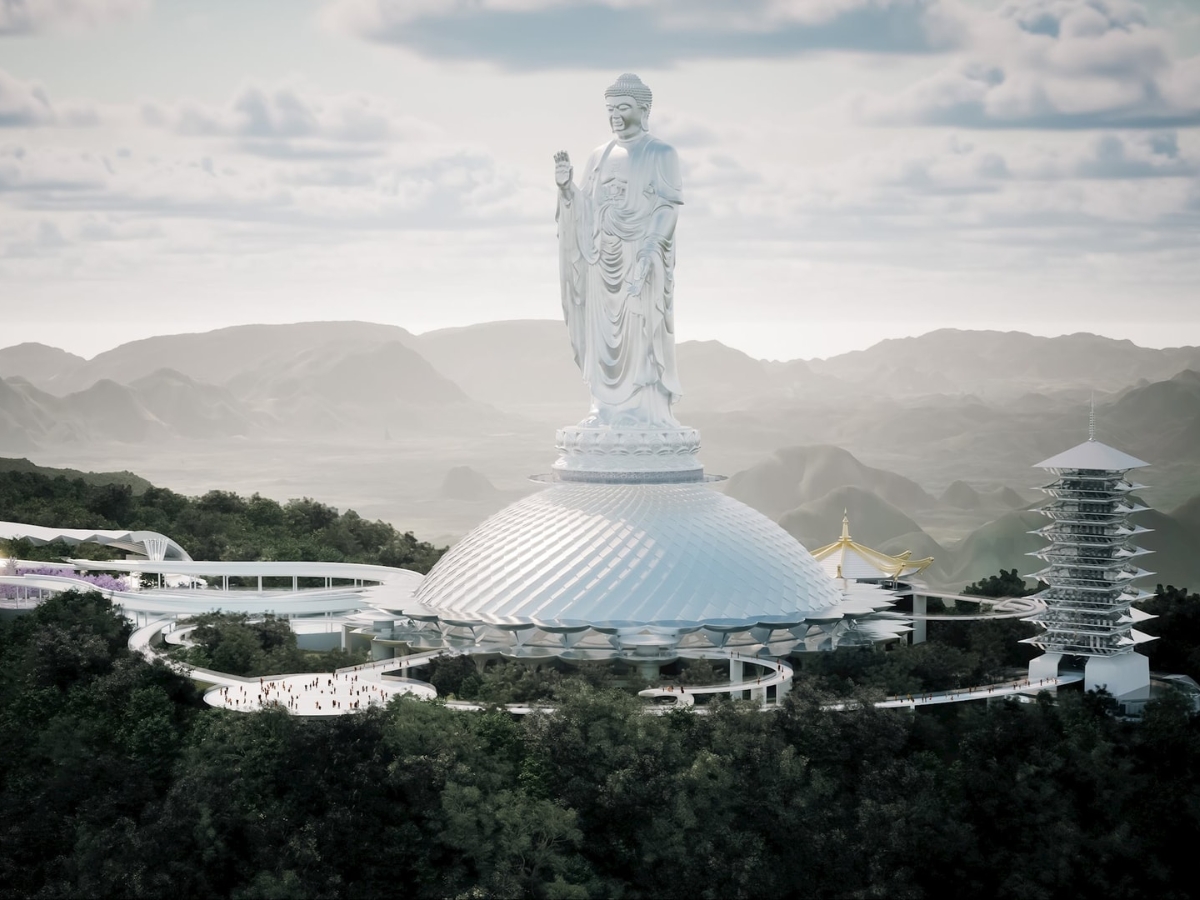
Legend of Am Tien promises to become a unique spiritual tourist destination in Thanh Hoa in the future. (Source: Collected)
The Muong Xia Festival is not only an occasion for tourists to admire the traditional cultural beauty of the Thai people but also a journey to find one's roots, where past and present harmonize in the resonance of gongs and drums and sacred beliefs. Amidst the majestic space of Son Thuy mountains and forests, every ritual, every dance, every song contains the love for the homeland and the desire for peace of the people in the border region. If you are looking for a destination that is both rich in cultural identity and full of the breath of the mountains and forests of Western Thanh Hoa, visit the Muong Xia Festival once to fully experience the sacred, rich, and vibrant beauty of this land.
Let's start your vacation!

Special offer up to 30% when booking tickets on the Sun Paradise Land app
Related topics

